In 2026, the digital storefront is no longer a static window; it is a dynamic, interactive conversation happening in the palm of a customer's hand. With over 65% of web traffic now originating from mobile devices, the traditional linear funnel has been replaced by "vibe marketing" and high-fidelity experiences. Brands that fail to adapt to this mobile-first reality aren't just losing clicks; they are losing the 20% increase in purchase likelihood that comes with interactive AI features. To capture this growth, forward-thinking engineers and marketers are turning to Claude Code and the Model Context Protocol (MCP) to bridge the gap between complex design and lightning-fast mobile performance.
The 2026 Mobile Mandate: Why Interactivity is Non-Negotiable
The baseline for mobile ecommerce optimization 2026 has shifted significantly. We are no longer optimizing for mere readability; we are optimizing for engagement. Data from SuperAGI reveals that mobile users are 20% more likely to purchase when interactive AI features, such as virtual try-ons or real-time product configurators, are present on the landing page. This isn't just a trend; it's a fundamental change in consumer psychology.
While the cross-industry average landing page conversion rate sits at a modest 6.6%, the top 10% of performers—those leveraging hyper-personalization—are seeing a 25% increase in conversion rates and a substantial 10–15% boost in Average Order Value (AOV). Achieving this requires a toolchain that can handle the complexity of interactive ecommerce landing pages without sacrificing the speed mobile users demand.
"The shift from 'Chat AI' to 'Action AI' means we are no longer asking Claude to write headlines, but to build, audit, and deploy entire interactive environments in seconds."
Claude Code and MCP: The Engine of Modern Ecommerce
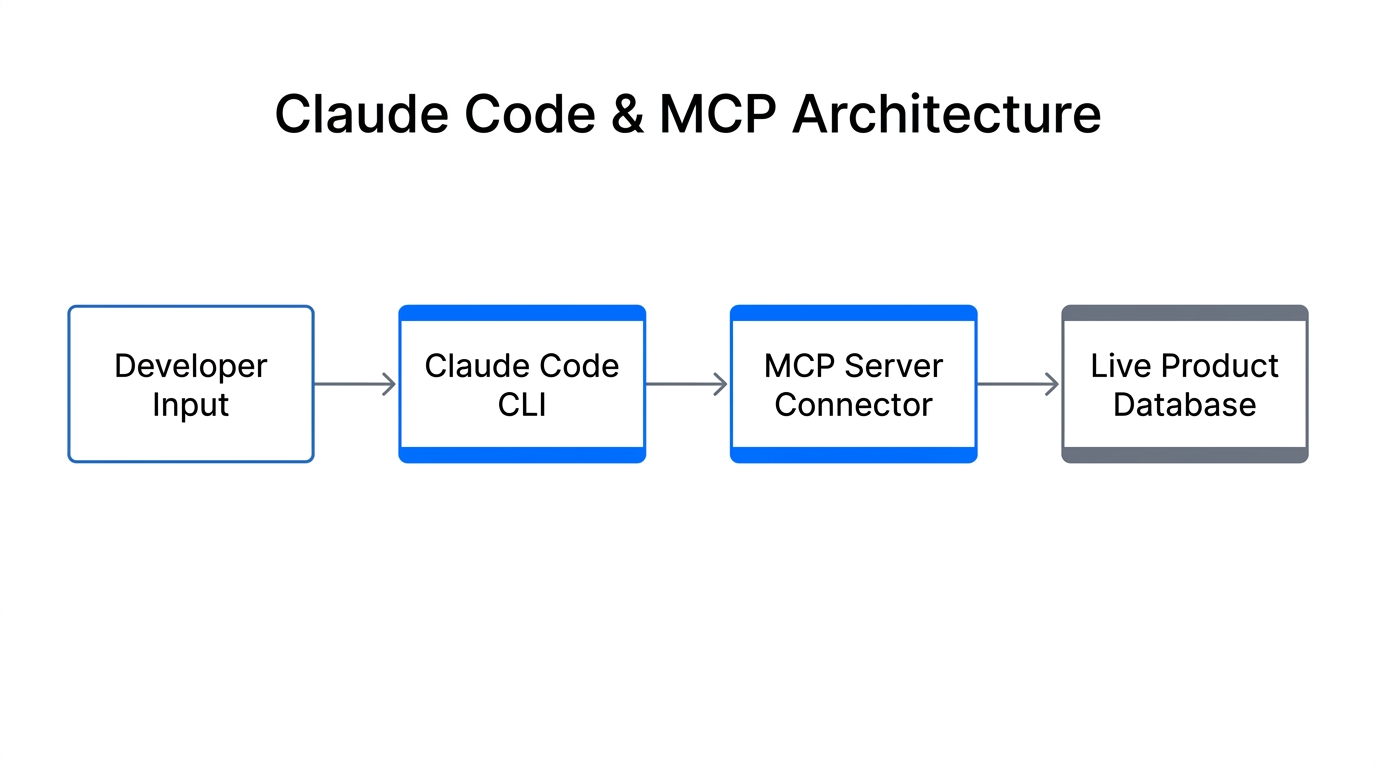
The rise of Claude Code as a dominant force in development—reaching a $2.5 billion run-rate revenue by early 2026—is driven by its ability to execute complex software modifications. Approximately 34% of tasks on Claude are now focused on software modification and coding. For ecommerce brands, the real breakthrough is the Model Context Protocol (MCP).
MCP allows Claude Code to pull live data directly from your Shopify backend, Google Ads performance metrics, or your CRM. This means your Claude Code mobile pages aren't just built once; they can be optimized in real-time based on actual user behavior and inventory levels. For example, if a specific SKU is trending on TikTok, Claude can automatically adjust the hero section of your mobile landing page to feature that product, ensuring your marketing vibes match consumer intent.
| Feature | Traditional Workflow | Claude Code + MCP Workflow |
|---|---|---|
| Data Integration | Manual export/import | Real-time via MCP |
| UI Updates | Hours of dev time | Seconds via agentic coding |
| A/B Testing | Static variants | Dynamic intent-based variations |
| Dev Efficiency | Baseline | 28–44% improvement |
Maintaining the 90+ Score: Performance as a Feature
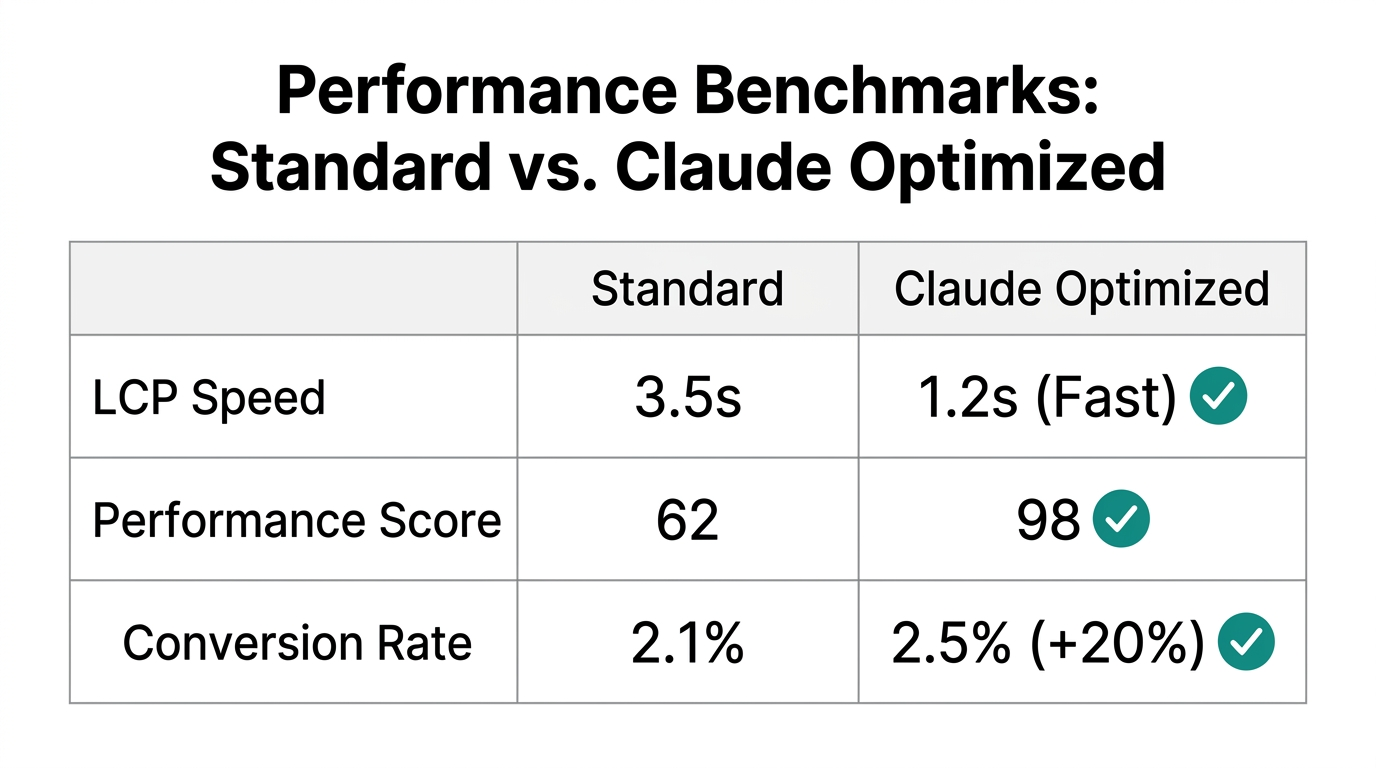
Interactivity often comes at the cost of speed, but on mobile, a one-second delay can decimate your mobile conversion rate growth. Using Claude Code, developers can implement "automated performance hooks" that act as gatekeepers. By integrating with Vercel, you can instruct Claude to block any deployment if the Core Web Vitals (like Largest Contentful Paint) drop below a score of 90 on mobile devices.
To keep the codebase lean, it is essential to move away from bloated JavaScript libraries. Experts recommend instructing Claude to use Tailwind CSS and Shadcn UI. This utility-first approach ensures that the interactive elements—whether it's an instant modal flow or a Beehiiv email capture—are bundled efficiently. Brands like Nuun have seen a 34% jump in conversion rates simply by redesigning their checkout for speed and AI-driven efficiency.
"Performance isn't just a technical metric; it's the foundation of user trust. If the page doesn't load in under 2 seconds, the 'vibe' is already lost."
Capturing the Sound of Sale: Voice Commerce Optimization
The voice recognition market has hit $26.8 billion, and mobile users are increasingly using natural language to find products. Voice commerce optimization is no longer optional. When building mobile pages with Claude Code, you must optimize product listings to capture high-intent natural language queries.
Instead of just keyword-stuffing, use Claude to generate schema-rich descriptions that answer specific questions users might ask their voice assistants. This transition from "search terms" to "conversational intent" allows your mobile landing pages to rank higher in AI-driven search results, meeting the user exactly where they are in their journey. This is particularly effective when combined with UGC strategies—platforms like Stormy AI can help identify the natural language trends creators are using, which can then be fed into Claude to update your page copy.
The Figma-to-Code Workflow: Ensuring UI Fidelity
One of the biggest pitfalls of AI-generated code is the "generic AI look"—the sea of purple gradients and stock layouts. To avoid this, a rigorous Figma-to-Code workflow is essential. By using the Figma MCP, developers can extract design tokens (spacing, typography, hex codes) and feed them directly into Claude Code.
Experts note that while some models are faster at backend logic, Claude Sonnet 4.5/5 remains the gold standard for UI fidelity. It respects the nuances of a brand's design system, ensuring that the generated mobile UI isn't just functional, but emotionally resonant. Fashion brands like J. Lindeberg have leveraged this high-fidelity approach to increase sales by 70% by focusing half of their page real estate on immersive brand storytelling.
Playbook: Deploying Lean, Interactive Mobile Pages
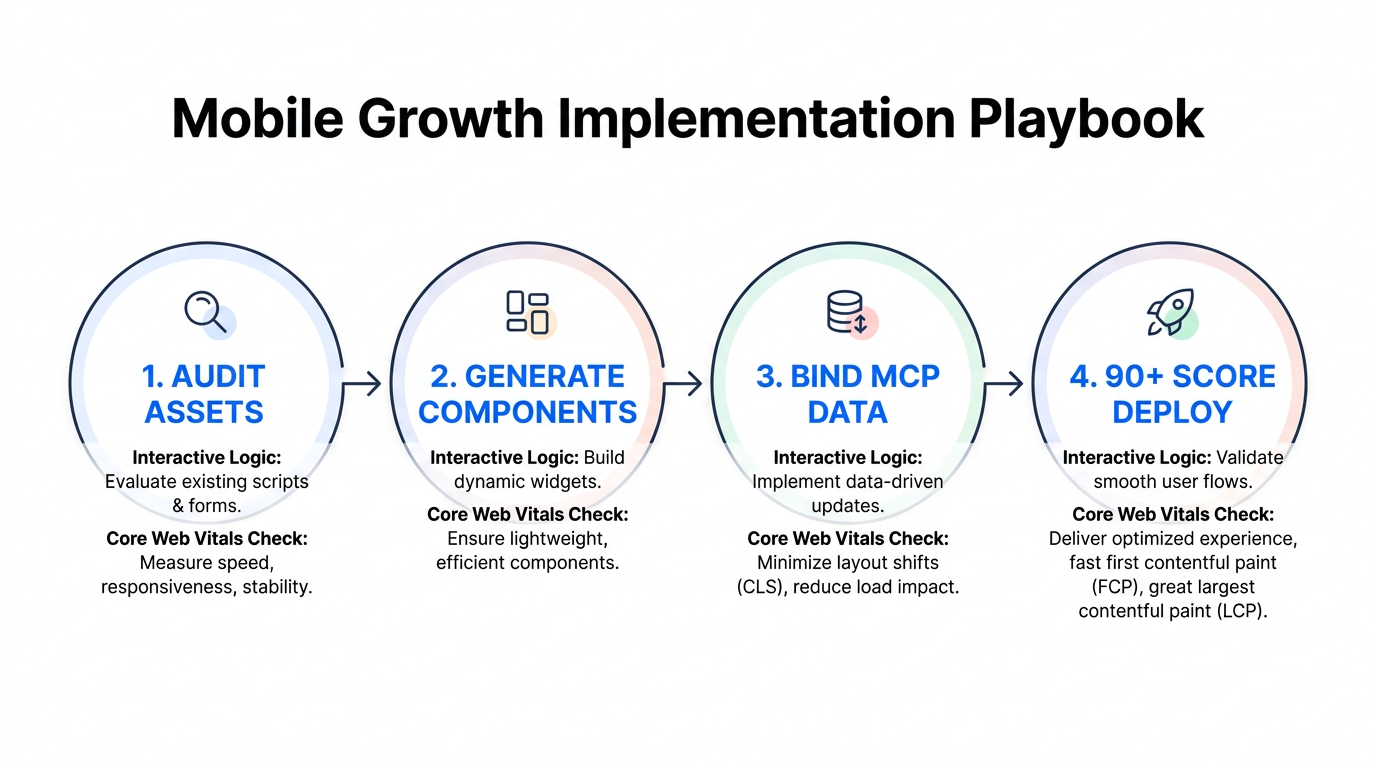
Ready to scale? Follow this step-by-step guide to deploying high-performance mobile ecommerce pages using the modern stack.
Step 1: Strategy-First Prompting
Before writing a single line of code, feed Claude Code your Ideal Customer Profile (ICP) and Unique Selling Proposition (USP). Use a prompt like: "Analyze these three competitor mobile pages, identify the conversion gaps, and draft 3 first-person CTAs that align with our brand voice before generating the Next.js components."
Step 2: Extract Design Tokens
Use Figma to define your mobile UI. Connect Claude to your Figma project via MCP to ensure it uses your exact padding, color palette, and component structures. This prevents the "AI blue" syndrome and keeps your brand consistent.
Step 3: Build with Tailwind and Shadcn
Instruct Claude to build the page using Next.js 15 and Tailwind CSS. Use Shadcn UI for pre-built, accessible components that are easy to customize and keep the bundle size small.
Step 4: Implement Interactive AI Features
Integrate your interactive elements—whether it's an AI-powered size recommender or a virtual try-on modal. Ensure these are lazy-loaded to maintain your mobile performance budget.
Step 5: Automated Performance Audit
Set up a deployment script where Claude Code audits the page for Core Web Vitals. If the mobile LCP (Largest Contentful Paint) is over 2.5 seconds, have the AI refactor the image loading strategy automatically.
"The goal is a 'human-in-the-loop' system where the AI handles the heavy lifting of coding and performance, while the marketer focuses on the storytelling."
The Bottom Line for 2026
Scaling mobile ecommerce in 2026 requires more than just a responsive layout; it requires an agentic approach to development. By leveraging Claude Code mobile pages and the real-time data capabilities of MCP, brands can build interactive ecommerce landing pages that don't just look good—they perform. When you combine high-performance code with a strong creator strategy (found through tools like Stormy AI), you create a mobile experience that is fast, emotional, and highly portable. The future of mobile growth is interactive, automated, and built with Claude.