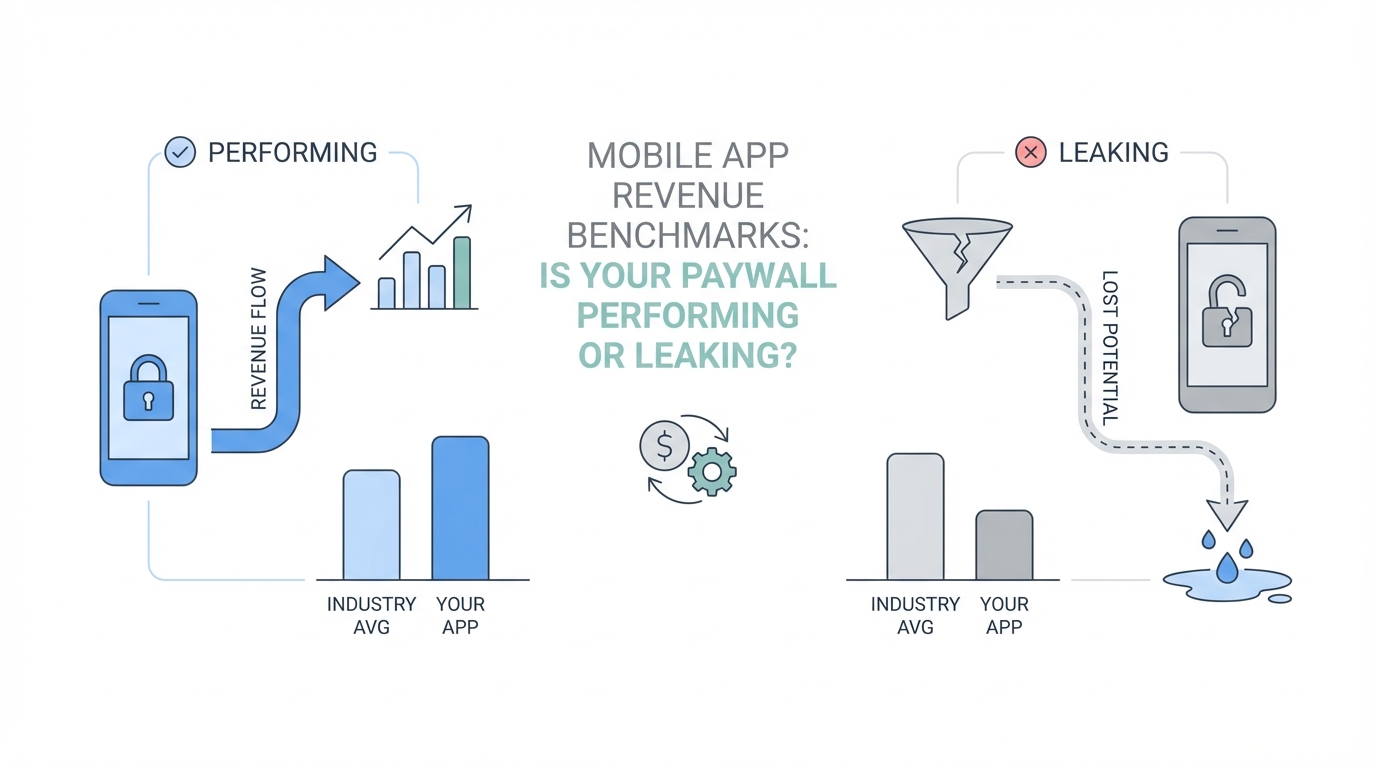
Most mobile app founders believe that the secret to scaling revenue lies in the next viral TikTok or a perfectly optimized set of Google Ads. While user acquisition is undeniably important, focusing solely on the top of the funnel is like pouring water into a leaky bucket. If your conversion funnel isn't optimized, you aren't just missing out on growth; you are actively wasting every dollar spent on Meta Ads Manager or Apple Search Ads. According to industry experts who have run over 10,000 paywall experiments, roughly 80% of the effort you put into building your app should actually go toward onboarding and the paywall, because that is where the actual revenue is generated.
The 15% Rule: Benchmarking Trial Starts
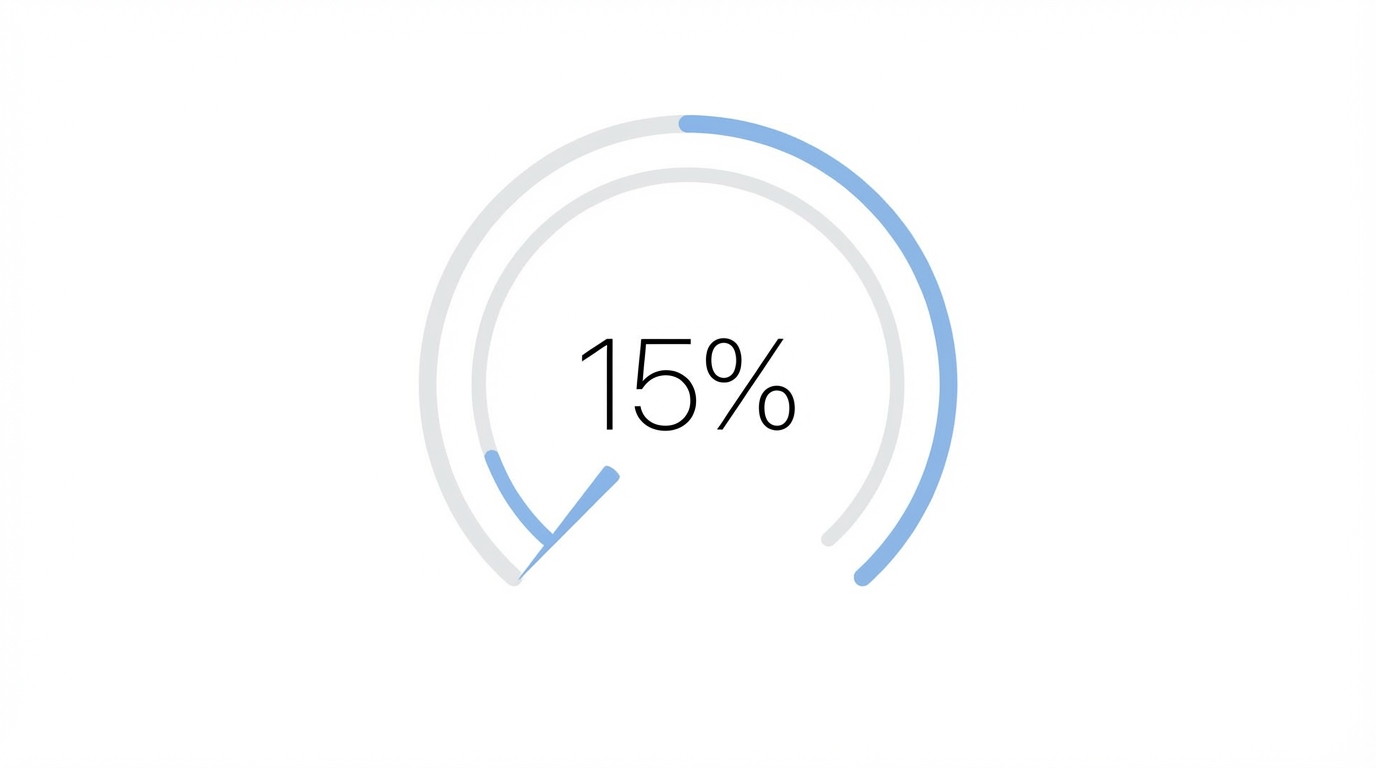
When auditing an app’s health, the first metric to scrutinize is the trial start rate. In the world of subscription apps, this is your primary pulse check. A strong app conversion rate benchmark for trial starts is 15% or higher, according to data from the RevenueCat State of Subscription Apps report. If your current rate is sitting below that 15% threshold, you likely have a fundamental problem with your paywall’s value proposition, placement, or design.
It is surprisingly common to find apps that appear "healthy" but are operating with trial start rates between 8% and 11%. While these apps may be profitable, they are often leaving massive amounts of revenue on the table. In 90% of cases, an app with an 8% conversion rate can be optimized to reach 15% without changing the product itself, simply by fixing the leaks in the existing monetization system. If you want to see how your own screens stack up, you can use a paywall experiment generator to get data-backed ideas for your next A/B test.
When analyzing these metrics, it is also essential to use Stormy AI to vet the creators driving your traffic; if you are bringing in low-quality users, your trial-to-paid conversion rate will suffer. A solid benchmark here is 30% or higher [source: Adapty Benchmarks]. If more than 70% of your trial users are canceling before the first billing cycle, it’s a signal that either your trial length is too short for users to find value, or the product experience isn't living up to the promise made on the paywall.
Install-to-Paid Metrics for Non-Trial Apps

Not every app uses a free trial model. For apps that move straight to a purchase—or for developers calculating the bottom-line efficiency of their funnel—the install-to-paid rate is the ultimate metric. In the competitive US market, a high-performing app should aim for an install-to-paid rate of 4% to 10%.
If your rate is below 4%, you are in the "problem zone." This indicates that your users do not perceive enough immediate value to justify the cost. Platforms like Stormy AI are frequently used by app developers in this position to find UGC creators who can better articulate the app’s value through high-converting video ads, helping to pre-condition users for the purchase before they even hit the App Store. Moving a non-trial app from a 1.1% install-to-paid rate to 4% can effectively quadruple your revenue while keeping your Google Ads spend exactly the same.
The Psychology of Multi-Step Paywalls
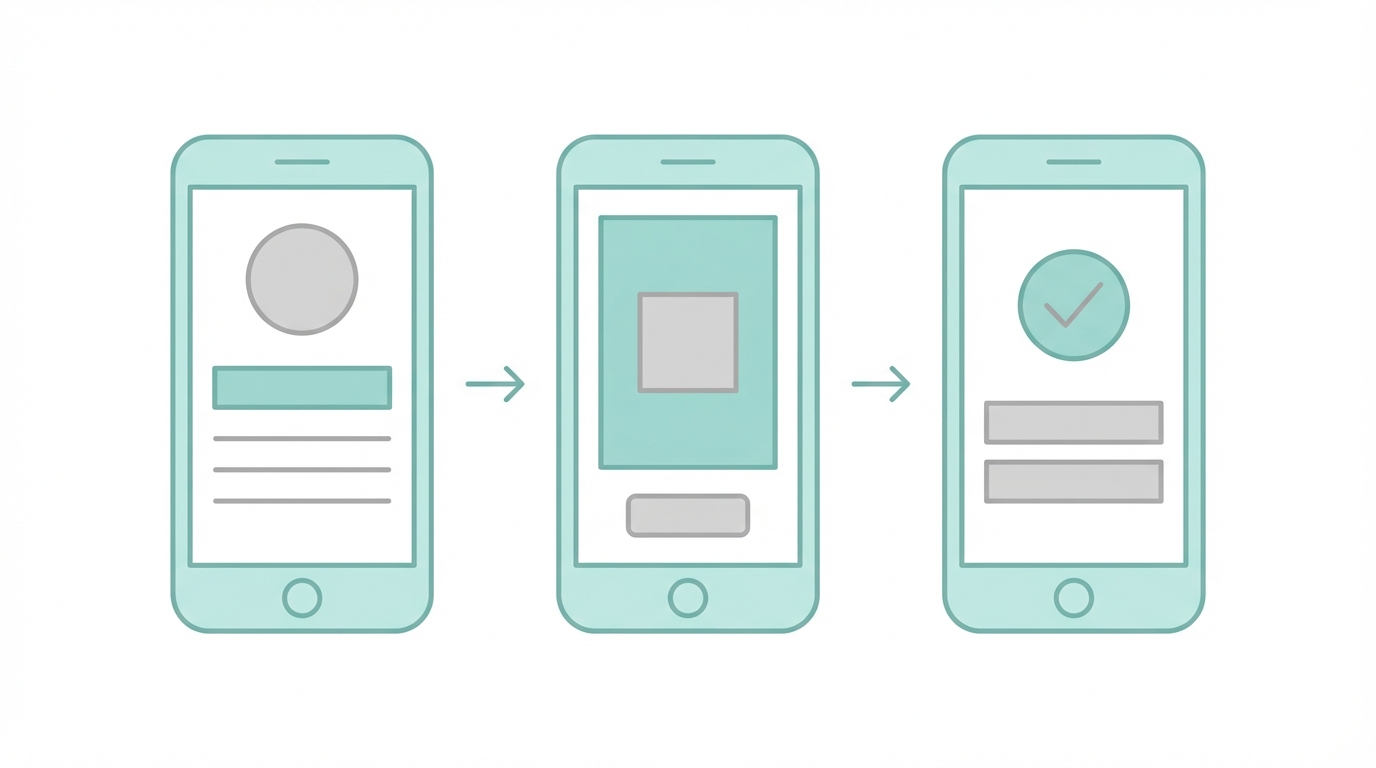
One of the most effective ways to boost conversion rates is by moving away from a single-screen "buy now" approach toward multi-step paywalls. This strategy often results in a 20% to 40% uplift in trial starts. Why? Because it systematically addresses trial anxiety.
A successful multi-step paywall doesn't just list features; it walks the user through a narrative of security and value. For example, apps like Claim and Riz use a three-step process:
- Step 1: The Promise. Reinforce the value proposition and emphasize that the trial is risk-free.
- Step 2: The Education. Show a timeline of how the trial works. Explicitly state that a reminder will be sent 2 days before the trial ends.
- Step 3: The Offer. Present the pricing in a clear, distraction-free format.
Interestingly, some of the best-performing paywalls actually remove the time constraint from the main call-to-action. Instead of saying "Start 3-Day Free Trial," which reminds the user they have to cancel soon, high-converting paywalls often simply say "Try for $0" or "Try Free." By lowering the linguistic friction, you keep the user focused on the benefit rather than the deadline.
Price Anchoring and the Math of Authenticity
Pricing is as much about psychology as it is about economics. While many founders default to the standard $2.99 or $4.99 per week, experimental data suggests that randomized pricing numbers often feel more authentic to modern consumers. Users have developed a "defensibility" against prices ending in .99, recognizing them as marketing tactics. A price like $3.33 per month can actually outperform $2.99 because it feels like a calculated, "real" number rather than a sales pitch.
Price anchoring also plays a critical role in increasing your average app revenue per user. By presenting an annual plan alongside a weekly or monthly option, you frame the higher-priced item as the better deal. For example, if a weekly plan is $12.99 and the annual plan breaks down to $3.33/month, the perceived savings (often labeled as "60% off") drive users toward the high-LTV annual subscription. This buffer in revenue allows you to spend more on Stormy AI, an AI-powered platform for creator discovery, to find top-tier creators for your app install campaigns, creating a virtuous cycle of growth.
Transaction Abandonment: Capturing the "No"
One of the most overlooked mobile app KPIs is the transaction abandonment rate. This happens when a user clicks your "Purchase" button but cancels when the Apple or Google system dialogue appears. Instead of letting that user walk away, you should immediately trigger a transaction abandonment paywall.
The goal here is to offer a "downsell" or a different incentive. A high-leverage tactic is the Free Trial Toggle. You can offer the user a choice: buy the subscription with a 7-day free trial at full price, or skip the trial and get a 30% discount. Surprisingly, about 10% of users will opt to buy immediately without a trial if the price is lower. This provides you with immediate cash flow and eliminates the risk of a trial cancellation. Experimenting with these placements ensures you aren't leaving money on the table at the very last second of the user journey.
The Paywall Optimization Playbook
If you are ready to audit your performance and stop the leaks in your revenue, follow this structured playbook to iterate on your monetization strategy.
Step 1: Audit Your Placements
Before testing colors or copy, ensure you have the "Bare Minimum" placements. You should have a paywall appearing at onboarding, at session start (at least once per day), and upon transaction abandonment. If your app involves a specific action—like scanning a document or generating an AI image—trigger a paywall after a set number of actions to capture high-intent users.
Step 2: Perform a Price Sensitivity Analysis
Don't blindly copy your competitors. While it’s a good starting point, Utility apps and Health/Fitness apps have very different levels of user intent. A user trying to lose weight has a much higher "perceived value" for a solution than a user looking for a file converter. Look at your acquisition costs on Meta Ads Manager and calculate the price point needed to achieve a positive ROAS within 30 days. This should be your floor price.
Step 3: Implement Multi-Step Messaging
Break your paywall into a sequence that highlights social proof and risk reduction. Use real App Store reviews and clear timelines to reduce the anxiety associated with hitting the "Subscribe" button. Ensure the word "Free" is mentioned multiple times throughout the flow to reinforce the risk-free nature of the trial.
Step 4: Scale with AI Automation
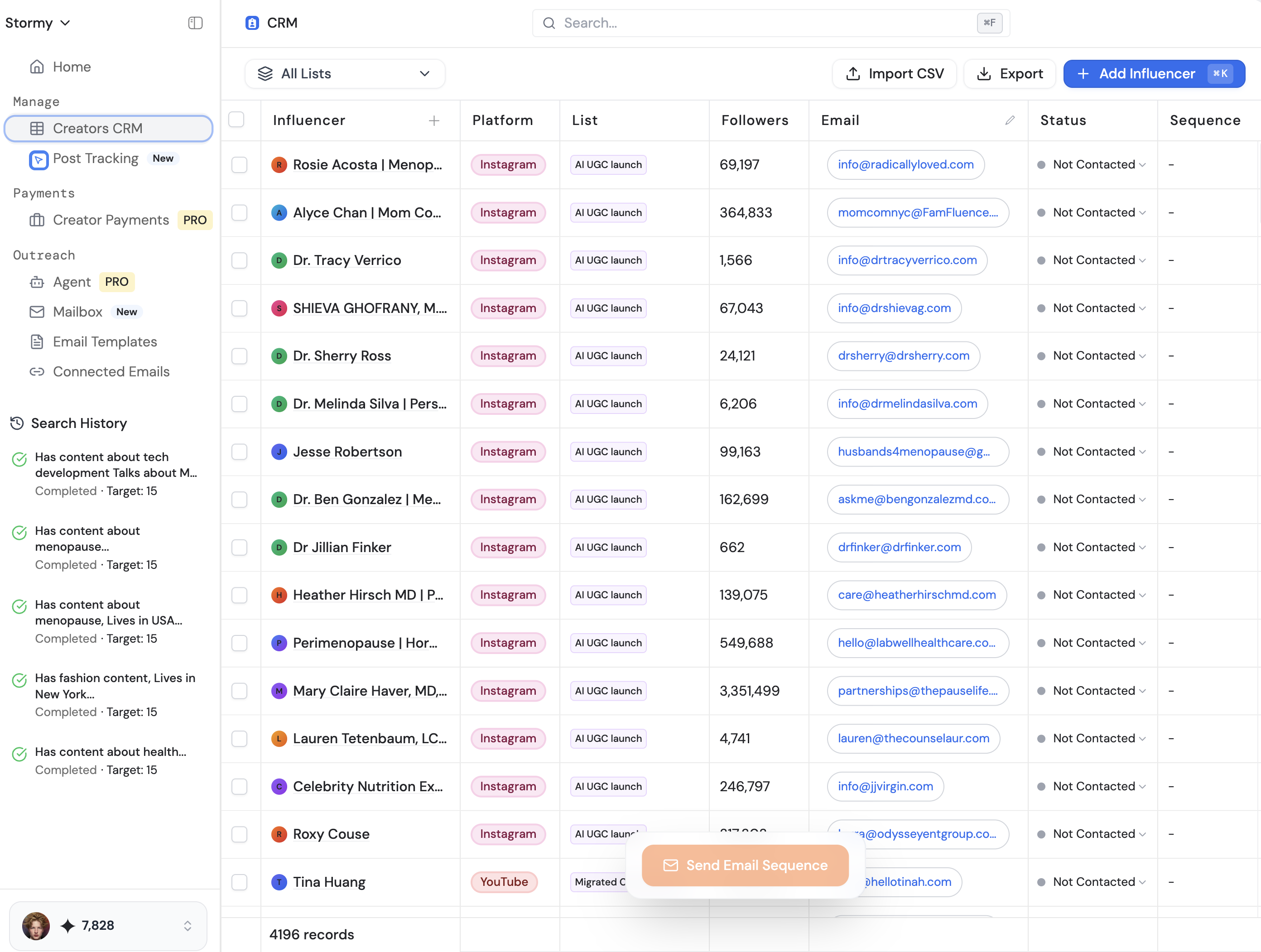
Once the funnel is optimized, use an AI agent from Stormy AI to discover and outreach to creators autonomously. While legacy tools like Captiv8 or Tagger require heavy manual lifting, a modern AI-native platform can handle your entire creator discovery and email follow-up sequence on a schedule while you sleep.
Conclusion: Beyond the Benchmarks
Hitting app conversion rate benchmarks like a 15% trial start or a 4-10% install-to-paid rate isn't the result of a single "hack." It is the result of constant, data-driven experimentation and a deep understanding of user psychology, often tracked through tools like Amplitude or Mixpanel. By fixing your paywall leaks, you effectively lower your customer acquisition costs and increase the lifetime value of every user.
Once your paywall is a predictable revenue machine, the next step is to feed it with high-quality traffic. Using tools like Stormy AI allows you to find the UGC creators who can build the trust necessary to get users to your paywall in the first place. Stop focusing on getting more users into a broken system; fix the system first, and the growth will follow.