The era of the "idea guy" has officially arrived, as recently noted by Sam Altman. For mobile app developers and B2C SaaS founders, this shift represents a massive opportunity to outpace traditional incumbents. The traditional mobile app marketing strategy of dumping six-figure budgets into stagnant Meta ads is dying. In its place, a new model has emerged: the creator-led growth flywheel. By leveraging short-form video on TikTok, Instagram Reels, and YouTube Shorts, startups are scaling from zero to millions of users with almost zero upfront ad spend. This article breaks down the exact mechanics of how to build this flywheel for your product.
The Shift from Social Graphs to Interest Graphs
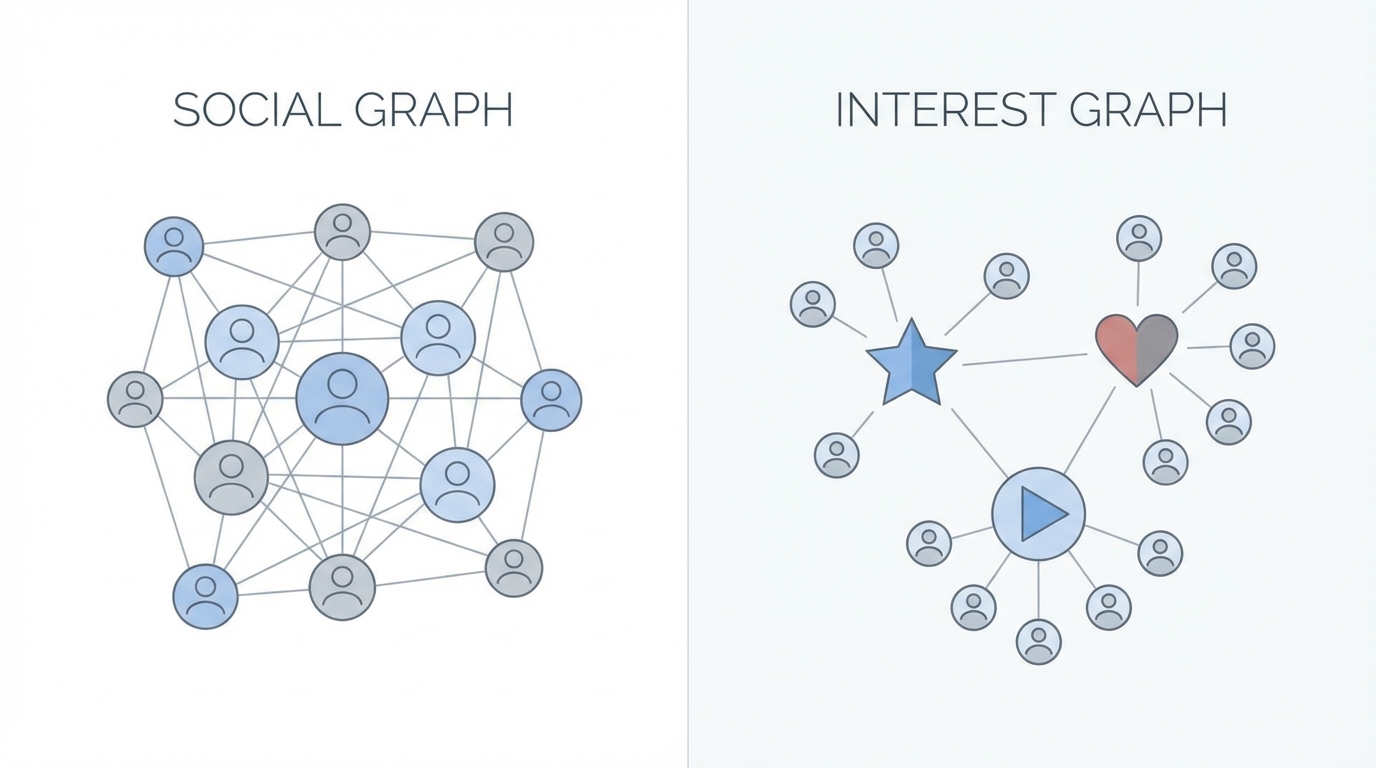
To understand how to grow a mobile app in the current landscape, you must first understand how social media has fundamentally changed. We have moved from the "social graph" era—where you saw content from people you followed—to the "interest graph" era. Platforms like TikTok pioneered the "For You Page" (FYP) model, which prioritizes content relevance over follower count. This is a game-changer for b2c saas marketing.
In the old world, a brand needed an influencer with 100,000 followers to get 30,000 views. Today, a creator with zero followers can post a video that reaches 1 million people if the algorithm deems it engaging. This creates a massive arbitrage opportunity. You are no longer paying for an influencer's "status"; you are paying for a creator's ability to generate "brain rot" content that the algorithm loves. For developers building with modern tools or "vibe coding," this means your reach is limited only by your creative output, not your follower count.
The Anatomy of a Viral App Feature
Not every app is suited for short-form video virality. To succeed with mobile user acquisition trends, your product needs to have a "killer feature" that is instantly understandable. Short-form video is not the place for complex enterprise software with a steep learning curve. It is the place for apps with zero learning curve and immediate payoff.
Consider apps like Focus Tree, a productivity tool that gamifies focus by growing a digital forest when you stay off your phone. The value proposition is visual, simple, and takes three seconds to explain in a video. Similarly, apps that address high-intent pain points—like data privacy tools that block brokers from selling your email—thrive because the problem and solution are clear. If your app requires a 10-minute tutorial, you will struggle. If it has a "magic moment" that can be captured in a 15-second clip, you have a viral engine.
Creators vs. Influencers: The Math of Arbitrage
Many founders make the mistake of chasing "influencers." They pay $2,000 for a single post from someone with a large following, only to see it flop. Why? Because you only get one "at-bat." In content marketing, success is usually a 1-out-of-10 game. Only 10% of your content will likely be a "viral outlier."
Compare these two strategies for your mobile app marketing strategy:
- The Influencer Play: Pay $2,000 for one post. If it fails, your budget is gone.
- The Creator Flywheel: Pay a creator $900 a month to post one video per day (30 videos).
By hiring a creator to post daily, you get 30 at-bats for half the price. Mathematically, you are almost guaranteed to hit at least three viral outliers. Furthermore, the CPM (cost per thousand impressions) on creator-led content is often around $2.00, compared to the $6.00-$8.00 average on Meta Ads Manager or Google Ads. This 75% discount on attention is how small teams are outcompeting massive corporations.
Case Study: How Focus Tree Scaled to 2 Million Users
A prime example of this strategy in action is Focus Tree. They didn't build a massive internal marketing department. Instead, they built a decentralized network of hundreds of creators. Each creator operates their own account (e.g., "@focus_with_ali") and posts daily content showing how the app helps them study or work. This creates digital gravity—the more surface area your brand has across different accounts, the more likely you are to capture your target audience.
By sharing winning hooks and formats across this network, Focus Tree created a growth flywheel. When one creator found a format that worked, the entire network "remixed" it. This resulted in scaling from zero to over 2 million users. This method also improves app store optimization efforts; as people see the app everywhere, branded search volume spikes in the App Store, naturally boosting your organic rankings.
Building Your Creator Flywheel: A Step-by-Step Playbook
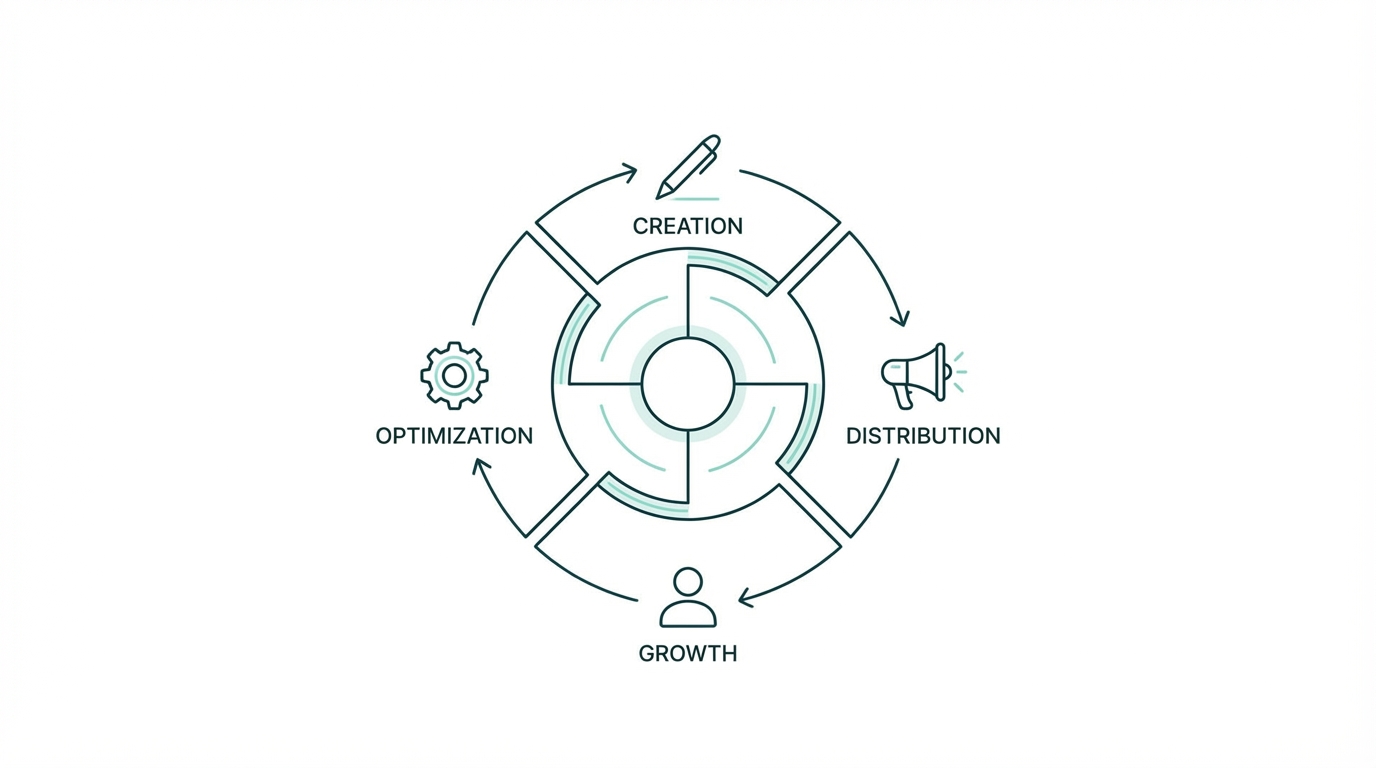

Scaling this process requires moving from manual hacking to a systematic operation. Here is the playbook for building your own mobile app growth engine.
Step 1: Discovery and Vetting
You need to find creators who are already making "brain rot" or high-engagement content in your niche (productivity, finance, fitness, etc.). Don't look for people with the most followers; look for people who know how to edit for the FYP. Tools like Stormy AI can significantly accelerate this process. Instead of manually scrolling TikTok for hours, you can use AI-powered search to find creators matching your specific niche and audience quality requirements instantly.
After discovering potential partners, you must vet them for quality. Modern tools allow you to paste a profile URL and instantly detect fake followers or engagement fraud, ensuring your $900/month retainer isn't going to a bot farm.
Step 2: Outreach and Onboarding
Once you have a list of 50-100 creators, you need to reach out. Many creators are 20-somethings who may be "flaky" but highly talented. Personalized outreach is key. Platforms like Stormy AI help here by generating hyper-personalized emails and managing the follow-up process automatically, which is often the most time-consuming part of creator management.
Step 3: Management and The Learning Loop
Manage your creators in a WhatsApp group or Discord. The goal is to facilitate a "learning loop." Use tracking tools like Shortimize or Viral App to monitor which videos are getting the most views and engagement. When an "outlier" video hits, immediately share it with the rest of the team and tell them to remix that specific hook.
Using AI to Find Viral Outliers

You don't have to reinvent the wheel. To stay ahead of mobile user acquisition trends, use research tools like Sandcastles AI or Virulo. These platforms scrape and aggregate thousands of trending shorts, allowing you to search for viral outliers in your specific category. If a video about a "budgeting hack" is exploding for a competitor, have your creators remix that format for your finance app. This data-driven approach removes the guesswork from creative production.
Integrating Impulse Purchases and TikTok Shop

For B2C apps and e-commerce, the goal is to trigger an impulse install or purchase. If you are selling a physical product alongside your app, TikTok Shop mechanics are incredibly powerful. By giving creators an affiliate commission on top of their flat video fee, you align incentives. The more "native" the content feels—shot on an iPhone, edited in CapCut, and devoid of high-production "ad" tropes—the higher it will convert.
Even if you aren't selling a physical product, the same "impulse" psychology applies to app installs. A user sees a video, clicks the link in the bio, and installs the app via Apple Search Ads or a direct link. This frictionless transition is why how to grow a mobile app in 2024 is inseparable from short-form video strategy.
Conclusion: Scaling Your Digital Gravity
Building a mobile app marketing strategy around short-form video is about creating "digital gravity." By deploying a decentralized army of creators, you ensure that your brand is constantly appearing in front of your target audience on their For You Pages. This strategy lowers your CPM, increases branded search, and drives low-cost installs that traditional paid ads can no longer deliver.
Start small: find three creators, set them on a daily posting schedule, and use tools to track their outliers. As you find winning formats, scale your network to 10, 50, or 100 creators. In the era of the interest graph, the brands that produce the most "relevant" content—not the biggest ad spend—will win the market.