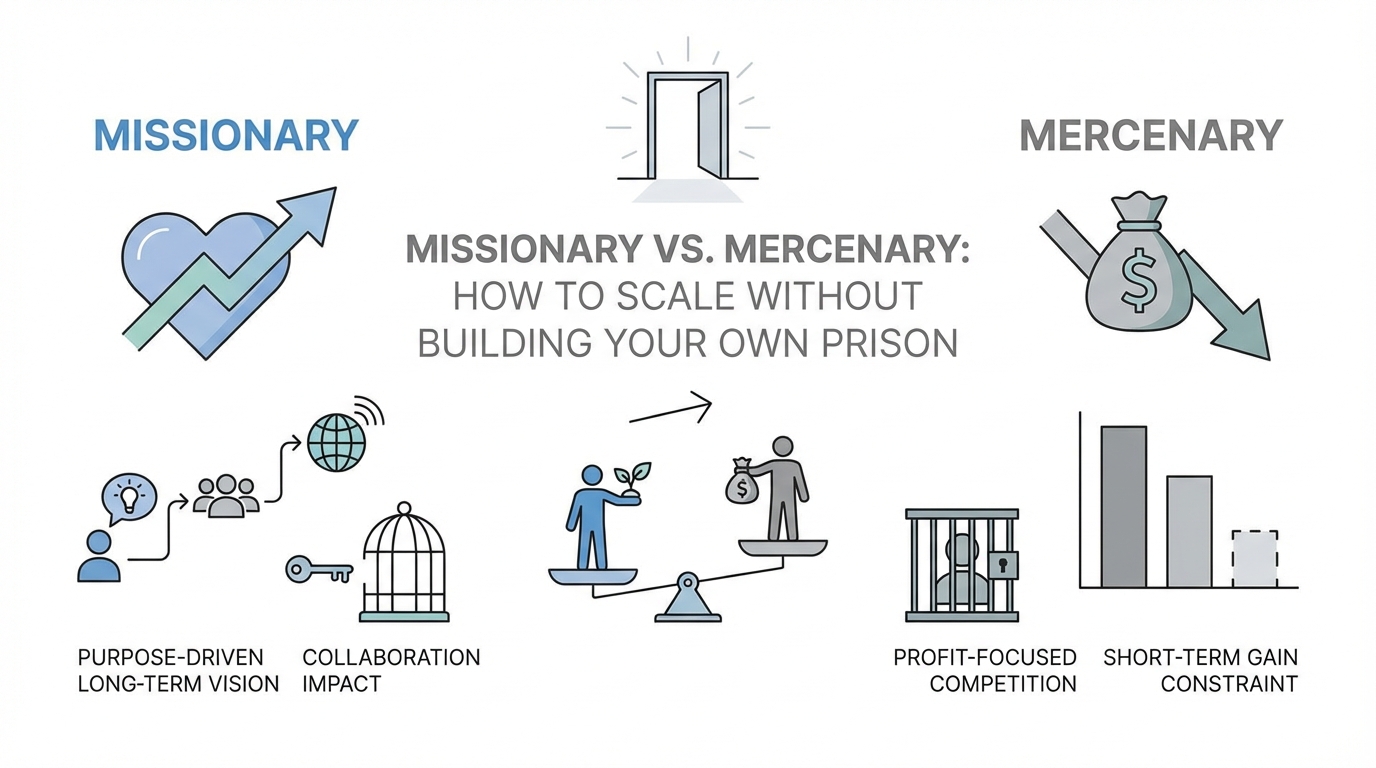
We have all seen the narrative of the overnight success: the founder who builds a rocket ship, scales to millions in revenue, and exits for a life of leisure. But behind the highlight reels of business growth strategy lies a darker reality many leaders face—the construction of their own prison. When you build a company based solely on market potential rather than personal alignment, you risk waking up one day and realizing you dislike the people, the culture, and the very product you created. This is the trap of the mercenary, and avoiding it requires a radical commitment to excellence and a refusal to compromise on core identity.
The Mercenary Prison: Why Chasing Market Potential Leads to Burnout

The term "Mercenary Prison" describes a state where a founder’s startup leadership tips are driven entirely by financial upside rather than a mission. In this state, decisions are often born from insecurity—the fear of failure or the desperate need to prove one’s worth through cash. As the research suggests, if you make six small decisions to conform just to survive, you can end up in an unrecognizable spot. You might find yourself building a live-streaming app for a platform you don’t use, like Twitch, simply because the "napkin math" looked good. This misalignment is a primary driver of founder burnout prevention issues, as it is exhausting to push a boulder uphill when you don't care about the destination.
Being a mercenary isn’t inherently a failure; it can lead to massive commercial success. However, it is often a "win-lose" scenario. If you get the result, it was worth it; if you don’t, you’ve wasted your time on something you hated. A missionary approach, by contrast, is a "win-win." Even if the business doesn't reach unicorn status, the journey—having 50 dope conversations on a podcast or building a community of friends—was worth the effort. To scale sustainably, you must ensure your product is just "you pushed out," an extension of your own DNA rather than a calculated imitation of someone else’s success. When your business growth strategy feels authentic, the work becomes a source of energy rather than a drain. Many founders find that leveraging Stormy AI helps them manage these complex operations through an AI-powered creator CRM without losing their personal touch.
Irritation as Innovation: The Seed of Excellent Products


True innovation often begins with a simple realization: "This sucks." This irritation is the greatest opportunity for company culture building. For example, many professional conferences are dry and uninspiring. By asking what a conference would look like if it didn’t suck, leaders can create unique experiences like "basketball camp for billionaires." This is how you differentiate in a crowded market. Instead of just another networking event, you build a "vibe" that people can’t buy elsewhere. Platforms like Stormy AI, an AI-powered platform for creator discovery, help brands find this kind of unique edge by identifying creators who already embody that specific energy.
This leads us to the dialectics of success. Leadership requires balancing two opposing forces: impatience with action and patience with results. If you are patient with your actions, you do nothing. If you are impatient with your results, you make short-sighted decisions and give up too early. The best founders are those who move at lightning speed on execution—turning a book idea into a printed physical copy in two weeks—while remaining calm as the market slowly catches up to their vision. Managing these fast-paced cycles is easier when using tools like Meta Ads Manager to test ideas in real-time while maintaining a long-term brand perspective.
Action-Oriented Values: Moving Beyond Wall Posters
Most employee engagement ideas fail because they are words on a wall rather than rituals in the office. Values like "kindness" or "creativity" are useless if they don't dictate daily behavior. Radical rituals are what truly define culture. For instance, the Japanese company Rakuten implements a rule where everyone, including the CEO, cleans the office. This isn't about saving money on janitors; it's about radical self-reliance and attention to detail. If your values are just posters, your employees won't know them. If you offer a fifty-dollar reward for naming the company values and zero people can do it, your culture doesn't exist.
True values show up in the hard moments, such as severance. While industry standards might suggest two weeks of pay, a mission-driven company might offer significantly more to a departing employee because it aligns with their value of "building with pride." This creates a "halo effect" that resonates with the remaining team. When you treat people well, not because a spreadsheet says so, but because it’s who you are, you build a brand that lives in the customer's head rent-free. This is the ultimate prize of company culture building. To track how these values translate into market perception, savvy leaders use Google Ads to monitor brand search and sentiment alongside their performance metrics.
The 'Proportion' Rule: Jerry Seinfeld’s Secret to Quality
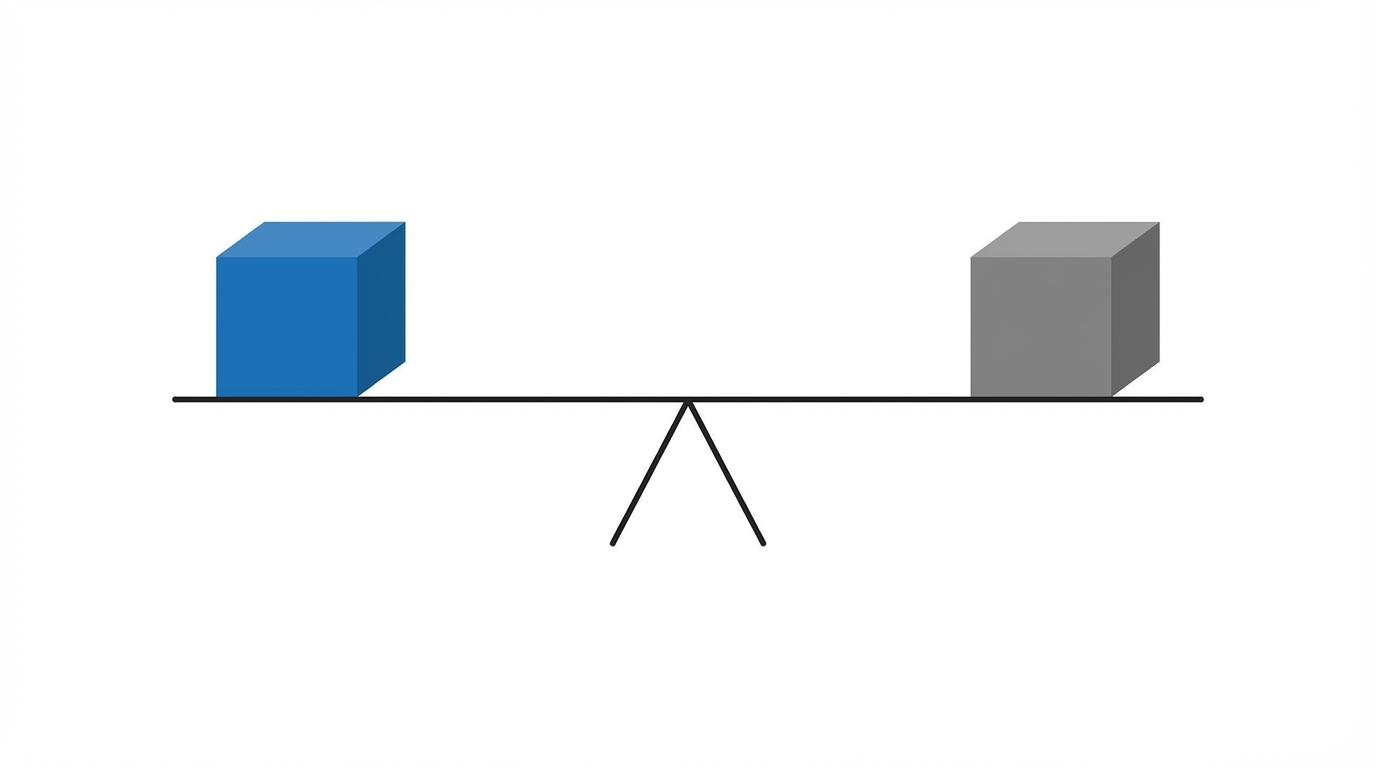
Scaling a business often leads to the fallacy that more is always better. However, the legendary comedian Jerry Seinfeld suggests that the secret to excellence is proportion. He famously turned down $110 million for one more season of his show because he knew that in art, too much of anything is a bad thing. Too much cake is sickening; too many jokes ruin the timing. In business, too much scaling too fast can destroy the very culture that made the company successful. Knowing when to say no is a startup leadership tip that prevents the missionary from becoming a mercenary.
The Proportion Rule applies to marketing as well. If you over-index on data-driven, scientific small iterations, you lose the emotional storytelling that builds a legendary brand. Conversely, if you only focus on the "vibe" without measuring results, you will run out of money. The most successful companies, like Stormy AI, understand how to blend AI-powered analytics with the human touch of creator discovery. This balance ensures that your business growth strategy remains high-quality without becoming bloated or unrecognizable.
Step 1: Apply the 'Yes Test'
Before committing to a new project or partnership, ask: "Would I do this thing for no money or even lose money?" If the answer is yes, you have found something that is food for your soul. This is a powerful founder burnout prevention tool. When you are willing to lose money on a project, it forces the project to be so good that the intangible benefits—like meeting interesting people or building a core memory—outweigh the financial cost. Many of the best things in life, from playing an instrument to coaching a team, are "money losers" that provide the highest returns in happiness and fulfillment.
Step 2: Foster Radical Self-Reliance
Borrowed from the culture of Burning Man, radical self-reliance means empowering your team to figure things out on their own. Instead of hand-holding, create an environment where the community provides the solutions. This drives employee ownership and employee engagement ideas that actually stick. When employees feel they are part of a mission rather than just cogs in a mercenary machine, their productivity skyrockets. They stop asking for permission and start asking for forgiveness, which is the hallmark of a high-growth startup environment.
Step 3: Curate Your Peers
As the saying goes, you are the average of the people you spend time with. But a more nuanced view is that your peers are those who have leverage over you—those whose opinion you care about. If you surround yourself with people who value excellence and integrity, you will naturally rise to meet those standards. This is critical for startup leadership tips because it creates a healthy pressure to perform. If your peers are only focused on the next exit, you will find yourself slipping into mercenary habits. If they are focused on changing the world, you will remain a missionary. Many developers utilize Apple Search Ads to ensure their mission-driven apps reach the right audience of like-minded users.
The Brand as a Concept: Lessons from Prefontaine and Nike
Before Nike was a global behemoth, it was a scrappy running company called Blue Ribbon Sports. Its soul wasn't found in a boardroom but in an athlete named Steve Prefontaine. Prefontaine was a "hunk" of a runner with a punk-rock attitude who refused to run a tactical race. He ran all out from beginning to end, saying, "I want a race to see who has the most guts." This fierce independence became the brand concept for Nike. Even after his tragic death, his spirit remained the guiding light for the company’s identity.
When a brand becomes a concept, it transcends its physical product. If Stormy AI were to open a physical space, you could imagine the vibe: efficient, creator-focused, and powered by intelligent connections. This is the difference between a brand and a commodity. A commodity like an insurance company or a generic hotel chain feels like nothing. A brand with a concept, like Nike or Airbnb, owns a piece of real estate in your head. Airbnb didn't just sell a bed; they sold the idea of "living like a local," making hotels seem like the generic, "boxed" choice. This emotional storytelling is a far more powerful business growth strategy than competing on price alone.
Conclusion: Escaping the Prison and Scaling with Soul
Scaling a business without building a prison requires a constant re-evaluation of your motivations. Are you making decisions out of insecurity, or out of a commitment to excellence? By applying the Yes Test, maintaining the right proportion, and turning your irritations into innovations, you can build a company that is an extension of your best self. Remember that culture isn't what you say; it's what you do when no one is looking—whether that’s cleaning the office or providing generous severance.
Avoid the mercenary trap by staying a missionary for your cause. Surround yourself with peers who challenge you, and use tools like Google Ads and Stormy AI to scale your message to the world. In the end, the goal isn't just to make money; it's to make money so you can keep making great things. Don't sacrifice the gift. Build something you’re proud of, and the commercial success will follow naturally as a byproduct of your excellence.