For years, the digital marketing echo chamber has whispered that affiliate marketing is dead. They point to Google algorithm updates, the rise of AI-generated content, and the saturation of every conceivable niche. But while the casual bloggers are exit-stage-left, a new breed of entrepreneur is quietly building seven-figure empires. Take Alex, the founder of Fin Versus Fin, who scaled a side hustle into a million-dollar business while working a demanding 9-to-5 job. His secret wasn't a magic loophole; it was a disciplined approach to building an affiliate marketing portfolio designed for a high-multiple exit.
Building to sell is fundamentally different from building for lifestyle cash flow. It requires a shift from being a 'content creator' to an 'asset manager.' In this playbook, we will break down the strategic pillars of constructing a portfolio that attracts institutional buyers, maintains topical authority SEO, and ultimately leads to a life-changing payday.
The Portfolio Play: Leveraging Economies of Scale
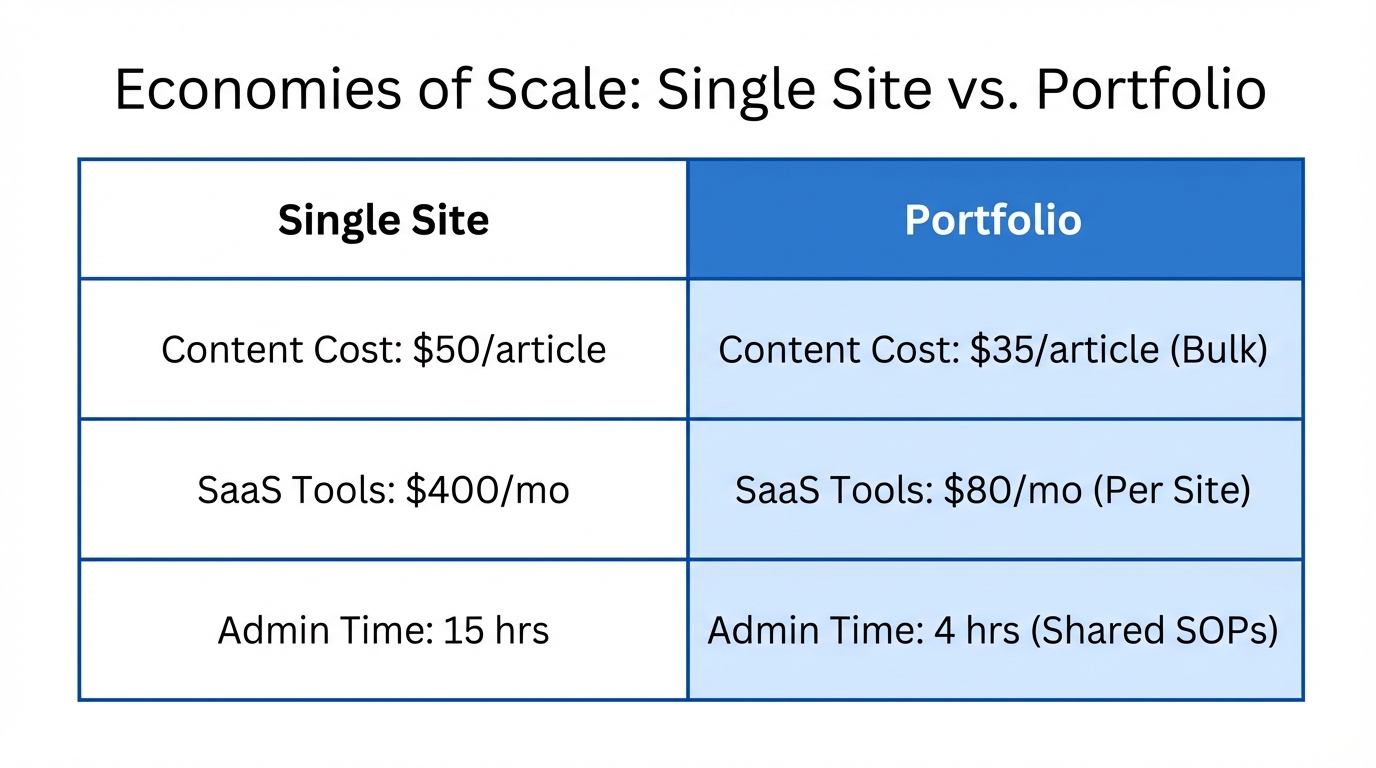
Most affiliate marketers make the mistake of pouring all their energy into a single, massive 'authority site' that covers everything from vitamins to vacuum cleaners. While this worked in 2015, modern search engines and buyers prefer specialized assets. Alex's strategy involved managing a portfolio of approximately six sites, each focusing on a narrow slice of the health and wellness industry. This isn't just about diversifying risk; it’s about economies of scale.
When you own an e-commerce ecosystem or a cluster of niche sites, you gain massive leverage with brand partners. Instead of pitching a partner for one site, you can offer them placement across five or six distinct properties. This increases your value to the brand and allows you to negotiate higher commission rates that a single-site owner could never access.
| Strategy Component | Single Authority Site | Affiliate Marketing Portfolio |
|---|---|---|
| Risk Profile | High (Single point of failure) | Diversified (Risk spread across niches) |
| Negotiation Power | Moderate | High (Multi-site placements) |
| SEO Efficiency | Broad and difficult | Laser-focused (Deep topical authority) |
| Exit Valuation | Standard multiples | Premium multiples (Strategic asset) |
By treating your sites as a collective, you can also centralize your back-office operations. A single developer, using tools like Notion or Asana for project management, can maintain the infrastructure for half a dozen sites as easily as one. This operational efficiency is exactly what buyers look for when selling an affiliate business.
"The smart, innovative moment for us was the idea of partnering with brands directly and leveraging those relationships across our entire portfolio to create massive leverage."
Mastering Topical Authority SEO in a Post-Helpful Content World
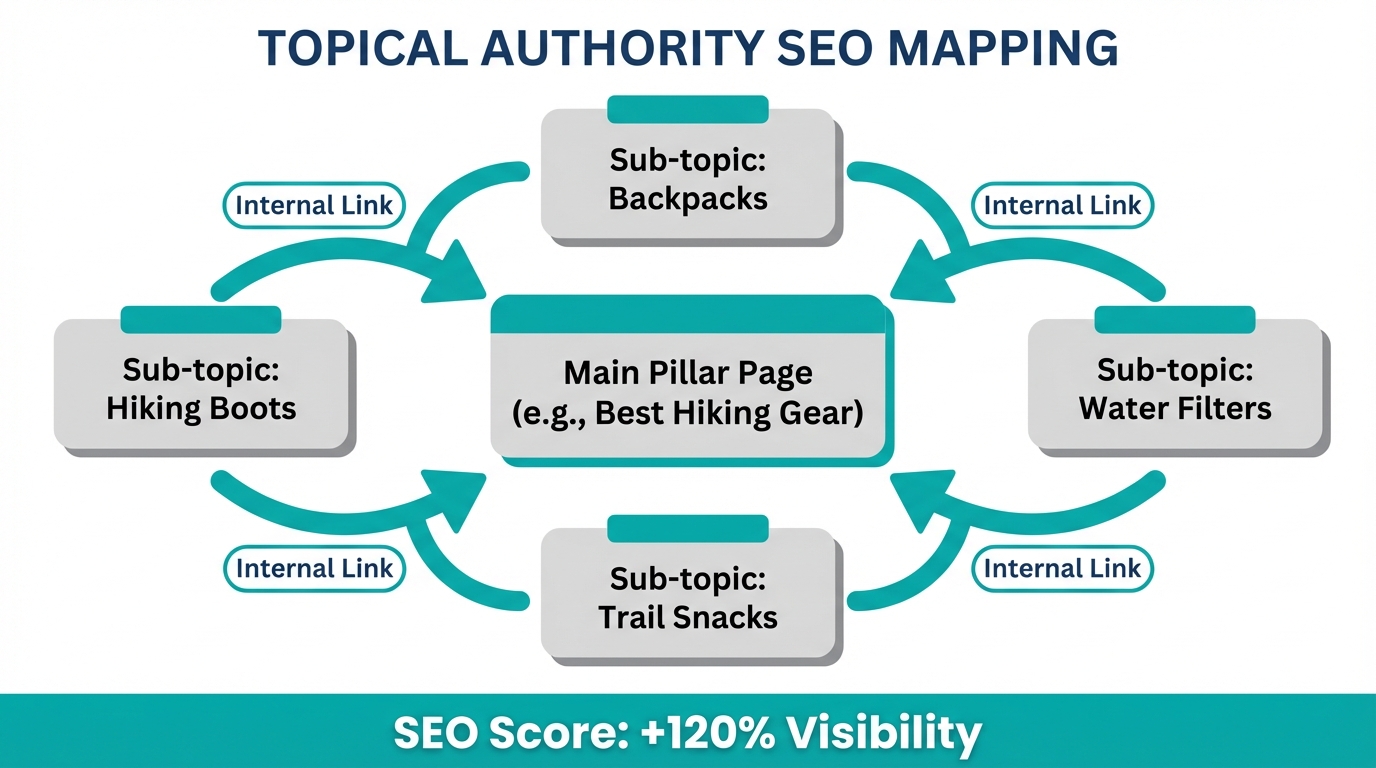
Google’s recent updates have made one thing clear: generalists are out, and experts are in. To build a valuable asset, you must win the topical authority SEO game. This means your site shouldn't just have 'an article' about a topic; it should be the definitive resource for that specific micro-niche. When Alex started, he targeted the emerging tele-health and tele-medicine space before it became a household term. Being first and being the most thorough is the winning formula.
The process of building this authority involves identifying low-competition, long-tail keywords that high-intent shoppers are searching for. Don't try to rank for 'best supplements.' Instead, aim for 'best personalized vitamin subscription for triathletes.' The volume is lower, but the conversion rate and the 'expert' signal sent to Google are significantly higher.
As your rankings grow, you can diversify your traffic sources. While organic SEO is the foundation, savvy portfolio owners use Google Ads or TikTok Ads to supplement their reach. This diversification makes the business more resilient and, consequently, more attractive to buyers who are wary of 'Google dependency.'
Asset Preparation: Structuring Your Business for a Buyer
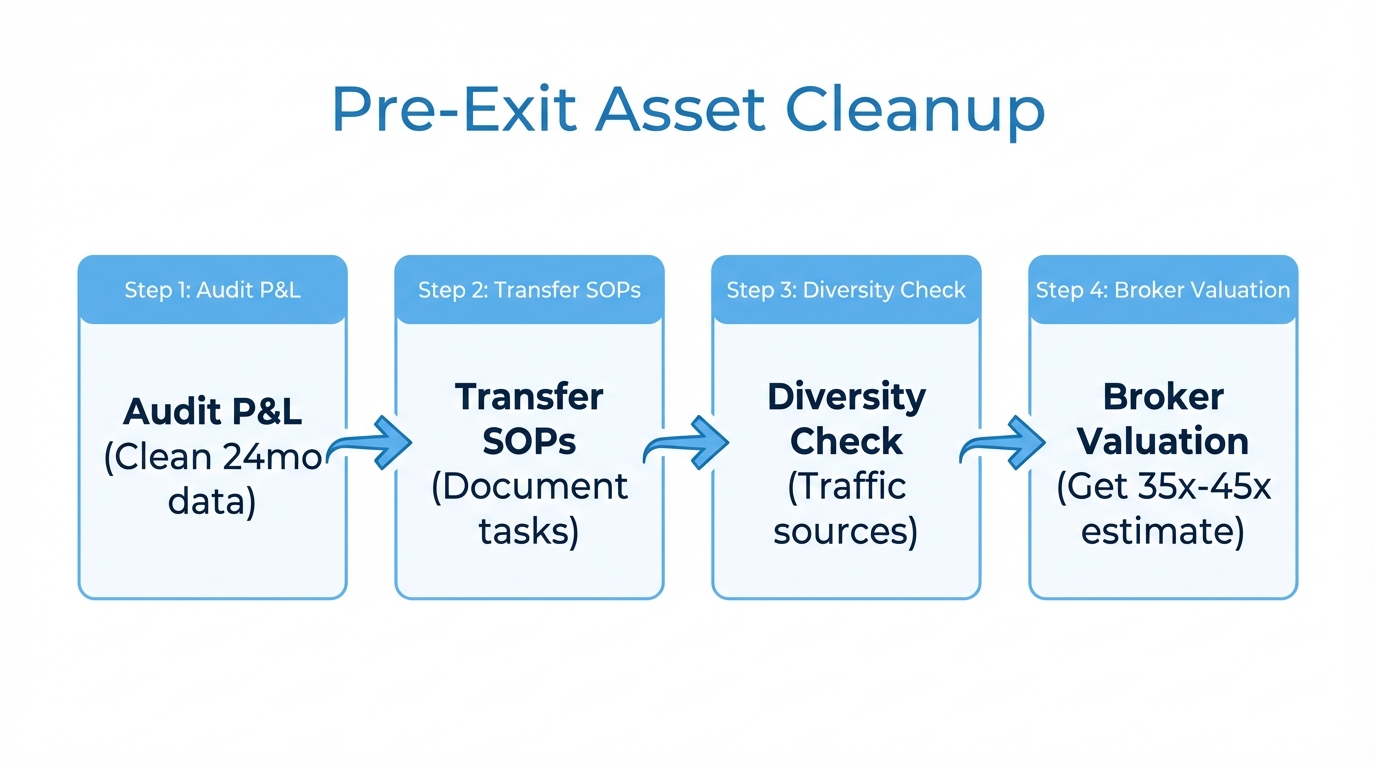
A buyer isn't just purchasing your traffic; they are purchasing your systems. If the business requires you to write every post and manage every partner email, it’s a job, not an asset. To prepare for a niche site exit strategy, you must remove yourself from the daily operations. Alex achieved this by systematically outsourcing every function of the business:
- Writing: Transitioning from founder-written content to a team of niche experts.
- Editing: Hiring a full-time editor to maintain quality control and brand voice.
- Technical: Bringing on a web developer and designer to ensure site speed and conversion optimization.
- Operations: Utilizing a virtual assistant to handle publishing and routine tasks.
By the time you are ready to sell, your role should be strictly high-level strategy and partnership management. In fact, for those looking to scale even faster, platforms like Stormy AI can help source and manage UGC creators at scale, providing a steady stream of high-quality video content that boosts your affiliate conversions without requiring your personal time.
Documentation is the other half of asset preparation. You need clean financials—preferably managed through QuickBooks or a similar tool—and documented Standard Operating Procedures (SOPs) for every task. A buyer should be able to step in on Day 1 and run the business without a steep learning curve.
"You can't win in a crowded space when you're new, but you can win queries that nobody has ever written for before."
Navigating Equity Buyouts and Ownership Transitions
Many affiliate portfolios start as partnerships. While having a co-founder can provide the 'intensity match' needed in the early days, it can complicate an exit. Alex faced a common crossroads: he wanted to go full-time, but his partner wanted to keep the business as a side hustle. The solution was a clean equity buyout.
If you are in a partnership, it is vital to have clear agreements on how a buyout would work long before you reach the million-dollar mark. This includes:
- Pre-defined valuation formulas based on trailing twelve months (TTM) profit.
- Clear intellectual property (IP) assignments.
- Non-compete clauses to protect the business after the buyout.
Once you achieve solo ownership, or at least a unified vision for an exit, the path to selling an affiliate business becomes much clearer. You can focus entirely on engineering the outcome—optimizing for the highest possible trailing twelve-month profit to maximize your exit multiple.
Engineering the Exit: Determining the Right Time to Sell
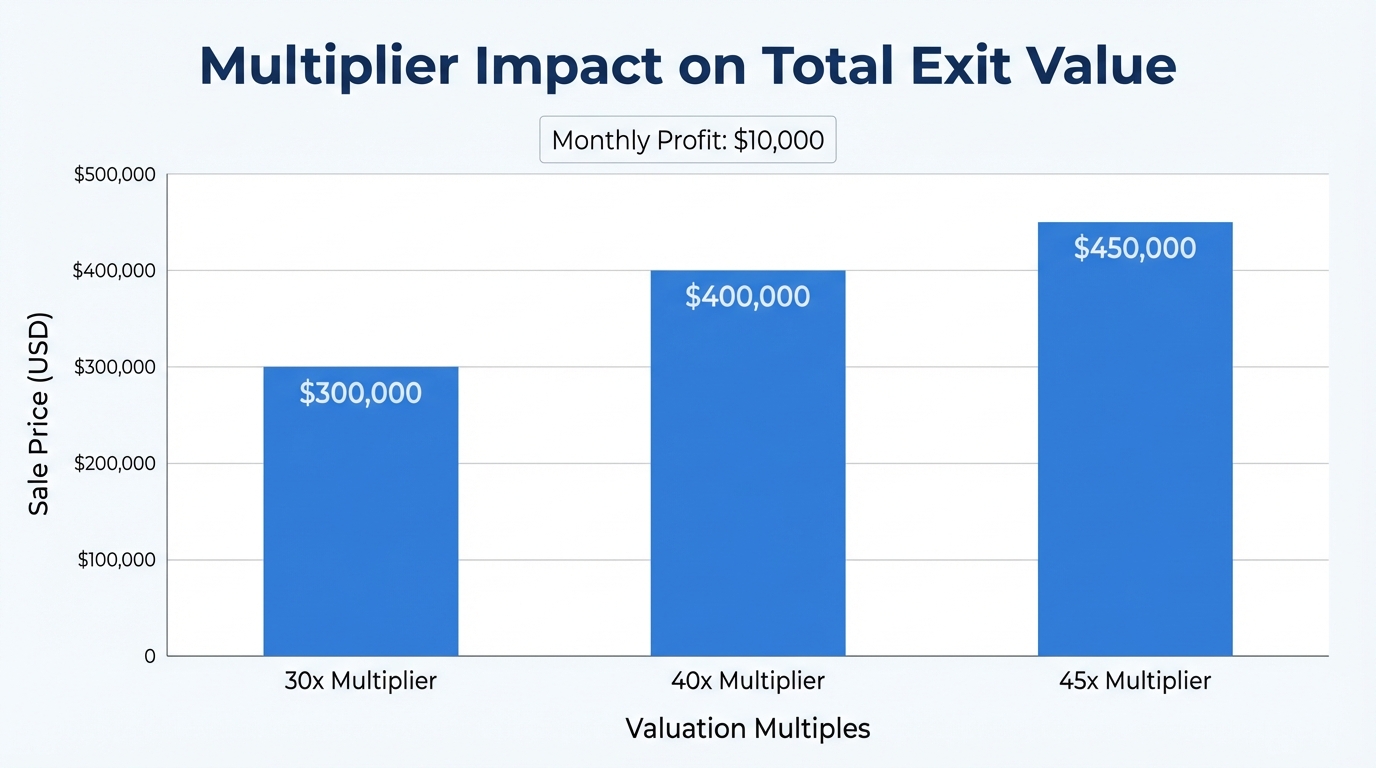
The hardest decision for any profitable affiliate marketer is deciding when to let go. Do you keep the business for 'lifestyle cash flow' or do you take the 3x-5x multiple today? There are three main factors to consider when engineering your exit:
| Factor | Indicator to Hold | Indicator to Sell |
|---|---|---|
| Market Trends | Niche is growing rapidly | Niche is peaking or declining |
| Personal Interest | You are excited to innovate | You are feeling burned out |
| Risk Tolerance | You can weather a Google update | You want to de-risk your net worth |
For Alex, the decision to sell was about finding a 'new home' for the business where it could continue to thrive under more robust resources. Selling at the peak—or while the business is still on an upward trajectory—is the key to getting a premium valuation. Buyers want to see growth potential, not a business that has already squeezed every drop of juice from its niche.
As you approach the finish line, remember that the most successful exits happen when the founder is already looking toward their next venture. Whether that's starting a new portfolio or moving into a different sector, having a clear 'post-exit' plan prevents the hesitation that can kill a deal.
Final Takeaway: From Side Hustle to Seven-Figure Asset
Building a million-dollar affiliate marketing portfolio is a marathon, not a sprint. It begins with a single niche, a commitment to topical authority SEO, and the discipline to build systems rather than just content. By leveraging economies of scale and preparing your business for a buyer from day one, you transform a simple website into a high-value financial instrument.
If you're ready to start scaling your own creator-led affiliate strategy, tools like Stormy AI can streamline your discovery and outreach, helping you build the partnerships that drive seven-figure revenues. Stop building a blog and start building a portfolio. The million-dollar exit is closer than you think.