Building a $17K/Month Micro-SaaS with the Keywords Everywhere and RevenueCat Stack
Learn how to build a $17K/month micro-SaaS in 2026 using Keywords Everywhere for validation and RevenueCat for payments. A lean, data-driven marketing playbook.
In 2026, the dream of the "solopreneur" has evolved from a romanticized ideal into a repeatable, data-driven science. You don't need a massive creative team or a viral TikTok dance to hit $17,000 in monthly recurring revenue (MRR). Instead, founders like Ben, the creator of FollowBuddy, are proving that a "zero creativity" approach—relying on cold, hard search data—is the most reliable path to SaaS success. By pairing the right validation tools with a robust payment infrastructure, you can build a high-margin business that solves specific, painful problems for a global audience.
The 'Zero Creativity' Approach: Search Data Over Intuition
Learn why focusing on existing search demand eliminates the need for marketing guesswork.
Many founders fail because they try to be too original. They wait for a "lightbulb moment" or attempt to create a new category. In 2026, the most successful Micro-SaaS ideas aren't born from artistic intuition; they are found in the search bar. This is the Zero Creativity approach: identifying high-intent problems that people are already searching for and simply providing the most direct solution.
Ben’s app, FollowBuddy, solves a very specific problem: safely tracking who unfollowers you on Instagram. He didn't invent the concept of an unfollower tracker. Instead, he noticed that existing solutions were getting users banned for violating terms of service. By looking at the data, he saw a massive volume of users searching for a "safe" alternative. He didn't need to be a creative genius; he just needed to be a better listener.
"You don't have to convince people of something. They've already convinced themselves. They're simply trying to source a solution, and you want to be the guy that can give it to them."
Using Keywords Everywhere to Validate Before You Code
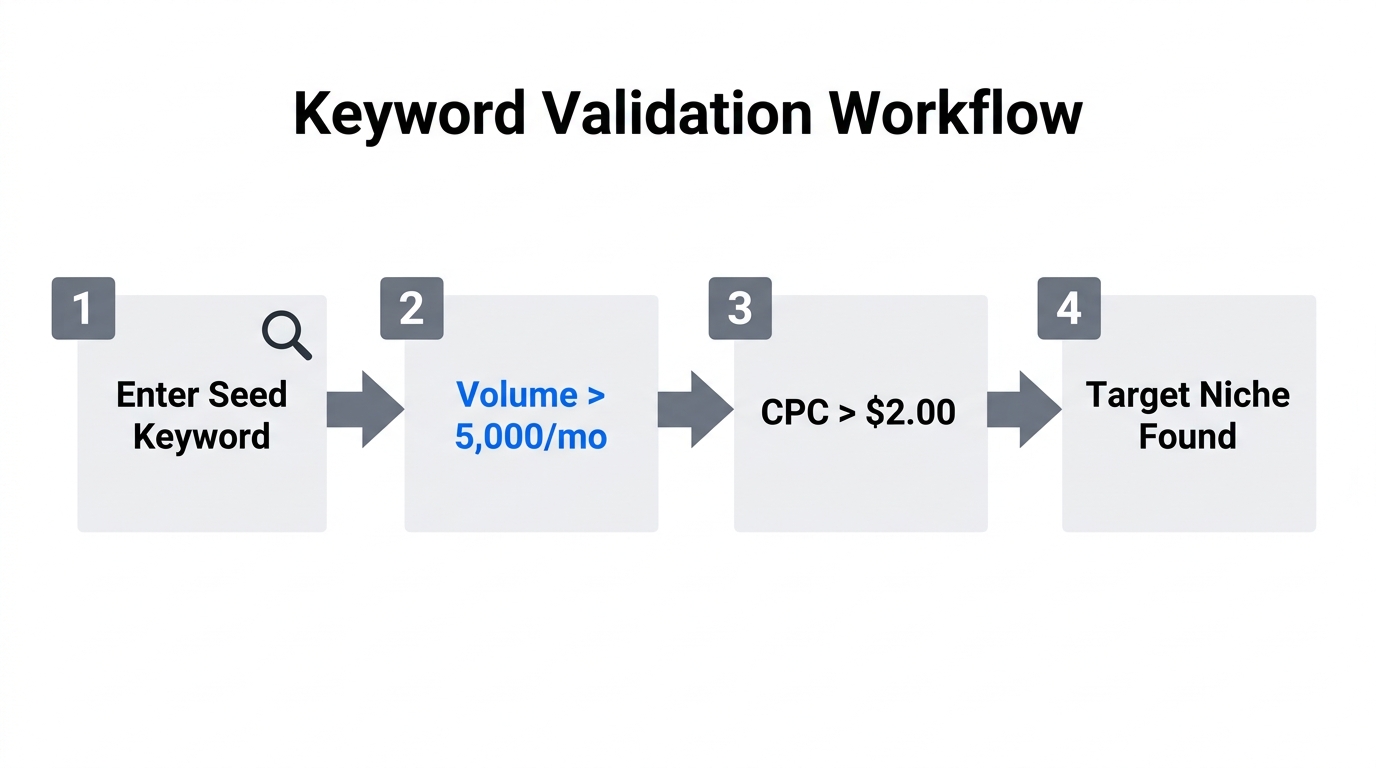
One of the most dangerous things a founder can do is write a single line of code before validating market demand. In the FollowBuddy tech stack, the most important tool isn't the code editor—it's Keywords Everywhere. This browser extension allows you to see monthly search volume, cost-per-click, and competition data directly inside search engines like Google and YouTube.
Before building FollowBuddy, the team used Keywords Everywhere to confirm that terms like "unfollower app Instagram" had significant, consistent volume. This transformed the project from a "guess" into a calculated investment. By seeing how many people were actually searching for the problem every month, they could estimate their potential reach without spending a dollar on Google Ads.
| Awareness Stage | Customer Intent | Search Term Example |
|---|---|---|
| Aware of Need | Looking for a general solution | "How to see who unfollowed me" |
| Aware of Solutions | Comparing types of tools | "Best Instagram unfollower tracker" |
| Aware of Specifics | Validating a chosen tool | "FollowBuddy vs generic apps" |
| Purchase Ready | Searching for a way to buy | "FollowBuddy pricing" |
This year, tools like VidIQ and Keywords Everywhere are essential for lean startup marketing. They allow you to map out an "Awareness Ladder" and create content for each rung, ensuring that your Micro-SaaS is visible at every stage of the buyer's journey.
Why RevenueCat is the Payment Backbone of 2026
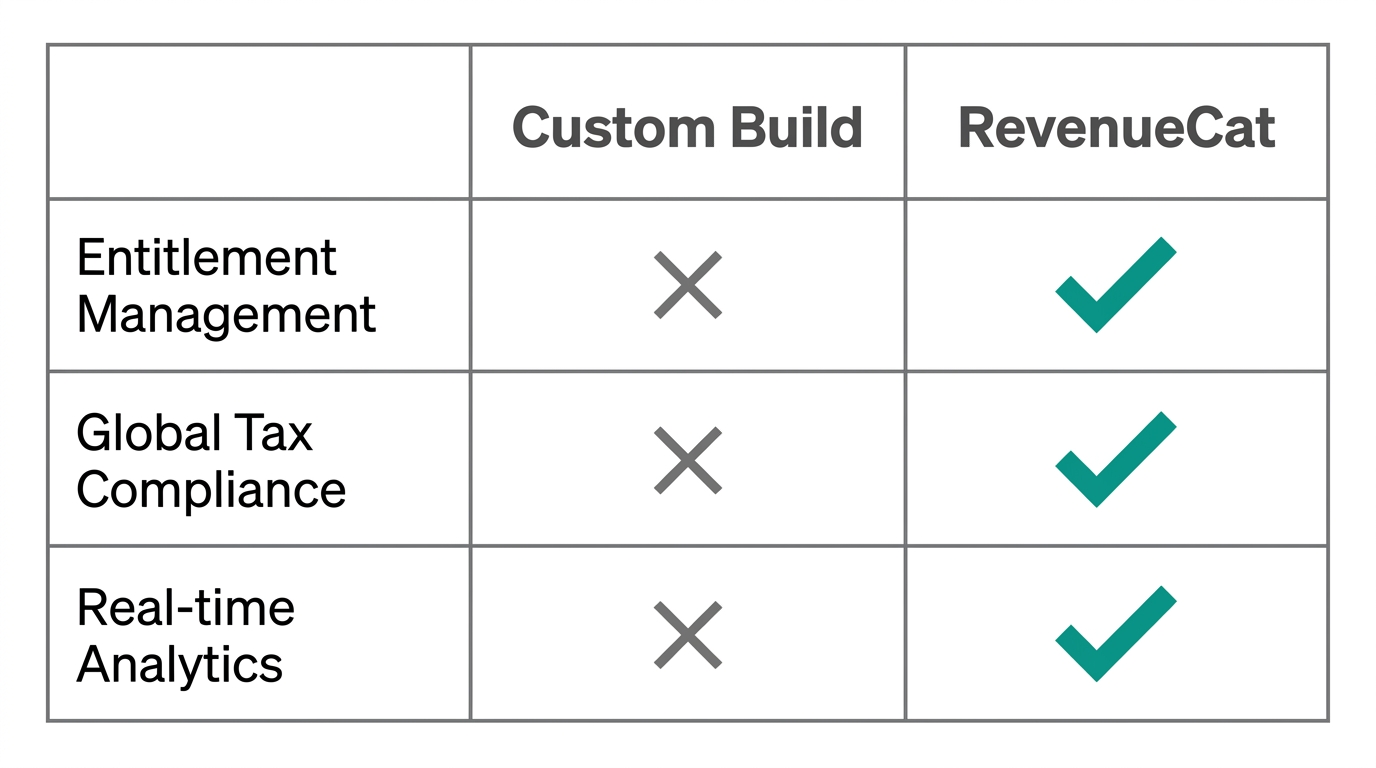
Managing subscriptions, trials, and cross-platform payments is a technical nightmare that can sink a small team. That’s why the FollowBuddy stack relies heavily on RevenueCat. Instead of building a custom billing engine, RevenueCat handles the heavy lifting of processing payments across web and mobile platforms like Stripe and the Apple App Store.
A critical part of the RevenueCat pricing strategy for FollowBuddy is the use of varied subscription tiers: weekly, monthly, and yearly. Interestingly, the app pushes its $50/year plan most aggressively. RevenueCat allows the team to easily implement free trials that automatically convert to paid subscriptions if not canceled, a tactic that has helped them reach 3,128 paying users.
"We use RevenueCat to process payments, which takes about 1% on all transactions. The value difference is 100% worth it because I paid for not thinking like that with a year of my time and a lot of money."
By outsourcing payment logic, founders can focus on product and marketing. Pair a solid billing infrastructure like RevenueCat with a flexible database like MongoDB and cloud hosting on AWS, and you have a scalable architecture that costs very little to maintain in its early stages.
The Skin-in-the-Game Model: Partnering with Talent
Strategic advice for non-technical founders looking to partner with developers using revenue splits.If you aren't a developer, building a Micro-SaaS in 2026 requires a strategic partnership. Ben’s approach was to find a developer and offer them skin in the game. This could be a revenue split or the promise of full-time employment once the app reaches certain milestones. In a world where ChatGPT and AI have made it easier to code, the gap between a "good" and a "great" developer is still massive.
Partnering with a technical co-founder or a lead developer on a revenue-share basis ensures that both parties are aligned on the success of the product. It moves the relationship from a transactional "client-freelancer" model to a true partnership where the developer is motivated to build for long-term stability and security, rather than just hitting a deadline.
Scaling a One-Person Marketing Engine via YouTube Search
Discover how simple screen-recorded videos can rank high and generate consistent recurring revenue.The most underrated acquisition channel in 2026 isn't a viral short-form video—it's YouTube Search. Ben’s playbook for scaling FollowBuddy involves creating simple, "Loom-style" videos that answer specific user queries. These aren't high-production masterpieces; they are helpful tutorials that rank for keywords like "Best Instagram Unfollower Tracker Apps."
Step 1: Front-Load Your Keywords
When creating a search-based video, your title must be incredibly obvious. You need to talk to the computer (SEO) and the human at the same time. Use the primary keyword at the very beginning of the title and repeat it in the first two sentences of your description.
Step 2: Confirm Intent Immediately
The moment a viewer clicks, you must confirm they are in the right place. If they searched for "how to find unfollowers," your first sentence should be, "In this video, I'm going to show you exactly how to find who unfollowed you." This reduces bounce rates and signals to the algorithm that your video is relevant.
Step 3: Over-Deliver and Mention Cons
Interestingly, Ben found that mentioning a "con" or a limitation of the product actually increased conversion rates. It builds trust. In 2026, users are weary of over-hyped marketing. Being honest about how your tool works (e.g., leveraging Instagram's approved data export feature) makes the sale easier.
While organic search is powerful, sophisticated founders also use Stormy AI to discover niche influencers who can create these types of search-optimized review videos, further dominating the search results for their target keywords.
Conclusion: The 2026 Micro-SaaS Playbook
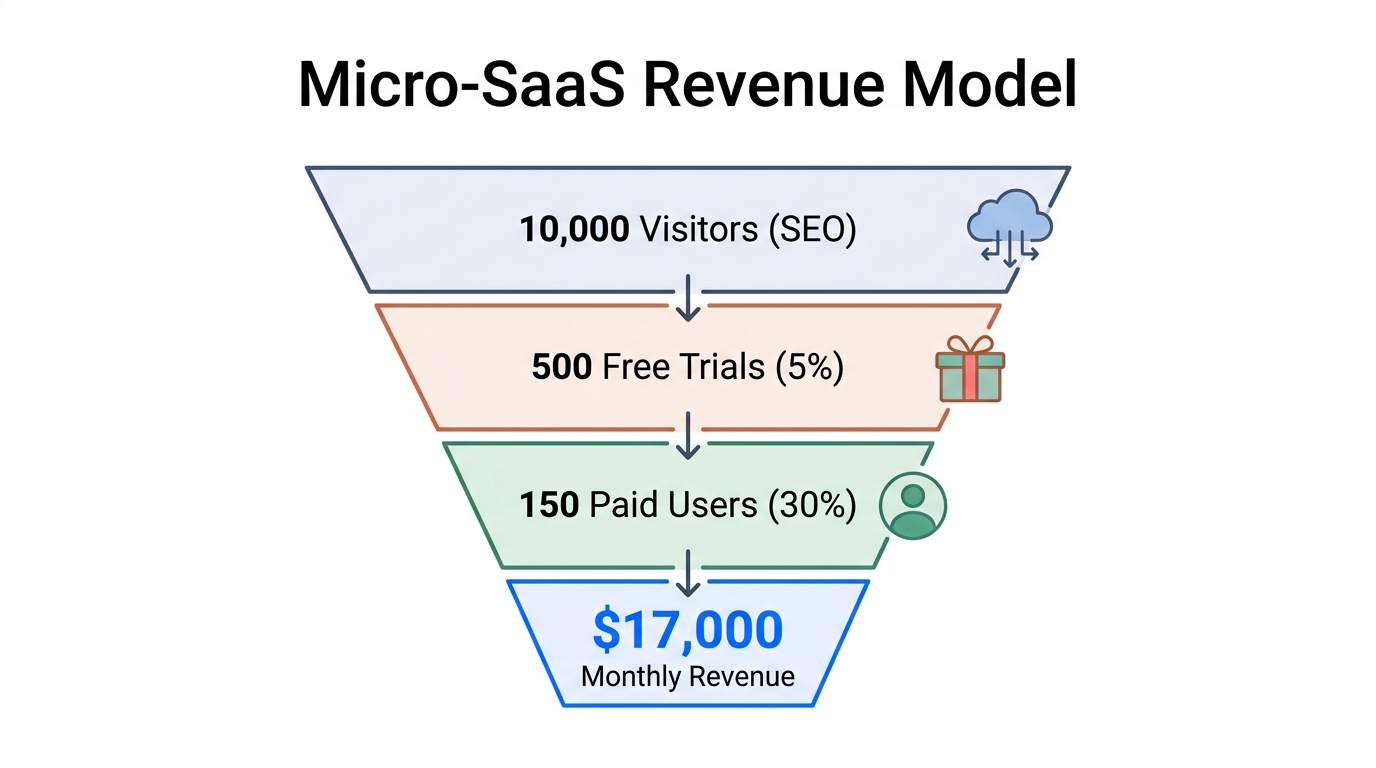
Building a $17K/month business is no longer about having the biggest budget; it's about having the best data and the most efficient stack. By using Keywords Everywhere to validate demand, RevenueCat to handle the complexity of global payments, and a search-first marketing strategy, anyone can build a high-margin SaaS.
Remember, the goal isn't to be the most creative person in the room—it's to be the person who best understands the customer's problem. Stop guessing what people want and start building what they are already searching for. Whether you are using SendGrid for your outreach or Stormy AI for creator discovery, ensure every tool in your stack serves the goal of lean, profitable growth.