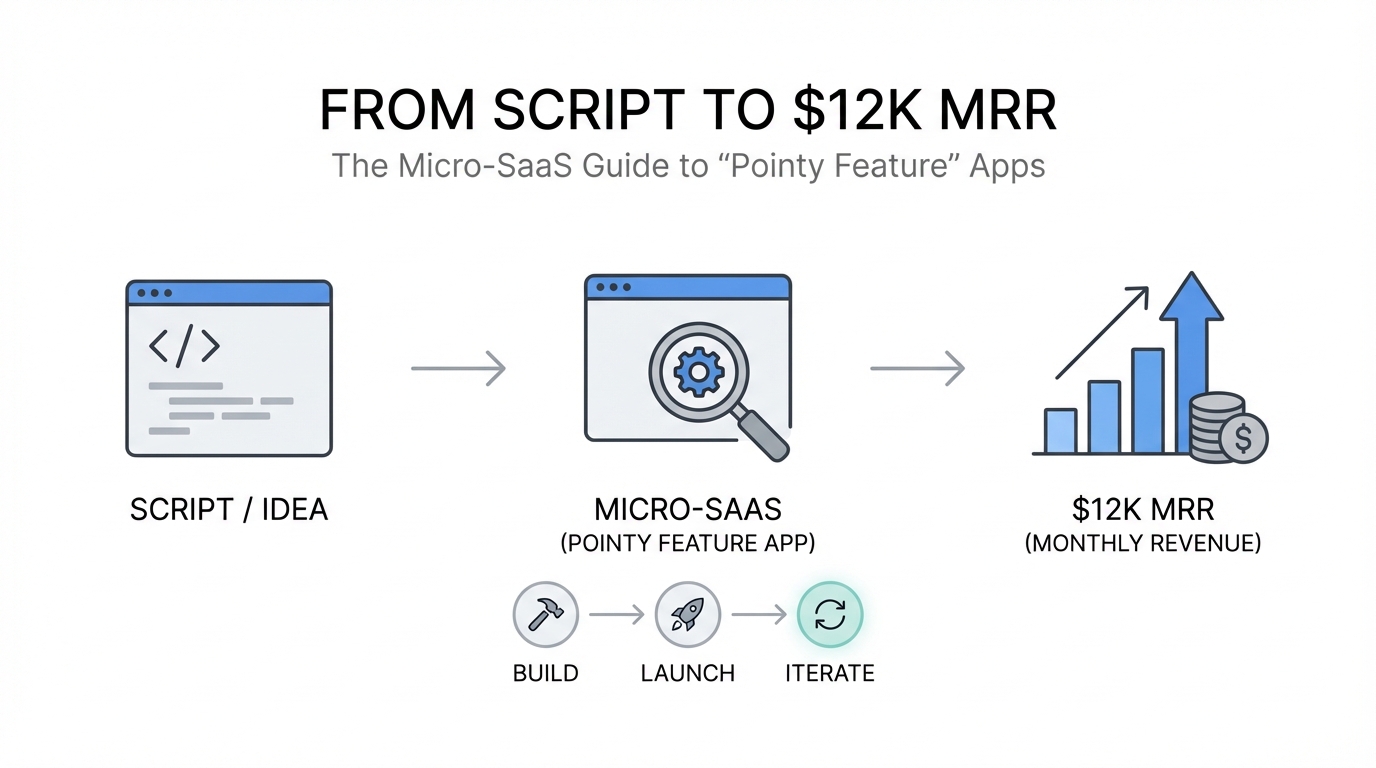
Imagine building a software tool that does exactly one thing, but does it so well that customers happily pay you a monthly subscription to keep using it. This is the world of pointy feature apps—micro-tools that solve specific, high-friction problems within massive ecosystems like Photoshop, Etsy, or Shopify. While most entrepreneurs are busy trying to build the next all-in-one platform, a growing number of founders are scaling to $12,000 MRR (Monthly Recurring Revenue) by focusing on the smallest possible unit of value. These micro saas business ideas often start as simple scripts but evolve into highly profitable engines by eliminating manual labor for a very specific audience.
The Rise of Pointy Feature Apps: Why Small is the New Big

A "pointy feature" app is characterized by its extreme focus. Unlike a broad project management tool or a full-scale CRM, these apps target a single, repeatable task that takes humans way too long to complete manually. For instance, Vikash, the founder of Bulk Mockup, identified that Etsy sellers and print-on-demand entrepreneurs were spending hours manually placing designs onto t-shirt templates in Photoshop. By building a tool that performs this one sharp function, he transformed a 60-minute manual process into a 2-minute automated task.
When exploring profitable software niches, the goal isn't to boil the ocean. It's to find a specific pain point that is currently being solved by hiring a Virtual Assistant or through hours of tedious clicking. This philosophy aligns perfectly with modern growth strategies used by platforms like Stormy AI, an AI-powered platform for creator discovery, which help brands find specific UGC creators for mobile app ads. Just as a niche creator provides more value than a generic influencer, a pointy feature app provides more efficiency than a bloated software suite. In fact, most micro saas business ideas thrive because they are "indefensible" in their simplicity yet indispensable in their utility.
Mining the Gaps: Finding Ideas on Upwork and YouTube
How do you find these hidden opportunities? You don't look for them in your own head; you look for them where people are already asking for help. Platforms like Upwork and freelancer.com are literal goldmines for software inspiration. Vikash discovered his idea when a client on Upwork asked him to create 1,800 mockups manually. Instead of doing the work, he realized there had to be a way to automate it.
Beyond job boards, you can identify profitable software niches by mining the following touchpoints:
- YouTube Comments: Look for tutorial videos in your niche with high comment volume but unresolved questions. If people are asking, "How can I do this faster?" or "Is there a plugin for this?", you've found a gap.
- Reddit and Niche Communities: Join subreddits where your target customers hang out. Listen for complaints that start with "I hate it when..." or "Why is it so hard to...".
- App Store Reviews: Read the 3-star reviews of major platforms. Users often love the main tool but hate one specific missing feature. That missing feature is your product.
By focusing on these "automated solution" gaps, you can begin to map out how to start a software business without the risk of building something nobody wants. You can also use Stormy AI to vet potential influencers in your niche and analyze their audience demographics to ensure your software idea reaches the right end-users. This level of research ensures that your pointy feature apps are built on a foundation of verified demand.
From Hacky Script to $12K MRR: The Development Journey
One of the biggest misconceptions about low code saas development is that you need to be a senior engineer from day one. In reality, many of the most successful micro-SaaS tools started as "hacky" scripts. Vikash famously learned JavaScript in a single night via Stack Overflow to solve a client's problem. That script eventually became a internal tool, then a lifetime deal, and finally a subscription-based product.
When you are in the early stages of building pointy feature apps, follow this progression:
- The Script Phase: Solve the problem for yourself or one client using basic code or even AI-generated snippets.
- The UI/UX Polish: Once the logic works, wrap it in a simple interface. Don't worry about being perfect; focus on functionality.
- Validation through Sales: Sell the tool as a one-time fee on platforms like Gumroad or AppSumo to build a war chest for future development.
- Scaling with Experts: Once you have revenue, use it to hire a professional developer from Upwork to refine the code and manage user licenses.
This lean approach allows you to iterate based on real feedback. For instance, many mobile app developers use similar strategies when creating UGC-style ads; they test a raw concept, and if it converts, they invest in high-fidelity production. You can even use Stormy AI for finding UGC creators and influencers who can demonstrate your micro-SaaS in action, making the "how-to" aspect of your marketing even more potent.
The Content Flywheel: Marketing Your Micro-SaaS

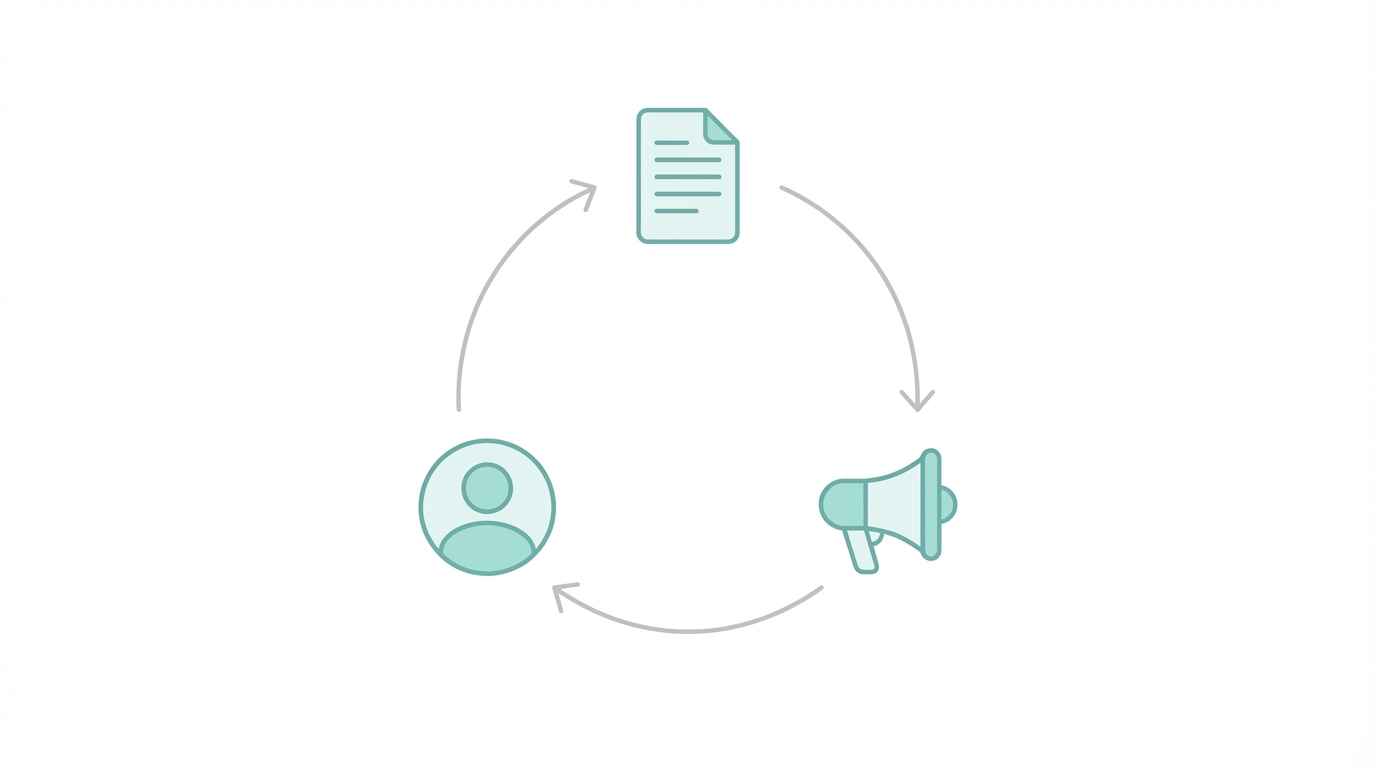
Marketing a micro-SaaS is different from marketing a general consumer app. You don't need a viral hit; you need high-intent search traffic. Vikash's "Content Flywheel" is a masterclass in this strategy. Instead of chasing views, he creates videos that solve long-tail customer problems. A video with only 370 views can generate thousands of dollars in lifetime value because every single viewer is a high-intent buyer looking for that specific solution.
To build your own marketing flywheel, focus on these assets:
- Search-Optimized YouTube Videos: Google often ranks YouTube videos at the top of the search results for "how-to" queries. Use the keyword in your title, description, and the first 30 seconds of your script.
- SEO-Driven Blog Posts: Target specific long-tail keywords related to the platform you are building for (e.g., "Photoshop automation for Etsy").
- Comparison Content: Create content that compares the "Manual Way" vs. the "[Your Tool] Way." Showing the time saved is the most effective sales pitch.
By treating every piece of content as an evergreen asset on Google search, you ensure a steady stream of new users without a massive ad spend. Once your influencers start posting tutorials, you can use Stormy AI to track all videos and monitor engagement performance in one dashboard. This is particularly effective for low code saas development projects where the margins are high and the team is small.
Why High-Touch Customer Support is a Goldmine
In the world of micro saas business ideas, customer support isn't a chore—it's market research. When a user reaches out with a problem, they are giving you a roadmap for your next feature. Vikash's approach involves recording custom Loom or Komodo videos for every single support query. This creates a library of over 1,500 videos that can be repurposed into YouTube content.
By getting on calls with customers via cal.com, you can see exactly where they get stuck. This high-touch service builds immense trust, which is vital for small software companies. A customer who receives a personal video tutorial is far more likely to leave a 5-star review on your site or recommend you to their peers. This feedback loop is what separates a "hacky script" from a profitable software niche leader.
The Lean Tech Stack for One-Feature Software
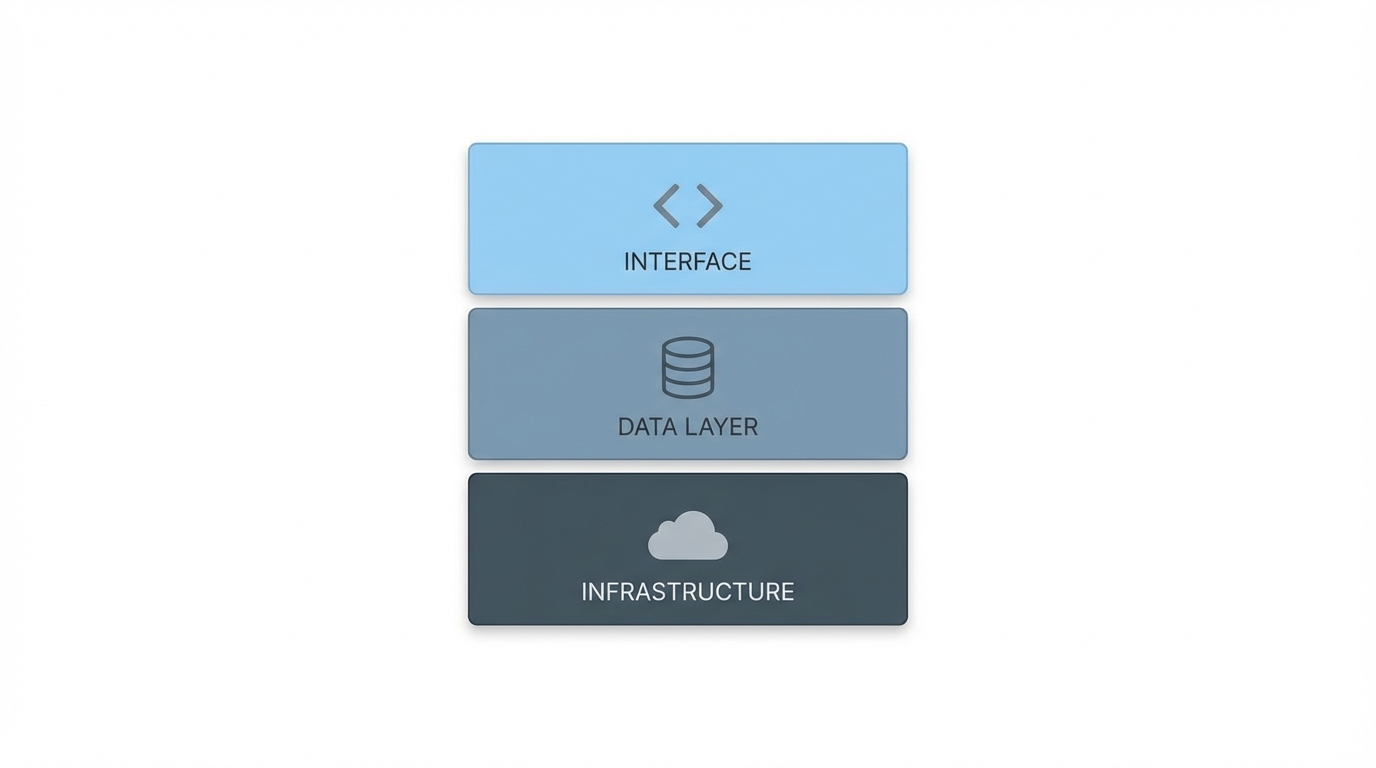
Building a pointy feature app doesn't require a complex infrastructure. You want to keep overhead low to maximize your MRR. Here is a typical "lean stack" for a solo founder:
- Product Delivery: Adobe (for plugins) or Chrome Web Store for extensions.
- Sales and Licensing: Gumroad or Lemonsqueezy for handled payments and VAT.
- Internal Organization: Notion for content planning and customer data.
- Partnerships: Stormy AI for automated, AI-personalized email outreach to potential affiliate partners.
- Communication: cal.com for scheduling and Zoom for deep-dive support calls.
- Documentation: Boromi or Loom for recording tutorials.
This stack ensures that you are spending less than $200 a month on tools while generating thousands in revenue. It's the ultimate playbook for anyone wondering how to start a software business with minimal upfront capital.
The Micro-SaaS Playbook: A Step-by-Step Guide

Step 1: Harvest Customer Pain
Don't brainstorm in a vacuum. Go to Upwork, look at active jobs for virtual assistants, and see what repetitive tasks are being outsourced. Look for things that take hours but follow a clear logic. This is where profitable software niches are born.
Step 2: Build a Script-Based MVP
Use AI tools or simple coding to create a tool that performs the core task. Don't worry about a website yet. Just make the "pointy feature" work. If you can save yourself 30 minutes of work, others will pay for it.
Step 3: Create a Content Flywheel
Record your screen as you use the tool to solve a specific problem. Upload this to YouTube with an SEO-optimized title. Focus on "How to [Task] in [Platform] Automatically." This is the engine of your micro saas business ideas growth.
Step 4: obsess Over Support
When the first customers arrive, talk to them. Use tools like cal.com to book 15-minute feedback calls. Turn their confusion into more tutorial videos, which in turn brings in more customers.
Conclusion: Start Small, Scale Sharp
Building a pointy feature app is one of the most accessible ways to enter the software world. By solving one tiny, painful problem perfectly, you can build a sustainable, high-margin business that doesn't require a massive team or venture capital. Remember, $12,000 MRR isn't about having the most features; it's about having the most useful ones. If you are ready to stop dreaming and start building, focus on the problems hiding in plain sight on platforms like Upwork. The path to a successful micro-SaaS is paved with the boring, repetitive tasks that everyone else is too busy to automate. Start small, stay sharp, and let your customers' pain guide your product roadmap.