Finding 'Boring' Problems in the Real World
The first step in how to start a micro saas isn't a brainstorming session on a white board—it's active observation. Jure’s success stems from identifying gaps in existing workflows rather than inventing new categories. For instance, his first major success, Rummer, came from a personal need while purchasing a used car. He realized that a simple OBD-2 device could read live RPMs and, with the right software, generate fake engine sounds through a car's speakers. This 'silly' or 'boring' utility solved a specific desire for car enthusiasts and generated $300,000 in revenue within a year.
To find profitable app ideas 2024, you must look for areas where people are already spending money but are frustrated with the current solutions. Jure's other ventures include Optibase, an AB testing tool specifically for Webflow, and Parakeet AI, an interview assistant. Neither of these reinvented the wheel; they simply provided a better, more targeted experience for an existing audience. If you can find a niche where the competition is stagnant or the marketing is outdated, you have found your micro-SaaS opportunity.
The 14-Day MVP Rule: Speed as a Competitive Advantage

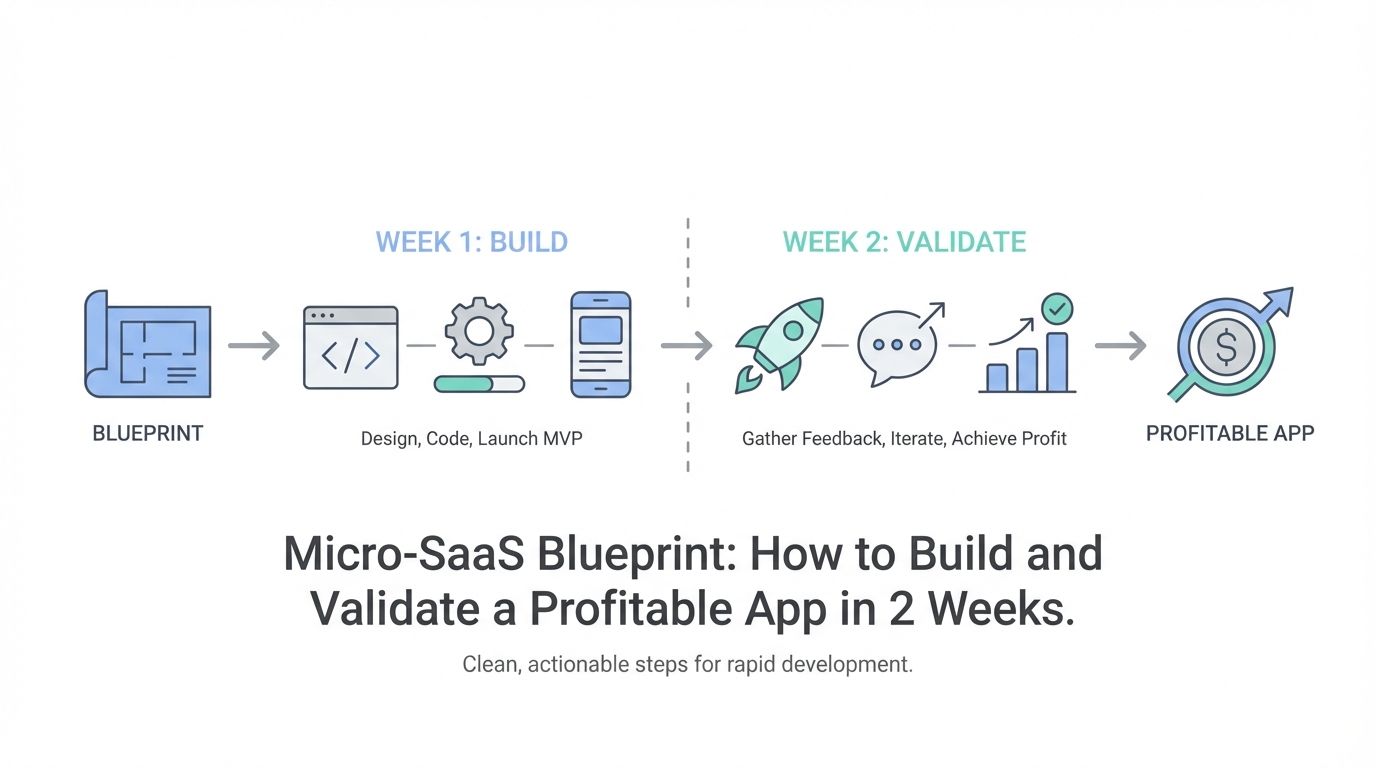
In the world of software entrepreneurship guide tactics, speed is the ultimate differentiator. Jure advocates for the saas mvp framework where a product goes from zero to its first sale in exactly two weeks. The logic is simple: if you can test two ideas in a month while your competitor takes six months to launch one, you have a significantly higher statistical chance of hitting a winner. The "Viable" in Minimum Viable Product means the product must be good enough to compete for a sale, not just a proof of concept.
When you are in this rapid development phase, you cannot afford to manually vet every potential marketing partner or influencer to help you spread the word. This is where modern tools change the game. Instead of spending days scrolling through social media, you can use Stormy's AI search to instantly find creators in your niche—whether it's car enthusiasts for a device like Rummer or HR tech influencers for an interview tool. By typing a natural language prompt, you can identify the exact creators who can help you validate your MVP within that 14-day window.
Jure’s latest project, an AI job application agent, reached $1,000 in sales in its first two weeks. This speed allows founders to fail fast and double down on what works without losing months of salary or capital.
Product vs. Marketing: Deciding Where to Compete

Every founder faces a critical choice: do you build a technically superior product, or do you execute marketing better than the incumbents? Jure suggests that for most micro-SaaS projects, the marketing side is just as complex and important as the code. Many developers fail because they stop after the deployment. To succeed, you must evaluate the competition and find a "squeeze point." If the existing tools have terrible UI, build a better product. If the existing tools have great features but zero social presence, win on marketing.

For most founders today, the "marketing squeeze" involves short-form organic content. Platforms like TikTok and Instagram Reels allow a single video to reach millions without a dollar in ad spend, according to recent video marketing statistics. Jure’s businesses have racked up over 300 million organic views. However, the bottleneck for a solo founder is often managing the sheer volume of creator partnerships and outreach required to maintain that virality. Using Stormy's AI outreach, you can automate this process, sending hyper-personalized emails to hundreds of creators to scale your distribution while you focus on fixing bugs in the product.
Validation Techniques: From $0 to $1,000
Validation isn't a survey; it's a transaction. A product is validated when a stranger gives you money. In the first 14 days, your goal is to move the needle to that first $1,000. Jure’s strategy involves choosing the right monetization model for the product's nature. For his AI interview assistant, he opted for credit-based one-time payments rather than the standard SaaS subscription. This removed friction for users who only needed the tool for a specific hiring window, allowing him to scale to $35,000 in revenue in just 30 days.
To hit these numbers, you need a high-impact distribution strategy. Jure suggests picking one channel—like TikTok or Google Ads—and dedicating 100% of your attention to it for two months. For Rummer, they focused on funny, controversial short-form videos that sparked engagement. They didn't just post randomly; they used a modular content strategy: creating 3 hooks, 5 main segments, and 3 endings to generate dozens of unique video combinations from a single filming session. You can further refine this by studying expert guides on TikTok scripts to learn how to write scroll-stopping scripts.
As you begin to see which videos or influencers are driving traffic, you must ensure you aren't being misled by vanity metrics. Use Stormy's influencer analysis to vet the quality of the accounts mentioning your brand. This tool detects fake followers and engagement fraud, ensuring that the traffic hitting your landing page is coming from real, high-intent users.
The Modern AI Tech Stack for Founders

The days of spending weeks setting up server infrastructure are over. Rapid app development for founders now relies on a specialized stack designed for deployment speed. Jure’s stack is a prime example of high-efficiency building:
- Frontend & Backend: Next.js and React provide a unified framework for fast iteration.
- AI Core: OpenAI APIs (specifically ChatGPT) for generating logic, answers, or content.
- Specialized APIs: Speechmatics for real-time transcription, which costs roughly $1 per hour.
By leveraging these tools, a developer can build a functional AI-powered web app in a matter of days. Jure spends roughly $3,000 to $5,000 per month on these API costs, but because his micro-SaaS products generate high margins, the business remains incredibly profitable. For payments, integrating Stripe allows you to handle global transactions with a few lines of code, making it the industry standard for solo builders.
Scaling Operations with AI Agents
Once your MVP is validated and you are making sales, the challenge shifts from building to management. Keeping track of creator relationships, negotiations, and post-performance can quickly become a full-time job. Jure found his primary content partner by cold-emailing hundreds of creators until he found someone who believed in the product. This revenue-share partnership aligned their incentives and allowed Jure to focus back on the product while the partner handled the viral content.
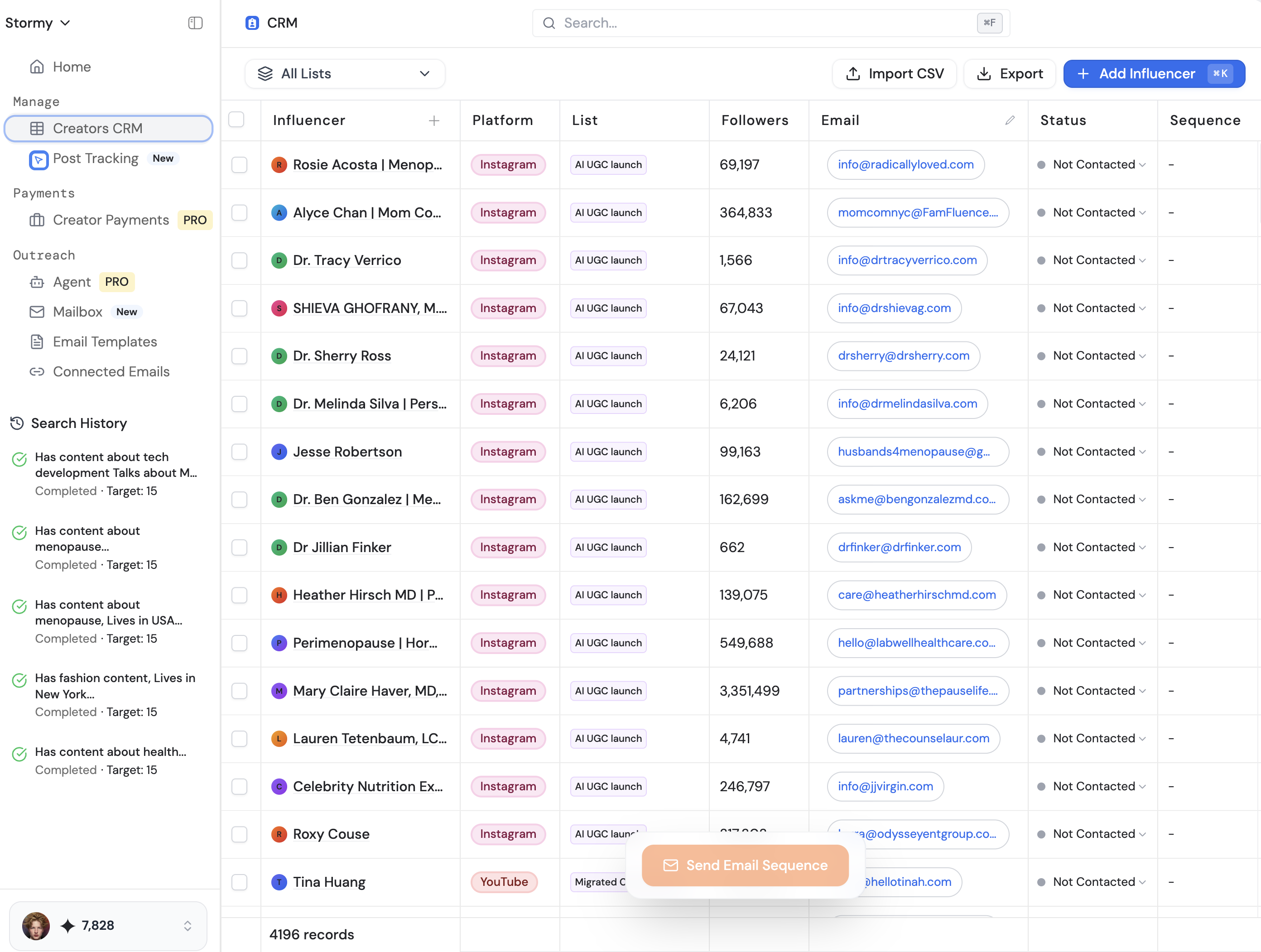
To replicate this without a full-time staff, you can use Stormy's creator CRM to manage your collaboration history and deal stages. Instead of losing track of who you've messaged on Instagram or LinkedIn, the CRM keeps everything in one central AI-powered inbox. Furthermore, you can set up an autonomous AI agent within the platform to discover and outreach to new creators every single day, effectively running your marketing department while you sleep.
Conclusion: The Bias Toward Action
The journey from a software engineer to a successful software entrepreneur isn't defined by the quality of your code, but by your willingness to put imperfect products in front of real customers. Jure’s story proves that by focusing on boring problems, using a 14-day MVP rule, and leveraging short-form organic content, anyone can build a profitable micro-SaaS portfolio.
Don't wait for the perfect idea. Start by observing the friction in your daily life, build a simple solution using the modern AI stack, and use Stormy's post tracking to monitor your growth and analytics. Whether you are building an AI agent or a niche B2B tool, the blueprint remains the same: build fast, market hard, and let the data guide your next move.