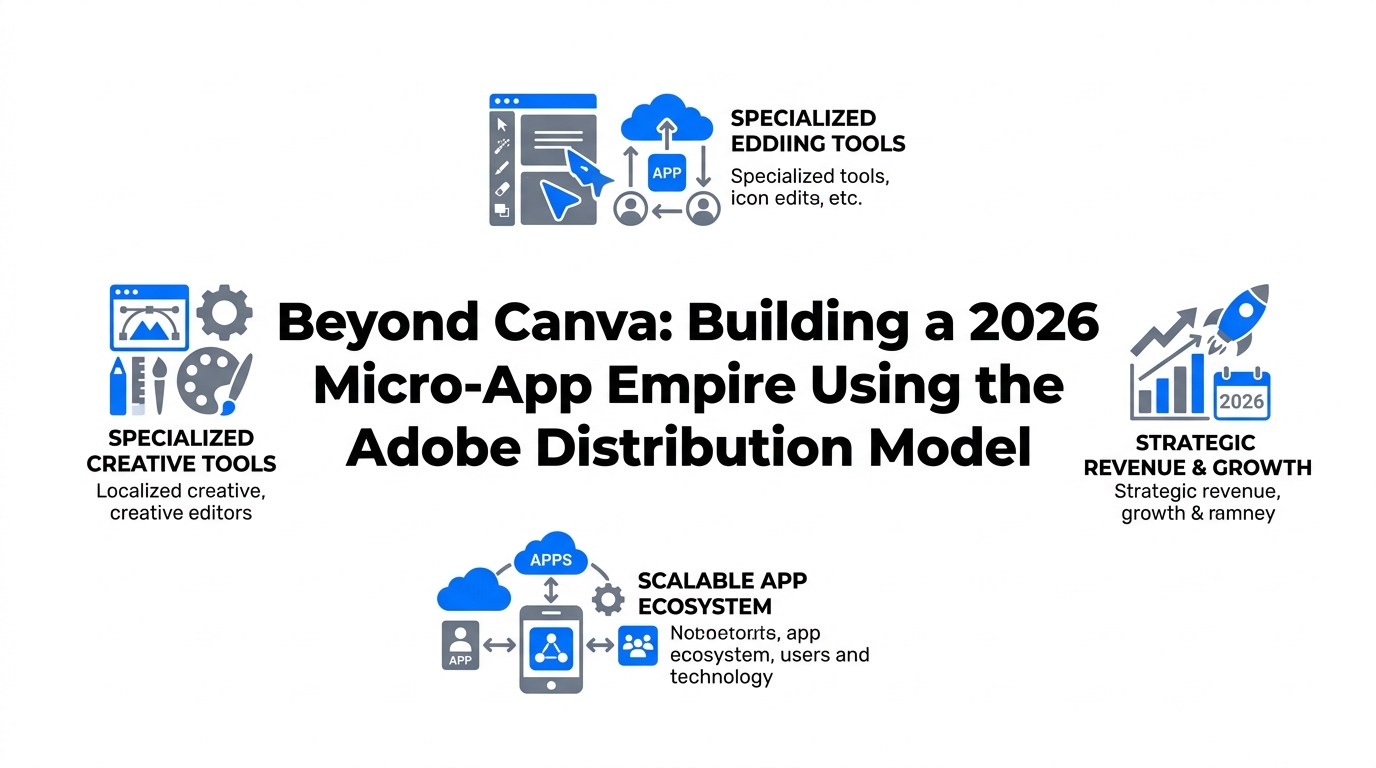
In the digital landscape of 2026, we are witnessing the end of the "Cheesecake Factory" era of software. For years, the goal was to build the all-in-one platform—a Canva or a Salesforce that does everything for everyone. But as users face extreme decision fatigue, the market is shifting toward single-action micro-apps. These are lightweight, hyper-focused tools that solve one specific problem perfectly. Think of it as moving from a 50-page menu to the best Cuban sandwich in town. If you can build a studio that identifies these narrow trends and ships solutions in under 24 hours, you aren’t just building an app; you’re building a micro-app empire.
The Rise of the 'Single-Action' App Trend
Discover how hyper-focused apps like text-behind-image are dominating today's growing software market.
The biggest growth hack in 2026 isn't a new ad format; it's extreme product focus. We’ve seen this play out with companies like Veed.io. While they offer a full-scale video editor, they achieved massive secondary growth by launching a standalone captions app. This tool does one thing: it puts text on videos. By isolating that high-intent action, they reached significant ARR milestones in record time. They didn't try to sell the whole kitchen; they sold the one tool people were desperately searching for in the App Store.
This is the essence of the micro-app business model. Whether it's a "text-behind-image" tool that viral YouTubers use for thumbnails or an AI-powered background remover, these apps ride on the back of ephemeral media trends. Users don't want to learn a complex suite of tools; they want to click a button and get a result. In 2026, the speed of discovery and deployment is your only true competitive advantage.
"The TAM for 'one-click' solutions is often larger than the TAM for the complex platforms they simplify. Everyone takes photos; not everyone wants to be a graphic designer."
The Adobe Distribution Strategy: Micro-Apps as Lead Magnets
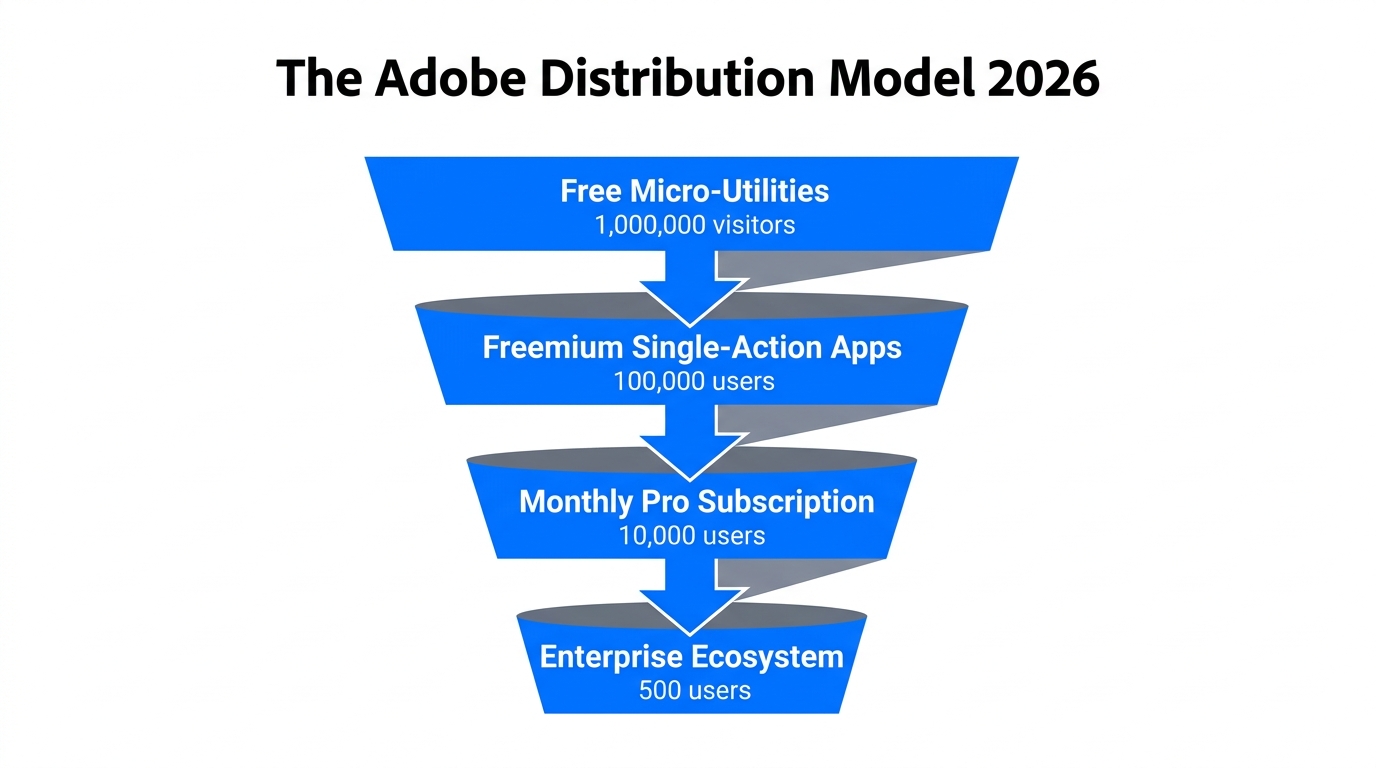
Many entrepreneurs mistake Adobe for just a software company, but in reality, they are masters of funnel architecture. Adobe identifies high-volume search terms—like "free PDF converter" or "remove background"—and creates lightweight web tools or micro-apps specifically for those terms. Using tools like Adobe Express, these apps serve as lead magnets that funnel users into the broader Creative Cloud ecosystem.
To build a micro-app empire, you must replicate this Adobe distribution strategy. Instead of building one giant SaaS, you build a portfolio of 10–20 micro-apps that rank for specific, high-intent keywords. For example, if you see a surge in photographers looking for "Boho Lightroom Presets" on Creative Market, you don't just sell a pack; you build an AI-powered XML generator that creates custom presets from an uploaded photo. You then use these micro-apps to capture emails and upsell users into a recurring subscription library.
| Strategy Component | Traditional SaaS Model | 2026 Micro-App Studio Model |
|---|---|---|
| Product Scope | Feature-rich, complex workflows | Single-action, one-click results |
| Acquisition | High CAC, long sales cycles | Low-cost SEO & viral social trends |
| Development | 6-12 month builds | 24-hour AI-led deployment |
| Monetization | Monthly/Annual contracts | $7/week impulse subscriptions |
High-Velocity Shipping: The AI-Led Product Studio
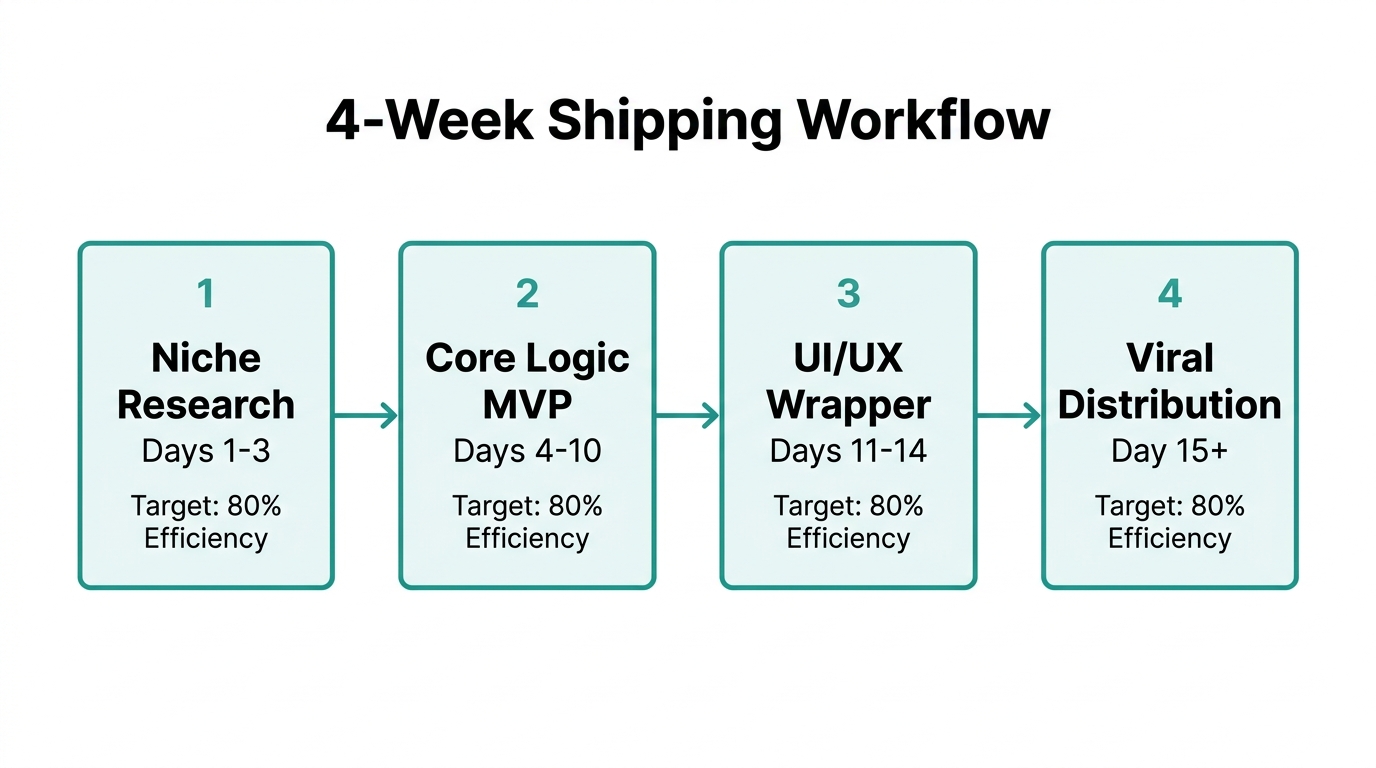
In 2026, you cannot afford a three-month development cycle. The "viral window" for a trend—like the recent obsession with AI-generated aesthetics—is often less than 90 days. To win, you need an AI-led product studio capable of shipping a functional MVP in 24 hours. This involves having a standardized "app framework" where you simply replace the core logic (the "guts") of the API calls while keeping the UI, payment processing via Stripe, and onboarding flows the same.
Using tools like Cursor or other AI coding agents, a small team of "cracked engineers" can now deploy API wrappers that feel like premium, standalone products. This is the Canva growth hacking secret: don't build the technology from scratch; curate and package it for a specific audience. Whether you are targeting music artists who need tour-specific SMS lists or e-commerce brands needing holiday-specific newsletters on Shopify, the goal is to be first to market when the search volume spikes.
App Store SEO vs. Meta Ad Targeting
Understand the strategic differences between Facebook's AI platform and traditional Google search intent.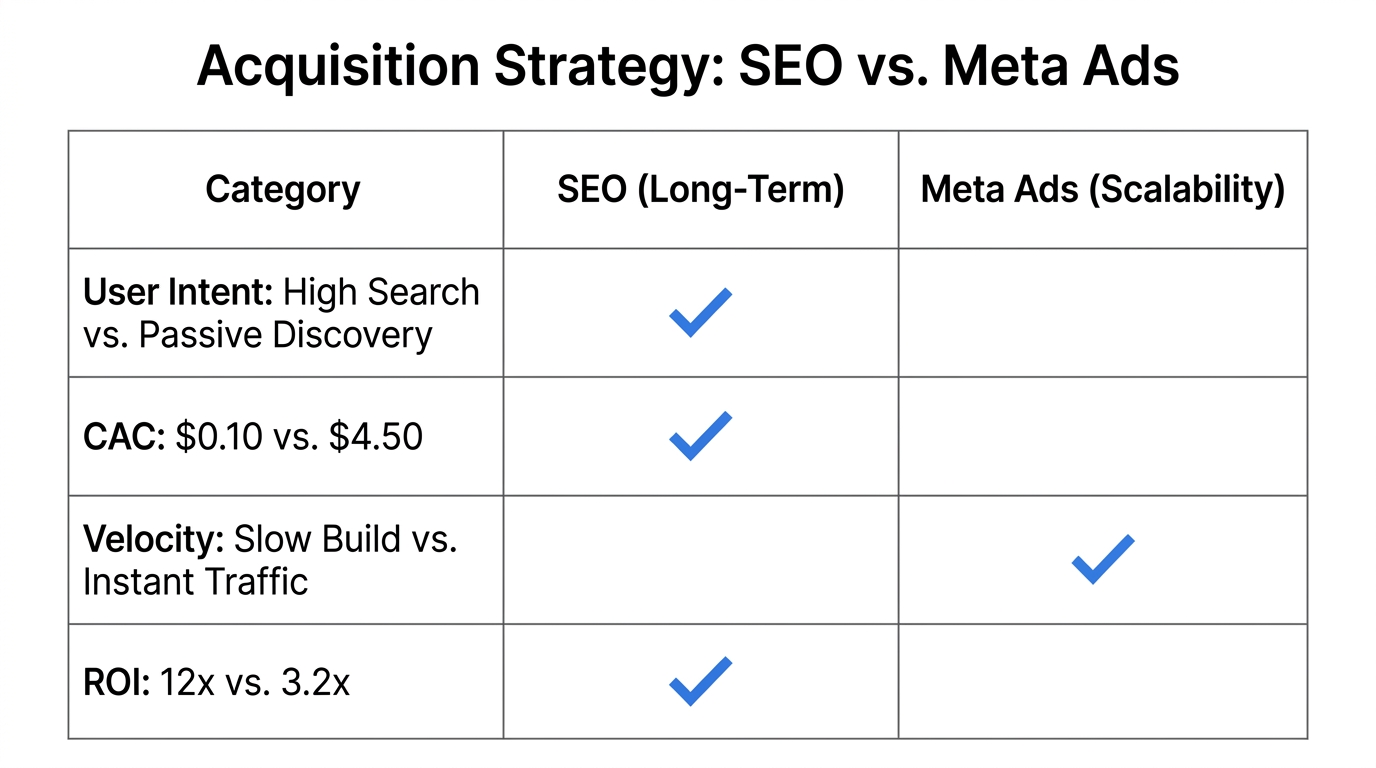
Distribution for micro-apps in 2026 relies on two pillars: Long-tail SEO and Meta's "Broad" AI targeting. If you are targeting specific search terms, the "rank and rent" strategy is a goldmine. You can buy 1,000 domains for $10 each—targeting every variation of a keyword like "Boho Lightroom Presets"—to own the first page of Google. This creates a digital real estate portfolio that funnels traffic into your subscription apps.
Conversely, for apps with a massive TAM (Total Addressable Market), broad targeting on Meta Ads Manager is the winning play. Because Meta's AI is now more effective than manual targeting, you simply define a conversion action—like an app install—and let the algorithm find the users. In this world, creative is the variable. You run 100 variations of an ad using Figma-designed assets, and the AI finds the 30% of the population most likely to pay for your $7/week solution.
"Don't fight the algorithm. Tell Meta what you want, give it 100 creative variations, and let the AI agent do the targeting for you. It's better at it than you are."
Monetization Psychology: The Rise of Impulse Subscriptions
Learn why credit-based pricing models are becoming the standard for modern micro-app monetization.Traditional SaaS pricing is dying at the consumer level. In 2026, monetization psychology has shifted toward the "impulse subscription." Users who would hesitate to pay $120 for an annual plan will happily pay $7.99 for one week of access to a viral tool. This mirrors the old "ringtone economy" of the early 2000s, where users paid a small price for social status or a quick hit of utility.
These micro-subscriptions often lead to higher LTV (Lifetime Value) because the friction to start is so low. If you acquire a user for $3 on Meta and they stay for three months at $29/month, your margins are infinite. This is the ultimate AI startup idea for 2026: building a factory of high-margin, low-friction micro-apps that capture the 10% of users willing to pay for convenience.
Finding Trends Before They Explode
Find out how to identify emerging trends and build a studio around micro-app opportunities.Success in this model requires a constant pulse on what's "popping off." In 2026, we use automated trend analysis to spot growing keywords. For example, if there is a sudden spike in AI for e-commerce newsletters, it indicates a pain point where store owners are struggling to use platforms like Klaviyo. Instead of building a new ESP, you build a micro-app that generates specific holiday storytelling narratives from a product catalog.
Similarly, the "Soho House-ification" of physical spaces is a trend worth watching. From dog parks with bars to Padel clubs with membership dues, the transition from services to subscriptions is happening everywhere. In the digital world, this means building members-only micro-communities on Beehiiv or specialized agency services that eventually transition into automated software plugins.
Conclusion: Building the Studio Empire
The roadmap to a 2026 micro-app empire is clear: stop trying to build the next giant platform and start building a high-velocity studio. Identify the single actions people are already performing, productize them with AI, and use the Adobe distribution model to capture the lead. By combining long-tail SEO with aggressive Meta ad creative, you can build a portfolio of digital assets that generate massive recurring revenue with minimal overhead.
To succeed, you need to manage your outreach and creator partnerships efficiently. Tools like Stormy AI can help you discover the influencers driving these viral trends, allowing you to partner with them and scale your micro-apps to the moon. The era of the monolithic SaaS is over—the era of the Micro-App Studio has begun.