In the hyper-competitive landscape of 2026, the traditional influencer marketing model is dead. Brands are no longer looking for passive shoutouts; they are seeking systematic, viral distribution that scales. Enter the "Method Economy," a psychological shift in how mobile apps acquire users. By solving the creator "cold start" problem with immediate financial incentives and gamified feedback loops, platforms like Methods have rewritten the playbook for app growth. In just seven days of stealth operation, this strategy propelled a startup to $1.2 million in ARR, proving that when you gamify the hustle, the algorithm follows.
Solving the Creator 'Cold Start' Problem: Immediate Rewards vs. Delayed Gratification
Explore why most platforms fail creators and how Methods solves the cold start problem.
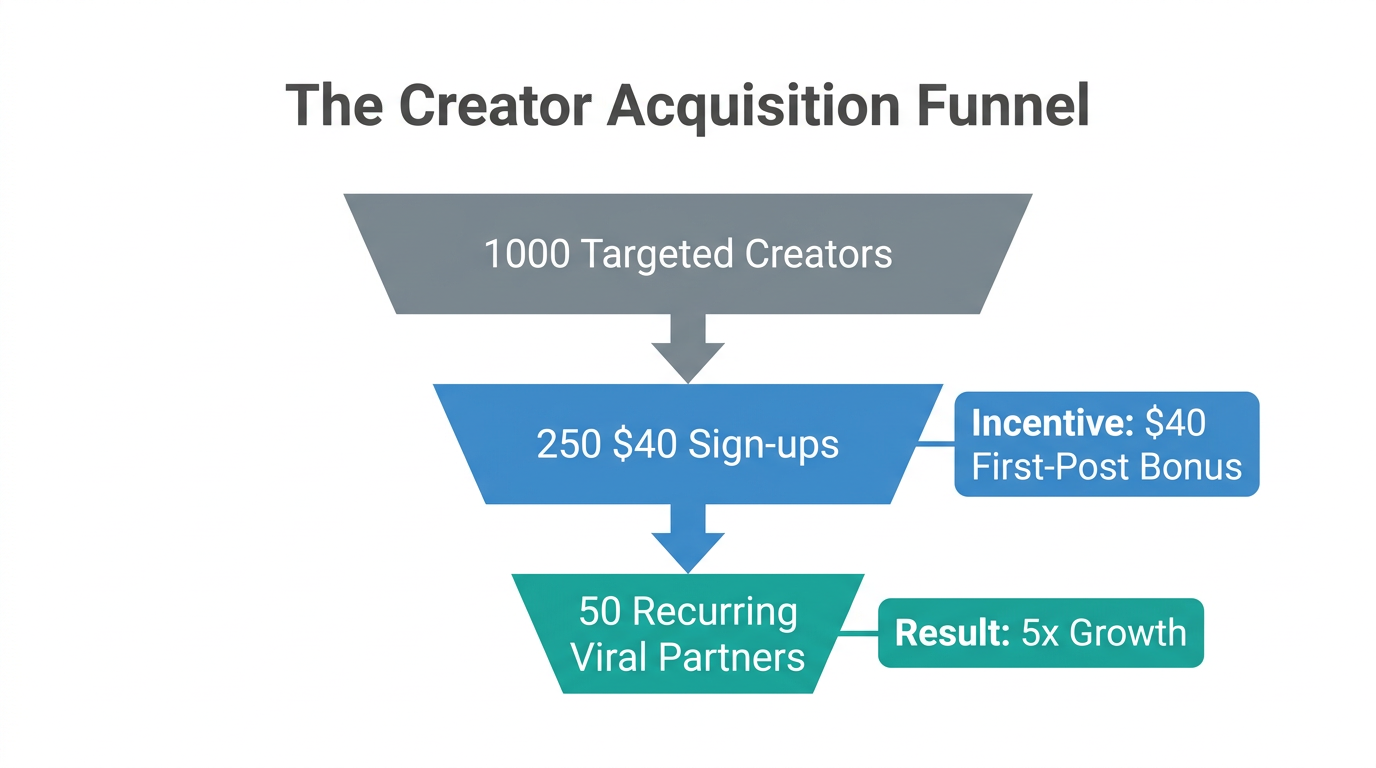
The biggest hurdle in any User-Generated Content (UGC) program is the "Cold Start." Most creators are paralyzed by the fear of "flopping"—the psychological trauma of spending hours on a video only for it to receive 100 views. In 2026, the lizard brain of the average creator demands immediate validation. According to growth experts like Andrew Chen, traditional platforms offer delayed gratification: "post now, and maybe you'll get a brand deal in three months." Methods flips this by offering a $40 hook for the very first post.
This isn't just about the money; it's about breaking the psychological barrier. When a creator joins a platform and is told they can earn $40 instantly just for putting in the reps, the "scary" element of content creation vanishes. They are no longer "creators" in the traditional, high-pressure sense; they are participants in a gamified incentive structure that rewards output over perfection.
"Humans are instinctively hive mind; they want reward immediately. They are not interested in delayed gratification. We pay people $40 for their first video, and they are instantly hooked."The $40 Hook: Overcoming the Fear of 'Flopping'
Why $40? It’s the "Goldilocks" zone for creator acquisition. It’s high enough to be meaningful for a Gen Z creator but low enough for an app founder to maintain a sustainable Customer Acquisition Cost (CAC). According to research into the 2026 creator economy, this upfront payment functions similarly to the onboarding rewards in Superwall-optimized mobile apps—it provides a "win" before the user has a chance to churn.
By removing the friction of unpaid labor, Methods has scaled to over 50,000 creators in under five months. This massive influx of talent allows for high-volume experimentation. As Dris, the founder of Methods, notes: "The difference between a video going viral versus it getting 100 views is often very minimal." By paying for the first rep, you ensure that the creator stays around long enough to find the format that actually hits the algorithm.
Building a 'Method' Instead of a 'Gig': The Power of Framing
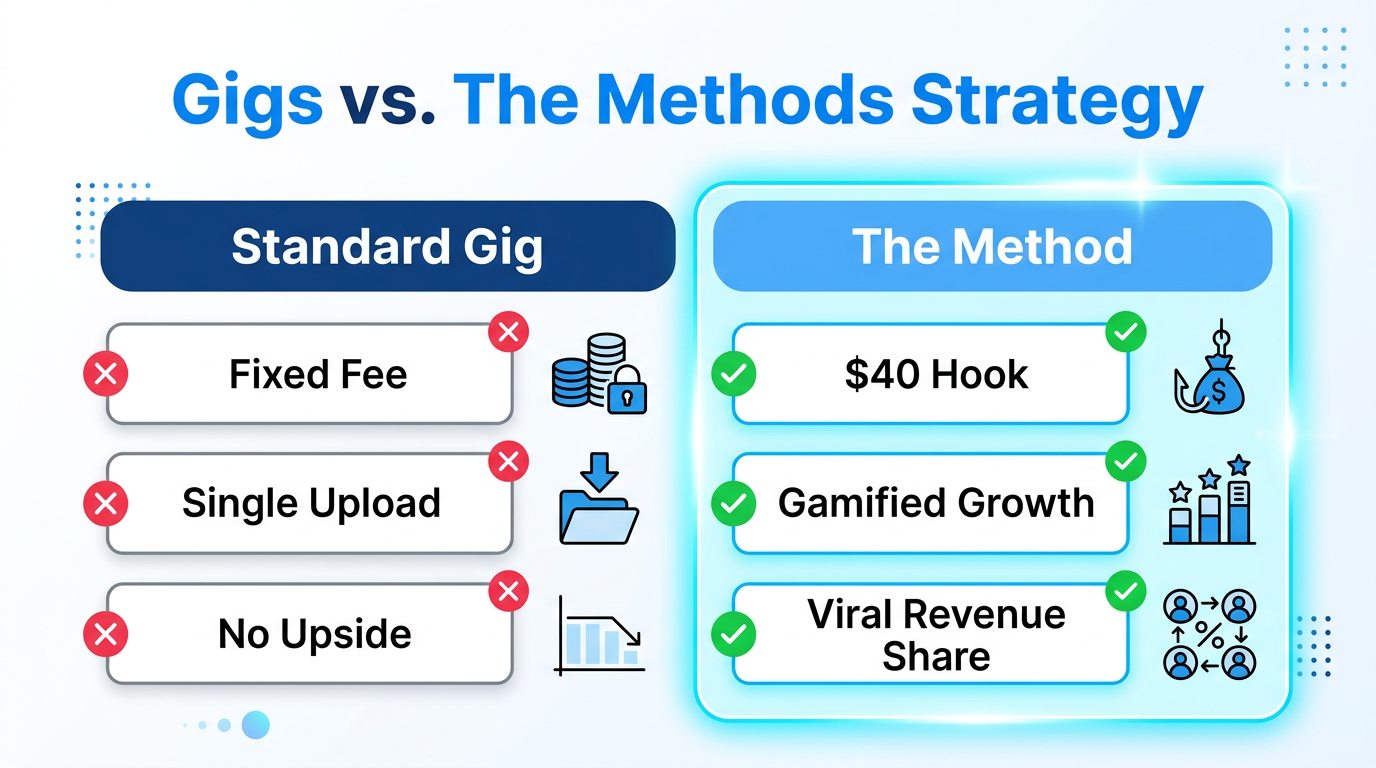
In 2026, the "Gig Economy" has a branding problem. It feels like labor. The "Method Economy," however, feels like a growth hack. Framing is everything. When you tell a creator they are performing a "Method"—a specific, repeatable sequence of actions that leads to money—you tap into the same psychology that drives success in Shopify-based dropshipping and crypto trading.
| Feature | The Old 'Gig' Economy | The 2026 'Method' Economy |
|---|---|---|
| Incentive | Payment after approval/results | Upfront reward for the first action |
| Structure | Loose creative briefs | Strict, AI-backed scripts and formats |
| Retention | Low (creators quit after one flop) | High (gamified levels and survival tiers) |
| Goal | One-off "content" | Infinite viral distribution |
This framing allowed Methods to surpass legacy platforms in creator quality and scale. Creators don't want to be "influencers" as much as they want to know the "game". By providing exact scripts and example videos, brands can turn any user with a smartphone into a high-converting marketing asset. For those looking to discover these creators at scale, platforms like Stormy AI can help vet and manage thousands of profiles while the "Method" handles the training.
Closing the Quality Gap: Personalized AI Feedback
The role of personalized AI feedback in helping creators understand what makes content viral.One of the revolutionary aspects of the Methods strategy is the use of personalized AI feedback. It is no longer enough to just give a creator a script. In 2026, successful UGC programs provide real-time analysis of a creator's lighting, hook strength, and conversion metrics tracked via Google Analytics. When a creator uploads a post to Methods, the AI analyzes why it might or might not go viral.
- Hook Analysis: Does the first 1.5 seconds grab attention?
- Visual Quality: Is the lighting optimized for the TikTok algorithm?
- Call to Action: Is the transition to the app store seamless?
This feedback loop ensures that creators aren't just "doing the reps"—they are improving with every single post. This is the same logic used by high-growth apps that use RevenueCat to run paywall experiments to iterate on revenue; you must iterate on your creators just as aggressively as you iterate on your product.
"The one issue we face is if users do not see immediate results, they quit. We reinforce the fact that if you keep trying, it is impossible to fail. Content is something that can be easily trained."The Survival Philosophy: Outlasting the Algorithm
Dris breaks down his philosophy on why survival is the most important business metric.The highest-paid creators in 2026 are not necessarily the most talented; they are the ones who survived. Dris’s startup philosophy—that survival is the only metric that matters—applies directly to UGC. If a creator can survive the first ten "flops" because they were incentivized by that initial $40, they will eventually find the "outlier" video that generates millions of views.
Brands like Cluey and Decart (which hit 100 million views in two weeks using this strategy) don't look for one-hit wonders. They look for creators who can execute on proven formats. As seen in tools like Spytok, most viral app videos aren't unique—they are iterations of formats that have worked 100 times before. The "Method" is simply the systematic application of these outliers.
How to Implement the Methods Strategy for Your App
If you are an app founder or marketer in 2026, you cannot rely on the old ways of "hiring influencers." You must build a machine. Here is the playbook:
- Define the Method: Don't ask creators for "creative ideas." Give them a winning format (e.g., the "ragebait" launch or the "Snapchat style" walk-and-talk).
- Incentivize the First Rep: Offer a guaranteed payout, perhaps handled via Stripe, for the first video to bridge the "fear gap."
- Gamify the Feedback: Use AI tools or platforms like Stormy AI to track which creators are actually driving engagement and provide them with the data to improve.
- Scale the Winners: 90% of your views will come from 1% of your creators. Identify those outliers and double their pay to keep them "surviving" in your ecosystem.
Conclusion: The Future is Methodical
The success of Methods and its $1.2M ARR in a single week is a signal to the entire marketing industry. The "Method Economy" isn't just a trend; it's the inevitable evolution of work in a post-AI world. By treating creator management as a gamified engineering problem rather than a creative one, brands can unlock levels of distribution that were previously impossible. Whether you are building a fitness app or a billion-dollar AI lab like OpenAI, your goal remains the same: find the method, pay for the rep, and survive the algorithm.