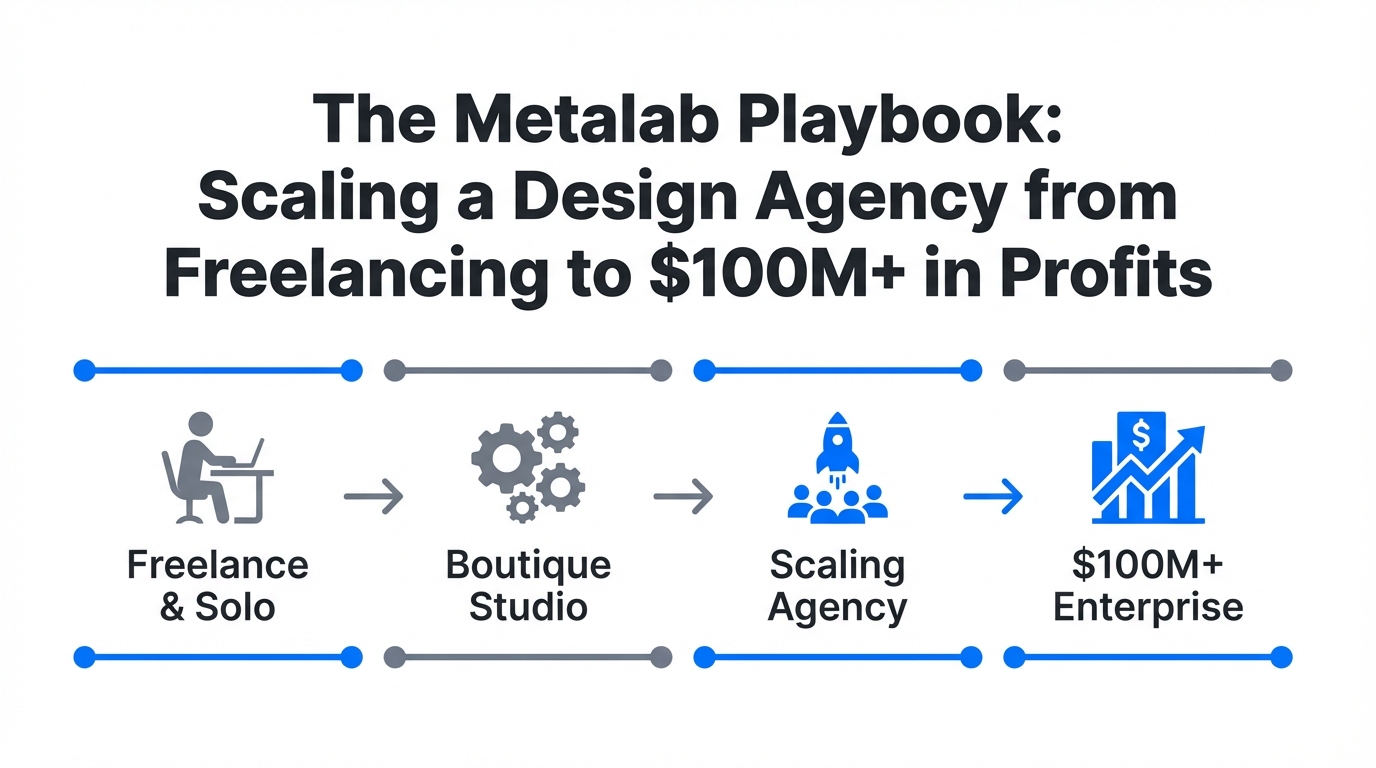
Most service businesses start with a single person in an apartment, trading hours for dollars. It is a model Andrew Wilkinson, founder of Metalab, describes as "D-tier"—a living, but fundamentally an owner-operator trap. Yet, Metalab broke the mold, evolving from a solo web design gig into a powerhouse that has generated hundreds of millions of dollars in profits. This wasn't achieved through aggressive cold calling or massive ad spend. Instead, it was built on a foundation of 'defining work' and a clinical approach to agency infrastructure.
Transitioning from Owner-Operator to Scalable Infrastructure
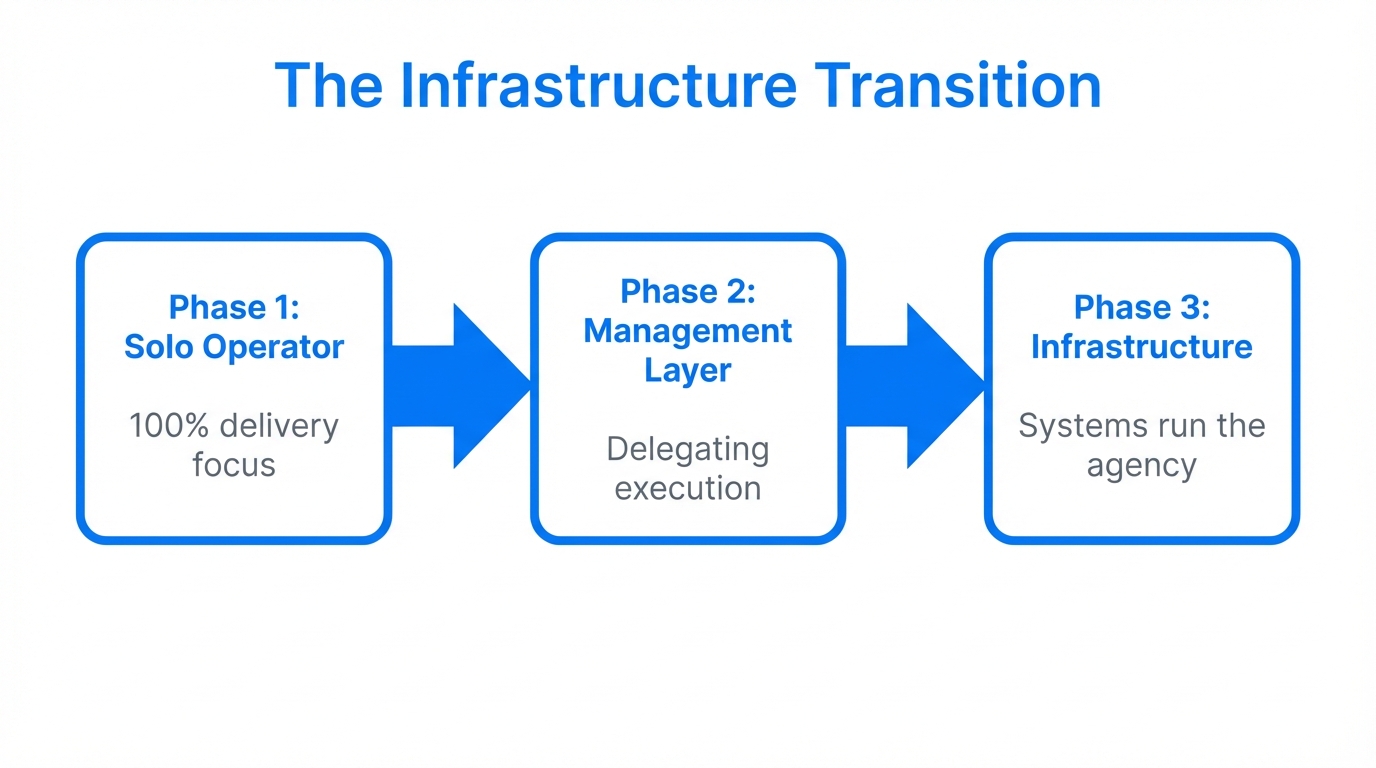
The transition from a freelancer to a scalable agency is the hardest leap in professional services. Most founders get stuck in the "messy middle" where they are too big to do everything themselves but too small to afford a full management layer. Wilkinson notes that the freelance model is a D-Tier business because it doesn't scale unless the founder is physically working. To move into the C-Tier (Agency) or higher, you must build a predictable delivery machine that functions without the founder's daily input.
Building this infrastructure requires moving away from being a "doer" and becoming a "capital allocator." For Metalab, this meant reinvesting early profits into top-tier talent and operations rather than just taking a higher salary. They shifted the focus from high-volume, low-margin tasks to high-ticket strategy and design. By the time Metalab reached its peak, it was part of a larger ecosystem under Tiny, which now manages over $300 million in revenue across 30 businesses.
The 'Defining Work' Strategy: Planting Your Flag
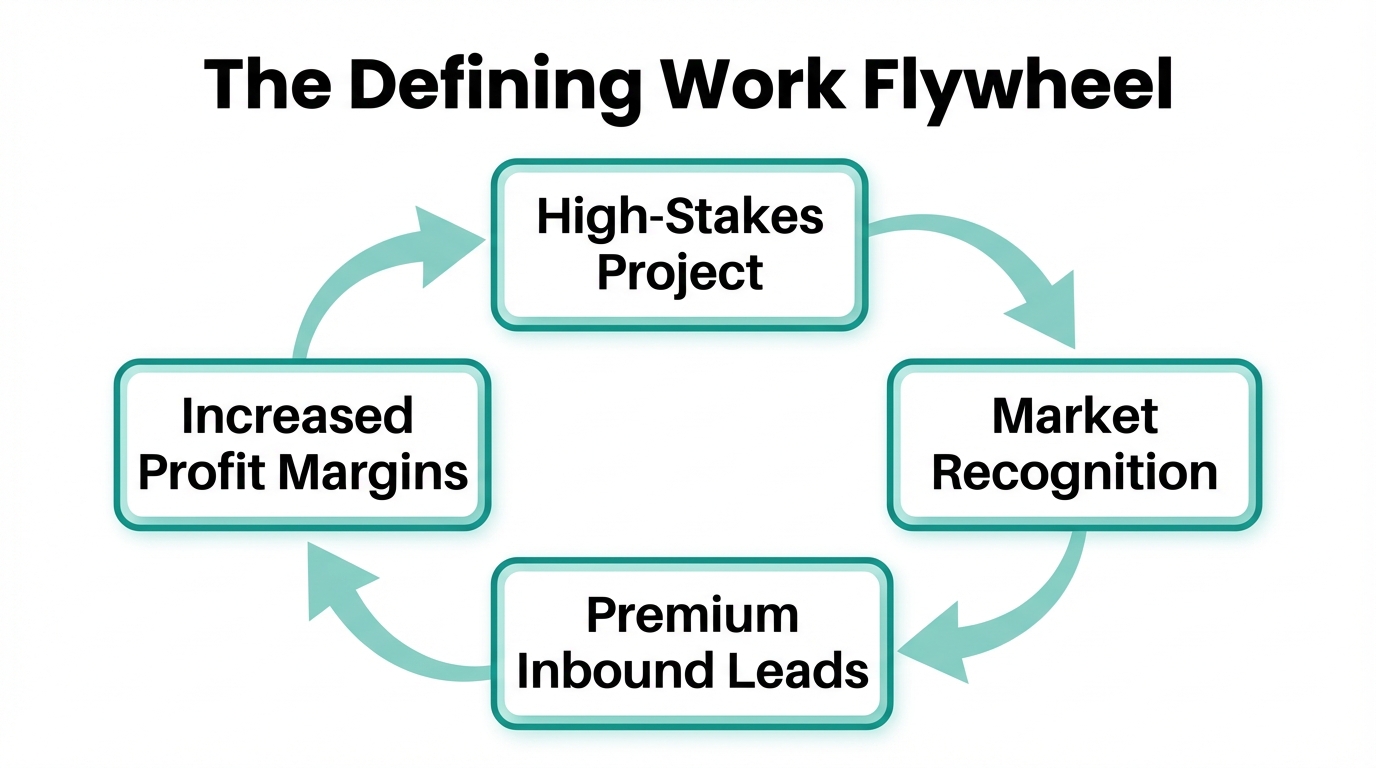
How does an agency become the "default choice" for blue-chip clients like YouTube, Uber, and Walmart? It starts with what Wilkinson calls Defining Work. In the early 2010s, Metalab designed the first version of Slack. That single project acted as a beacon for the next decade. When a project is groundbreaking and widely used, it creates a permanent reputation moat.
"Metalab did so much defining work between 2008 and 2015... we designed the first version of Slack, we worked on groundbreaking projects, and we planted our flag. That reputation is nearly impossible to recreate."
For agencies looking at a scaling a design agency, the lesson is clear: one high-profile, high-quality project is worth more than fifty mediocre ones. This 'flagship' work allows you to charge a premium because you aren't just a vendor; you are the team that built the industry standard. This makes your agency the low-risk choice for CMOs at major corporations who cannot afford a failed launch.
Managing the 'Feast or Famine' Nature of High-End Services
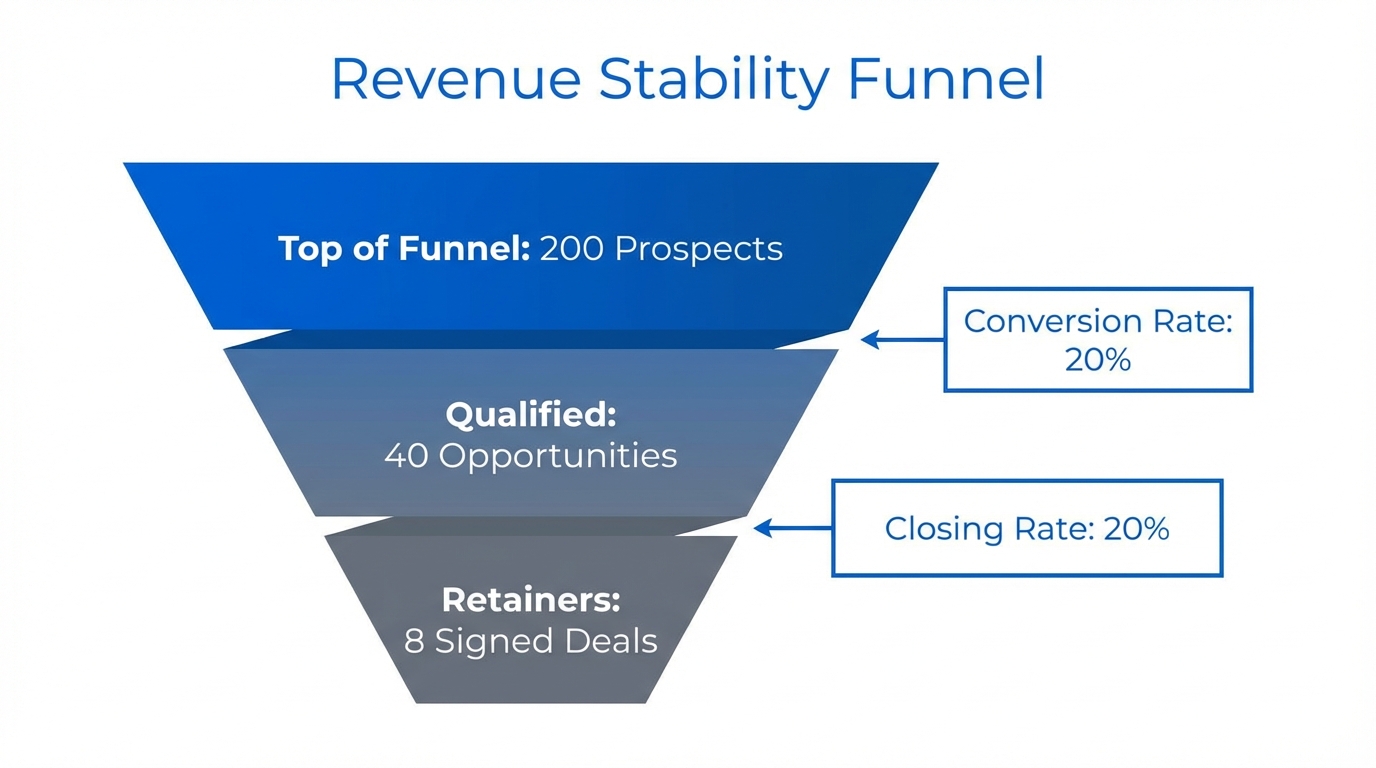
Even at the top, the agency model is inherently "lumpy." Wilkinson admits that agencies are often either making a fortune or on the verge of going out of business. This is usually due to client concentration risk. If a massive client like Walmart represents 50% of your revenue and a new Product Manager decides to cut the budget, you are left with massive overhead and no income.
| Risk Factor | Freelance Model | Scalable Agency Model |
|---|---|---|
| Lead Source | Word of mouth / Personal network | Multi-channel (SEO, Content, Partnerships) |
| Revenue Stability | Very Low (Project to Project) | Medium (Retainers + Portfolio approach) |
| Exit Potential | Zero | High (Private Equity / Acquisition) |
| Founder Involvement | 100% | <10% (Operationalized) |
To mitigate this, successful agencies use lead diversification. They don't just wait for the phone to ring. They build a brand that generates a constant stream of inquiries. Using tools like Google Ads to capture search intent and Meta Ads Manager for brand awareness ensures the top of the funnel is always full. When you have more leads than you can handle, you gain the power to say "no" to bad clients and "yes" only to the most profitable work.
The 'Z1 Model': Scaling via Acquisition
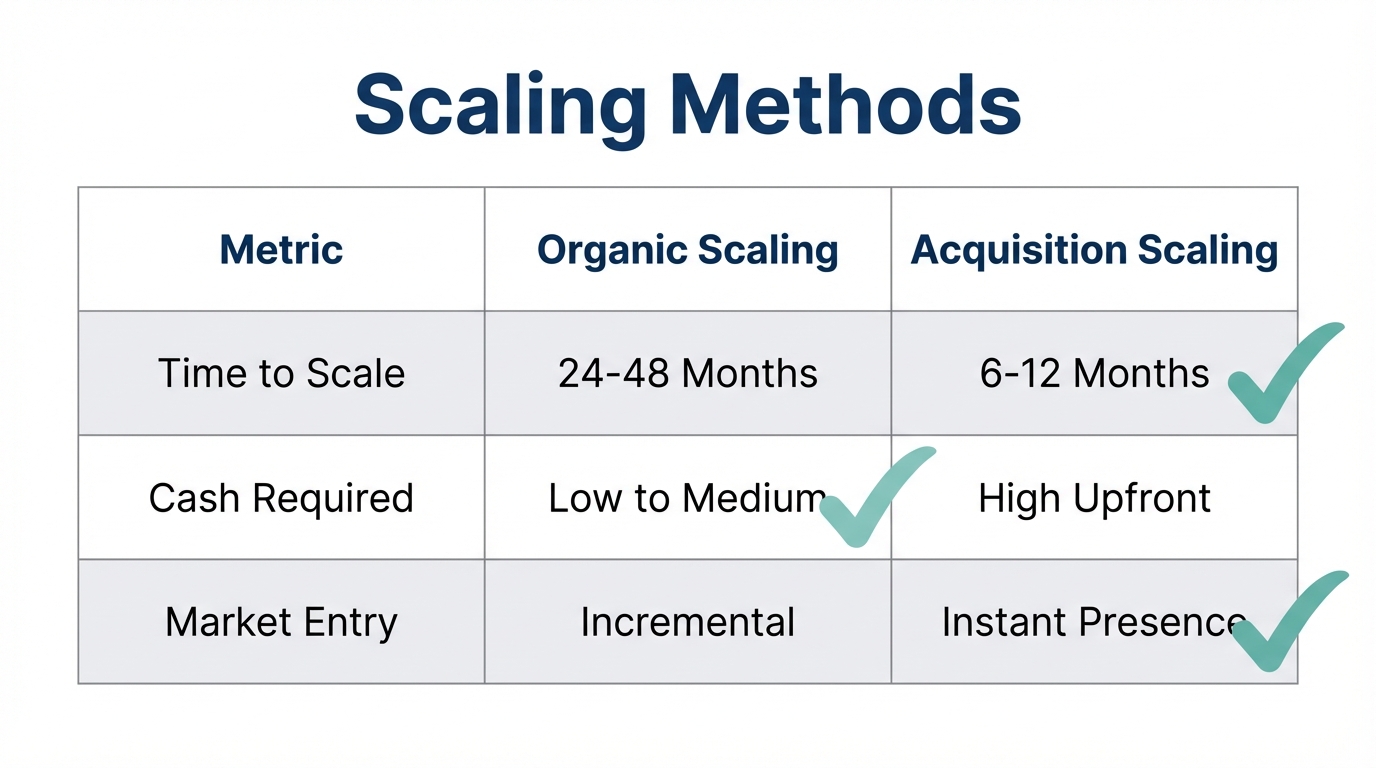
One of the most brilliant moves in the Metalab playbook was the acquisition of Z1, a smaller agency in Spain. The logic was simple: Metalab received hundreds of leads that were too small for their premium pricing. Instead of throwing that money away, they acquired a lower-cost, high-quality partner agency to handle the overflow.
- The Strategy: Buy a smaller agency for a low multiple (e.g., $300k).
- The Synergy: Feed them the leads your main agency rejects.
- The Result: Turn a "waste" product (rejected leads) into millions of dollars in profit.
This agency growth strategy is a superior hack because it bypasses the need for new marketing. You already have the attention; you just need a more affordable bucket to catch it. By managing a portfolio of agencies, you can service every tier of the market without diluting your premium brand's value.
"The theory was literally: Metalab gets a ton of leads that are too small for it. Let's buy another smaller agency and just send them those leads."
Leveraging Modern Tools for Client Acquisition
In today's market, client acquisition for agencies has moved beyond simple portfolios. High-growth agencies are increasingly relying on UGC (User-Generated Content) and influencer strategies to prove their results. If you are an agency helping mobile apps grow, showing real-world creator testimonials is more powerful than a static case study. Tools like Stormy AI allow agencies to quickly discover and vet creators who can produce this content, streamlining the entire outreach and management process.
By using an AI-powered creator discovery platform, agencies can source talent for their own marketing or for their clients' campaigns without the manual slog of Instagram DMing. This level of automation is what separates the modern "S-Tier" agencies from the legacy firms still relying on Rolodexes. Combining high-ticket sales strategy with cutting-edge tech like Figma for design and TikTok Ads for distribution allows you to maintain high margins while keeping your team lean.
Building a Reputation as the 'Default Choice'
Ultimately, the goal of a service business marketing plan is to reach a stage where you are the "safe bet." In the investment world, people buy Berkshire Hathaway because it is the gold standard. In design, people hire Metalab because they want the "Slack level" of quality. This level of trust allows you to operate on high-ticket sales strategies where price is secondary to certainty of outcome.
To get there, you must be willing to be disliked by the majority of the market to be loved by the top 1%. You cannot be everything to everyone. You must pick a niche (like high-end UI/UX), produce defining work, and then operationalize your lead flow. Whether you use AI outreach agents to scale your networking or platforms like Stormy AI to find UGC creators for your portfolio, the focus must remain on the inputs that drive long-term reputation.
The Path Forward
Scaling from a freelancer to a $100M+ profit agency requires a fundamental shift in mindset. You are no longer a designer or a developer; you are a builder of systems. Start by identifying your flagship project, diversifying your leads through modern ad platforms, and considering acquisitions to handle overflow. The Metalab story proves that while the agency business is hard, it is one of the few models where you can bootstrap your way to world-class wealth if you play the long game.
Ready to start sourcing creators for your next agency campaign? See how Stormy AI can automate your discovery and outreach today.