In the current marketing landscape of 2026, the distance between a viral video and a multi-million dollar physical brand has collapsed. We are no longer in the era of three-year product development cycles and massive TV spends. Today, the most successful CPG brand building happens when growth marketers identify high-velocity social memes and convert that energy into a physical product in a matter of weeks. The story of 6-7 Water—a brand born from a high school basketball player, a TikTok audio snippet, and an 8-week sprint—is the definitive viral product launch playbook for this year according to recent CPG industry reports.
Step 1: Identifying 'Meaningless' High-Velocity Memes
 10:05
10:05The biggest mistake legacy marketers make is looking for 'depth' in a trend. In 2026, culture moves too fast for deep meaning. The 6-7 Water brand didn't start with a mission statement about hydration; it started with a 17-year-old athlete named Taylen Kinney (TK) making a hand gesture and saying a line from a ScHoolboy Q song. Within months, millions of users on TikTok and Instagram were mimicking the motion, with even elite athletes like Cooper Flagg and Paige Bueckers joining in. To the uninitiated, the meme meant nothing. To the social commerce growth hacks expert, it meant everything.
To identify these trends before they peak, marketers must employ aggressive social listening. Platforms like Stormy AI streamline creator sourcing and outreach by allowing you to find the exact influencers who are driving these micro-cultures. In 2026, you don't look for the biggest star; you look for the 'red threads'—the subcultures of young people connecting on Overtime or niche Discord servers—and follow the trail of who they follow.
"You only see the thing that you look for. Business schools train people to look for blue, but a viral entrepreneur is looking for the red things everyone else filters out."
Step 2: The 8-Week Rapid Product Prototyping Framework
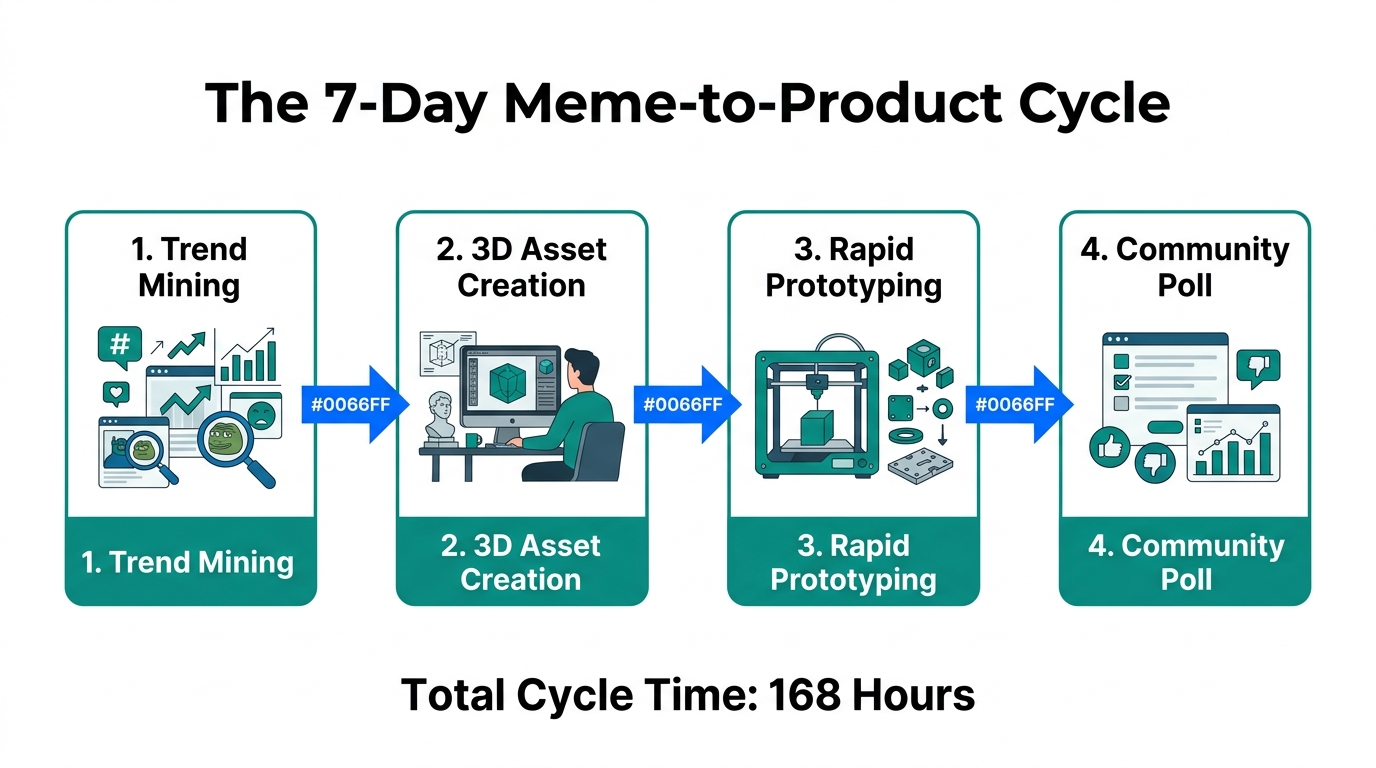
Once a meme hits critical mass, the clock is ticking. You don't have time for a two-year R&D phase. The 6-7 Water team followed a rapid product prototyping framework that moved from concept to manufactured cans in exactly eight weeks. The secret? Keep It Simple Stupid (KISS). While others try to formulate complex energy drinks with Nootropics and rare botanicals, the winning move for a meme-brand is often something 'boring' like water.
| Feature | Legacy CPG Approach | 2026 Meme-to-Commerce Playbook |
|---|---|---|
| Product Discovery | Focus groups and market research | Social listening and NIL trends |
| Formulation | 12-18 months of flavor testing | 8 weeks (KISS: Water/Basic staples) |
| Marketing | Top-down celebrity endorsements | Bottom-up community engagement |
| Distribution | Mass retail (Walmart/Target) | Hyper-local (Gas stations/Tournaments) |
When you choose a simple product like canned water, you eliminate the need for complex flavor profiles or FDA-heavy ingredients that stall production. You focus entirely on the packaging and the 'vibe.' As Dan Porter noted, 6-7 Water isn't just hydration; it's a movement. The gold can was designed specifically to look good on YouTube and in social media clips, ensuring that every time a kid drinks it on camera, they are perpetuating the brand's visibility.
Step 3: Positioning as a 'Bouncer' Strategy
55:52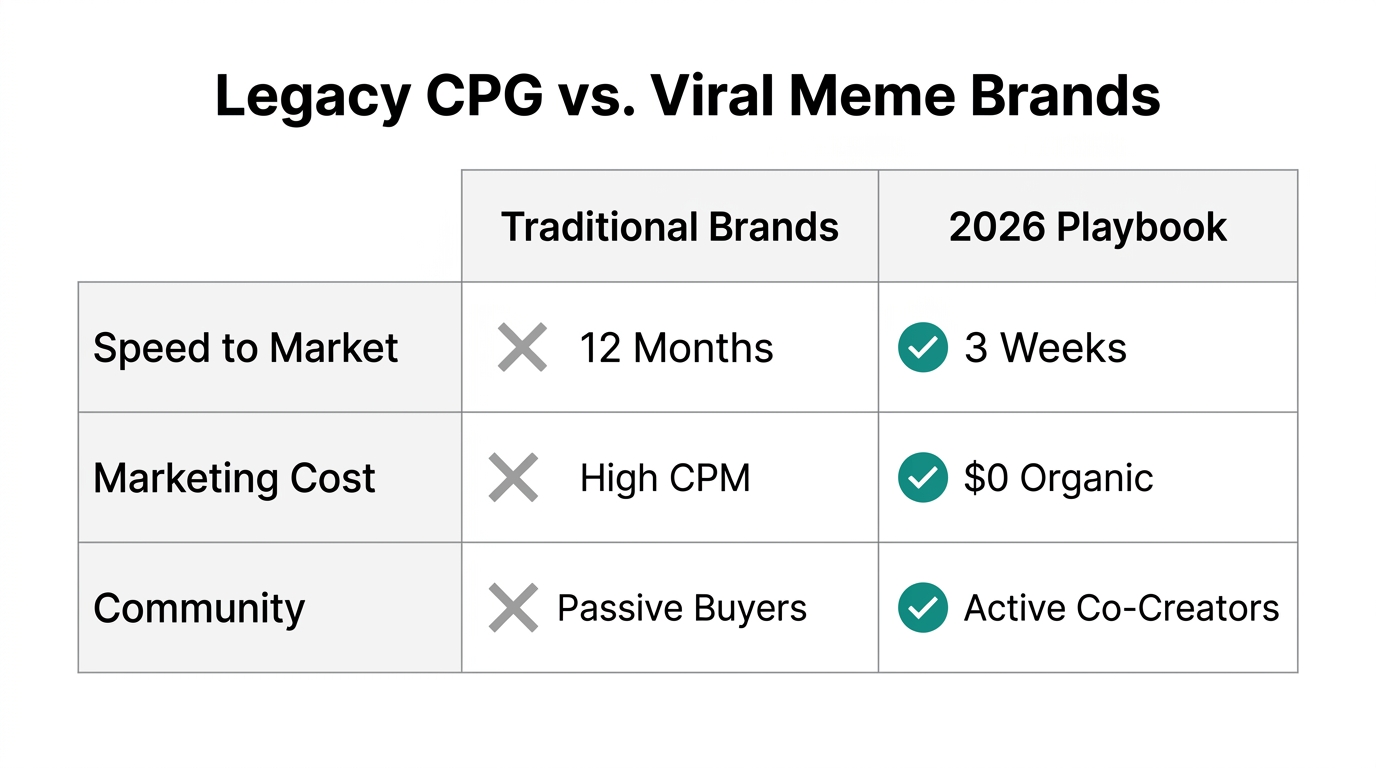
In 2026, CPG brand building is about counter-positioning. You don't compete with giants like ESPN or Dasani by doing what they do better. You compete by doing what they can't do. A massive corporate entity cannot use slang like 'rizz' or 'liddy' without looking like a 'try-hard.' Their success is their trap. They must appeal to everyone; you only need to appeal to your tribe.
Use the 'Opposite is Stupid' test for your strategy. If the opposite of your brand strategy is something no one would ever do (e.g., 'We have bad customer service'), then you don't have a strategy—you have a platitude. A real strategy involves a trade-off. For 6-7 Water, the trade-off was maturity. They leaned into a 'grown-up proof' aesthetic that made parents confused but made the product a status symbol for 17-year-olds.
"Positioning is about finding the white space in the supermarket aisle. If everyone is going for 'Adult/Healthy,' you go for 'Kid/Hyper-Viral.'"
Step 4: Grassroots Distribution Over Traditional Retail
58:11The instinct for many startups is to launch on Shopify and run Meta Ads Manager campaigns. While Shopify is essential for infrastructure, 6-7 Water focused on where their target demographic actually lives: gas stations and ice cream trucks. For a 16-year-old with a new driver's license, the gas station is the 'bodega' of the rest of the country. According to NACS industry data, it remains the primary point of commerce for gen-alpha.
- Strategic Stunts: TK would 'sneak' into gas stations, put the water on the shelf, and film a video as if he just discovered it there. This creates a 'treasure hunt' mentality.
- Event Domination: They prioritized basketball tournaments and youth sports events, giving the water away for free to build social commerce growth hacks through influencer cameos.
- NIL Integration: Leveraging Name, Image, and Likeness, the brand can offer custom-colored cans to colleges to help in their recruitment efforts—a level of agility no major water brand can match.
Step 5: Building Long-Term Equity with Waitlists
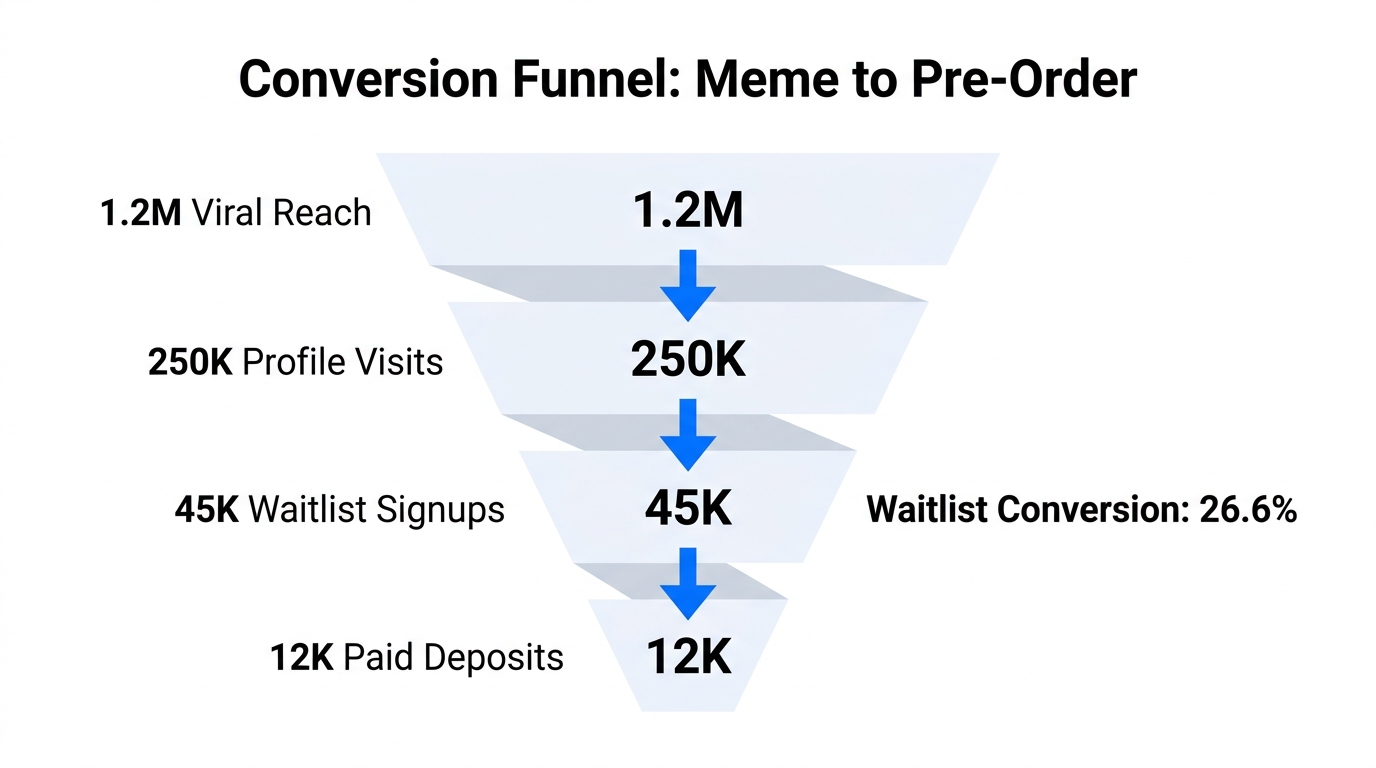
One of the most effective meme marketing strategies for 2026 is the 'Scarcity Engine.' Even though 6-7 Water had over 150,000 followers across Instagram and TikTok, you couldn't actually buy the water for the first several months. Instead, they used a waitlist landing page to capture data. By the time they launched, they had 25,000+ emails from high-intent customers ready to purchase.
The engagement didn't stop at the sign-up. The team practiced 'bottom-up' community management by replying to every single comment. They even leaned into 'roast' culture, where their community managers would mock followers' fashion choices in exchange for brand loyalty. This turns a customer into a 'fan for life'—a metric that carries more weight in 2026 than a simple conversion rate.
The 2026 Viral Product Launch Playbook
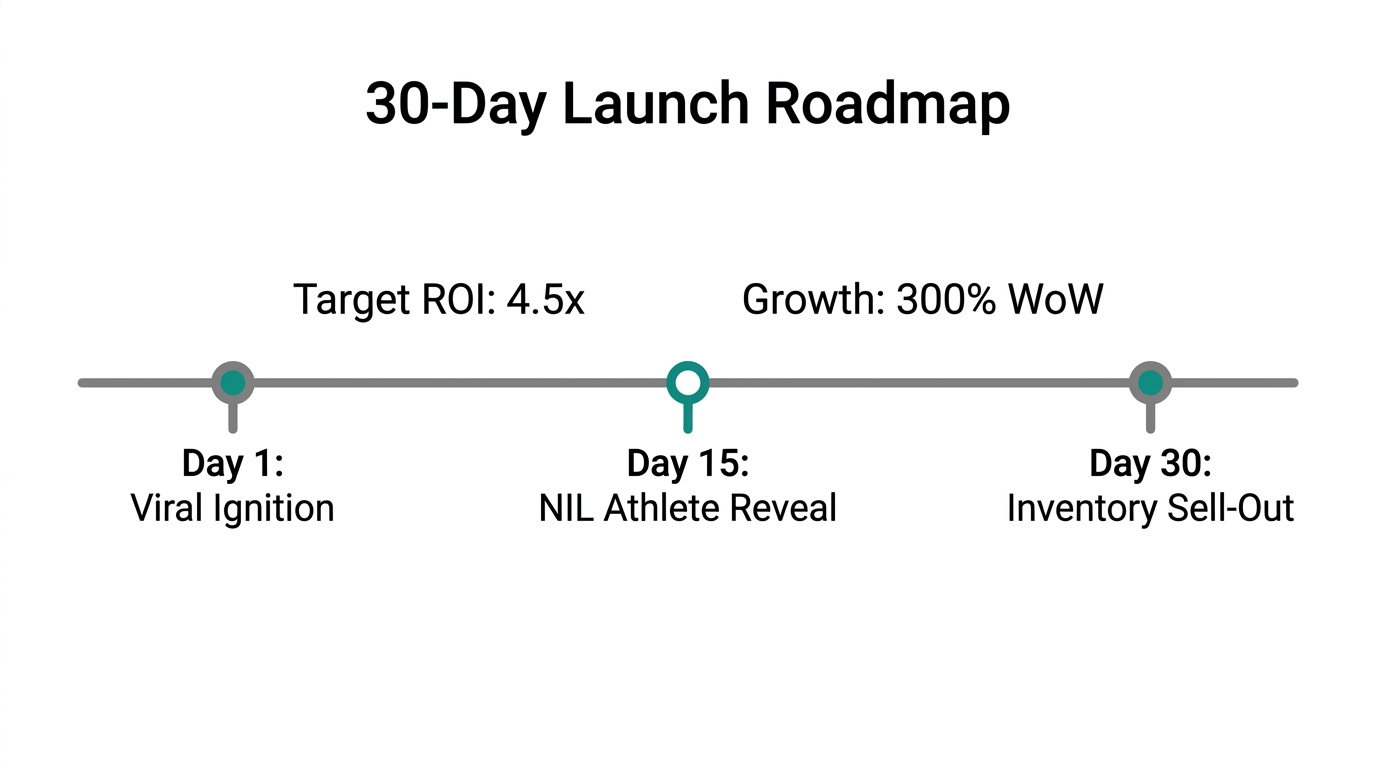
If you are looking to replicate this success, your roadmap should look like this:
- Listen: Use tools to track audio trends and NIL athlete velocity. Don't look for meaning; look for engagement.
- KISS: Choose a product category with low manufacturing friction. Water, basic apparel, or simple accessories beat complex formulations every time.
- Counter-Position: Find the 'trap' your biggest competitor is in. If they are 'premium,' you are 'grassroots.' If they are 'serious,' you are 'funny.'
- Distribute Locally: Focus on the 'third places' of your demographic—gas stations, local tournaments, and community hubs.
- Nurture the Waitlist: Capture the hype before you capture the dollars. Build an audience of 100k+ before you ship a single unit.
"If you try to crawl before you walk, and walk before you run, you spend your whole life crawling. In 2026, the meme-to-commerce cycle requires you to start at a full sprint."
The Future of Social Commerce
The 6-7 Water case study proves that the traditional barriers to entry for CPG have vanished. By combining rapid product prototyping with authentic meme marketing strategies, anyone with an ear to the ground can launch a category-disrupting brand. Whether you are managing your creator outreach manually or using an AI-powered platform like Stormy AI to automate your influencer discovery, the key remains the same: Listen to the culture, move faster than the incumbents, and never underestimate the power of a 'meaningless' meme.