In the current tech landscape, it has never been easier to build a million-dollar business—and it has never been easier to watch your equity value evaporate overnight. We are living through a sustaining innovation cycle where new technology, like the recent wave of AI agents, drastically drops the cost of production but also levels the playing field so quickly that margins inevitably trend toward zero. If you launch a calorie-tracking app or a basic productivity tool today, you might hit a million dollars in annual recurring revenue (ARR) in weeks, but within months, a hundred competitors will vibe code their way into the App Store with the exact same features for a fraction of the price. To build a decamillionaire-level business in 2025, you need more than just code; you need a media-led growth strategy that starts with a niche community.
Distribution: The Only Sustainable Moat in a World of Unlimited Competition
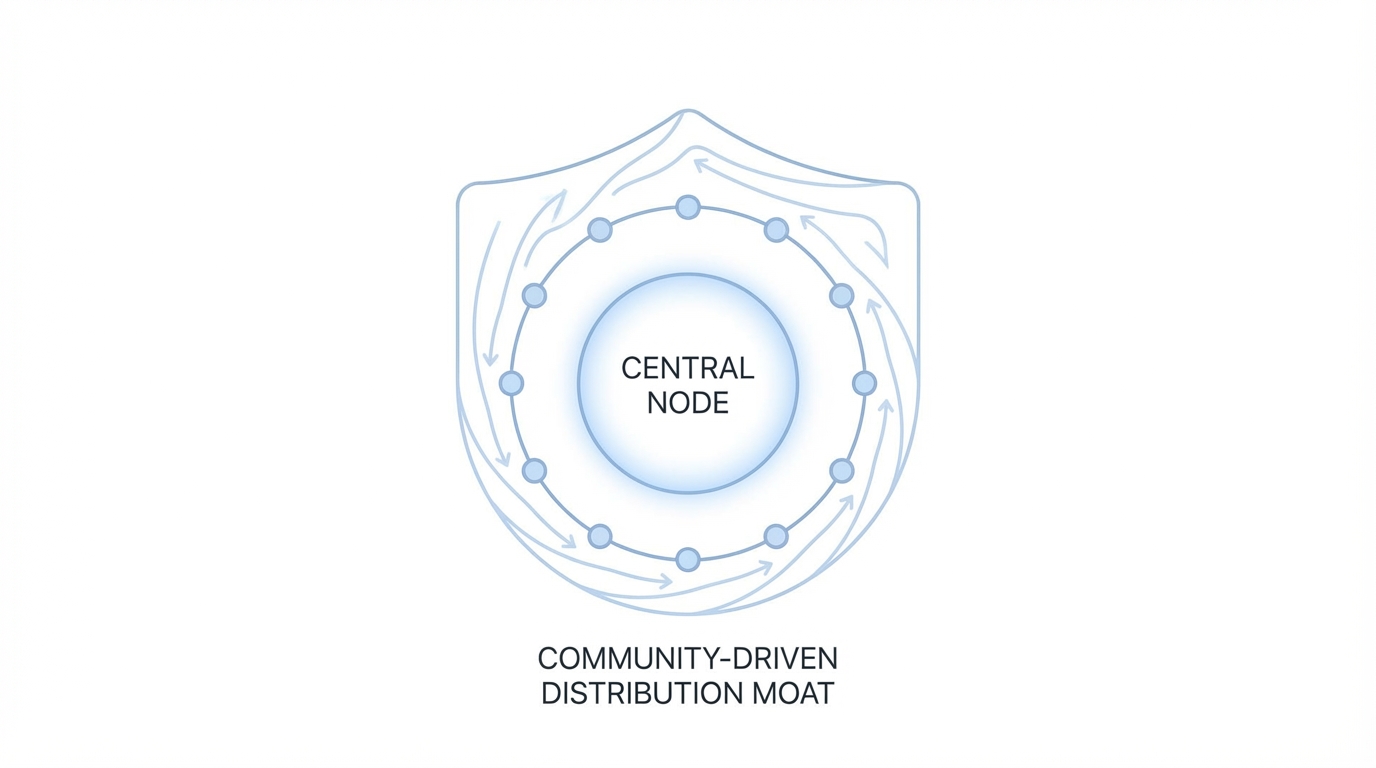

For decades, software was protected by the scarcity of talent and capital. There were only so many people who could build a complex CRM or a social network. Today, that scarcity has vanished. As the barrier to entry falls, software becomes a commodity—a "sandcastle on the beach" that can be washed away by the next tide of innovation. In this environment, distribution is the new moat. If anyone can create anything, the person who wins is the person who already has the attention of the buyer.
This is why media-led growth is becoming the foundational strategy for the next generation of successful AI startups. Instead of building a tool and then begging for users through Google Ads or Meta Ads Manager, smart entrepreneurs are acquiring or incubating media brands first. By owning the channel, you secure your distribution before you even write a single line of production code. This approach flips the traditional SaaS model on its head, moving from "Build, then Sell" to "Gather, then Automate."
How to Identify High-Value Niches: TechCrunch vs. MrBeast
When selecting a niche for buying media businesses, it is critical to distinguish between reach and value. While massive creators like MrBeast command billions of views, their audience is often economically low-value—largely children or general consumers with limited purchasing power. For an AI startup, the goal should be high-value, under-monetized niches where the community members are decision-makers or high-net-worth individuals.
Consider the difference between a general entertainment channel and a brand like TechCrunch. A brand with a legacy in a specific industry—like Silicon Valley tech or deep-sea yachting—holds a "personal monopoly" on that audience's trust. Even if the brand is currently struggling as a traditional ad-supported entity, its value as a distribution engine for AI services is immense. Another example is a highly sought-after event series like TED or South by Southwest. These are not just media companies; they are network effect engines. When you own the event where the industry meets, you own the data on who is influential and what problems they are trying to solve.
Turning Community Attention into a Proprietary Dataset for LLMs
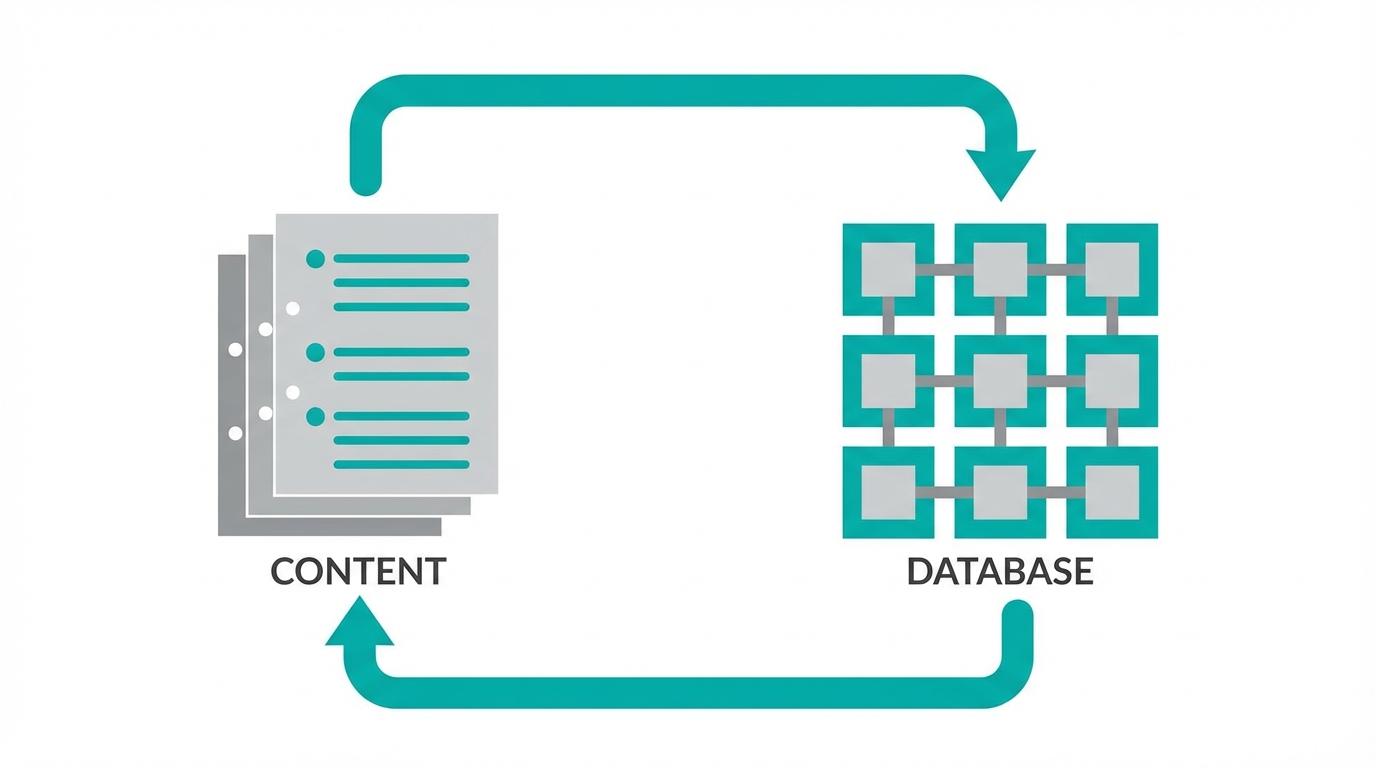
The biggest threat to a modern AI business is the "thin wrapper" problem. If your tool simply pipes data to ChatGPT or Claude, you have no competitive advantage. However, if you own a media property, you have access to proprietary data for AI that the frontier models haven't yet "eaten." [Source: Sequoia Capital Research]
By managing a community through LinkedIn, TikTok, or private forums, you can gather unique data points that are not publicly available on the web. For instance, if you own a community for yacht owners, you can collect data on maintenance costs, crew salaries, and private transaction prices. This data becomes the training set for a specialized AI agent that provides insights no general LLM could ever match. This is the transition from a content brand to an AI-powered service business: you use the media to attract the users, use the community to gather the data, and use AI to provide a high-margin solution.
The Playbook: A Step-by-Step Guide to the Media-First Strategy
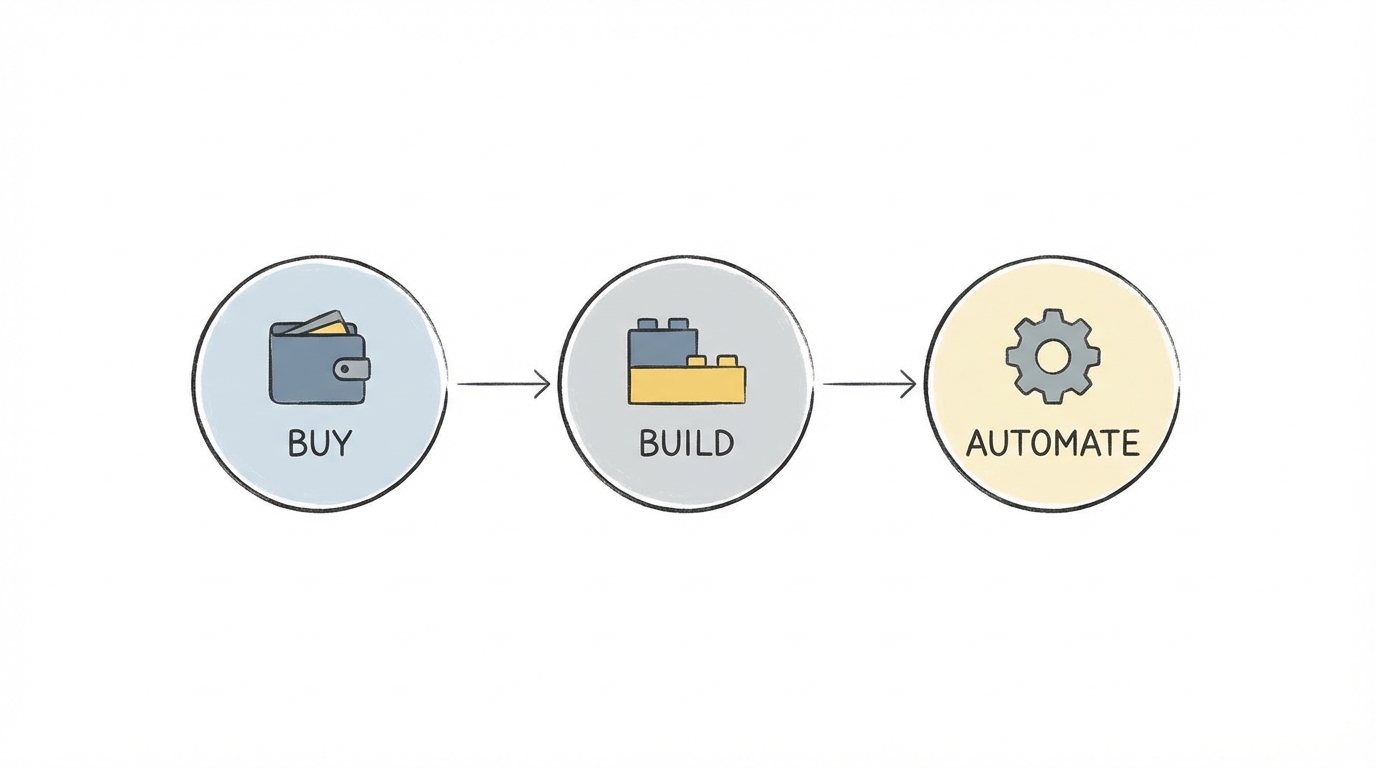
Step 1: Buy or Incubate the Media Brand
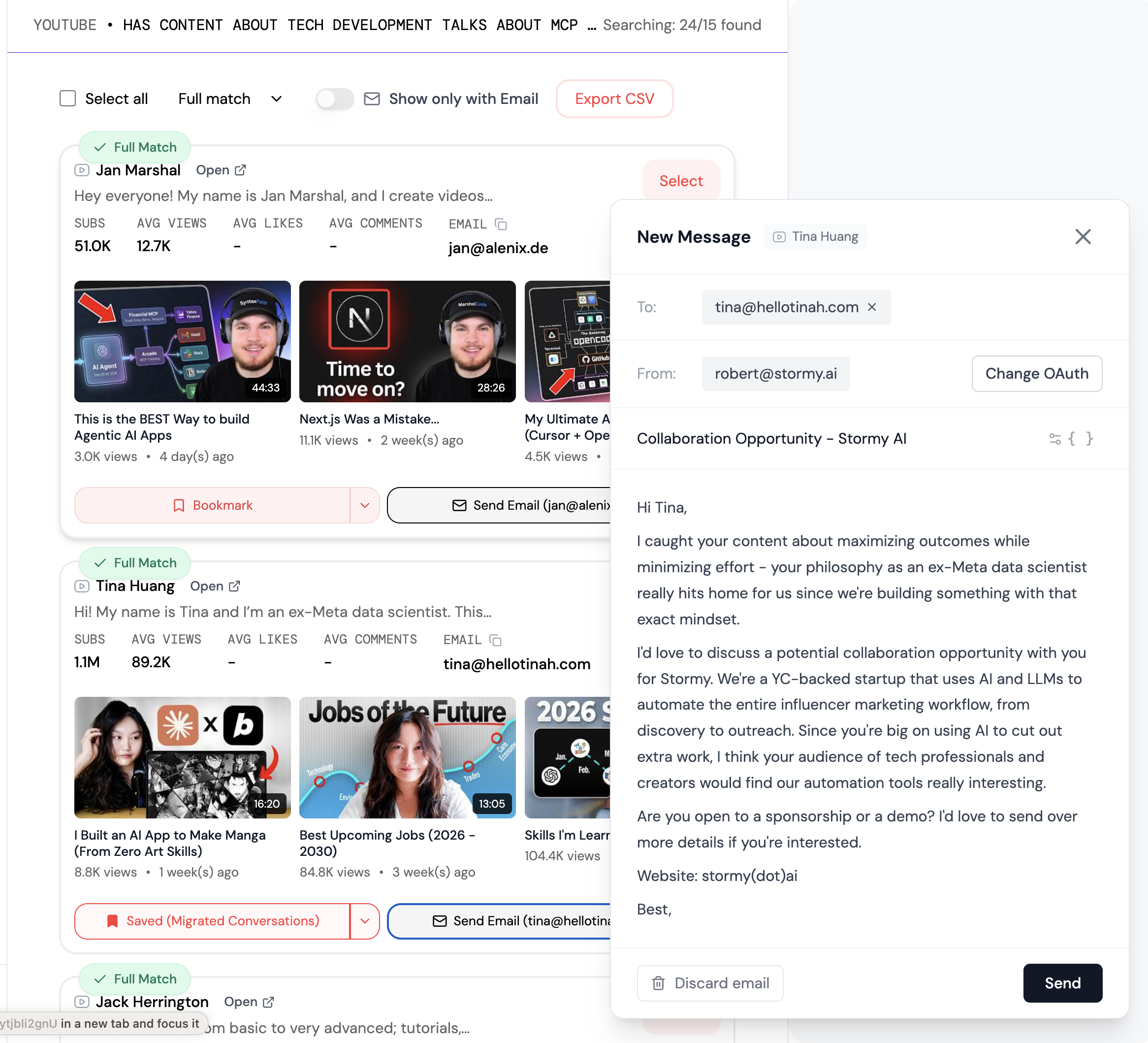
Identify a distressed or under-monetized media asset in a high-value niche. This could be a newsletter, a podcast, or a local news site. The goal is to acquire distribution at a fair price. Tools like Stormy AI can be invaluable during this phase, allowing you to discover and vet creators or niche media properties across YouTube and Instagram that have highly engaged audiences but lack a sophisticated monetization engine.
Step 2: Collect Proprietary Data
Once you own the attention, you must start gathering data. This isn't just about email addresses; it's about contextual interactions. Use polls, private Slack channels, or survey tools to understand the specific pain points of your community. If you are running a B2B media brand, track what software your audience is buying and what their margins look like. This data is the raw material for your future AI moat.
Step 3: Vibe Code Your Internal Tools
Before launching a public-facing product, use AI to "vibe code" internal tools that improve the community experience. You can use platforms like Notion or Zapier to automate community management. Once these tools are proven internally, you can productize them for your audience. This is exactly how you transition from a "vibe coded crappy app" to a community-led growth SaaS that has a five-year shelf life rather than a two-month one.
Tactical Steps for Automating the Media Business
Automation is what allows a media-first business to scale without a massive head-count. Modern entrepreneurs are using AI agents to handle the administrative nightmare of running a media brand. For example, you can set up agents to source local news, fact-check stories, and even format newsletters in your specific brand voice. This allows you to maintain the human touch where it matters—in the strategy and relationship-building—while letting AI handle the repetitive tasks.
For those looking to manage relationships with hundreds of community influencers or UGC creators, platforms like Stormy AI offer a comprehensive creator CRM and AI-powered outreach tools. These tools allow you to automate the discovery and vetting process, ensuring that your media brand is always partnering with the most relevant and high-quality creators in your niche. By using an AI agent to handle daily outreach and follow-ups, you can build a massive network of advocates for your brand while you focus on the core business logic.
Case Study: Transitioning from a Content Brand to AI-Powered Service
Consider the potential of a calorie-tracking app that shifts from a simple tool to a community-led health platform. A basic app might allow you to take a photo of your food to calculate calories—a feature that will soon be a default in every smartphone OS. However, if that app builds a community around weight loss, similar to a modern-day Weight Watchers, it creates a physical and social moat. By using AI to analyze the text messages and interactions within that community, the platform can offer personalized coaching that is far more effective than a generic chatbot.
Another example is in the world of specialized finance. A media brand focused on "vibe coding" or indie hacking could launch a secure AI-based lending service. By using the Model Context Protocol (MCP) to securely ingest a user's Stripe data and tax records, the AI can perform diligence in minutes rather than weeks. The media brand provides the trust and the leads, while the AI provides the speed and efficiency. This is a business that is hard to displace because it relies on both technical integration and community trust.
Conclusion: Building for the Five-Year Horizon
The era of the "one-off bite" AI app is coming to an end. While you can still make a quick million dollars with a viral photo editor or a simple GPT wrapper, those businesses are inherently fragile. To build something that lasts, you must embrace the media-first playbook. Focus on high-value niches, secure your distribution through community ownership, and leverage proprietary data for AI to create a service that cannot be replicated with a simple prompt.
The competition is coming, and it is coming faster than ever before. In a world where all keyboard jobs could be automated within years, the only thing that remains truly valuable is the relationship you have with your audience. Start building that community today, and use the latest AI tools to serve them better, faster, and more securely than anyone else.