The era of vanity metrics in the SaaS world is officially over. As the global influencer marketing market prepares to hit $34.1 billion by 2026, marketing managers are facing a pivotal shift from broad brand awareness to measurable, bottom-line impact. For B2B tech and software brands, the challenge has always been attribution: how do you tie a 60-second YouTube deep-dive or a LinkedIn post to a specific enterprise signup? In an environment where conversational, lo-fi content is outperforming high-gloss corporate ads, the ability to track every touchpoint is the difference between a high-growth engine and a wasted budget.
Understanding the $5.78 ROI Benchmark for SaaS
To build a successful influencer marketing ROI framework, you first need to understand what good looks like. Industry research from the Influencer Marketing Benchmark Report suggests that businesses are making an average of $5.78 for every $1 spent on influencer marketing. However, in the high-ACV (Annual Conversion Value) world of SaaS, this number can be significantly higher if you move beyond simple coupon codes. Success requires integrating creators into your full marketing stack, utilizing tools like Google Analytics 4 and advanced UTM parameters to monitor the user journey from click to conversion.
For modern growth teams, shifting to performance-based models is the most effective way to protect margins. Instead of paying massive flat fees to legacy "celebrity" influencers, brands are now leveraging AI-native platforms like Stormy AI to identify niche technical creators who align with their specific product-market fit. By automating the discovery and vetting process, SaaS companies can build a "long-tail" strategy of dozens of micro-influencers who drive higher quality demos than a single massive placement.
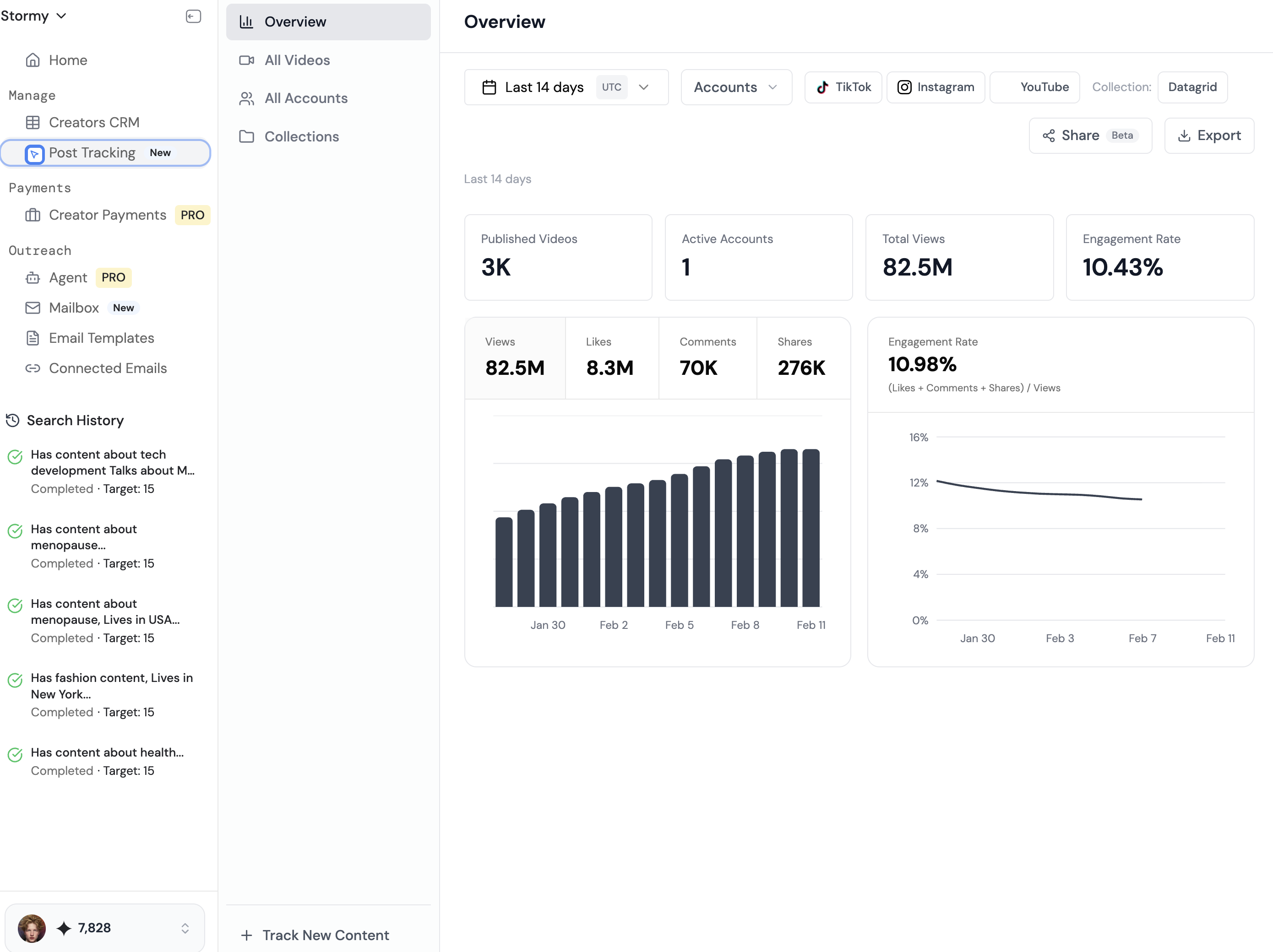
True attribution in software sales is rarely linear. A developer might see a TikTok video about a new API tool, research it on Reddit, and eventually sign up via a direct search weeks later. This is why multi-touch attribution modeling is critical. SaaS brands should look at "view-through" conversions and brand search lift alongside direct affiliate sales. While older tools like Tagger or impact.com offer basic tracking, modern platforms like Stormy AI provide deeper post-tracking analytics that help you see the real engagement and velocity of your campaigns across multiple social networks simultaneously.
Finally, consider the backend of your operations. Efficiently managing these relationships is just as important as the content itself. Whether you are processing payments through Stripe or managing your e-commerce integrations through Shopify, your influencer data needs to live in a centralized CRM. By focusing on data-driven creator selection and rigorous post-campaign analysis, SaaS companies can transform influencer marketing from an experimental line item into a predictable, scalable revenue channel.