On March 12, 2026, the landscape of local search changed forever with the official launch of Ask Maps. This Gemini-powered conversational interface, integrated directly into Google Maps, has effectively ended the era of static 3-pack listings. We are no longer in a world where a simple "Pizza NYC" query suffices; today, users engage in multi-condition search queries like, "Find a quiet coffee shop with fast Wi-Fi and a latte that isn't too sweet." For businesses, this shift represents a move from "list-based" discovery to a highly contextual "conversational discovery" model where entity trust and intent alignment are the only currencies that matter.
The Technical Engine: Navigating Google Places API (New) Billable Tiers
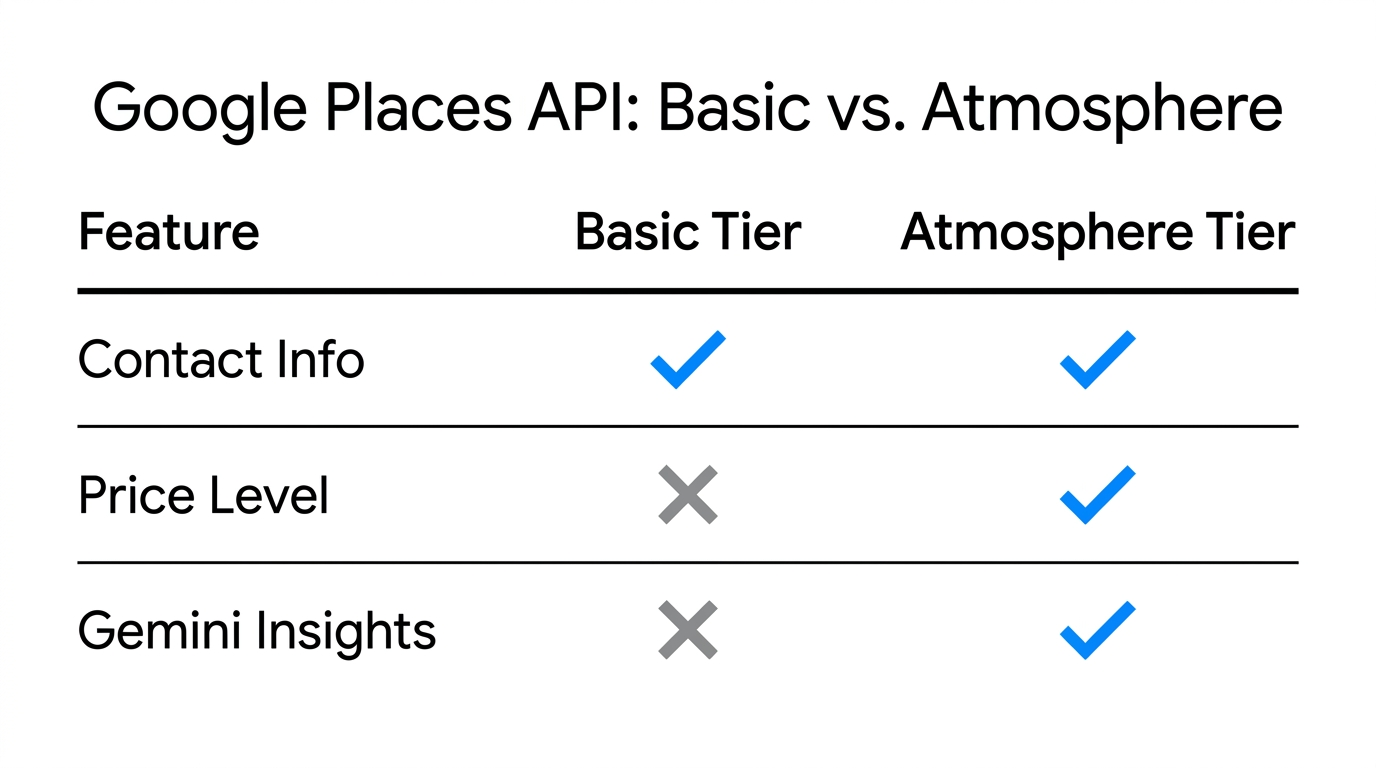
To dominate the 2026 Local Pack, you must understand the infrastructure powering it. Google has restructured its data delivery into three specific billable tiers under the Google Places API (New). While many businesses stick to the free "Essentials" tier (covering basic IDs and addresses), Google Places API marketing at the elite level requires moving into the Enterprise tier. This is where "Own Any Local Market" strategies are won or lost.
- Essentials: Basic location data (ID, address).
- Pro: Rich data, including ratings and dynamic Street View.
- Enterprise: This tier provides "Atmosphere" data—price levels, business status, and granular amenities.
Gemini relies heavily on these Atmosphere SKUs to build its conversational answers. If your Google Business Profile (GBP) lacks 100% attribute completion—such as "wheelchair accessible entrance" or "dog friendly"—you are effectively invisible to the Enterprise-level search calls Gemini makes to satisfy complex user intents. Practitioners are finding that filling 100% of fields is no longer optional; thin profiles are functionally invisible to the algorithm.
"AI local discovery is 30x more challenging than traditional ranking. It evaluates 7 trust factors including entity verification and structured content quality."
The Role of 'Atmosphere' Data in Gemini Recommendations
In 2026, Google’s Immersive Navigation and Ask Maps utilize 3D tiles and landmark-based guidance to help users find businesses. However, the recommendation engine goes deeper than visuals. It scans your website copy, GBP attributes, and even the Review Sentiment to decide if your "vibe" matches the user's prompt. This is why local entity SEO has shifted toward specific niche attributes.
For instance, if a user asks for a "business lunch spot with low background noise," the AI doesn't just look for restaurants; it looks for the "Atmosphere" data point indicating a quiet environment. This data is often pulled from third-party apps and AI-powered summaries of reviews via the updated Places API. If your profile doesn't explicitly mention these amenities, you won't appear in the top 2 recommendations that Ask Maps provides.
Why Review Sentiment Has Replaced Review Volume
The old playbook of "more reviews equals higher rank" is dead. In 2026, Review Sentiment is the primary ranking signal. AI now reads the content and context of every review to verify services. A single review mentioning "excellent patio cleaning in Austin" provides more semantic proof to the AI than fifty generic "Great job!" ratings. This shift rewards genuine local activity over sheer volume.
| Feature | Traditional Local SEO | AI Local Marketing (2026) |
|---|---|---|
| Input | Keywords (e.g., "Plumber NYC") | Natural Language (e.g., "Who can fix my sink today?") |
| Main Factor | Proximity & Star Rating | Intent Alignment & Entity Trust |
| Discovery | List-based (3-Pack) | Contextual (Ask Maps) |
| Strategy | Citation Volume | Review Specificity & Atmosphere Data |
To capitalize on this, brands are encouraging customers to include both the service and the suburb in their feedback. This helps Google’s Gemini engine confirm your business's expertise in a specific geographic micro-cell. As noted by experts at ALM Corp, one detailed review acts as a trust signal that prevents the "Zero-Click" problem by giving the AI enough confidence to recommend you immediately.
Setting Up Agentic AI for 24-Hour Response Cycles
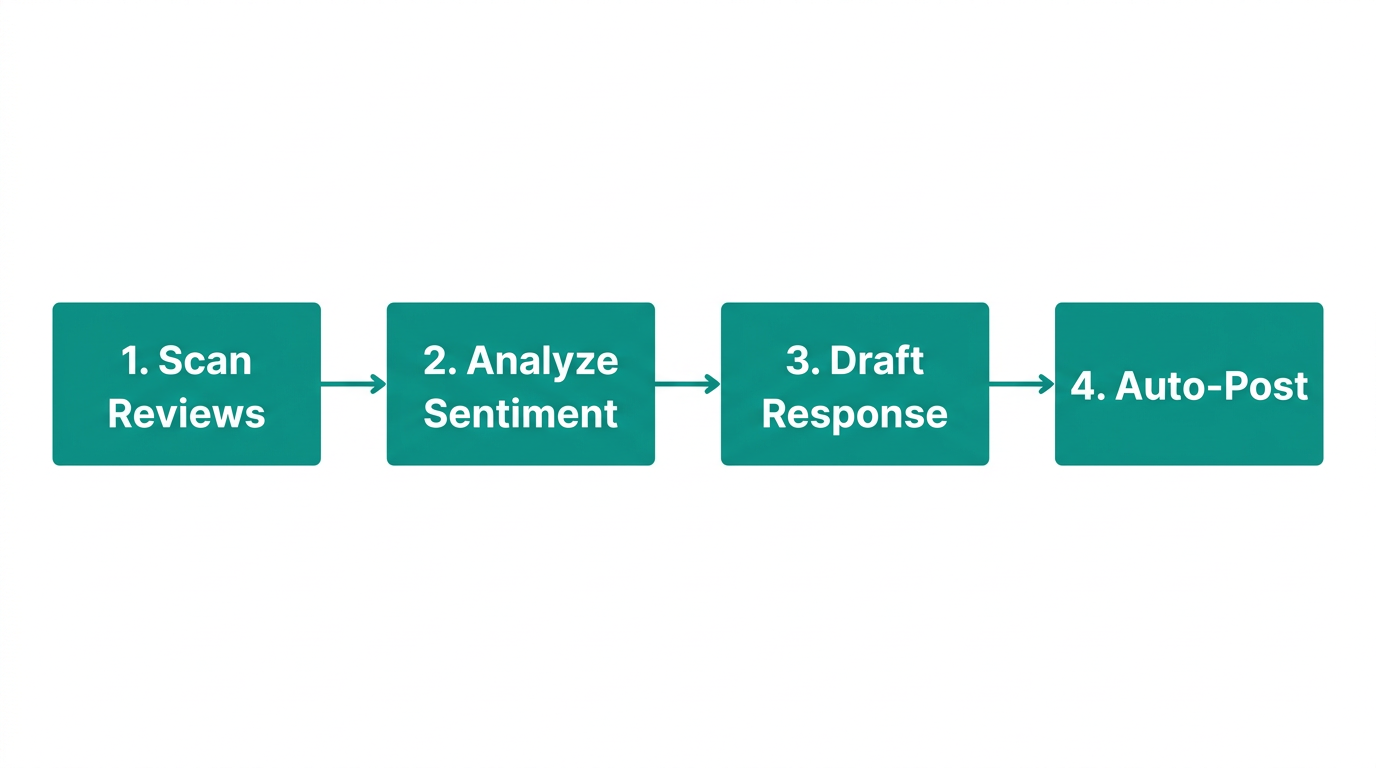
Response speed is a high-engagement metric for the 2026 algorithm. Waiting 48 hours to reply to a customer is no longer acceptable. Brands are now deploying AI-powered reputation management through "Agentic AI" platforms. Tools like Birdeye use AI-Employee workflows to handle reputation, messaging, and review responses automatically, ensuring a 24-hour cycle is maintained across dozens of locations.
These agents don't just say "thank you"; they are programmed to address specific points mentioned in the review, further reinforcing the local entity SEO signals. For agencies managing multiple clients, platforms like Stormy AI can be used to identify local creators who can generate authentic UGC (user-generated content) that feeds into these reputation loops, boosting Hyperlocal E-E-A-T (Experience, Expertise, Authoritativeness, and Trustworthiness).
"The key to 2026 local growth isn't just being found—it's being the only recommendation the AI has enough trust to provide."
Implementing Suburb-Specific Pages for Geographic Relevance
Google’s February 2026 core update significantly tightened "State-level personalization," making results vary block-by-block. To combat this, businesses must implement suburb-specific location pages (400–700 words) that pass geographic relevance back to the GBP. These pages shouldn't be generic; they must use Local Business Schema to "talk" to the Google Maps API effectively.
According to the blueprint provided by Mention First AI, these pages should include:
- Hyperlocal landmarks and directions.
- Embedded 3D photos or interior Street View to satisfy the Immersive Navigation requirements.
- Reviews specific to that suburb.
- Subtle mentions of community involvement.
By creating this web of geographic relevance, you increase the likelihood of appearing in Ask Maps when users include a location-specific preference in their prompt. This is a core component of the Leverage Local strategy, which treats every suburb as its own unique market.
ROI Benchmarks: The Cost of Dominance
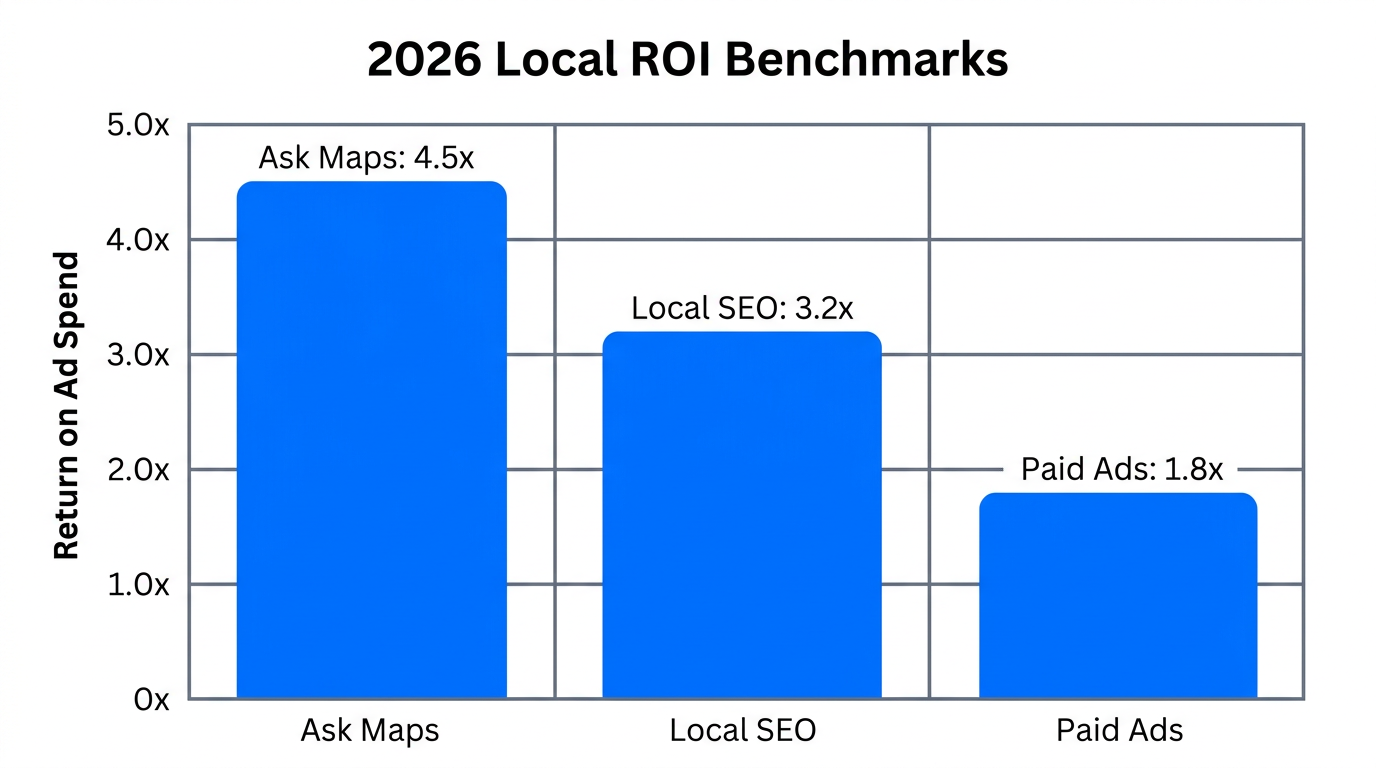
The financial rewards for mastering Ask Maps optimization are substantial. Research from Primal shows that businesses see an average return of $3.70 for every $1 spent on generative AI marketing, with top-tier performers reaching as high as $10.30 ROI. Furthermore, being cited directly within an AI Overview or Ask Maps response results in a click-through rate (CTR) that is 35% higher than standard organic links.
However, the "Black Box" problem remains a challenge. Algorithms are becoming more opaque, making it harder to understand why a competitor might be recommended despite having lower ratings. This is where AI-visibility tracking tools like Hovi Digital Lab or Local Dominator become essential, providing geo-grid heatmaps to visualize where your AI authority is strongest.
The 2026 Local Playbook Summary
To win in the era of Ask Maps, your strategy must move beyond keywords and citations. Focus on the following technical-marketing hybrid tasks:
- Upgrade your Data: Ensure your business is represented in the Enterprise tier of the Google Places API by completing 100% of GBP attributes.
- Optimize for Sentiment: Incentivize reviews that mention specific services and suburbs to build semantic proof.
- Leverage Agentic AI: Use tools like Birdeye on G2 to maintain a 24-hour response cycle and manage your reputation at scale.
- Build Geographic Authority: Deploy suburb-specific pages with rich schema markup and 3D visual data.
- Conduct Conversational Audits: Regularly test "Ask Maps" with multi-condition search queries to see if your business is the primary recommendation.
By treating Google Maps not just as a directory, but as a conversational partner, you can turn the complexity of Gemini into a massive ROI driver for your local business. For those looking to further bolster their local authority through influencer partnerships and localized content, platforms like Stormy AI provide the search and discovery tools needed to find the perfect creators to vouch for your brand in every neighborhood.