The era of manual dashboard-hopping is coming to an end. In 2025, the digital advertising landscape is shifting from "generative" (simply chatting with AI) to "agentic" (AI that executes tasks). According to research from Social Media Examiner, 88% of marketers now use AI tools daily, a massive jump from just 37% a year ago. But the real winners aren't just using AI to write ad copy; they are using tools like Claude Code from Anthropic to act as a fractional strategist, identifying hidden inefficiencies and reallocating millions in spend with surgical precision. Organizations adopting these agentic workflows are seeing 20% to 30% higher ROI, according to McKinsey, effectively turning the CLI (Command-Line Interface) into a high-octane profit center.
The Agentic Advantage: Why Claude Code is Your New Meta Ads Strategist
For years, Meta Ads managers have been beholden to the "Ads Manager" UI—a cluttered environment designed more for data entry than deep strategic insight. Claude Code, an agentic CLI tool, changes this by interacting directly with your ad data via the Model Context Protocol (MCP). This open standard allows Claude to "plug into" live environments, reading files, running terminal commands, and analyzing API data in real-time.
By bypassing the complex UI, a Meta Ads ROI strategy becomes less about clicking buttons and more about orchestrating intelligence. Instead of building a custom report, you can simply ask Claude: "Analyze our spend for the last 7 days. Which three ad groups saw the biggest jump in CPA, and what was the likely cause based on Search Lost IS?" (referencing the Impression Share logic often used in cross-channel analysis). Using the TrueClicks MCP server or GAQL.app, Claude can fetch this data instantly, providing executive-ready summaries in seconds.
"Marketers are evolving from content creators to strategic architects. You aren't playing every instrument; you're conducting the AI orchestra."
Analyzing Marginal Returns: Brand vs. Generic Campaigns
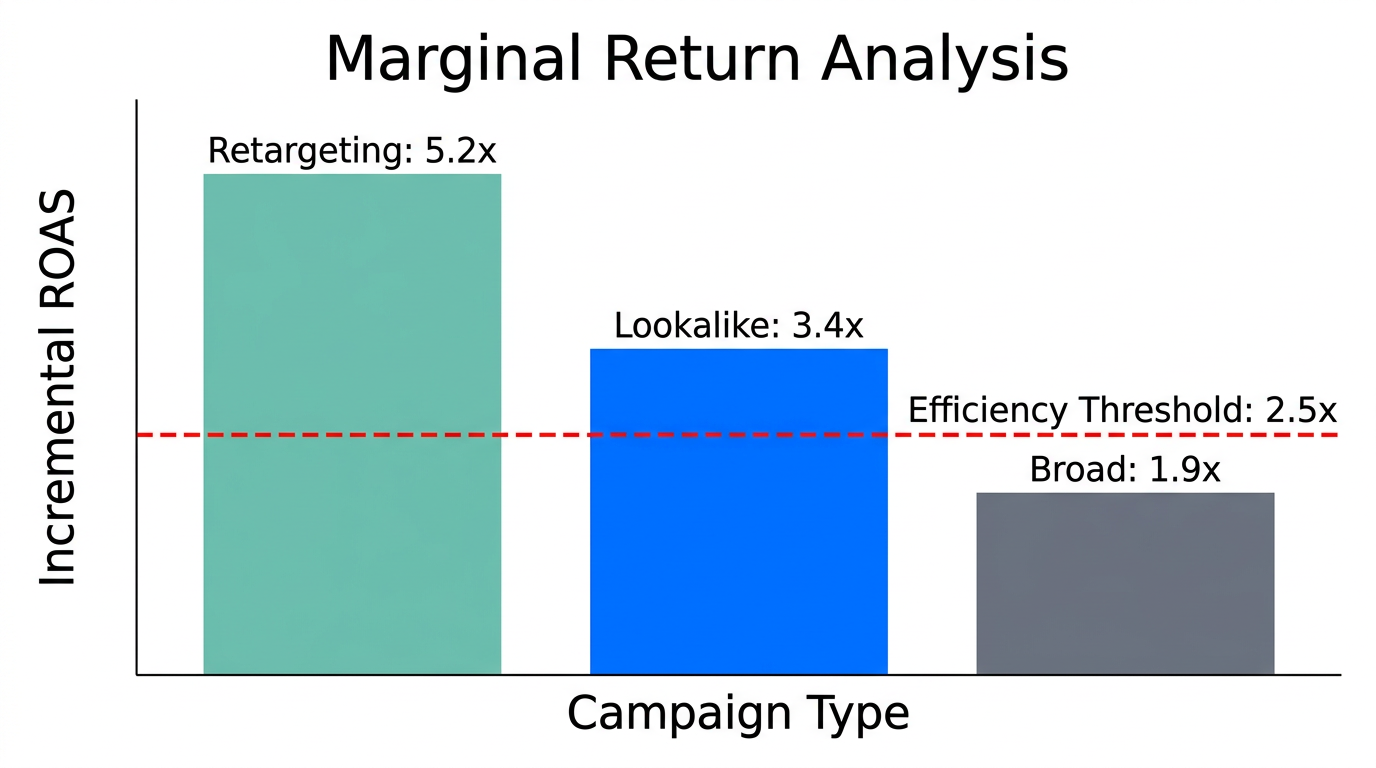
One of the most powerful applications of Claude Code for Meta Ads is identifying where your next dollar should go. Traditional platform recommendations often prioritize "reach" or "estimated conversions," which are often biased toward the platform's own bottom line rather than your profit. Claude can be instructed to perform a Marginal Return Analysis to see where scaling spend actually yields a higher return on ad spend (ROAS).
Step 1: Data Integration via MCP
To start, you must connect Claude to your live data. Many technical marketers use n8n as a self-hosted MCP server to create custom ad logic. This allows Claude to see the performance delta between your 'Brand' campaigns (bottom-of-funnel, high intent) and 'Generic' campaigns (top-of-funnel, high volume).
Step 2: The Fractional Strategist Prompt
Once connected, you can deploy a specific prompt to identify budget waste:
- "Analyze the last 30 days of data. Calculate the incremental ROAS for our Brand campaigns vs Generic campaigns. If I reallocate $10,000 from Brand to Generic, what is the projected impact on total LTV based on our current retention cohorts?"
| Strategy Type | Meta Default Advice | Claude AI Strategist Logic |
|---|---|---|
| Budgeting | Maximize daily reach | Maximize Marginal ROAS |
| Campaign Focus | Broad targeting (Advantage+) | Segmented by Profit/LTV |
| Success Metric | In-platform Conversions | Blended ROAS & Multi-touch Attribution |
By prioritizing profit and LTV metrics over default recommendations, you avoid the trap of over-spending on users who would have converted anyway (Brand cannibalization) or users with low long-term value.
Case Study: Autonomous Meta Ads Management
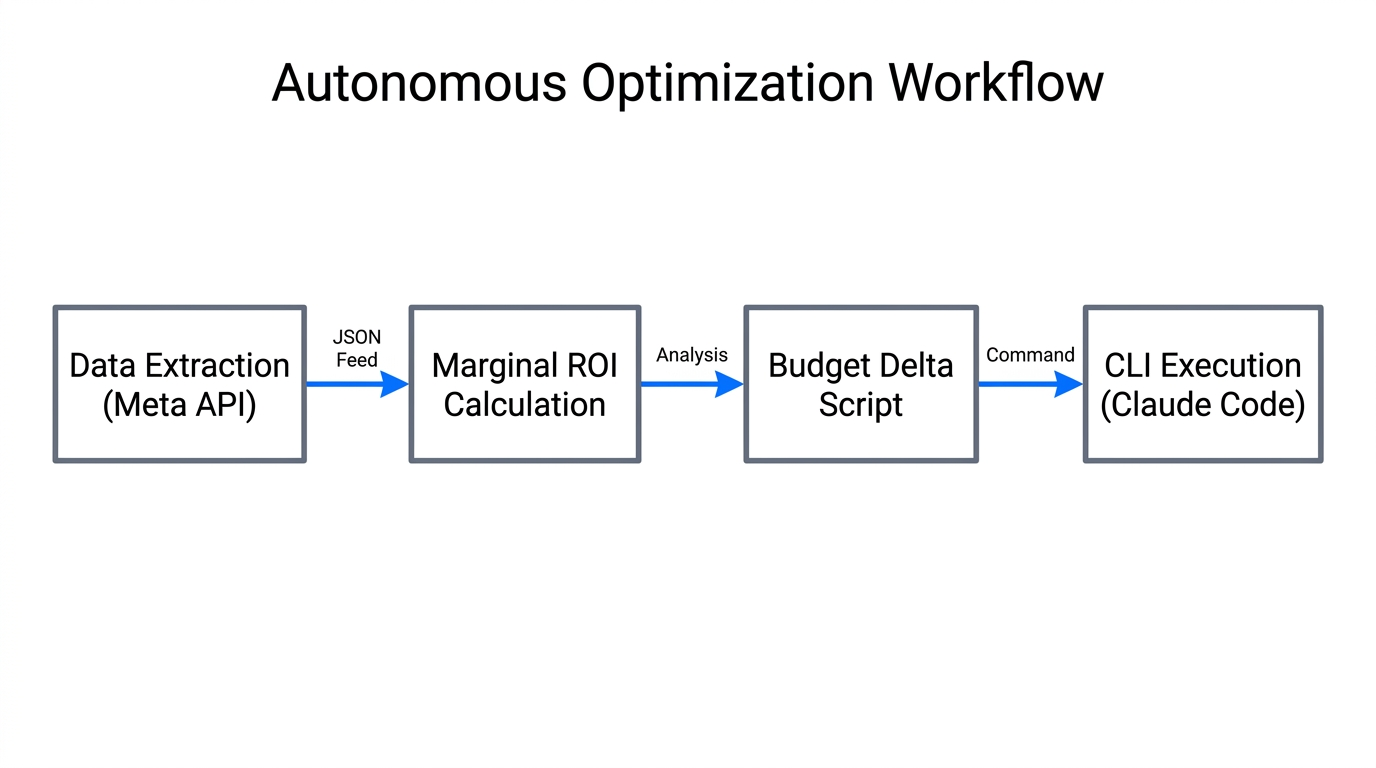
The potential for automation isn't just theoretical. Marketer Giorgio Liapakis documented a 30-day experiment letting Claude Code run a Meta Ads account autonomously. By utilizing the Meta Marketing API and the Nano Banana Pro API, the agent handled everything from initial ICP (Ideal Customer Profile) research to automatically pausing underperforming creative sets.
This "agentic" approach allows for 24/7 account monitoring. While a human manager might check an account once a day, an AI agent can monitor hourly fluctuations, scaling budgets during peak performance windows and pulling back when creative fatigue sets in. However, experts like PPC Specialist Malcolm Gibb warn that you must treat Claude as an analytical partner rather than a completely hands-off pilot. Security is paramount, and using well-vetted connectors like TrueClicks is essential to protect developer tokens.
"The shift from simple generative AI to agentic AI is the single most important technology trend for agencies this year."
'Vibe Coding' Custom Analytics Tools for Video Performance
The term "Vibe Coding" refers to using natural language to build complex software tools without deep manual coding. This is a game-changer for AI budget optimization because it allows marketers to build custom analytics tools tailored to their specific creative needs. For example, Mike Futia of Scale AI used Claude Code to build a custom Meta Ads Creative Analytics tool that syncs accounts and uses AI to analyze video hook and hold rates.
Creative is the biggest lever in Meta Ads today. By building a custom tool via Claude, you can:
- Automatically pull video performance data via API.
- Segment videos by "Hook Rate" (3-second views / impressions).
- Correlate high hold rates with specific creator personas or visual styles.
To feed these analytics tools with high-quality content, many growth teams use Stormy AI to discover and vet the top-performing UGC creators. Once you have the creator data, Claude can analyze which creator archetypes are actually driving the highest ROAS, allowing you to double down on the influencers that move the needle. This combination of UGC sourcing through Stormy AI and technical analysis through Claude Code creates a closed-loop system for creative dominance.
Safely Executing Budget Changes with 'Plan Mode'
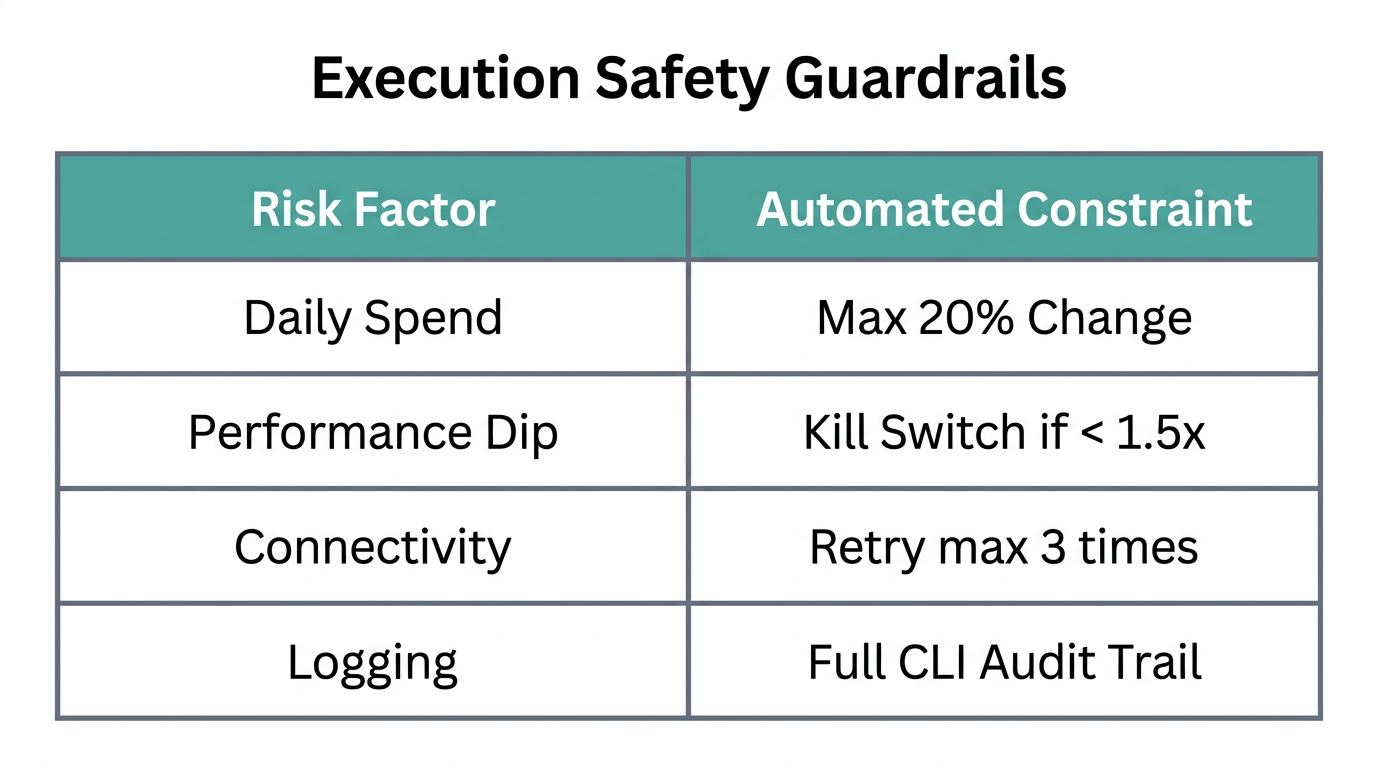
One of the biggest risks in using an AI marketing strategist is the "hallucination" factor—where the AI provides a logic that sounds perfect but is based on flawed data. In the terminal, this can lead to catastrophic budget errors. This is why mastering Shift+Tab 'Plan Mode' in the Claude Code CLI is non-negotiable.
Before any command is executed, Plan Mode allows you to review exactly what Claude intends to do. It maps out the API calls and logic changes without actually firing them. This provides a critical safety barrier. As the guide from Writer.com suggests, modern marketers must act as the "conductor of the AI orchestra," which means verifying the score before the performance begins.
Avoid the 'Garbage In, Garbage Out' Trap
Claude's analysis is only as good as your tracking infrastructure. If your Meta Pixel is firing double conversions or missing server-side events via the Conversion API (CAPI), Claude will optimize for false signals. Always perform a regular audit—using tools like the Claude Ads Skill by Daniel Agrici—to check for tracking errors and wasted spend before trusting the AI with budget reallocation.
Conclusion: Building Your Modern Growth Stack
Optimizing Meta Ads in 2025 requires a shift in mindset. You are no longer just an ad buyer; you are a systems architect. By leveraging Claude Code as your ROAS optimization tool, you can move beyond the limitations of standard dashboards and start making data-driven decisions that prioritize actual profit over vanity metrics.
Start small: Use Claude to audit your current account using a library from Cursor Directory or GitHub. Once you've established trust, move into marginal return analysis. Pair your technical stack with a creative sourcing engine like Stormy AI to ensure your high-performing algorithms always have high-quality content to scale. The future of Meta Ads belongs to those who can vibe-code their way to a better ROAS.