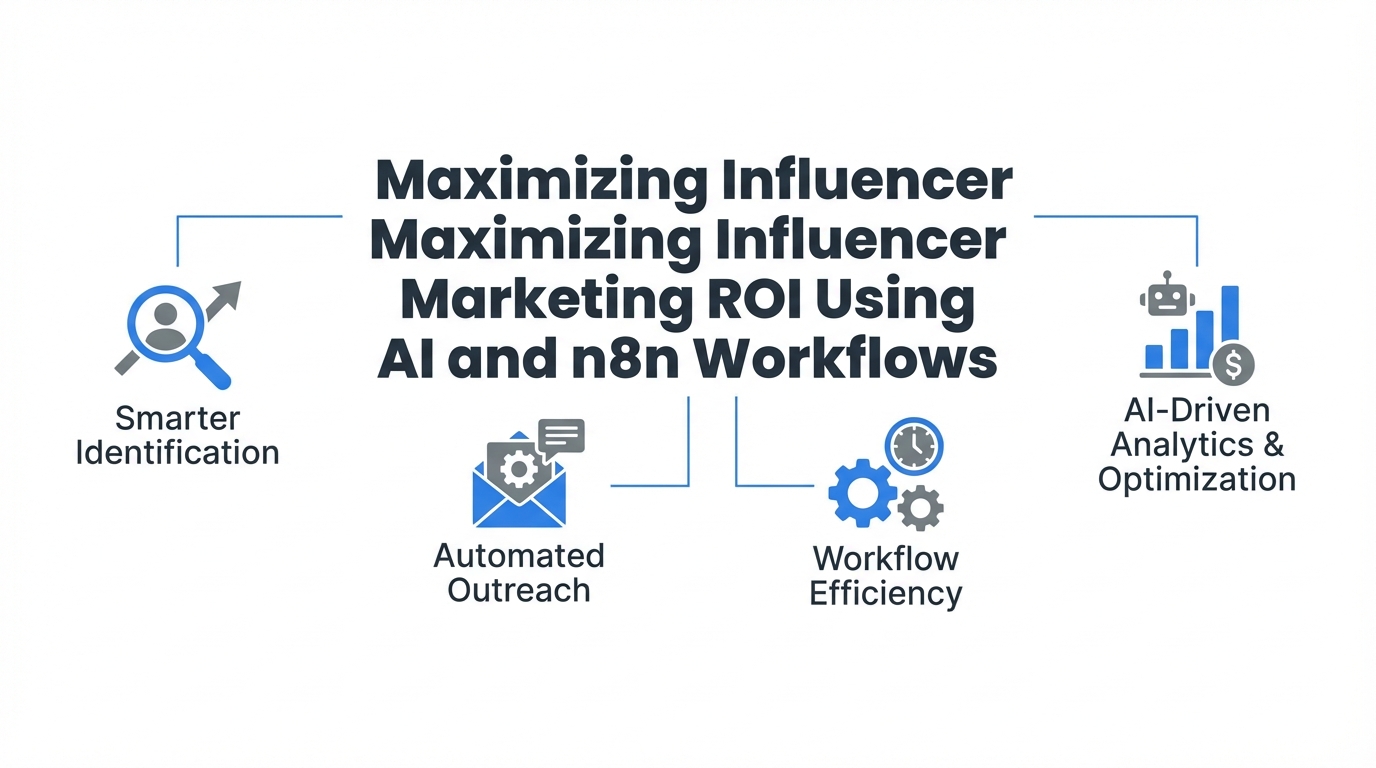
The era of measuring social media success through likes and comments is officially over. As we head into 2026, the industry is witnessing a seismic shift where influencer marketing ROI is no longer just a buzzword—it is the primary benchmark for survival. For performance marketers, the goal has evolved from simple brand awareness to a rigorous focus on how to reduce customer acquisition cost (CAC) through precise, data-backed creator collaborations. Brands are no longer willing to gamble their budgets on massive follower counts; instead, they are turning to performance marketing automation to ensure every dollar spent results in measurable growth.
This shift is driven by a maturing market where 74% of brands are moving their budgets into creator programs that prioritize conversion over vanity. To compete in this landscape, sophisticated growth teams are building a "Power Stack" that combines agentic artificial intelligence with low-code orchestration. By pairing the discovery and negotiation capabilities of AI agents with the workflow logic of tools like n8n, marketers can finally scale their outreach without sacrificing quality or breaking the bank.
The Performance Pivot: Why ROI is the Only Metric That Matters in 2026
For years, influencer marketing was treated as a top-of-funnel activity. However, as tracking technology improves and market competition intensifies, the industry is moving toward a performance-first model. In 2026, the most successful brands are those that treat creators as a scalable acquisition channel similar to Meta Ads Manager or Google Ads. This means evaluating a creator not just by their aesthetic, but by their historical ability to drive app installs, trials, and purchases.
According to research from Gartner, the adoption of AI has allowed marketers to move beyond the surface level. We are seeing a move toward "Agentic Orchestration," where tools like Claude Code and specialized AI agents can autonomously navigate campaign structures and make real-time decisions. This level of automation is essential for brands that need to manage hundreds of micro-influencer relationships simultaneously while maintaining a low CAC.
"Influencer marketing is still stuck in spreadsheets. You should be able to describe your campaign once and have the AI agent work for you while you sleep."Automated Bidding: Reducing Influencer Fees by 43%
One of the largest drains on influencer marketing ROI is the administrative overhead and the lack of price transparency during negotiations. Many brands overpay for talent because they lack the data to benchmark fees against real-time engagement. This is where automated negotiation agents change the game. By using multi-round automated bidding, these agents can compare a creator's quoted price against historical market data and engagement metrics, often reducing influencer fees by up to 43%.
This process removes the emotional friction of negotiation. An AI agent can handle the back-and-forth communication, ensuring that the brand secures the best possible rate while the creator receives a fair offer based on their actual performance potential. When these savings are compounded across a campaign with 50 or 100 creators, the impact on the bottom line is massive. Modern platforms like Stormy AI provide these automated outreach and negotiation capabilities, allowing brands to source and manage UGC creators at a fraction of the traditional cost.
| Feature | Legacy Outreach | Agentic AI Automation |
|---|---|---|
| Discovery Speed | Manual (Hours/Days) | Instant (Natural Language) |
| Negotiation | Back-and-forth emails | Automated Multi-round Bidding |
| Fee Reduction | 0-5% via manual haggling | Up to 43% via data-driven bidding |
| Data Sync | Manual entry to CRM | Real-time via n8n/Webhooks |
The n8n Orchestration Playbook: Connecting the Dots
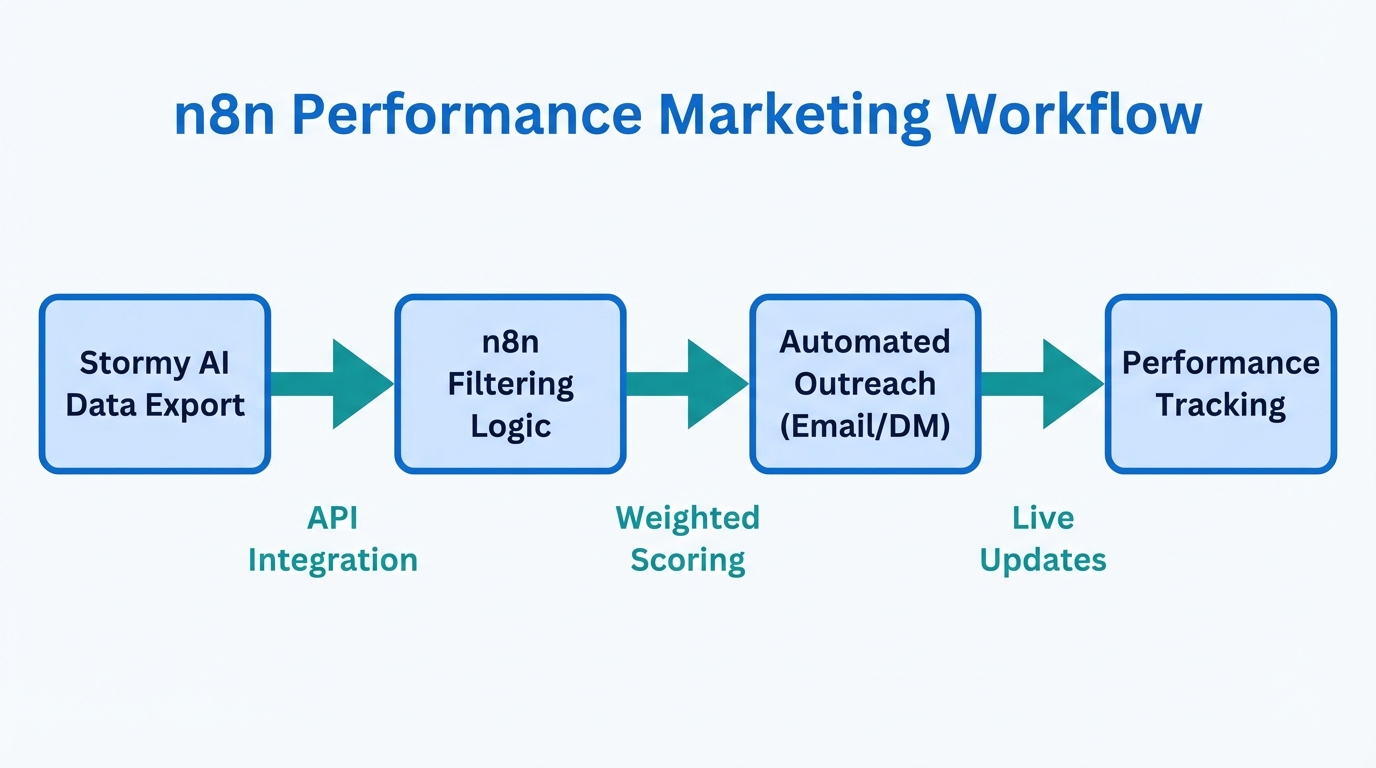
While an AI agent handles the "front-line" work of discovery and outreach, n8n acts as the central nervous system of your marketing stack. It allows you to connect the output of your discovery tool to your existing CRM and analytics platforms, ensuring that no data is siloed. Here is a step-by-step playbook for building a high-accuracy performance marketing engine.
Step 1: Automated Discovery and Export
Start by using natural language prompts to find your ideal creators. Instead of filtering by broad categories, use psychographic descriptions. For example: "Find US-based fitness YouTubers who talk about organic supplements and have 50k–150k subscribers." Once the initial list is generated, the data needs to be moved into your automation environment. This can be done by syncing the creator CRM to a Google Sheet or using a direct webhook trigger.
Step 2: Metric Enrichment via RapidAPI
Standard profile data isn't enough to calculate true ROI potential. Use an n8n workflow to send each creator's handle to the Instagram120 API via RapidAPI. This allows you to fetch real-time engagement rates, comment-to-like ratios, and audience growth trends. By enriching the data before the outreach begins, you ensure your performance marketing automation is targeting only the most viable candidates.
Step 3: AI-Driven Vetting and Scoring
Pass the enriched data through an n8n AI Agent Node using GPT-4o. The AI can analyze the creator's recent post captions and audience demographics to assign a brand alignment score from 1 to 10. This creates a "Human-in-the-Loop" system where the AI filters out the noise, leaving only high-potential leads for your team to review in Airtable or ClickUp.
"The future of marketing isn't just AI—it's agentic AI that can see your campaign goals and execute the technical plumbing to make them happen."Building a Weighted Scoring Formula to Prioritize ROI
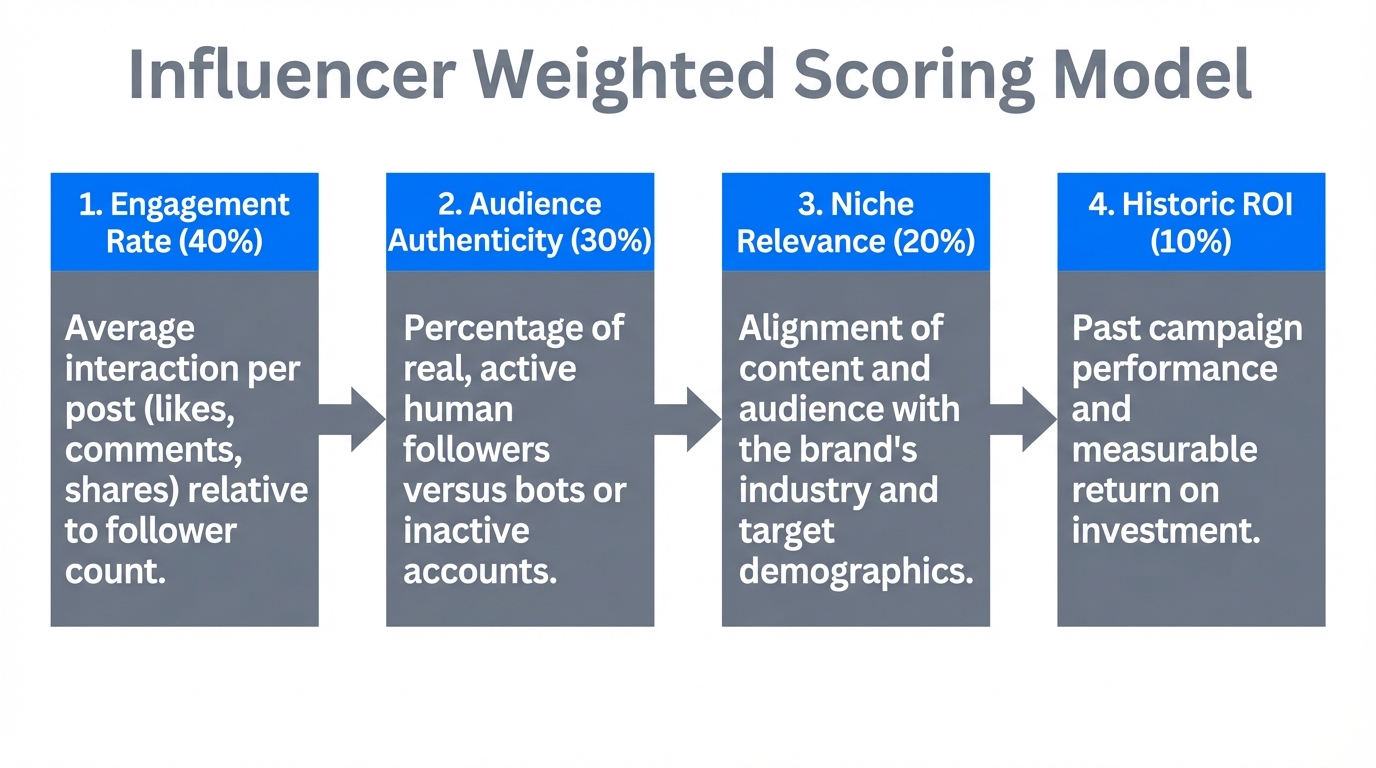
To truly reduce customer acquisition cost, you must move away from equal-weight metrics. A creator with 1 million followers but a 0.5% engagement rate is often less valuable than a micro-influencer with 50,000 followers and a 7% engagement rate. Within your n8n workflow, you should implement a weighted scoring formula that prioritizes the metrics most likely to drive conversions.
A common performance-focused formula looks like this:
- Engagement Rate (60%): The strongest indicator of audience trust and action.
- Audience Alignment (20%): How closely the creator's niche matches your target persona.
- Cost per Mille (CPM) (20%): The efficiency of the reach based on the negotiated fee.
By automating this calculation, you can programmatically ignore any creator who doesn't meet a minimum threshold. This ensures that your budget is only allocated to creators with the highest conversion potential. Tools like Stormy AI can help source these high-engagement micro-influencers through deep search, which can then be fed into your n8n scoring logic.
Case Study: Dunkin' Donuts and the Power of Local Discovery
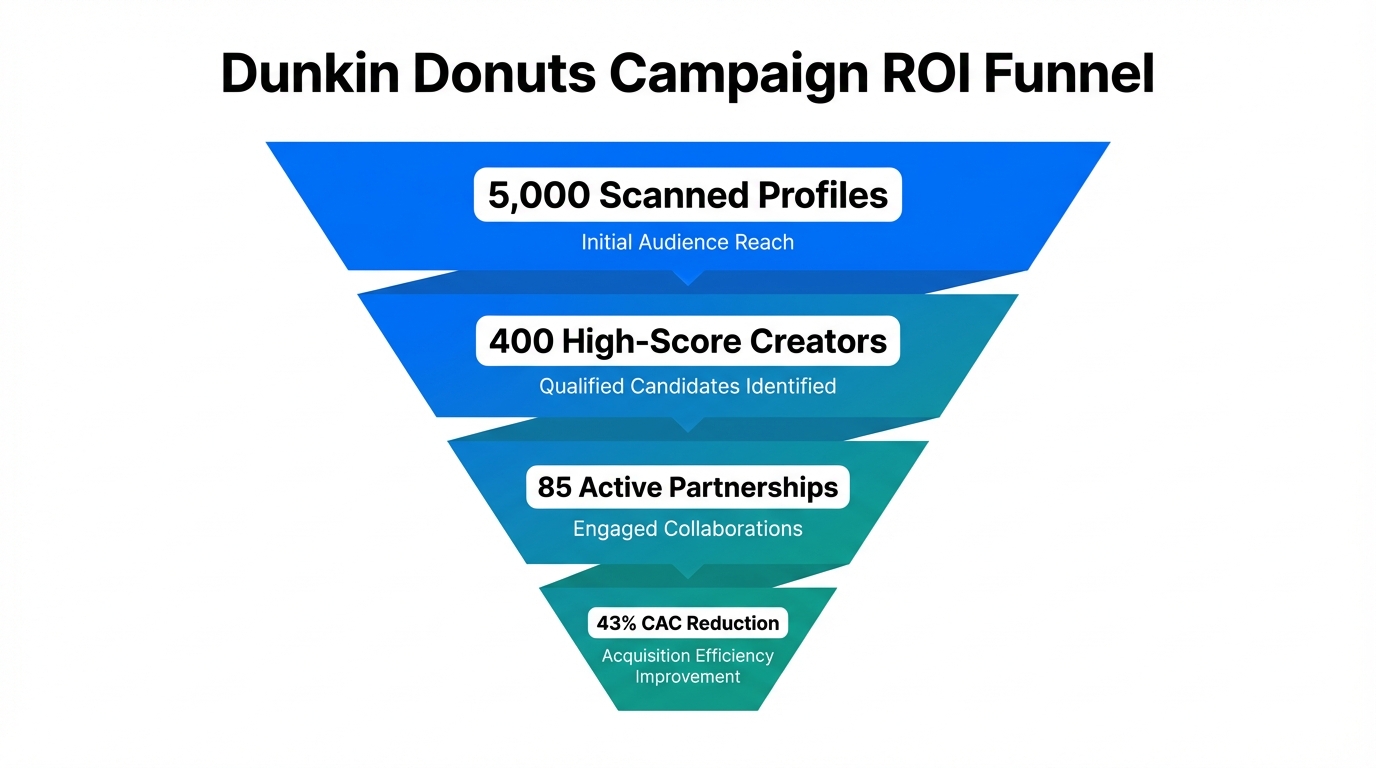
A prime example of data-driven influencer marketing is Dunkin' Donuts. They faced the challenge of driving app downloads in specific geographic regions where they were running local promotions. Instead of hiring expensive national celebrities, they utilized hyper-local discovery to find micro-influencers with highly concentrated local followings [source: Marketing Dive].
This success was made possible by the ability to search for creators at a granular level. When you can find 50 creators in a specific zip code who all share the same coffee-loving audience, the relevance of the content skyrockets, and the CAC plummet. This strategy is highly effective for mobile apps relying on Apple Search Ads or TikTok Ads Manager as it provides a steady stream of authentic UGC for ad creative.
Avoiding Common Automation Traps
While automation is powerful, it is not a "set it and forget it" solution. Marketers must be wary of several common pitfalls that can damage their brand reputation or lead to wasted spend:
- Over-Automation ("AI Slop"): Sending thousands of identical AI-generated emails can lead to being flagged as spam. Always use a "Wait for Approval" node in n8n for high-value outreach to ensure a human touch.
- Ignoring Compliance: Ensure all automated workflows respect GDPR and include necessary ad disclosures. Use the built-in compliant email finders found in reputable platforms.
- Siloed Data: If your influencer data isn't syncing with your main CRM, like Pipedrive or other performance-tracking databases, you'll lose the ability to track long-term customer lifetime value (LTV) from influencer leads.
- Vanity Metric Obsession: Never let follower count override engagement quality in your scoring logic.
"The biggest mistake in automation is removing the human entirely. AI should be the engine, but a human must still steer the brand's voice."Conclusion: Scaling Toward a High-ROI Future
The convergence of AI agents and workflow automation has made it possible for even small teams to execute enterprise-level influencer campaigns. By using Stormy AI for discovery and negotiation, and n8n for data orchestration, brands can finally reduce customer acquisition cost and maximize their influencer marketing ROI.
As we look toward 2026, the competitive advantage will go to those who can iterate the fastest. Using performance marketing automation isn't just about saving time; it's about making better decisions through data. Start building your automation stack today by identifying your key performance metrics, setting up your weighted scoring logic, and letting AI handle the heavy lifting of sourcing and negotiation while you focus on high-level strategy and creative direction.