The landscape of performance marketing is undergoing a seismic shift from manual data management to what experts call "AI-Native" architectures. As of 2025, the AI marketing market has already reached a staggering $47.32 billion, with projections suggesting it will more than double to $107.5 billion by 2028. For growth hackers and performance marketers, the challenge is no longer just collecting data—it is processing that data fast enough to make profitable decisions. Today, 88% of marketers use AI daily according to HubSpot research, and by 2026, 80% of analytics tools are expected to be fully AI-powered. This article provides a comprehensive playbook for leveraging Claude Code and n8n to automate the most tedious parts of Google Ads management, specifically focusing on Google Ads ROAS optimization and automated creative testing.
The New Growth Stack: Claude Code and MCP
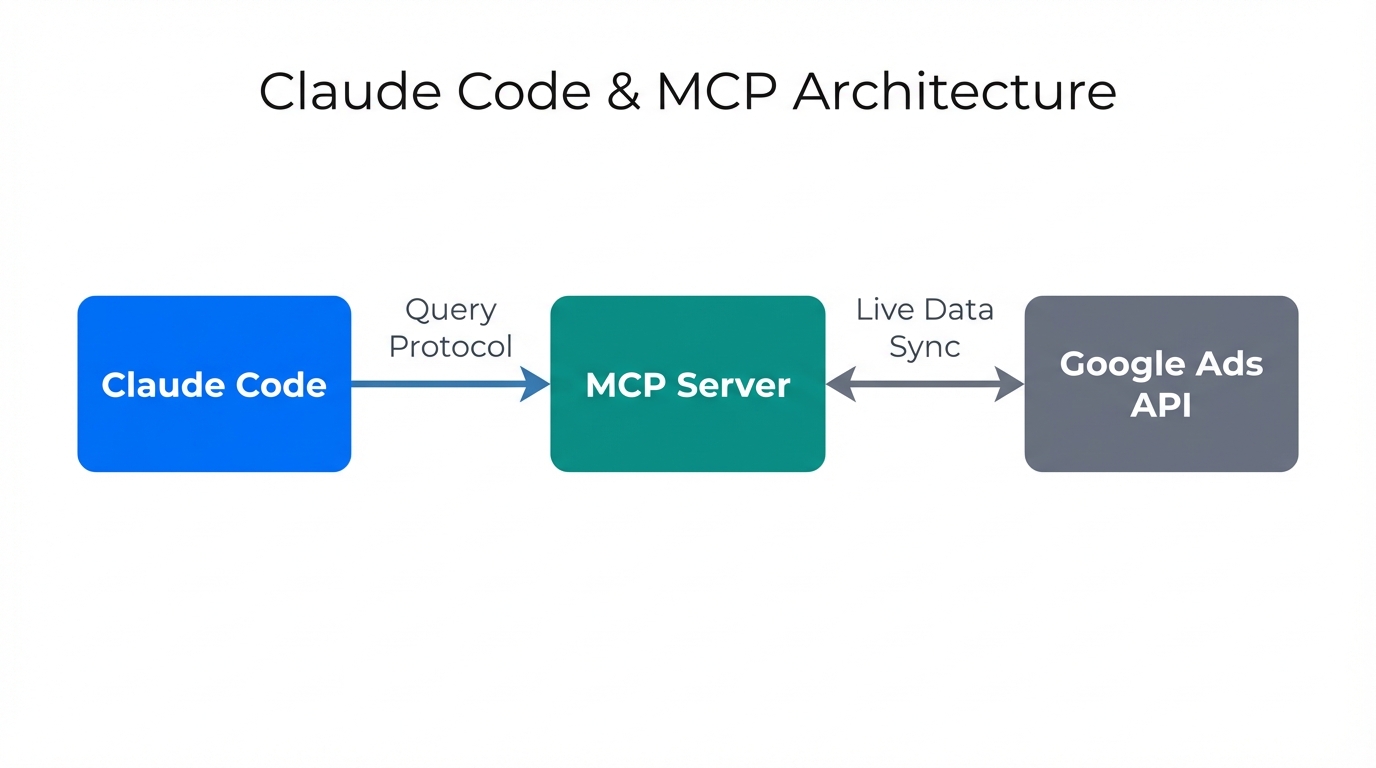
To understand the cutting edge of performance marketing automation, we must look at the integration of Anthropic’s developer tools with automation platforms. "Claude Code" represents a paradigm shift where developers and marketers use a CLI (Command Line Interface) or VS Code integration to interact with systems agentically. This isn’t just a chatbot; it’s a tool that can write, debug, and deploy logic across your marketing stack.
The bridge between Claude and your live ad data is the Model Context Protocol (MCP). By using an n8n MCP Server, Claude Code can literally "see" and "edit" your automation workflows in real-time. This allows growth hackers to describe a complex budget-pacing logic in plain English, while Claude handles the underlying JSON structure. Considering that Claude 3.7 Sonnet maintains high accuracy in generating structured JSON, this workflow eliminates the manual errors that typically plague complex API integrations.
"The future of growth hacking isn't building workflows manually; it's using AI to engineer the JSON that powers our marketing infrastructure."
AI Ad Creative Analysis: Eliminating Visual Friction
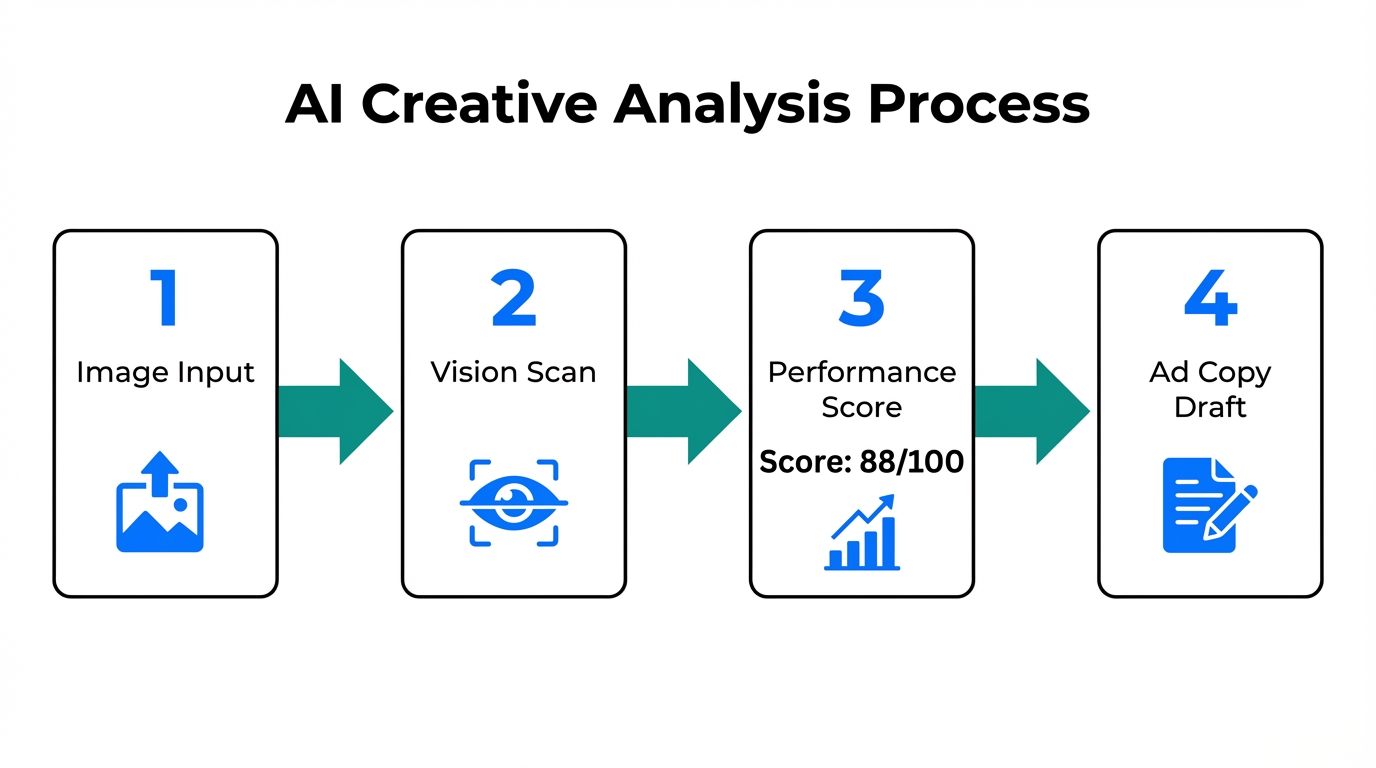
Most Google Ads optimization focuses on keywords and bids, but the creative asset is often the single biggest lever for Return on Ad Spend (ROAS). Using the vision capabilities of Claude 3.7 via the n8n Anthropic Node, marketers can now automate the qualitative analysis of their assets.
By building a workflow that fetches recent ad screenshots and passes them to Claude, you can identify "visual friction"—design elements that confuse the user or distract from the Call to Action (CTA). Resources on growth marketing strategy suggest that while AI is excellent at this "busywork" of summarizing and analyzing hundreds of images, it still requires human oversight for final strategic pivots. This 80/20 split allows you to scale automated ad testing without losing the brand’s creative soul.
| Optimization Tier | Manual Method | AI-Native Method (n8n + Claude) |
|---|---|---|
| Creative Vetting | Manual review of click-through rates | Automated Vision analysis for visual friction |
| Budget Scaling | Daily spreadsheet checks | Real-time ROAS guardrails via n8n triggers |
| Reporting | Weekly manual PDF exports | Live dynamic dashboards in Airtable/Sheets |
The n8n Playbook: Building Your Automation Engine
To achieve Google Ads ROAS optimization at scale, you need a structured workflow that bridges raw data and actionable AI insights. Follow this three-tier implementation strategy to build your own engine.
Step 1: Data Extraction & Foundation
The first step is pulling your performance data. Use the n8n Google Ads Node to extract metrics like ROAS, CPC, and Impression Share. Avoid the common "N+1 problem"—where you fetch data for each campaign individually—by using the Google Ads Query Language (GAQL) to fetch all necessary data in a single batch request.
Step 2: AI Analysis & Reasoning
Once the data is in your workflow, pass the JSON payload to Claude. Use a "Chain of Thought" prompting strategy. For example, ask Claude to:
- Identify three performance anomalies in the past 24 hours.
- Cross-reference these with creative asset IDs.
- Suggest budget shifts based on which campaigns are exceeding their ROAS targets.
Step 3: Distribution and Action
Don’t let the insights sit in the workflow. Connect your logic to a Slack Node to alert your team immediately if ROAS drops below a critical threshold (e.g., < 2.5x). For long-term tracking, push this data to Google Sheets or Airtable to create a live performance source of truth.
"Automating the alert system ensures that you stop losing money the moment a campaign breaks, not 48 hours later when you finally check the dashboard."
Implementing Automated Budget Guardrails
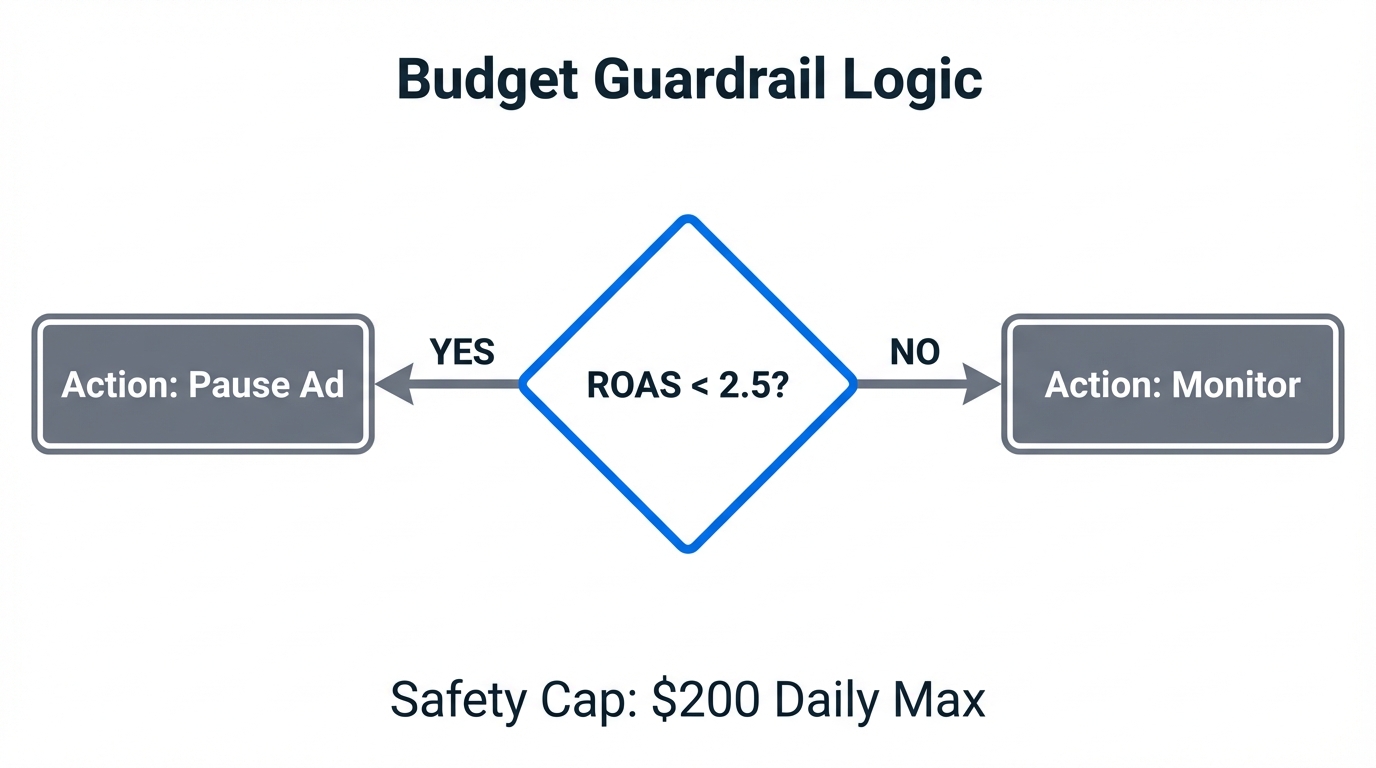
One of the most powerful applications for Claude Code for growth hackers is the creation of "Budget Guardrails." This involves an n8n workflow that monitors daily spend in real-time. If a campaign spends 120% of its daily budget without hitting its conversion target, the workflow can automatically pause the campaign or lower the bid via the Google Ads API.
For brands working with influencers or UGC creators, platforms like Stormy AI can help source and manage creators at scale, providing the very assets that these automated systems will then test. Since 79% of people say UGC highly impacts their purchasing decisions, feeding high-quality creator content into an automated testing engine ensures a constant pipeline of fresh creative for your Google Ads campaigns.
Security & Best Practices in Marketing Automation
When building advanced performance marketing automation, security cannot be an afterthought. A common mistake is hardcoding API keys or Google Ads developer tokens directly into a "Code Node" within n8n. This creates a significant security risk. Instead, always utilize n8n’s built-in Credentials Manager to encrypt and store sensitive tokens.
Furthermore, when sending data to Claude for AI ad creative analysis, be mindful of context window limits. Sending 50MB of raw CSV data will likely cause a crash or high latency. Use the n8n "Item Lists" node to pre-process and aggregate data into meaningful summaries before handing it off to the AI. This ensures the model focuses on high-level trends rather than getting lost in individual row-level noise.
Conclusion: The Future of ROAS is Automated
The combination of Claude Code’s reasoning capabilities and n8n’s orchestration power allows performance marketers to act with a speed and precision that was impossible just two years ago. By automating Google Ads ROAS optimization through real-time creative analysis and budget guardrails, brands can finally move away from reactive management and into a proactive growth stance.
Whether you are using automated ad testing to find your next winning video or leveraging tools like Stormy AI to discover creators who can fuel your ad accounts with high-performing UGC, the goal remains the same: maximizing efficiency through intelligent automation. Start small by automating a single reporting task, and gradually build the "AI-Native" infrastructure that will define the winners in the next era of digital advertising.