The landscape of digital commerce is shifting beneath our feet. For modern DTC brand founders and growth leads, the old playbook of high-spend Meta ads is yielding diminishing returns. Instead, the industry is entering the era of the "creator economy," projected to reach a staggering $32.55 billion by the end of 2025 according to data from SuperAGI. To capture this growth, brands are moving away from manual spreadsheets and toward sophisticated influencer management software like Stormy AI that can handle the sheer volume of modern creator partnerships.
Two platforms currently dominate the conversation: Stormy AI and Grin. While both aim to help brands scale, they represent fundamentally different philosophies. One is a high-octane autonomous agent designed for rapid execution, while the other is a robust CRM built for deep relationship management. This article breaks down how to choose the right DTC marketing strategy by leveraging these tools to scale your creator ecosystem.
The Great Shift: Why 73% of Brands Are Betting on Micro-Creators
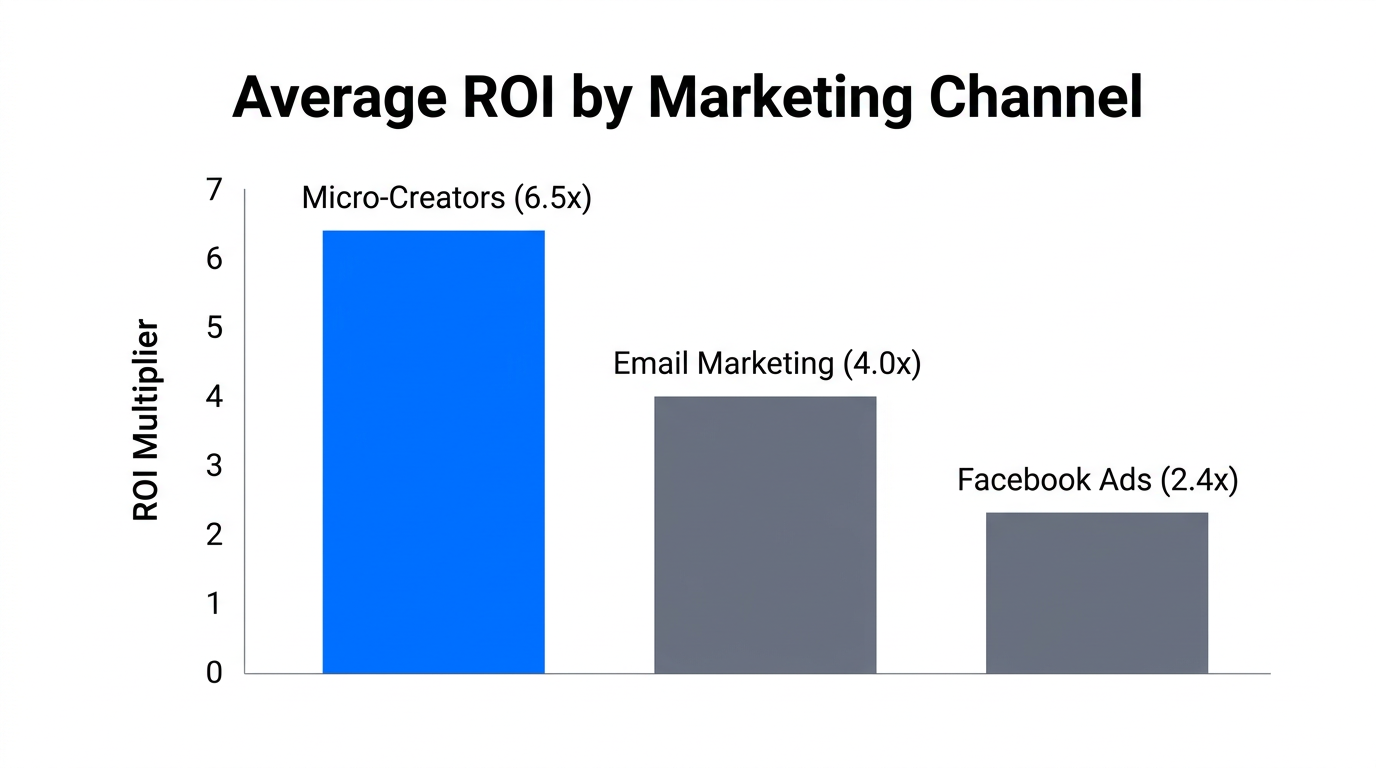
The days of chasing million-follower celebrities are fading. Recent data from the Later 2025 Report reveals that 73% of brands now prioritize micro-creators over mega-stars. The reason is simple: micro-creators offer significantly higher engagement-to-cost ratios on platforms like TikTok and Instagram, allowing brands to diversify their risk and speak to niche, high-intent communities. However, managing 50 micro-creators is exponentially harder than managing one celebrity.
This is where the choice of technology becomes critical. Without an automated system, your team will spend 80% of their time in DMs and only 20% on strategy. Platforms like Stormy AI are specifically built to solve this "volume problem" by using AI to discover and vet hundreds of creators in the time it takes a human to find five.
Stormy AI vs. Grin: A Philosophical Comparison
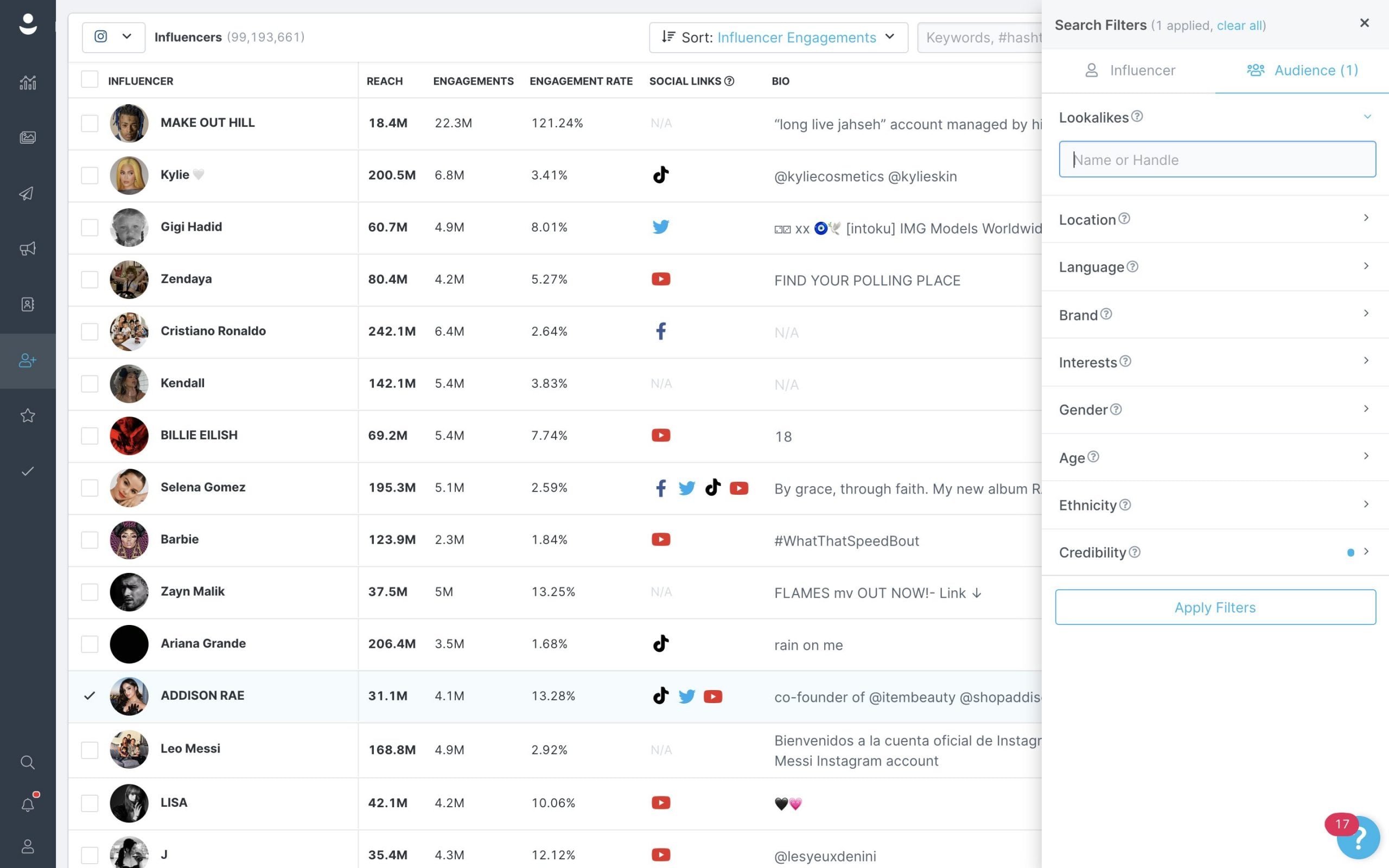
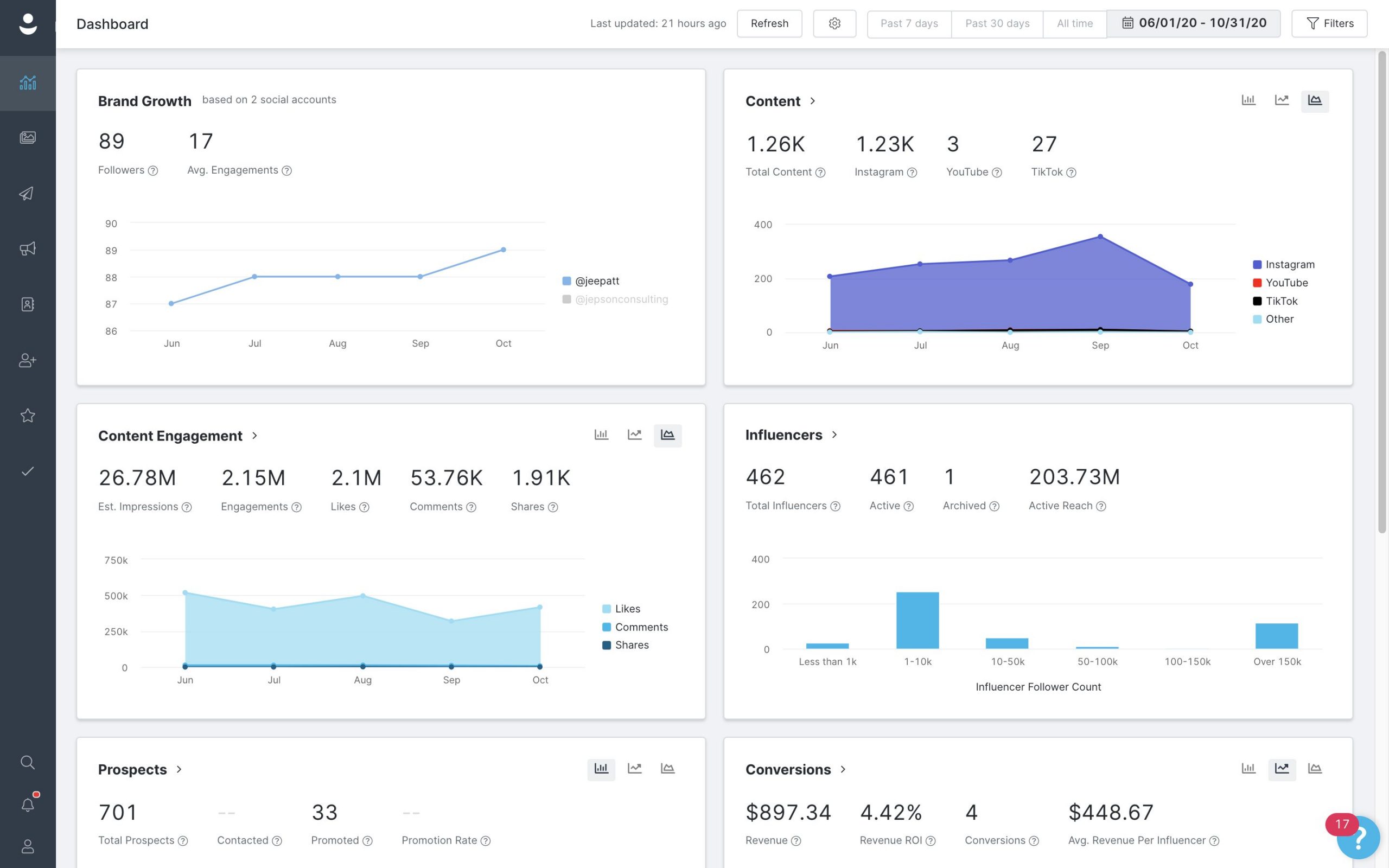
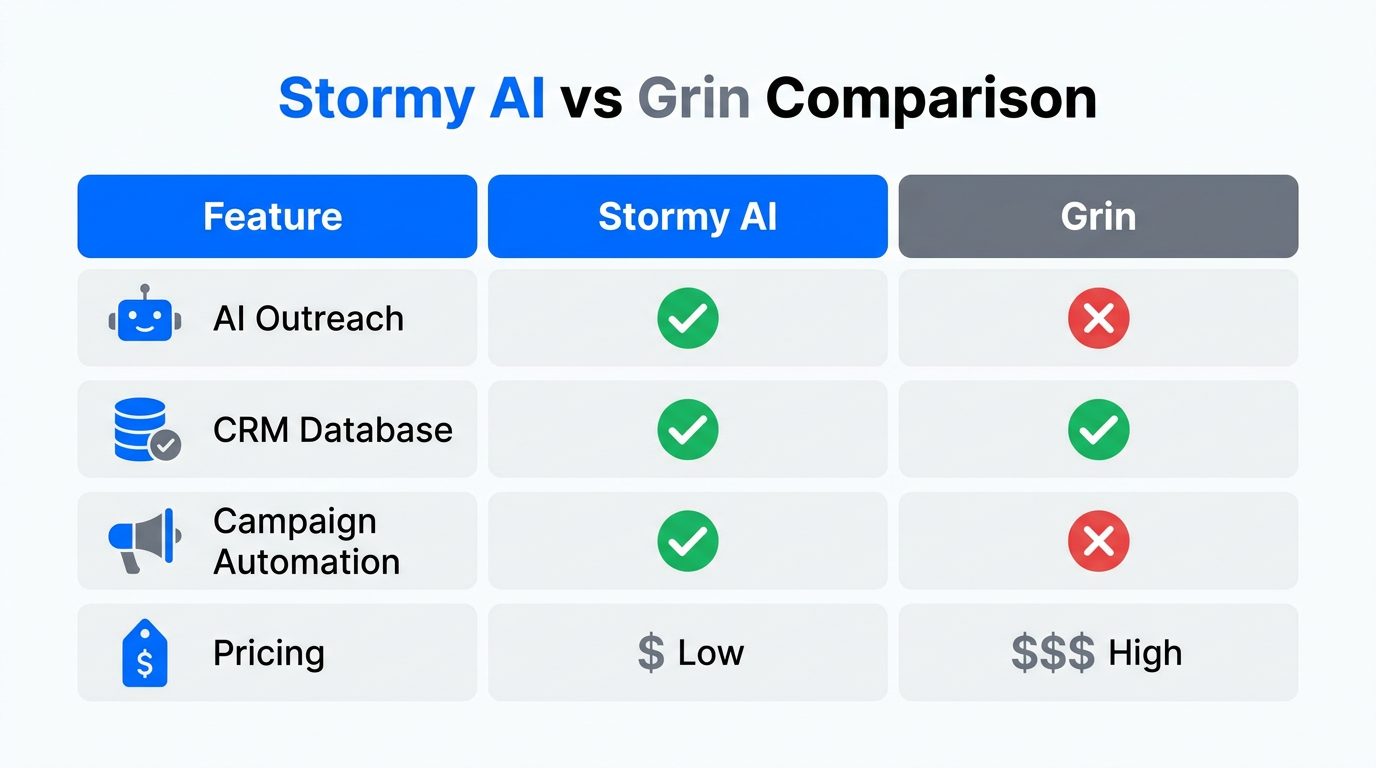
Choosing between these two platforms isn't just about features; it's about how your team operates. Grin is the industry stalwart for established DTC brands, providing a centralized hub for everything from product shipping to affiliate tracking. On the other hand, Stormy AI, a YC-backed innovator, acts as an autonomous AI agent that handles the entire outreach and negotiation lifecycle for you.
| Feature | Stormy AI | Grin |
|---|---|---|
| Core Identity | Autonomous AI Agent | Creator Management CRM |
| Best For | Fast Scaling & Startups | Enterprise & Mature DTC |
| Outreach | Fully Automated AI SDR | Manual/Template Assisted |
| Pricing | $40 - $200/month | $25k - $50k+/year |
| Integration | Gmail, Socials, AI Inbox | Shopify, Klaviyo, Salesforce |
While Grin provides the infrastructure for deep relationship management, Stormy AI provides the execution. If you need a partner that works while you sleep to fill your pipeline with new deals, Stormy is the clear winner.

Using AI to Avoid the 'Vanity Metric' Trap
One of the biggest mistakes in scaling creator partnerships is hiring influencers based solely on follower counts. This is the "Vanity Metric Trap." A creator with 1 million followers and a 0.1% engagement rate is a liability, not an asset. According to the Influencer Marketing Hub, brands using AI-driven analytics see 2.3x higher conversion rates because they vet for authenticity first.
Both Stormy AI and Grin offer vetting tools, but Stormy's AI-powered quality reports go deeper. By pasting any creator URL into Stormy AI, you get an instant analysis of fake followers, spam accounts, and content quality. This ensures that your budget—whether you're spending $500 or $50,000—is going toward real humans who actually influence their audience.
"In an AI world, you should describe your campaign once and have the AI agent work while you sleep, rather than manually managing spreadsheets and cold blasts."
How Stormy AI Acts as an 'AI SDR' to Close Deals 4x Faster
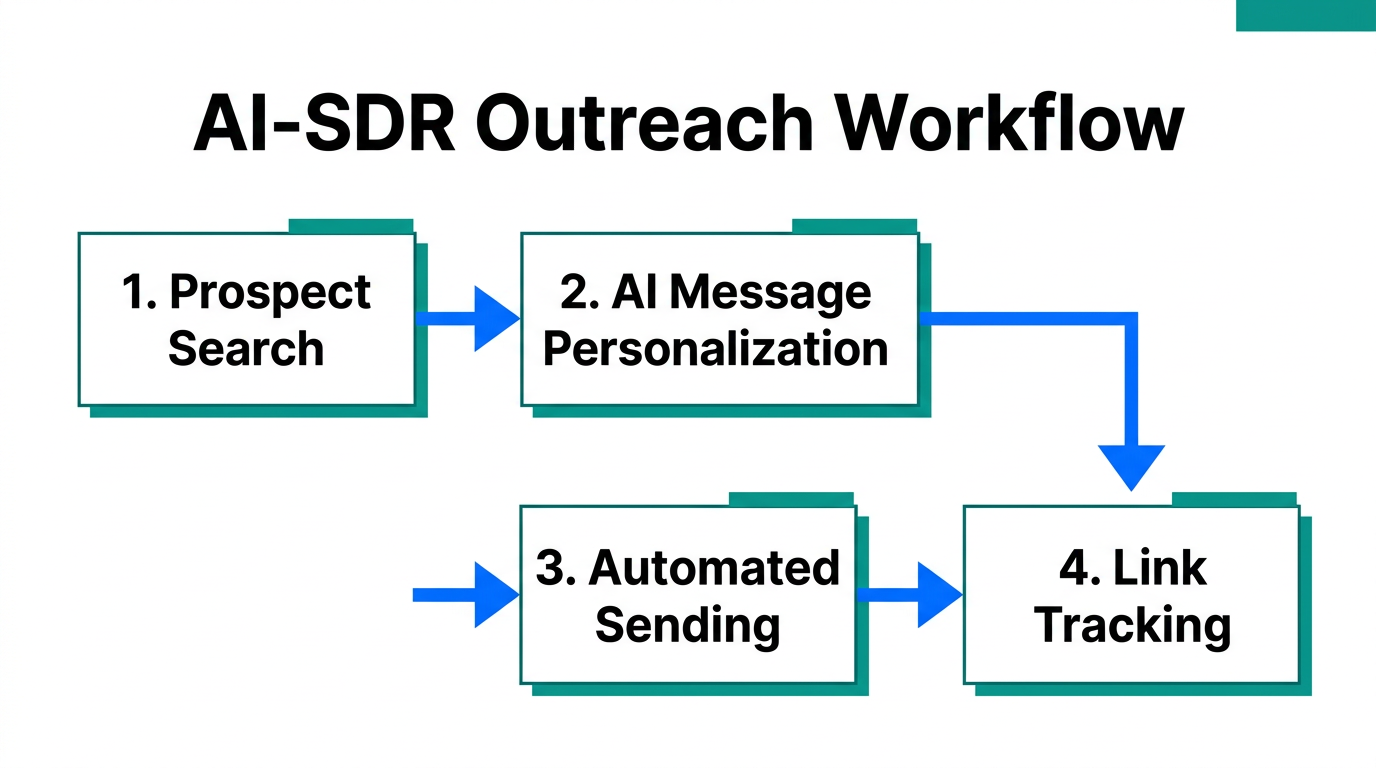
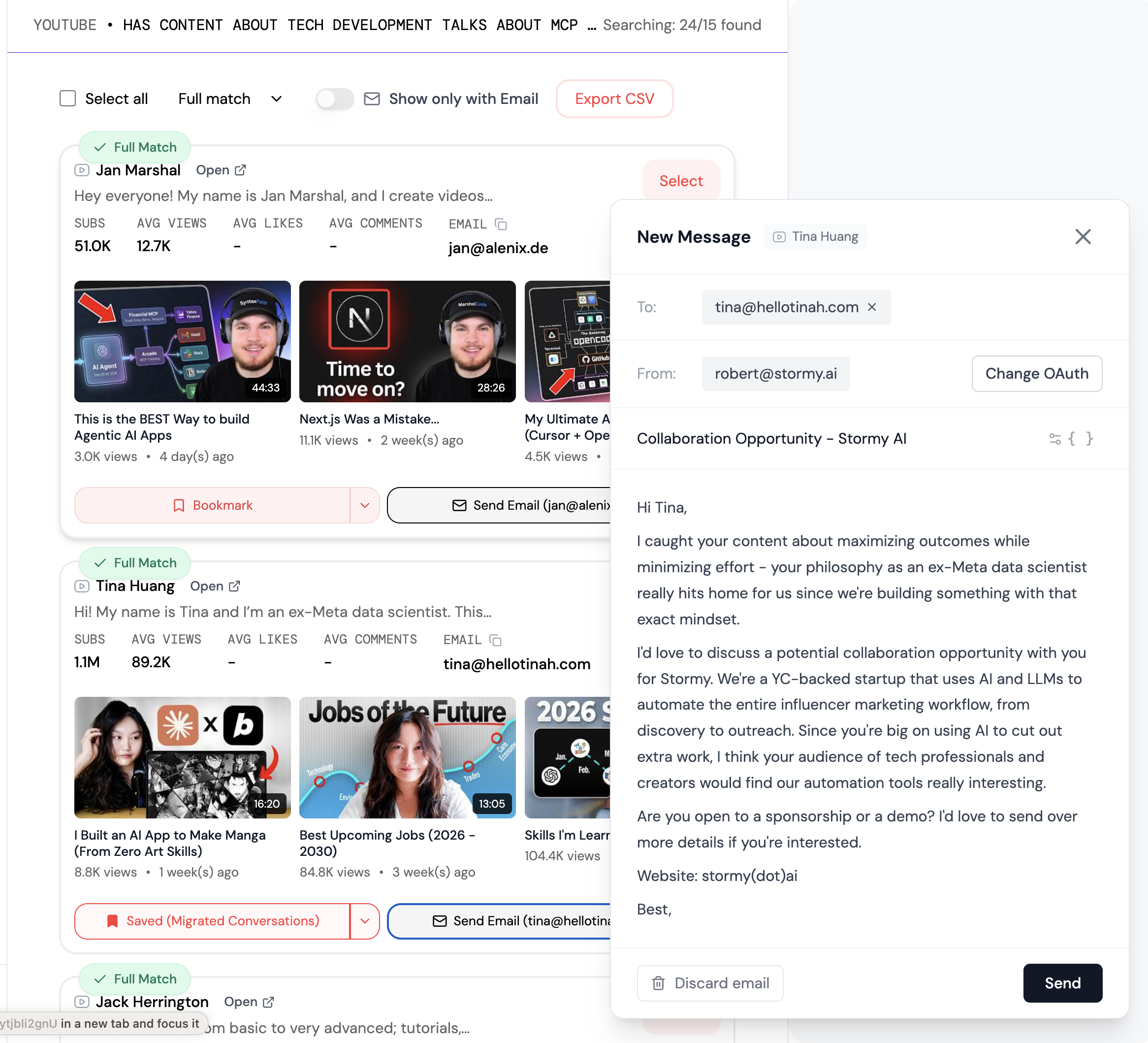
For most brands, the bottleneck in scaling is outreach. You have to find the email, write a personalized message, follow up three times, and then negotiate the price. Stormy AI transforms this process by acting as an AI Sales Development Representative (SDR) for your influencer marketing.
The platform’s unique "Price Strike" and automated negotiation features are designed to secure the best rates without manual back-and-forth. According to the YC Launch details, Stormy users close deals up to 4x faster than traditional manual methods. This speed is a massive advantage in a competitive market where the best creators are flooded with offers every day.
The Logistics of Product Seeding: Automation vs. Manual Effort
If you are a physical product brand using Shopify, logistics can make or break your scaling efforts. Grin is often cited as the "gold standard" for product seeding because it integrates directly with e-commerce platforms to automate shipping and fulfillment tracking. This is a powerful feature for mature brands shipping thousands of units per month.
However, many growth-stage brands find that Grin's hefty price tag—often starting at $25,000 per year—is a barrier to entry. For these teams, using Stormy AI to automate the discovery and negotiation phase, then handling fulfillment via tools like ShipStation or simple Shopify manual orders, offers a much higher ROI. By reducing manual coordination time by 60-70% (Meltwater), Stormy allows you to reinvest those saved thousands of dollars directly into creator fees or TikTok Ads to boost your UGC.
Case Study Benchmarks: Real-World Efficiency Gains
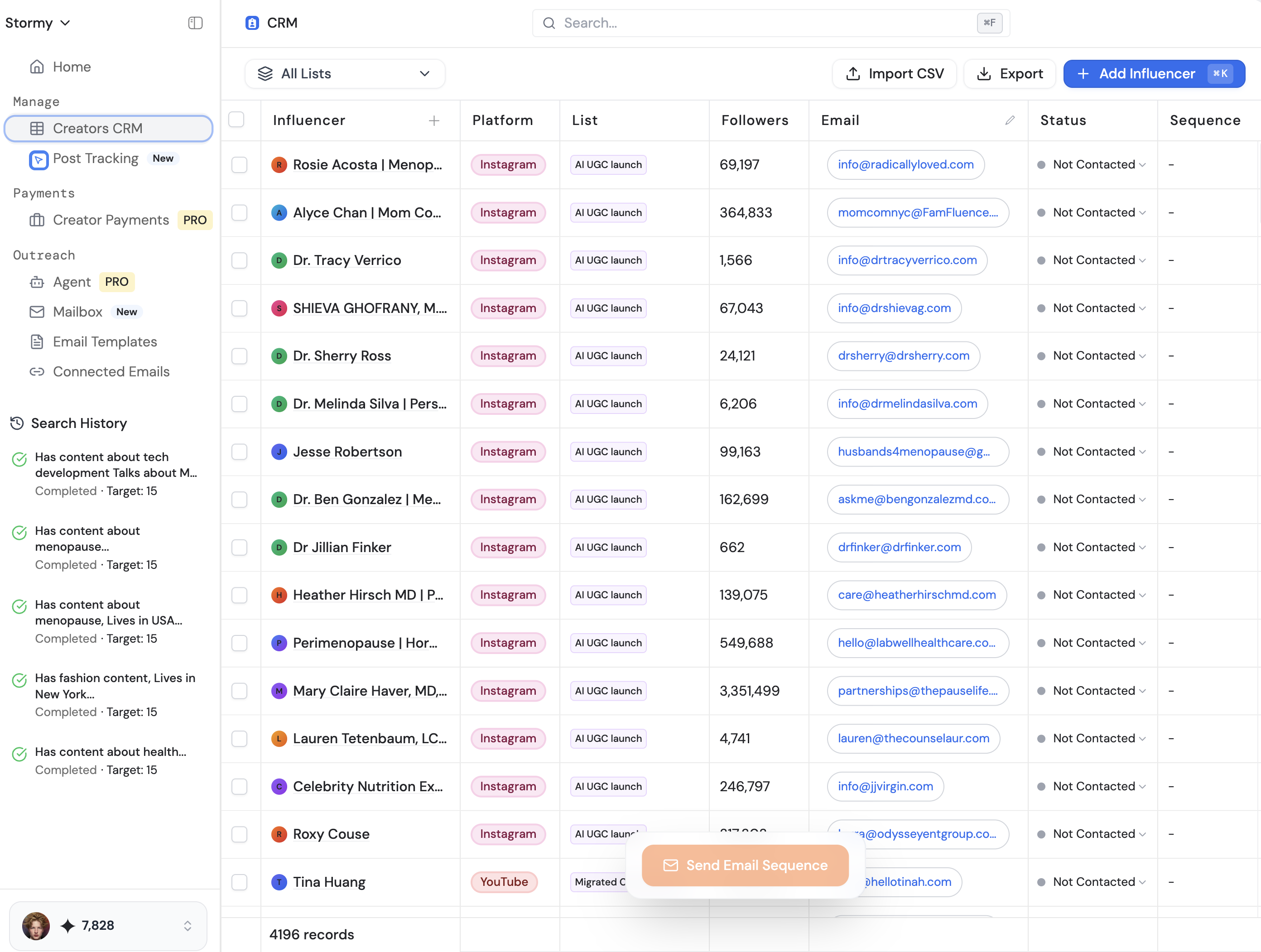
When evaluating ecommerce growth tools, the only metric that truly matters is efficiency. How much output can one marketing manager produce? In a traditional setup, a manager might be able to manage 10-15 active creator relationships. With Stormy AI, that number can jump to 50+.
By using the Stormy AI Creator CRM, teams can track every interaction, negotiation, and payment in one place, ensuring that nothing falls through the cracks. This visibility is vital when you are trying to scale from 5 to 50 creators per month.
Choosing Your Stack: A Founder's Playbook
So, which tool belongs in your tech stack? Follow this sequential playbook to decide:
Step 1: Audit Your Budget and Volume
If you have a dedicated influencer team and a $50k software budget, Grin provides the enterprise governance you might need. However, if you are a founder or a lean growth team looking for disruptive speed and a high ROI, Stormy AI is the far superior choice, starting at just $40/month.
Step 2: Define Your Priority
Is your bottleneck relationship depth or outreach volume? Grin excels at the former. Stormy AI is built for the latter, using an AI agent to handle the discovery and initial outreach so you only step in when the deal is ready to be signed.
Step 3: Test and Iterate
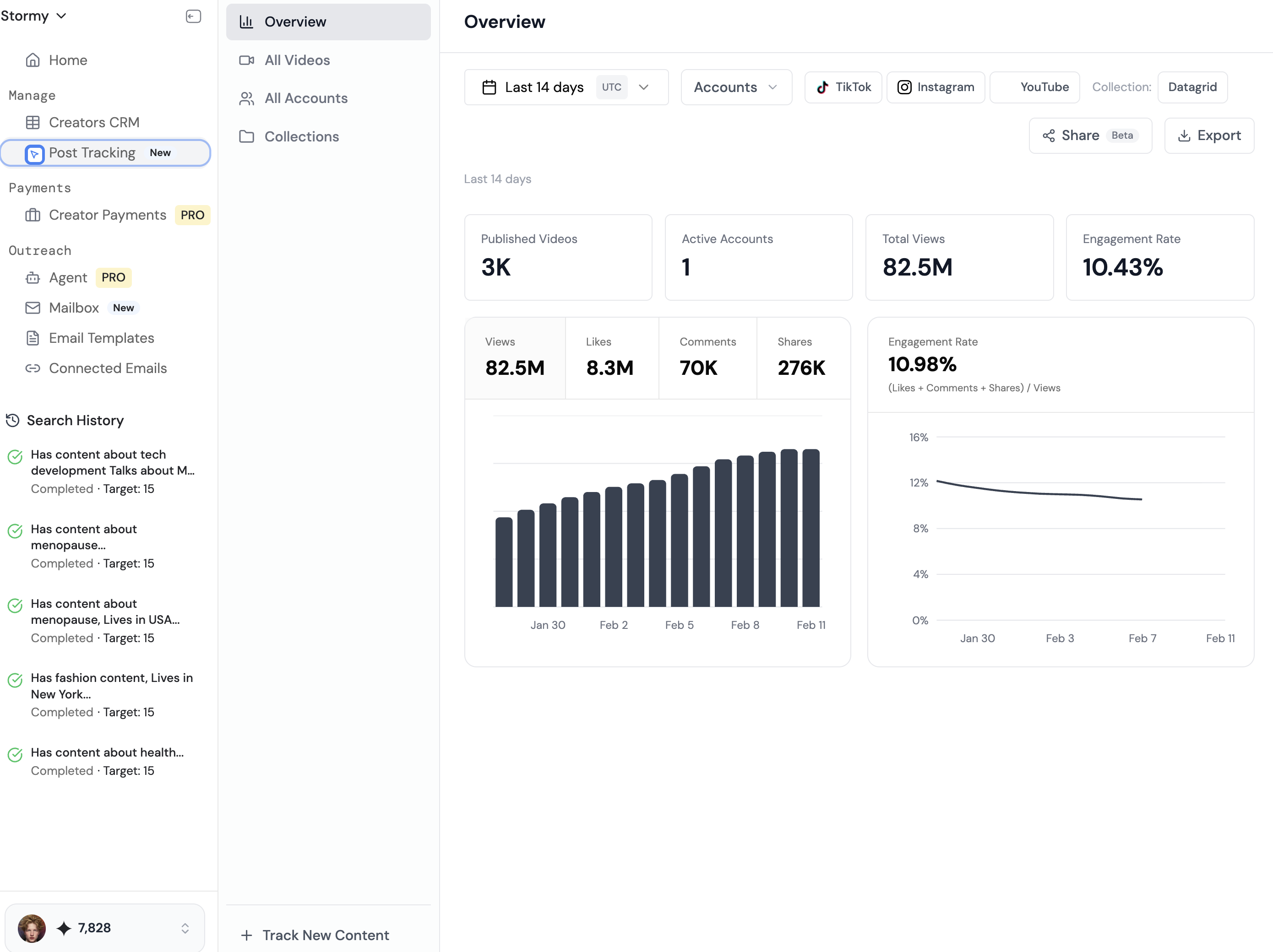
Modern growth is about experimentation. Start by using Stormy AI to run a fast-moving TikTok or YouTube campaign. Use its AI-personalized outreach to test different creator niches. Once you've identified what works, use the Post Tracking & Analytics features to double down on high-performing creators.
The Verdict: Scaling in 2025
The choice between Stormy AI and Grin is a choice between a traditional CRM and an AI-powered future. While Grin remains a powerful tool for large-scale e-commerce logistics, Stormy AI wins on speed, cost, and automation.
By acting as your autonomous AI SDR, Stormy AI removes the manual labor from influencer marketing, allowing you to focus on high-level DTC marketing strategy. Whether you are scaling UGC for app installs or driving sales for a new Shopify store, the ability to automate discovery and outreach is the ultimate competitive advantage. Don't get stuck in the manual past—it's time to let AI scale your brand.