In 2026, the battle for consumer attention on social media isn't won by the highest bidder, but by the advertiser who can iterate the fastest. We have officially entered the era of agentic media buying, where the bottleneck is no longer how much you can spend, but how quickly you can produce, test, and pivot your creative assets. Growth teams are increasingly moving away from manual dashboard management and toward AI-orchestrated workflows that treat ad accounts as code. At the center of this revolution is Claude Code, an agentic interface that allows performance marketers to audit, generate, and deploy creative strategies at a scale that was physically impossible just two years ago.
Creative fatigue is the silent killer of modern performance marketing. Even the most viral hook eventually decays, and in a landscape dominated by Meta’s algorithmic Advantage+ features, the platform demands a constant stream of high-quality signals to stay efficient. According to a Meta Internal Study, advertisers leaning into AI-powered automation reported a 22% higher Return on Ad Spend (ROAS). However, the secret isn't just letting Meta's AI run wild; it’s providing that AI with the superior creative inputs it needs to succeed. This article explores how to maximize your creative velocity using the latest agentic tools available in 2026.
The Shift to Agentic Media Buying in 2026
We are no longer just using AI to write a few catchy headlines. Today, Meta ads creative automation involves connecting Large Language Models directly to your ad account via the Model Context Protocol (MCP). This bridge allows an AI like Claude to "read" your live performance data and "write" new ad sets based on what it sees. By 2026, Meta is expected to move toward a "Goal-Only" ad system, where the human role shifts from clicking buttons to setting strategic parameters and high-level creative direction.
Agencies that have implemented these agentic workflows—connecting Claude to Meta via APIs—report a staggering 90% reduction in manual operational work, such as auditing campaigns and building reports, according to an Advolve Case Study. This freed-up time is now being reinvested into high-level AI ad copy strategy and psychology-based creative testing.
"In 2026, if you aren't treating your creative strategy as a high-velocity data pipeline, you aren't just falling behind—you're effectively invisible to the algorithm."
Why Claude Code is the 2026 Standard for Brand Voice
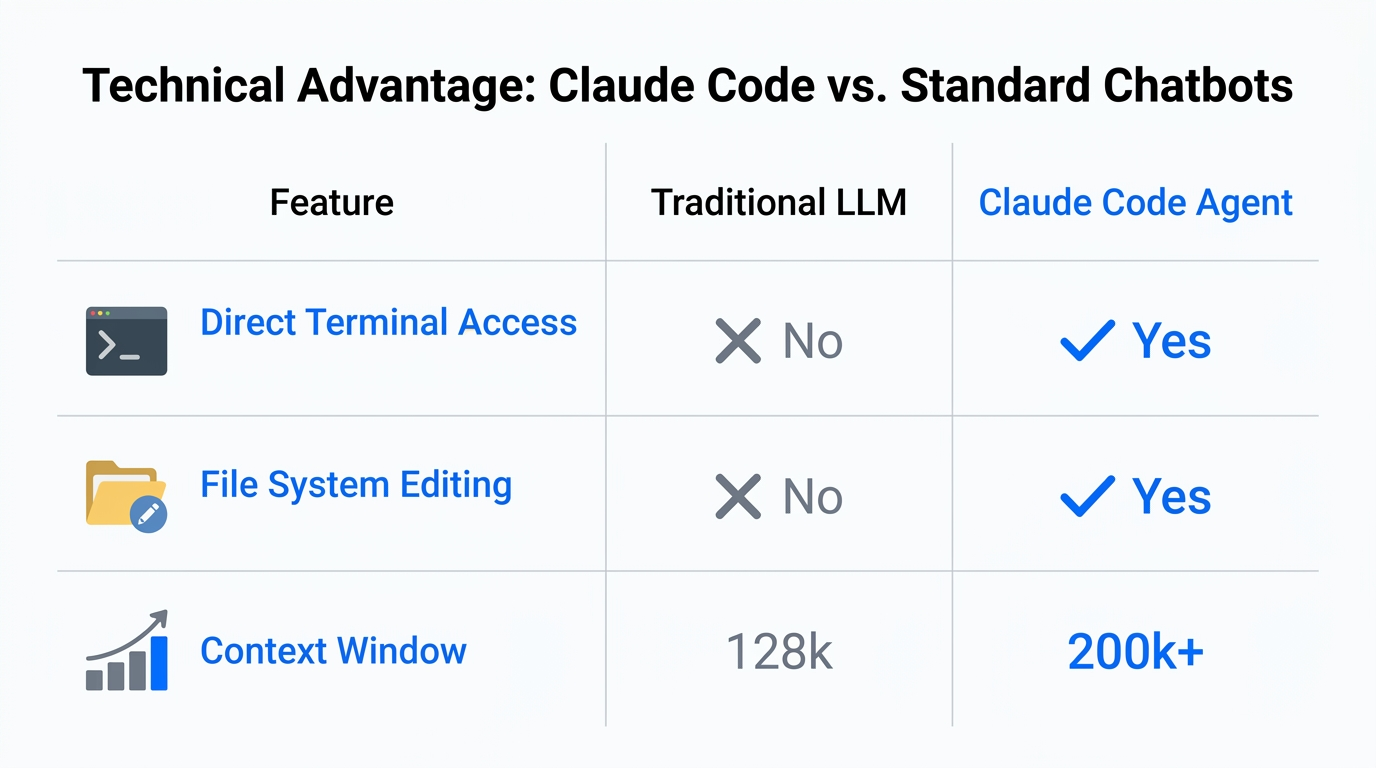
While various LLMs exist, the performance marketing community has largely standardized on Claude for customer-facing creative. A Stormy AI 2026 Report found that 80% of performance marketers prefer Claude’s natural language output over ChatGPT, primarily because it avoids the robotic, formulaic patterns that users have learned to ignore. This isn't just a matter of taste; it translates to a documented 11% higher Click-Through Rate (CTR) on assets where Claude was used to refine the brand voice.
| Feature | Claude AI (2026) | Standard LLMs |
|---|---|---|
| Brand Voice Alignment | Superior (Nuanced & Human-like) | Average (Often repetitive) |
| Workflow Integration | Agentic (Claude Code / MCP) | Chat-based / UI-heavy |
| CTR Performance | +11% Lift on average | Baseline |
| Creative Auditing | Real-time via API hooks | Manual copy-paste data |
By using Claude Code, media buyers can interact with their ad accounts via a command-line interface. Instead of navigating Meta’s often-clunky Ads Manager UI, they can run scripts that say: "Find all ad sets with a ROAS below 1.5 in the last 7 days and draft 3 new high-hook variations based on our top-performing UGC video."
Building a 'Creative Matrix' to Scale Without 'AI Slop'
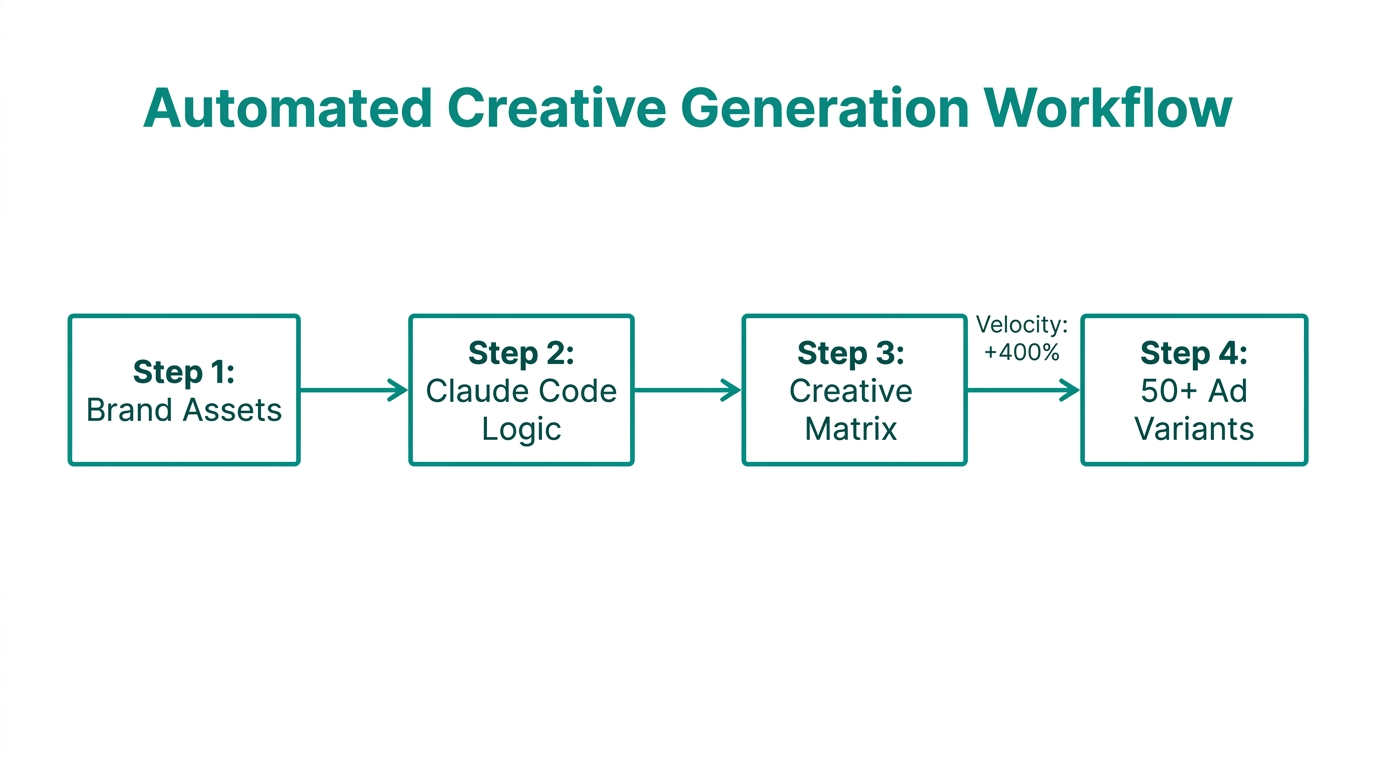
A common mistake in Meta ads creative automation is the "set and forget" fallacy—pumping out 500 low-quality variations and hoping for the best. This results in what industry experts call "AI slop," which can actually damage your account's standing with Meta's quality ranking. Instead, 2026’s best practice is building a Creative Matrix.
The 4x4 Creative Framework
Rather than infinite randomness, focus on 100+ high-quality variations based on a structured matrix. For example:
- 4 Core Hooks: Problem-centric, Benefit-centric, Comparison, and Social Proof.
- 4 Visual Styles: Lo-fi UGC, High-production studio, Text-overlay, and Listicle style.
- 4 Call-to-Actions: Direct (Shop Now), Soft (Learn More), Incentive (Get 20% Off), and Curiosity-based.
Using Pipeboard, which connects Claude to Meta via the Model Context Protocol, you can automatically generate these 64 combinations, audit them for brand safety, and push them directly to your campaigns as a bulk upload. This is how brands like TABA Digital managed to reduce their CPC from $0.35 to $0.01 while scaling volume by 3x within 30 days.
"The Creative Matrix isn't about more ads; it's about more intentional ads deployed at the speed of software."
'Vibe Querying': Natural Language Questions for Performance Trends
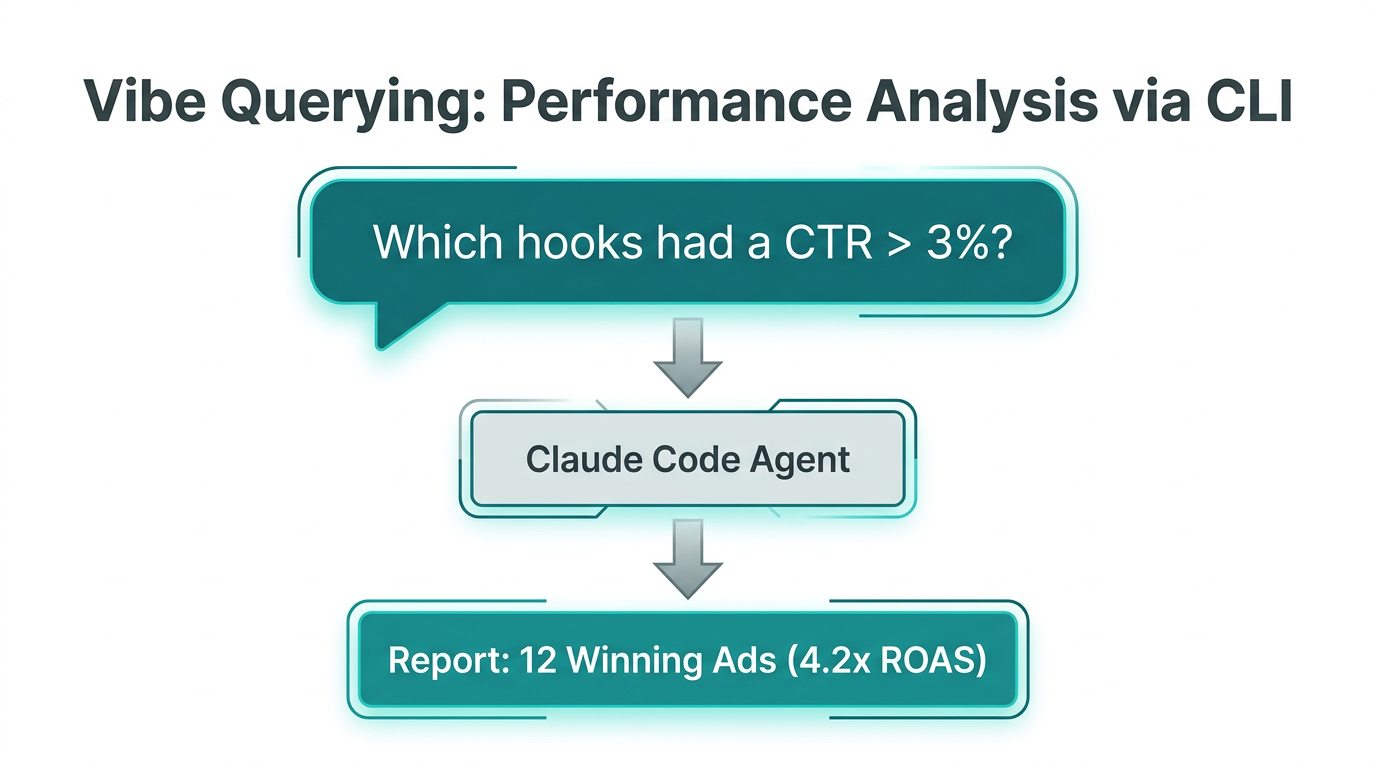
One of the most powerful features of the 2026 growth stack is Vibe Querying. Rather than spending hours building pivot tables in Excel, marketers are using Claude to ask natural language questions about their data. This is made possible by tools like Adzviser or Flyweel, which streamline Meta and Google data directly into the Claude environment.
A media buyer might ask: "Claude, which of my creatives saw a 20% CPM spike yesterday? Is there a common visual element among them?" Claude can then cross-reference your assets, identify the "creative fatigue" signal, and suggest an immediate replacement. This strategy saved a SaaS lead generation provider an estimated 15% of their monthly ad spend by catching fatigue two days earlier than a human buyer would have.
The 2026 Creative Automation Playbook
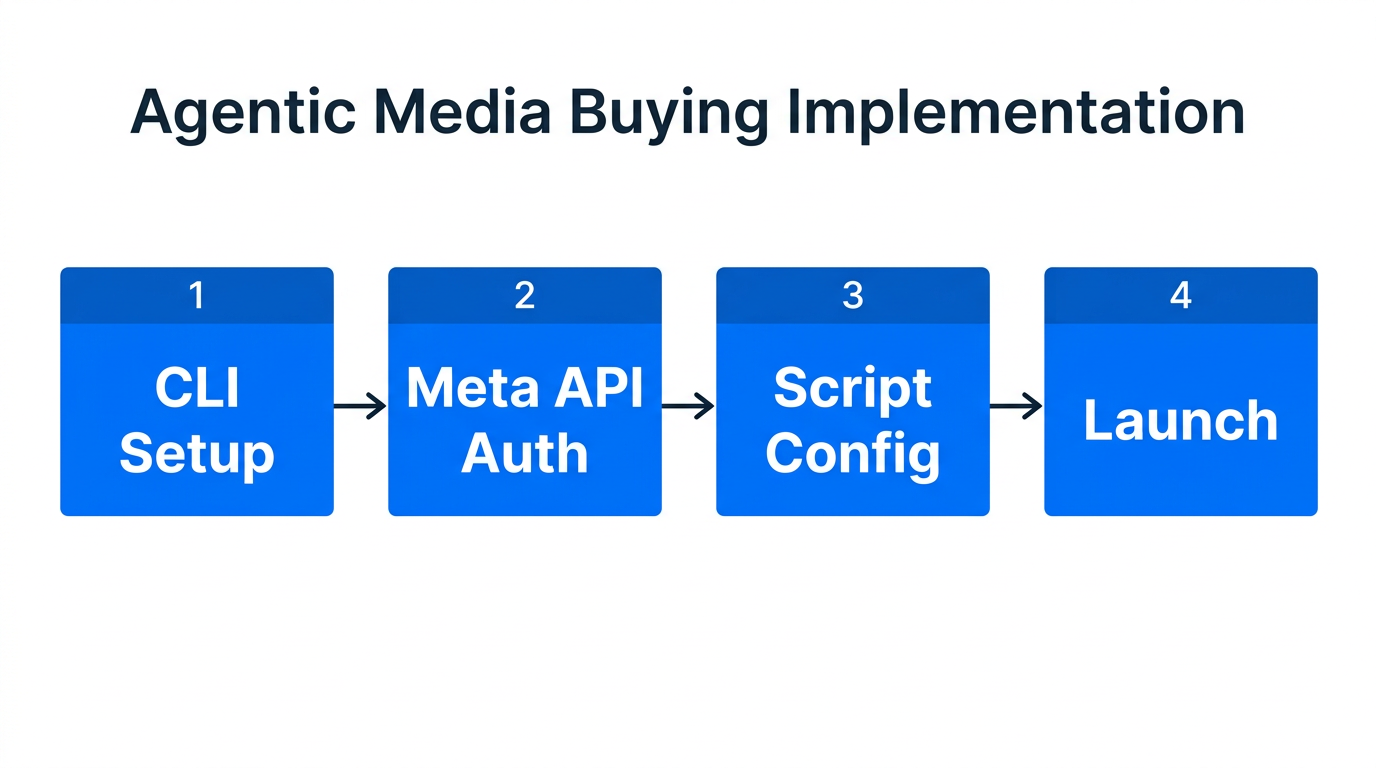
Ready to implement creative fatigue solutions in your own workflow? Follow this step-by-step playbook to integrate Claude Code into your Meta Ads strategy.
Step 1: Setup Your Data Foundation
Before automating, ensure your signals are clean. Running automation without the Meta Conversions API (CAPI) is a recipe for disaster. According to experts at AnyTrack, relying only on browser pixels leads to "hallucinated" ROAS numbers that mislead the AI.
Step 2: Connect Claude to Your Account
Install Pipeboard or use the Windsor.ai MCP to give Claude access to your live Meta Ads Manager. This allows the AI to see real-time data rather than relying on static CSV exports from platforms like Shopify.
Step 3: Generate the Matrix
Use Claude to generate 100+ headlines and body copy variations. To avoid the "slop" effect, provide Claude with a Style Guide that includes your brand's tone of voice, prohibited words, and top-performing historical hooks. You can even reference templates from design tools like Canva to ensure visual consistency.
Step 4: Bulk Deployment
Use Adspirer for conversational PPC management. This tool allows you to push Claude-generated creatives directly into Meta with a single command, significantly increasing your creative velocity.
"The goal is to move from 1 creative refresh per week to 10 per day, allowing the Meta algorithm to find the winning 'pocket' of inventory faster."
Common Mistakes to Avoid
As you scale your Meta ads creative automation, watch out for these common pitfalls that can tank your ROAS:
- Wrong Optimization Goals: Never automate for "Clicks" when you want "Sales." The AI will find "click-happy" users who have no intention of buying.
- The Human-in-the-Loop Gap: Even in 2026, you must perform a final "vibe check." AI is the engine, but humans are the steering wheel.
- Creative Overload: Meta’s algorithm works best with a few high-quality "anchor" creatives rather than 500 low-quality variations. Use the Creative Matrix to find those anchors, then consolidate.
For brands looking to fuel this automation with high-quality raw material, sourcing diverse creators is essential. Platforms like Stormy AI allow growth teams to discover and outreach to UGC creators in seconds, providing the "human fuel" that Claude needs to generate its high-velocity variations. By pairing Stormy AI for creator discovery with Claude for creative strategy, you create a powerhouse growth engine.
Conclusion: The Velocity Advantage
In 2026, creative velocity is the primary competitive advantage for digital advertisers. By integrating Claude Code into your Meta Ads workflow, you can solve creative fatigue through automated auditing, natural language vibe querying, and bulk variation generation. The shift from manual media buying to agentic orchestration isn't just a trend; it's a necessity for any brand looking to scale in an AI-first world. Start by building your Creative Matrix today, ensure your Meta Conversions API is firing correctly, and let agentic AI handle the heavy lifting while you focus on the big-picture strategy.