The digital marketing landscape has undergone a tectonic shift in the last twelve months. If you are still obsessing over 'Position 1' on Google’s traditional search results, you are playing a game that is rapidly becoming obsolete. By mid-2026, the majority of high-intent consumer queries have moved away from scrolling through 'ten blue links' and toward interactive, conversational responses. Welcome to the era of Generative Engine Optimization (GEO) and Answer Engine Optimization (AEO). In this new world, brand visibility isn't about being seen—it's about being cited by the Large Language Models (LLMs) that power ChatGPT, Perplexity, and Gemini.
Defining Generative Engine Optimization (GEO): Why Being Cited is the New 'Page 1'
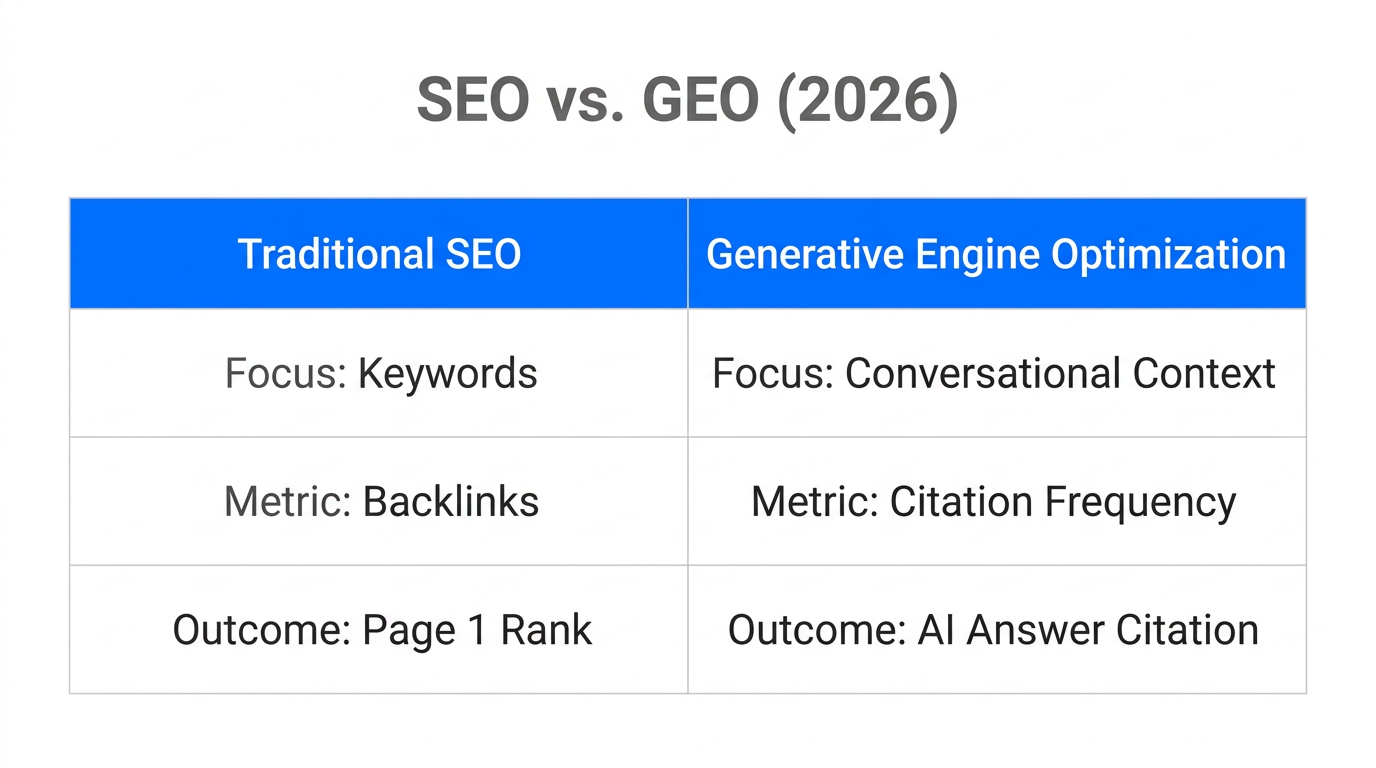
In 2026, the definition of search success has changed. Generative Engine Optimization refers to the practice of optimizing your brand's digital footprint so that AI models naturally select and recommend your products during a user's conversation. According to research from Moz, the focus has shifted from simple ranking to ensuring your brand is part of the AI's internal knowledge base.
Traditional SEO was about keywords; GEO is about authoritative data points. When a user asks, "What is the best sustainable skincare for sensitive skin under $50?", the AI doesn't just look for keywords; it looks for structured data, verified reviews, and high-quality content that proves the product's relevance. Brands that fail to adapt are seeing their organic traffic plummet, while those utilizing tools like Seomatic.ai to build programmatic, AI-friendly pages are seeing a massive surge in organic traffic.
"Being cited by an AI engine in 2026 is the digital equivalent of a front-page feature in the New York Times—it carries immediate authority and drives instant conversion."
Tracking Visibility with Passionfruit Labs: A Review
How do you measure success when there is no 'rank' in a traditional sense? This is the problem Passionfruit Labs solves. As a leader in AI search visibility 2026, Passionfruit Labs provides a dashboard that tracks brand citations across all major conversational platforms.
In our Passionfruit Labs review, the standout feature is the 'Share of Model' metric. Instead of tracking keyword positions, it tracks how often your brand is mentioned as a solution to specific user problems within OpenAI and Perplexity ecosystems. For ecommerce brands with thousands of SKUs, this level of insight is critical. Without it, you are flying blind in an ecosystem where the search engine is also the salesperson.
| Feature | Traditional SEO Tools | Passionfruit Labs |
|---|---|---|
| Primary Metric | Keyword Rank | AI Citation Share |
| Platform Scope | Google/Bing | ChatGPT, Perplexity, Gemini, Claude |
| Data Type | Search Volume | Conversational Intent Match |
| Actionable Insight | Backlink targets | LLM Training Gaps |
Solving the 'Thin Content' Problem with Jasper AI
A major pitfall in modern programmatic SEO is 'Thin Content.' AI search bots are highly sophisticated; they can easily identify pages that exist solely to capture traffic without providing value. According to recent search analysis, Google and LLMs now require unique, high-quality content to consider a page 'helpful'.
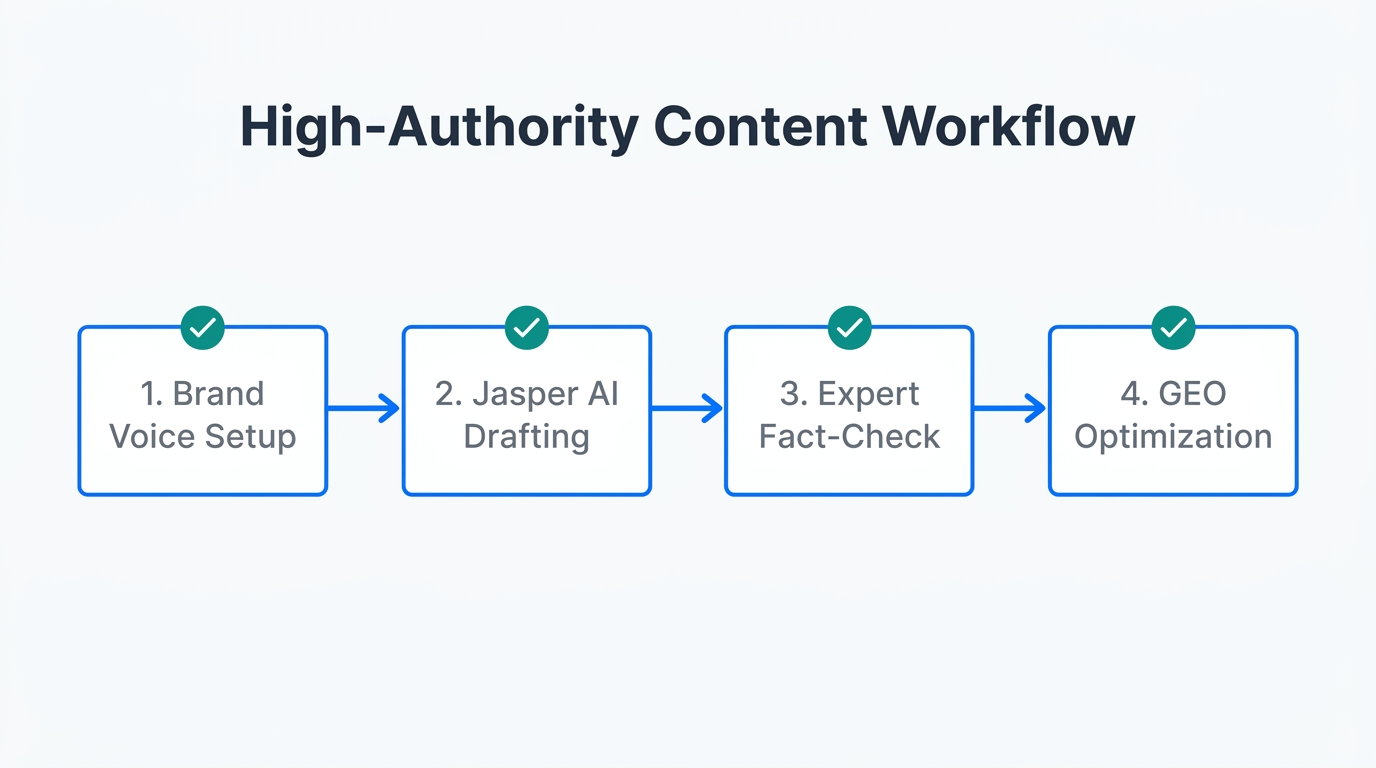
This is where Jasper AI for SEO becomes indispensable. Manually writing content for 5,000 product variants is impossible. Jasper AI allows brands to generate unique, brand-aligned product descriptions at scale. By feeding Jasper your specific brand voice and product data, you can transform a boring spec sheet into a compelling narrative that satisfies both the human reader and the AI crawler.
Using Jasper AI ensures you avoid the 'Duplicate Description' trap—a common mistake where brands pull manufacturer descriptions for every item. This leads to 'Crawl Waste,' where search engines stop indexing your site entirely. High-quality pSEO content for ecommerce achieved through Jasper can lead to conversion rates between 5% and 14%, as noted by Fuel LAB.
"The 2026 content mandate is simple: if your content doesn't add unique value beyond what the LLM already knows, it won't be cited."
The 2026 Knowledge Graph Strategy: Making Store Data Machine-Readable
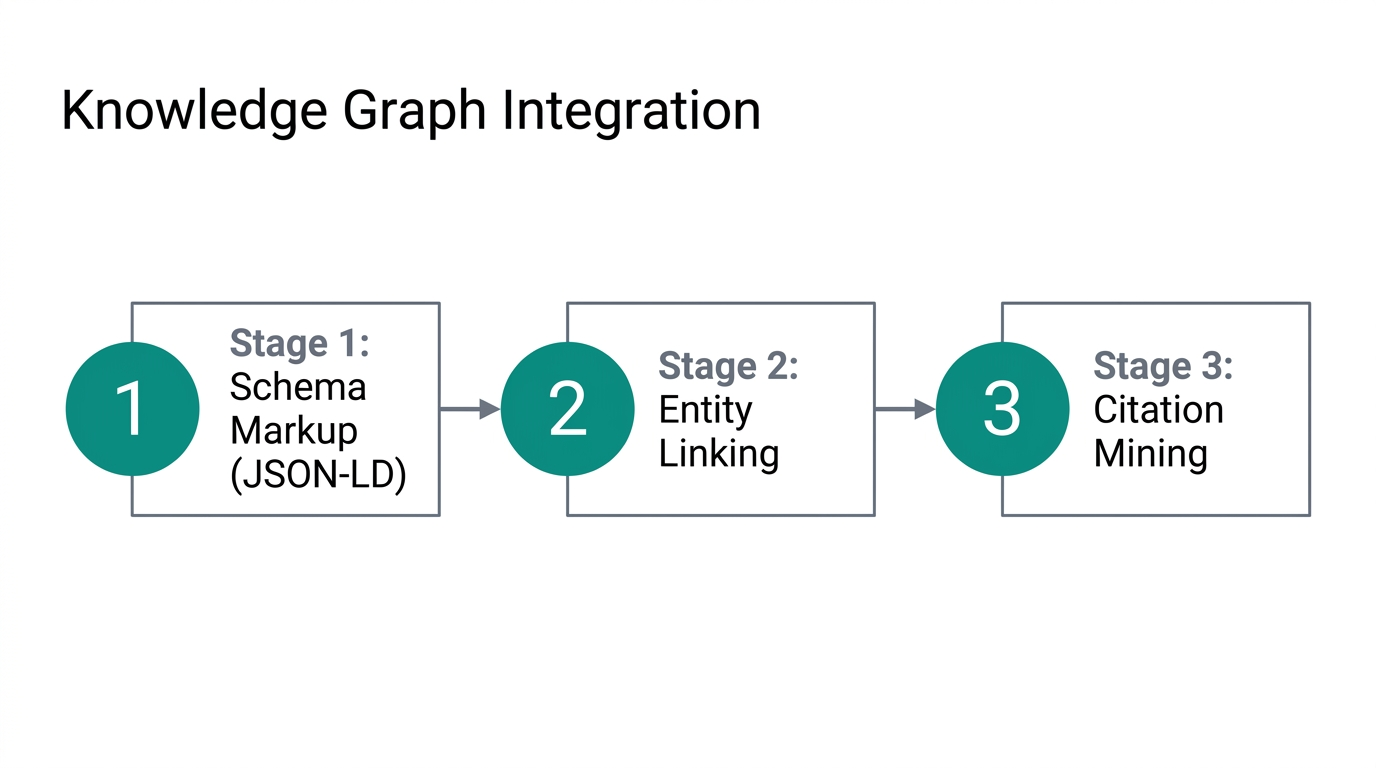
If Jasper AI provides the 'meat' of your content, your Knowledge Graph provides the 'skeleton.' To win in generative engine optimization, your data must be structured in a way that AI can ingest instantly. This involves moving beyond standard meta tags to automated Schema injection.
Tools like WordLift are essential here. They help you build a custom Knowledge Graph that connects your products, their attributes, and their relationship to broader market trends. This makes your store data readable for both search bots and LLMs. As noted by Novos, technical SEO is moving toward feed-based systems where individual product pages are optimized to win rich snippets in AI-driven shopping results.
Transitioning from Keywords to 'Conversational Intent'
The core of AI search visibility 2026 is understanding how people talk, not just how they type. Programmatic SEO is evolving from targeting 'red shoes' to targeting 'what are the most comfortable red running shoes for a marathon under $150?'.
Scaling this requires a sophisticated stack. Brands like REVOLVE have used Verbolia to identify and fill thousands of long-tail gaps, resulting in an 80% traffic increase. By focusing on dynamic product comparison pages (e.g., "Product X vs Product Y"), you target users in the highest-intent consideration phase.
To further boost your brand's authority in the eyes of AI, consider how User-Generated Content (UGC) influences the model. AI models are trained on social data. Platforms like Stormy AI allow you to discover and partner with creators whose content often serves as a primary data source for LLMs. When a creator mentions your product on TikTok or YouTube, that mention is indexed and becomes part of the AI's 'recommendation engine.'
"In 2026, your influencer strategy is your SEO strategy. AI cites the brands that people are talking about on social media."
Common Mistakes to Avoid in AI-Driven pSEO
As the barrier to entry for content creation drops, the volume of noise increases. To maintain AI search visibility 2026, avoid these critical errors:
- Ignoring Load Speed: Sites that load in 1 second have a 2.5x higher conversion rate. pSEO can bloat databases; keep it lean. (Source: Taylor Scher SEO).
- Static Feeds: Your product data must be dynamic. Use Whalesync to keep your Airtable data and Shopify stores in sync in real-time.
- Ignoring Local Intent: Even in a global market, local queries like "best coffee in [City]" are booming. Use CMAX to generate geotargeted pages at scale.
Conclusion: Future-Proofing Your Brand for the AI Era
The transition from Google to Answer Engines is not a threat; it is an opportunity for brands that are willing to modernize their stack. By combining Passionfruit Labs for citation tracking, Jasper AI for high-quality content generation, and structured data tools like WordLift, you can ensure your brand remains visible in the age of conversational search.
Don't just rank—be the answer. Start by auditing your current AI visibility and leveraging platforms like Stormy AI to build the social proof that fuels LLM citations. The brands that win in 2026 will be those that master the intersection of data, AI, and human-centric storytelling.