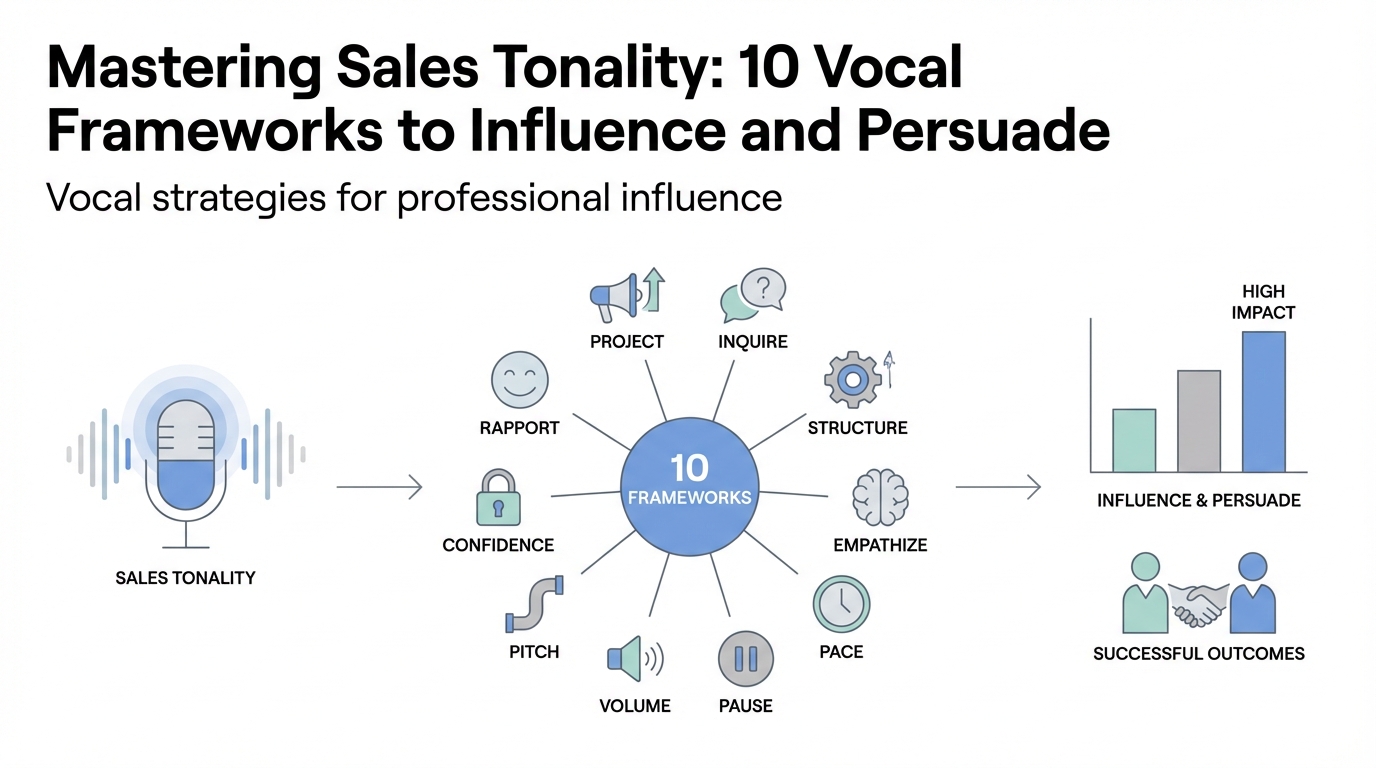
Most sales professionals spend hours obsessing over the perfect script, the slickest rebuttal, or the most data-driven slide deck. Yet, research consistently shows that what you say is often secondary to how you say it. In the high-stakes world of professional selling, sales tonality is the invisible thread that connects a pitch to a prospect's subconscious. It is the difference between sounding like a scripted telemarketer and an expert consultant. By mastering non-verbal sales communication, you can bypass logical resistance and build the immediate trust necessary to close complex deals.
The Science of 90%: Why Your Voice Outweighs Your Words
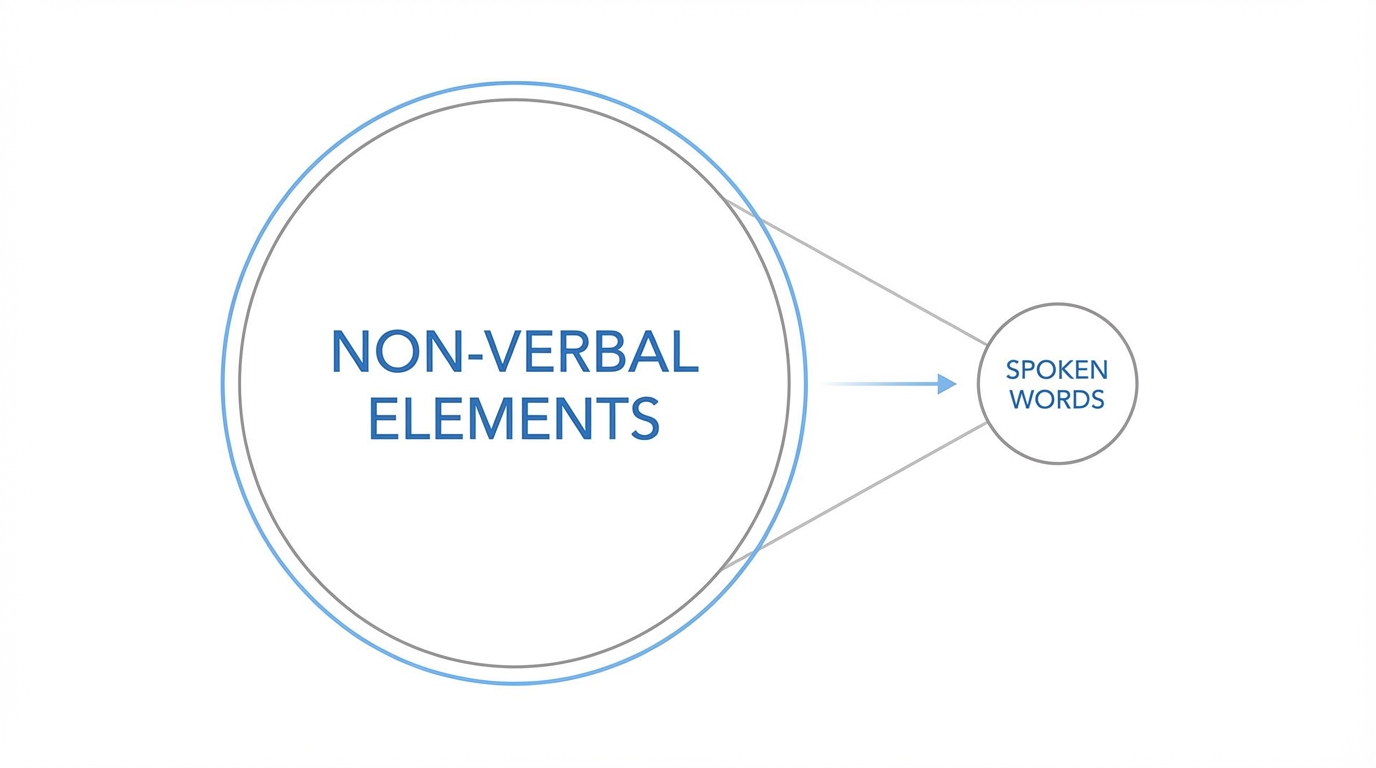
The concept that 90% of communication is non-verbal is not just a motivational trope; it is a fundamental principle of human psychology. When a buyer encounters a salesperson, their brain is hardwired to scan for threats and incongruencies. According to research from Hyperbound, a staggering 82% of buyers feel that salespeople are underprepared for their conversations. This lack of preparation isn't just about product knowledge—it's about the failure to project vocal influence techniques that command authority.
The foundation of effective persuasive communication lies in what is known as the "Three Tens." To move a prospect from uncertainty to a close, you must move them to a 10 out of 10 level of certainty in three areas: your product, you as a salesperson, and your company. If your tonality lacks absolute certainty, you will never move that needle. The goal of the Straight Line Selling System is to maintain control of the narrative by using your voice to signal that you are "Sharp as a Tack," "Enthusiastic as Hell," and an "Expert in Your Field" within the first four seconds of interaction.
The 10 Core Tonalities for Persuasion
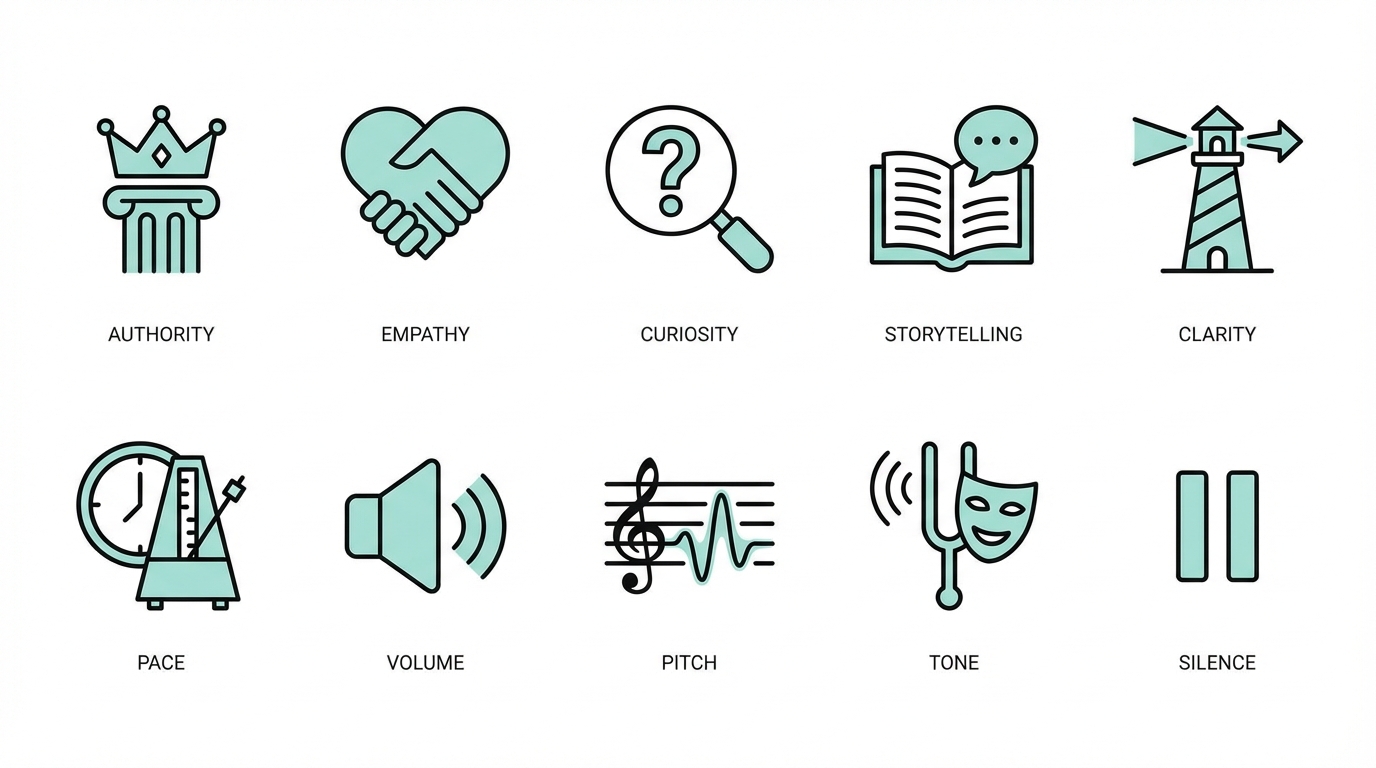

Mastering jordan belfort tonality requires more than just being loud or energetic. It involves a sophisticated layering of different vocal frameworks that trigger specific emotional responses. Here are the ten core frameworks every high-ticket closer should master:
- Scarcity/Urgency: This involves lowering your voice to a near-whisper. By speaking softly, you imply that you are sharing a secret or a limited opportunity, forcing the prospect to lean in and listen more intently.
- Reasonable Man: This is a calm, level tone used when asking for a commitment. By phrasing a request with a "Sound fair enough?" inflection, you trigger a social contract where the prospect feels compelled to respond in a similarly reasonable manner.
- Absolute Certainty: A firm, unwavering, and slightly lower-pitched voice. This signals that you believe 100% in the claim you just made, leaving no room for doubt in the prospect's mind.
- The "I Care" Pattern: A sympathetic and upbeat tone used during discovery. It shows you are on their side and genuinely interested in their challenges.
- The "Money Aside" Tone: A disarming, higher-pitched tone used to isolate objections. By saying, "Hypothetically, if money weren't an issue..." in a lighthearted way, you lower their defensive wall.
- Question as Declarative: Also known as "up-tones," where you end a statement with a rising pitch. This makes you sound more agreeable and less confrontational during the early rapport-building phase.
- Implied Obviousness: A "no-brainer" tone that suggests your solution is the only logical choice. It conveys a sense of "of course this works," which can be highly contagious.
- "I Really Want to Know": An empathetic, curious tone designed for deep discovery. It encourages the prospect to open up about their real pain points.
- Mystery and Intrigue: Used to build tension before a big reveal or a unique value proposition. It creates a "hook" that keeps the prospect engaged.
- Sincerity: A "heart-to-heart" tone used during the final close. It is low, slow, and deeply resonant, signaling that you are giving them your word of honor.
Virtual Adaptation: Combating Zoom Fatigue
The shift to remote work has changed the rules of engagement. Modern data from Rain Sales Training indicates that 91% of sellers find it significantly harder to maintain buyer attention in a virtual environment. Without the benefit of full body language, your sales tonality becomes your most potent tool for keeping prospects awake and engaged.
In virtual sales, you must compensate for the digital wall of Zoom fatigue by exaggerating your tonal shifts. A flat, monotone delivery on a Zoom call is a recipe for boredom. By utilizing the "Mystery and Intrigue" tone or shifting into "Absolute Certainty" during a screen share, you can recapture attention that might otherwise drift toward a browser tab. For brands managing large-scale creator partnerships, platforms like Stormy AI allow managers to maintain these relationships through an organized Creator CRM, but it is the personal, tonal touch in initial outreach or video calls that often secures the best rates and exclusive deals.
The 'I Care' Pattern: Intelligence Gathering with Empathy
One of the most common mistakes in non-verbal sales communication is acting like a "Grand Inquisitor." If you ask invasive questions about a company's budget or bottlenecks with a flat, cold tone, the prospect will instinctively shut down. To extract the information needed for a successful close, you must use the "I Care" pattern.
This framework combines a sympathetic pace with an upbeat inflection. When you ask about their current struggles, your voice should sound like a trusted advisor who has seen these problems before and genuinely wants to help. This creates psychological safety. Once you have built this rapport, you can shift into the "I Really Want to Know" tone for deeper probing. Remember, high-quality sales training that focuses on these nuances can deliver a 353% ROI on average, proving that the "soft skills" of tonality have very hard financial impacts.
A Playbook for Practice: How to Master Your Voice
Improving your vocal influence techniques is like training a muscle; it requires repetitive, intentional practice. You cannot "wing it" and expect to sound like an expert. Here is a step-by-step playbook for refining your sales tonality:
Step 1: Record and Review
Start by recording your sales calls or practice sessions. Listen for "fillers" (um, uh, like) and check if your tone matches your intent. Does your "Scarcity" tone sound genuinely urgent, or just quiet? Use a recording tool like Otter.ai or a built-in Post Tracking system to review your performance over time.
Step 2: Script Adherence
As emphasized by the Jordan Belfort Sales School, you must follow a script 100% of the time during training. When you don't have to worry about what to say next, your brain is free to focus entirely on how you are saying it. This is how you internalize the tonalities until they become second nature.
Step 3: The Mirror Exercise
Practice your tonality while looking in a mirror. Facial expressions and body posture directly influence vocal resonance. If you are smiling, your voice sounds warmer (the "I Care" pattern). If you are leaning forward with a serious expression, your voice naturally adopts "Absolute Certainty."
Step 4: Use External Feedback
Organizations that implement structured methodology training see a 20% performance boost in individual reps. Role-play with a peer and have them flag moments where your tone sounded disingenuous or pressured. For managers coordinating outreach for user-generated content (UGC), observing how influencers respond to different tonal approaches in video pitches can be a goldmine of data for optimizing campaigns.
Conclusion: The Tonality Advantage
In an era where buyers are more skeptical than ever, sales tonality is the ultimate differentiator. By moving beyond the words on the page and mastering the 10 core frameworks of persuasive communication, you position yourself as a trusted authority. Whether you are closing a Fortune 500 deal or sourcing creators on Stormy AI, your voice is the primary tool for building the certainty required for action. Stop focusing solely on what you say, and start mastering the music of the sale.