Pinterest has undergone a seismic shift in the digital marketing landscape, evolving from a simple digital scrapbook into a high-performance discovery engine. By early 2025, the platform reached a staggering 578 million monthly active users, representing a double-digit year-over-year increase. For brands, this growth isn't just about volume; it's about intent. Unlike other social networks where users scroll passively, Pinterest users are planners, making it a goldmine for full-funnel marketing. However, the manual labor required to align product catalogs with hyper-specific Gen Z marketing strategies and seasonal aesthetics has historically been a bottleneck. Enter the Model Context Protocol (MCP) for Claude AI—a game-changing integration that allows marketers to connect live Pinterest data directly to advanced reasoning models. This synergy is redefining Pinterest creative strategy, allowing brands to move from static images to dynamic, trend-aligned storytelling at scale.
The New Standard: Claude MCP and Pinterest Ads
The Model Context Protocol (MCP) is an open-source standard from Anthropic that enables Claude to interact directly with external tools and APIs. In the context of Pinterest, this means Claude is no longer just a chatbot you ask for advice; it becomes an agent capable of pulling real-time performance metrics and trend data. This capability is essential because Pinterest has transitioned into a full-funnel performance engine, where speed to market with relevant creative is everything. Modern advertisers are moving away from manual exports and toward "agentic reporting," where Claude analyzes Impressions, CTR, and ROAS directly through dedicated MCP servers.
To get started, developers and marketers use a claude_desktop_config.json file to enable specific Pinterest tools. Popular options include the Insightful Pipe Pinterest Ads MCP for performance reporting and the viaSocket Pinterest Lead Ads server for managing lead generation. For those managing multi-channel campaigns, the Adzviser Remote MCP provides a unified connector for Google, Meta, and Pinterest. This infrastructure allows for a Claude MCP for creators workflow that automates the most tedious parts of campaign management, from performance audits to budget adjustments.
"The future of Pinterest advertising lies in agentic automation—where AI doesn't just suggest ideas but executes data-driven creative adjustments in real-time."Leveraging Pinterest Trends API for Seasonal Niches
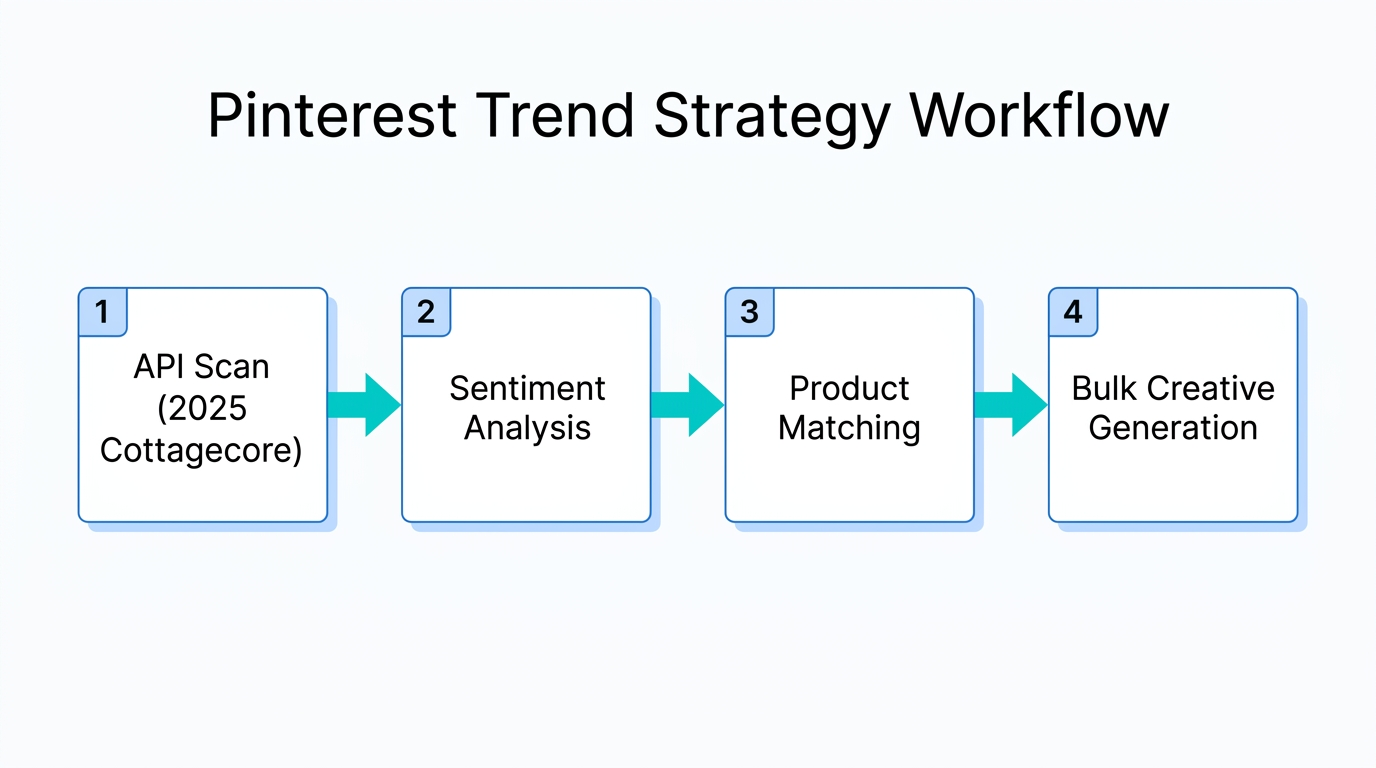
One of the most powerful applications of Claude MCP is its ability to interface with the Pinterest Trends API. In 2025, aesthetics like "cottagecore," "dark academia," and "cluttercore" aren't just hashtags; they are high-growth seasonal niches that drive billions in commerce. Gen Z, in particular, shops based on these curated vibes. By connecting Claude to the Trends API, brands can identify these spikes weeks before they reach peak saturation. For example, a home decor brand could use Claude to detect a 40% week-over-week rise in "vintage garden tea party" searches and immediately realign their product catalog to match that aesthetic.
This is where the Pinterest trends 2025 strategy becomes actionable. Claude can process the raw trend data and suggest specific product groupings that fit the emerging vibe. This isn't just about keywords; it's about visual alignment. Pinterest has reported that their Performance+ suite, which uses AI to optimize targeting and creative, has shown a 10%+ improvement in CPA for conversion campaigns. By using Claude to feed the right trend data into these automated suites, marketers can amplify their results significantly.
| Trend Category | Search Growth (Est. 2025) | Primary Demographic | Suggested Content Type |
|---|---|---|---|
| Cottagecore | +85% YoY | Gen Z / Millennial | Soft, natural lifestyle Pins |
| Quiet Luxury | +45% YoY | High Income Millennial | Minimalist, high-end product shots |
| Dopamine Decor | +120% YoY | Gen Z | High-saturation, vibrant Video Pins |
When implementing a Gen Z marketing strategy, authenticity is paramount. Gen Z users are quick to dismiss brands that feel out of touch. Using Claude to analyze the nuance of these trends—identifying the specific color palettes and textures that define "cottagecore" versus "shabby chic"—ensures that the creative resonates rather than feels like a generic marketing push. This level of granular trend analysis is nearly impossible to maintain manually across a catalog of thousands of products.
AI Lifestyle Images vs. AI Slop: The Quality Threshold
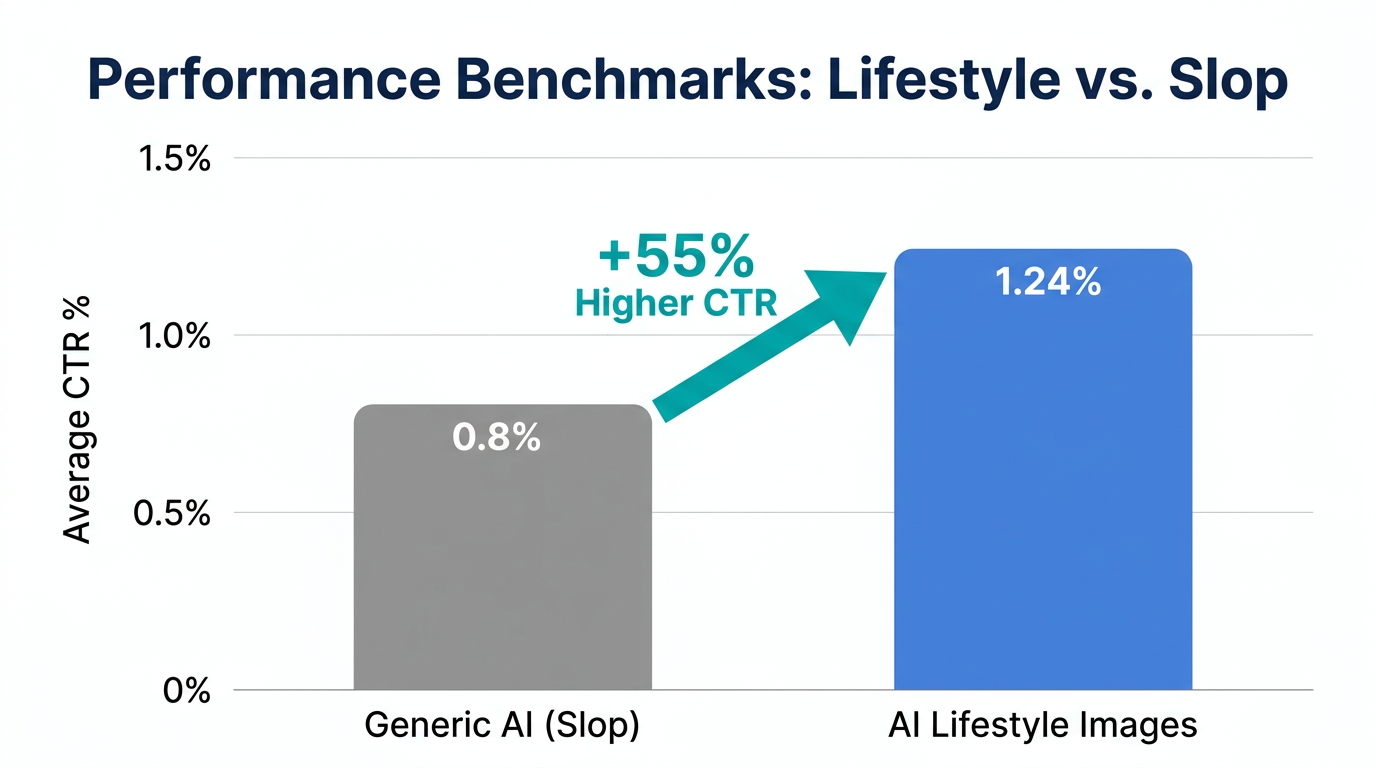
Perhaps the most transformative feature of AI in the Pinterest ecosystem is generative lifestyle backgrounds. Historically, brands had to choose between expensive lifestyle photography or sterile white-background product shots. According to Pinterest research, generative AI lifestyle backgrounds led to a 55% higher CTR and a 13% lower CPC compared to standard product images. This is a massive performance lift, but it comes with a risk: "AI slop."
"AI lifestyle images on Pinterest see a 55% higher click-through rate, but only if they maintain the aesthetic integrity that users expect from the platform."Pinterest users value high-quality, aspirational imagery. If a generated image looks uncanny or low-resolution, users will flag it as "AI slop" and move on. This is where a Pinterest creative strategy must involve a human-in-the-loop. A notable success story is Walgreens, which used generative AI to transform static product images into high-engagement lifestyle scenes for over 50 products. By placing a bottle of sunscreen on a sun-drenched beach towel rather than a white void, they saw a significant boost in engagement. The key was ensuring the AI-generated environment felt organic to the product, not like a disjointed collage.
To avoid the "AI slop" trap, use Claude to generate highly detailed prompts for your image generation tools like Midjourney or DALL-E 3 based on the visual data it pulls from the Pinterest Engineering insights. Claude can act as a creative director, ensuring that the AI lifestyle images Pinterest users see are indistinguishable from high-end photography. If your creative team needs a steady stream of authentic assets to feed this AI pipeline, platforms like Stormy AI can help source and manage UGC creators who provide the raw, real-world footage that AI can then enhance or iterate upon.
The 'Sous-Chef' Approach: High-Volume Creative Variants
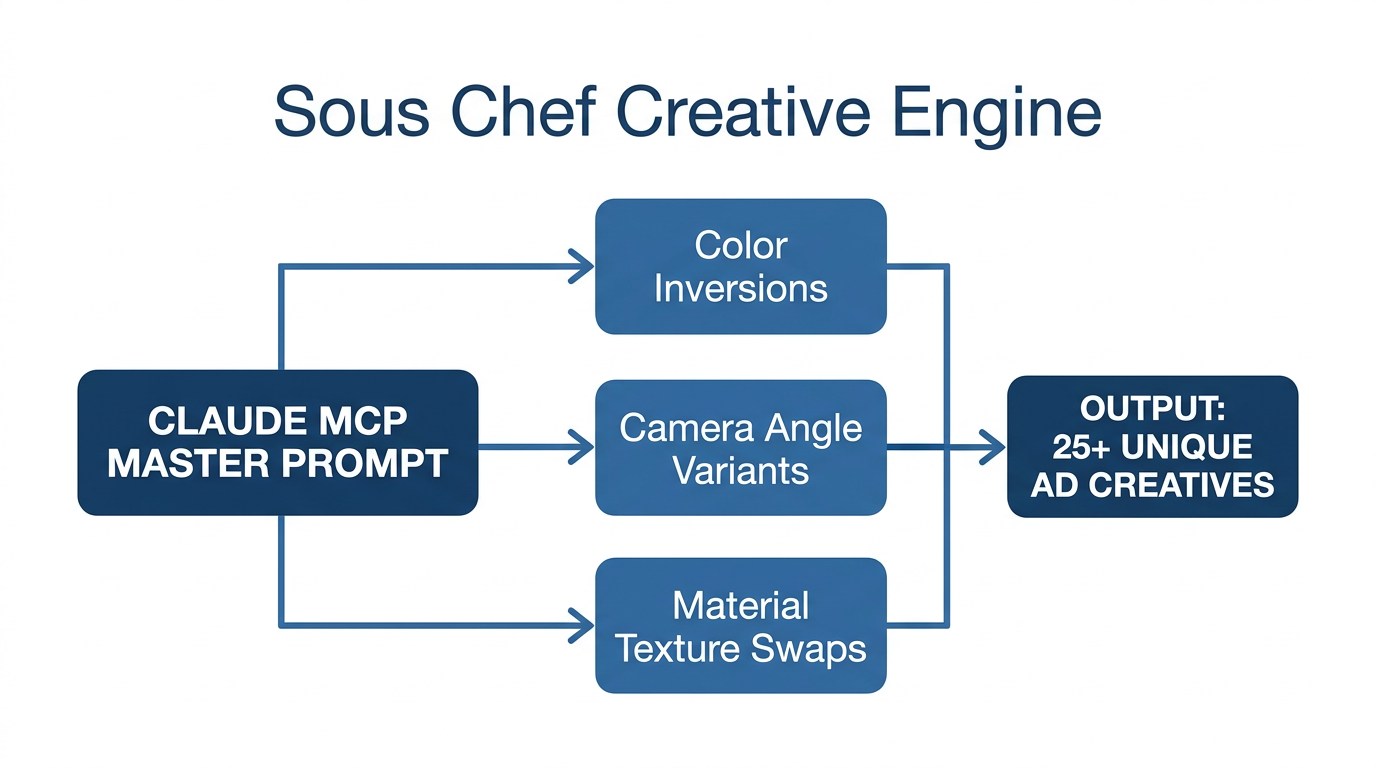
Industry experts, including Julie Towns, VP of Product Marketing at Pinterest, often refer to AI as a "sous-chef". In this model, the AI handles the prep work—generating 10+ SEO-optimized Pin descriptions, resizing assets, and creating background variants—while the human marketer acts as the Head Chef, making final strategic decisions. This approach allows for a level of scale that was previously impossible. Imagine launching a campaign where every single product in your catalog has a unique Pin description based on trending search terms like "sustainable living hacks" or "minimalist kitchen goals."
When generating SEO-optimized descriptions, Claude can incorporate the exact phrasing users are searching for, helping Pins rank higher in both Pinterest's internal search and Google Ads-driven discovery. The synergy between high-volume creative and precise SEO ensures that your brand remains visible throughout the user's planning journey. However, you must avoid letting the AI "hallucinate" product details or pricing. Human oversight is required to check that the AI-generated copy aligns with your brand voice and Pinterest's strict ad policies.
For large-scale operations, managing these creative assets and the creators who inspire them is a massive task. Tools like Stormy AI provide a centralized CRM to manage creator relationships, ensuring that as you scale your Pinterest creative strategy, you have a reliable pipeline of human-led content to complement your AI automation. This ensures a healthy mix of AI-optimized performance and human-centered brand building.
Case Studies: Prada and Walgreens
The real-world impact of these AI strategies is best seen in global brands. Prada utilized Pinterest's AI-powered Performance+ suite for a US-based leather goods campaign. By letting the platform's AI optimize targeting and creative delivery, Prada achieved a 64% decrease in CPA and a 30% increase in conversion rate. This proves that even for luxury brands where creative control is paramount, AI automation can deliver superior efficiency without compromising brand equity.
Similarly, the Walgreens example highlights the power of AI lifestyle images on Pinterest. By transforming basic product photos into contextually relevant lifestyle scenes, they moved away from the "catalog look" toward a "discovery look." This shift is crucial because Pinterest users aren't looking for a product in a vacuum; they are looking for how that product fits into their life. AI allowed Walgreens to test dozens of different lifestyle contexts for a single product to see which one resonated most with specific audience segments.
| Brand | Strategy Used | Primary Result |
|---|---|---|
| Prada | Performance+ AI Suite | 64% Reduction in CPA |
| Walgreens | Gen-AI Lifestyle Backgrounds | Significant Boost in Engagement |
| Standard Brand | Manual Creative / White Background | Benchmark CTR (0.5% - 1.0%) |
Avoiding Common Pitfalls in AI-Driven Pinterest Marketing
While the potential for Claude MCP and AI is vast, there are several critical mistakes to avoid. First is the Data Privacy Risk. When connecting Claude to your ad accounts via MCP, you must use sandboxed or verified servers to avoid exposing sensitive PII. Always consult the Anthropic Security Advisory before deploying new MCP configurations. Second is the risk of "Garbage In, Garbage Out." AI analysis is only as good as the data it receives. If your Pinterest Tag or API for Conversions isn't correctly installed, Claude will provide optimization advice based on faulty data.
Finally, avoid the temptation to let AI handle 100% of the creative process. Pinterest users are savvy and value authenticity. If every image is clearly AI-generated and every caption feels robotic, your brand will lose the trust of the very people it's trying to reach. According to market analysts, Pinterest faces a heightened risk if its feed becomes saturated with low-quality AI content. Brands that win in 2025 will be those that use AI to enhance human creativity, not replace it.
"The most successful Pinterest campaigns of 2025 will be those that blend the efficiency of Claude MCP with the authentic soul of human-led creative strategy."Conclusion: The Future of Pinterest Creative Strategy
Mastering Pinterest in 2025 requires a sophisticated blend of data science and creative art. By leveraging Claude MCP for creators, brands can tap into real-time trends, generate high-performance lifestyle imagery, and scale their creative output without ballooning their budgets. Whether you are aiming to capture the latest Gen Z aesthetic or optimize a global product catalog, the combination of Claude's reasoning capabilities and Pinterest's discovery engine is a formidable competitive advantage. Start by securing your data infrastructure, experimenting with lifestyle backgrounds that drive 55% higher CTR, and maintaining a "sous-chef" mentality that keeps human brand strategy at the center of every AI-driven campaign. The tools are here; the brands that use them with intentionality will be the ones that own the feed.