The era of simply asking an AI for answers is rapidly fading. In 2026, we have transitioned from Large Language Models (LLMs) that generate text to Agentic AI that executes complex, multi-step workflows autonomously. For growth teams, this shift represents a tectonic change in how Go-to-Market (GTM) strategies are built and maintained. The viral explosion of OpenClaw, which surpassed 232,000 GitHub stars by early 2026, has provided marketers with a toolkit that functions more like a digital special forces team than a simple chatbot. By deploying OpenClaw agent swarms, companies are now conducting 24/7 competitive research that used to require entire departments of analysts.
The Rise of Agentic AI and the OpenClaw Phenomenon
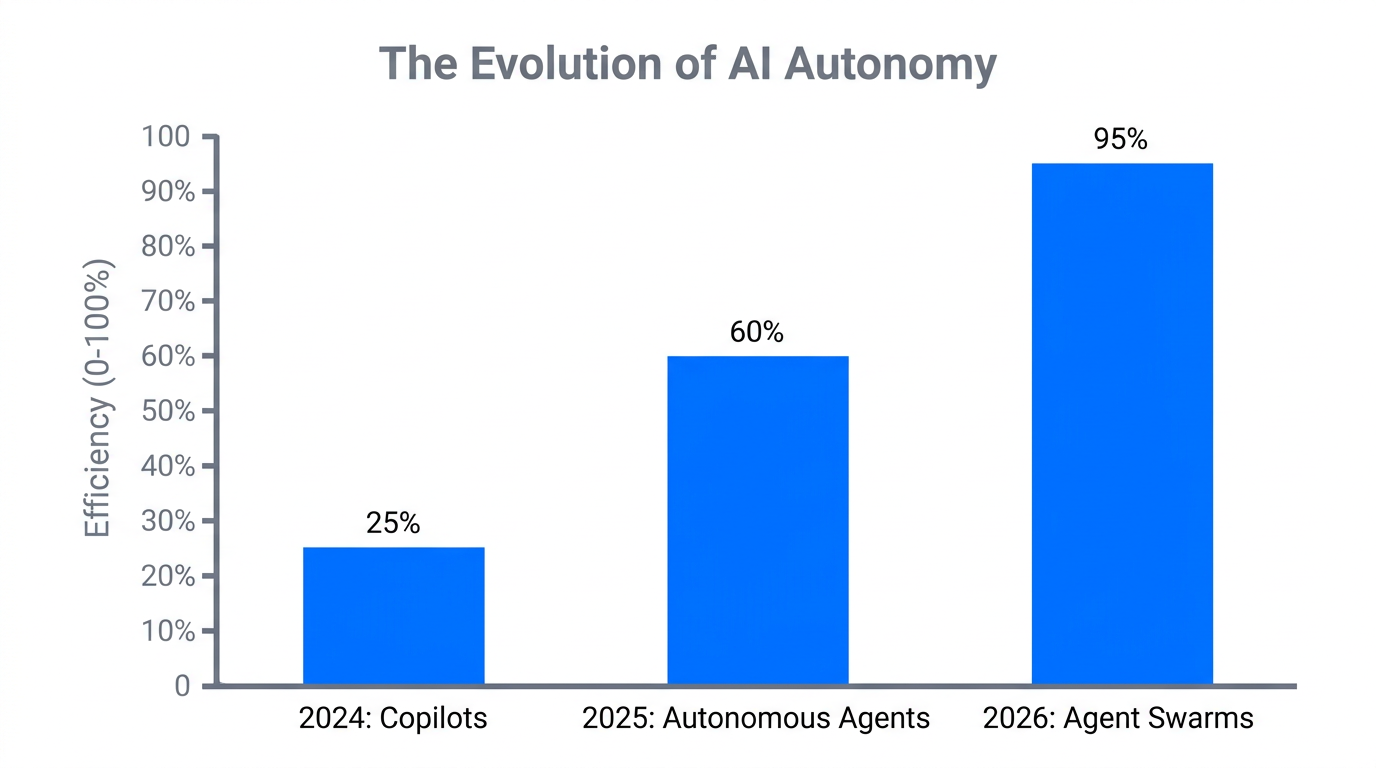
In the fast-moving landscape of 2026, market analysts at Nasdaq have noted that the primary competitive advantage is no longer just data access, but the speed of agentic execution. OpenClaw has become the gold standard for this action-oriented AI, reaching 100,000 stars in under a month and fostering an ecosystem of over 7,000 community-built skills on its marketplace, ClawHub. Unlike traditional tools that wait for a human prompt, OpenClaw utilizes a Heartbeat Scheduler to proactively scan the web, monitor competitor price changes, and triage intelligence without intervention.
This "JARVIS moment" for developers and marketers alike is fueled by OpenClaw's Local-First architecture. As privacy regulations tighten, the ability to run these powerful agents on a local Mac Mini or a private VPS—keeping sensitive GTM data off of third-party SaaS servers—has become a non-negotiable requirement for enterprise-level competitive intelligence automation. According to data from Substack-based researchers, over 28% of all OpenClaw deployments are specifically dedicated to research and data mining.
"OpenClaw is the closest thing to a real-life JARVIS because it has system-level access to files, terminals, and the live web simultaneously."What are Agent Swarms for GTM?
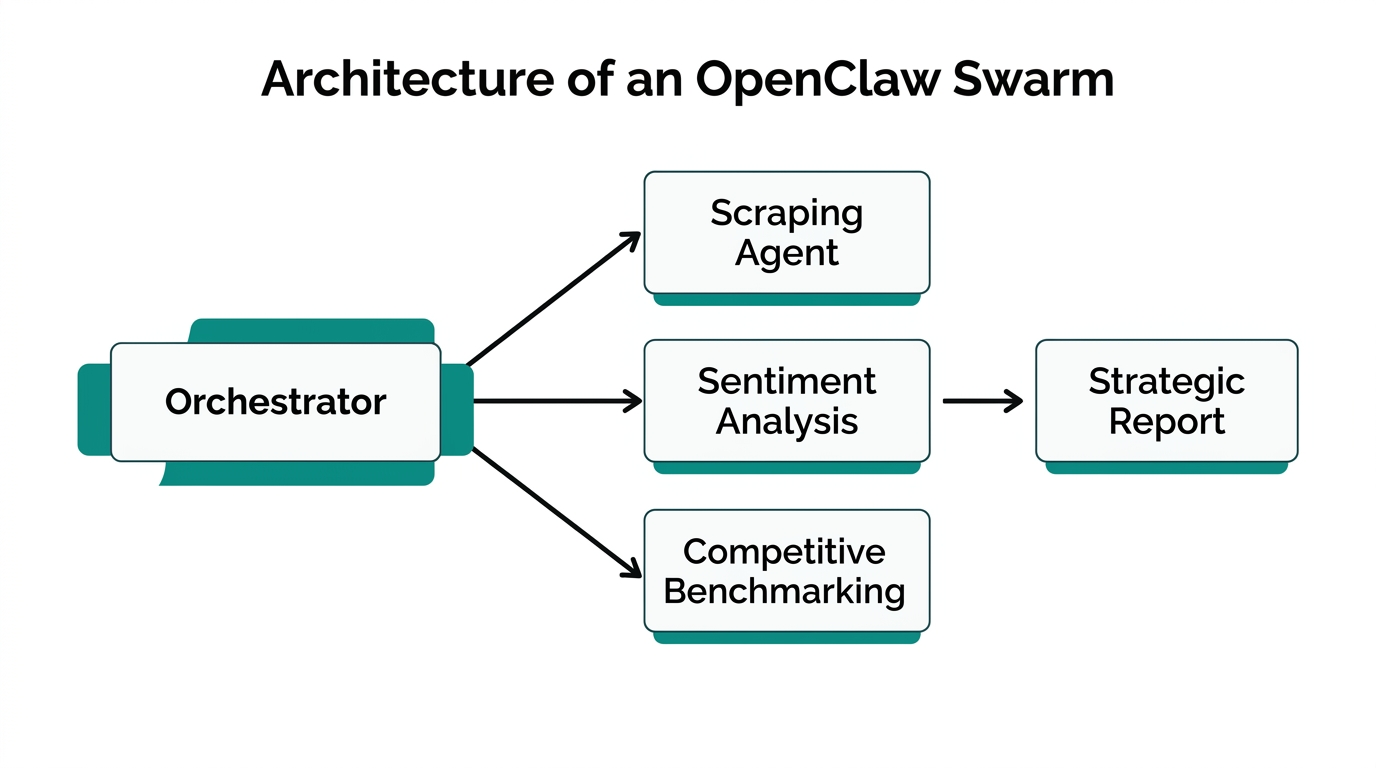
An "Agent Swarm" is a configuration where multiple OpenClaw instances work in parallel to achieve a single high-level objective. In a GTM context, you aren't just running one script; you are deploying a coordinated team of sub-agents. One agent might be tasked with scraping competitor pricing tables every four hours, while another monitors their LinkedIn job postings to identify which departments they are expanding. A third agent then synthesizes this data into a daily brief delivered directly to your messaging apps.
This parallel processing is crucial for modern competitive research. Using platforms like Milvus for vector storage, these agents can compare real-time findings against historical data to spot subtle shifts in a competitor's narrative or product focus. For example, if a competitor removes the term "AI-powered" from their landing page, an OpenClaw swarm will catch the change, analyze the new copy, and alert your team to the potential pivot before the news hits the industry blogs.
| Research Method | Traditional Manual Research | SaaS-Based Monitoring | OpenClaw Agent Swarms |
|---|---|---|---|
| Speed | Weeks | Days | Real-Time (Minutes) |
| Data Privacy | High | Low (Third-party) | Maximum (Local-First) |
| Cost | High Salaries | Monthly Subscription | API Costs Only |
| Customization | Total | Limited by Features | Infinite (ClawHub Skills) |
Playbook: Deploying Your Competitive Intelligence Swarm
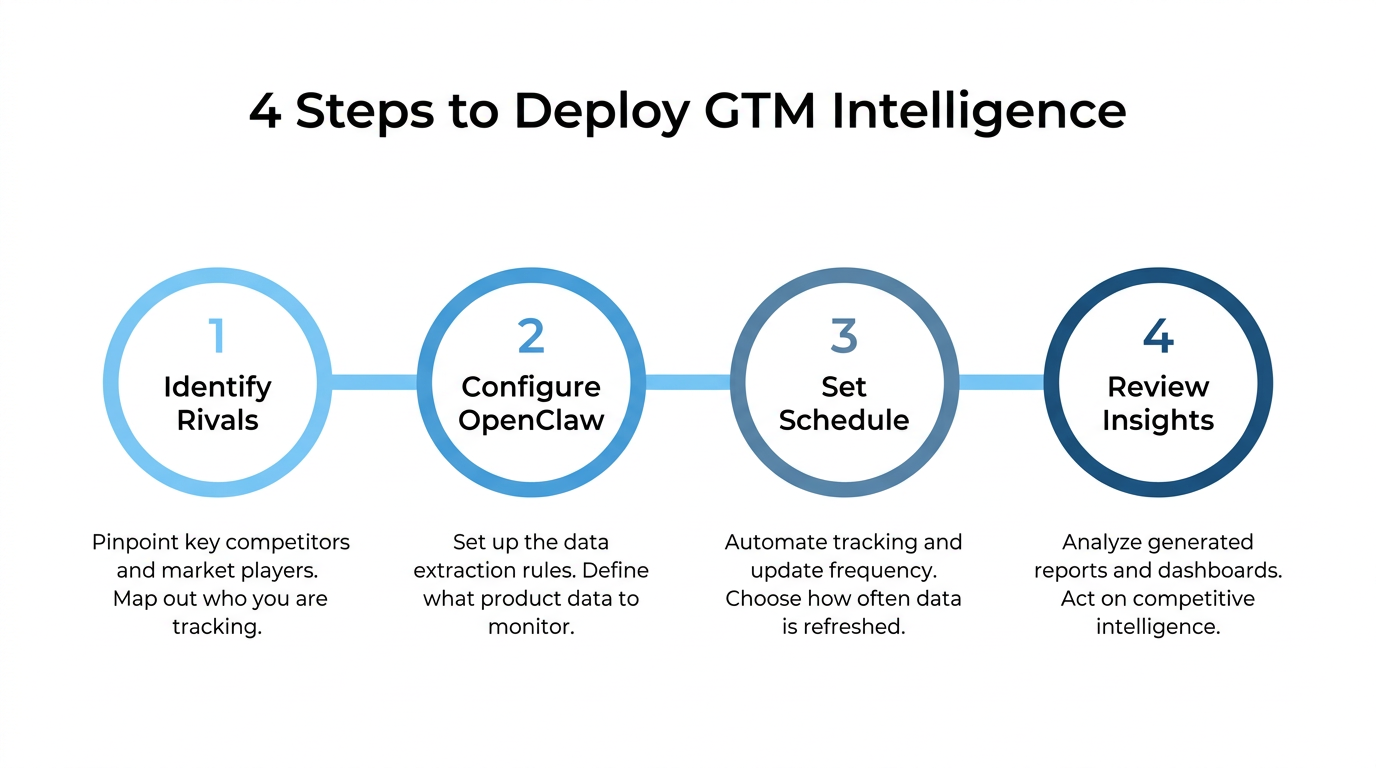
Setting up an automated research engine requires a structured approach to ensure the agents don't get stuck in expensive "thought loops." Follow this step-by-step playbook to deploy your first swarm.
Step 1: Define Your Target Parameters
Identify the top 5-10 competitors and the specific data points you need to track. This usually includes pricing pages, "What's New" sections, and customer sentiment on platforms like TLDL.io or Reddit. Don't try to track everything at once; focus on metrics that directly impact your sales velocity.
Step 2: Provision a Secure VPS
To avoid exposing your local machine, deploy OpenClaw in a Docker container on a dedicated VPS. Using a DigitalOcean 1-Click install is the fastest way to get started. This isolates the agent and prevents potential security risks associated with malicious skills or prompt injection attacks.
Step 3: Configure the "Sub-Agent" Workflow
Instead of one long-running agent, use the Sub-Agent feature. This allows a primary agent to spawn temporary workers for specific background tasks. For instance, the primary agent receives the command to "Map the competitor landscape," and it subsequently spawns sub-agents to handle scraping, sentiment analysis, and summarization independently. This prevents timeouts and improves reliability.
"OpenClaw changes human effort from execution to babysitting—success is no longer about doing the work, but verifying that the agent did it correctly."Step 4: Integrate GTM Tools
Connect your swarm to your internal stack. You can integrate with Salesforce to update competitor profiles automatically or send alerts to Slack. For teams looking to enhance their outreach based on these insights, tools like Stormy AI can help source and manage UGC creators at scale, allowing you to quickly pivot your creative strategy based on the competitor gaps your swarm identifies.
The 'OpenClaw Doctor' Command: Ensuring Security
With great power comes significant risk. Cybersecurity firms like Trend Micro have warned that OpenClaw's system-level privileges can be a "security nightmare" if misconfigured. In fact, a 2026 audit found over 30,000 exposed instances where users left their messaging policy set to 'open,' potentially allowing anyone to hijack their agents.
To combat this, the framework includes the openclaw doctor command. Running this after every configuration change is mandatory for professional GTM teams. This tool performs several critical checks:
- DM Policy Audit: Ensures the
dmPolicyis set topairinginstead ofopen. - Token Validation: Scans for expired API keys or hardcoded credentials in config files.
- Skill Safety: Cross-references installed ClawHub skills against a known list of malicious or buggy plugins.
- Network Isolation: Verifies that the agent is correctly sandboxed within its Docker environment.
openclaw onboard wizard to keep your credentials safe from prompt injection.Case Study: Transitioning from Execution to Babysitting
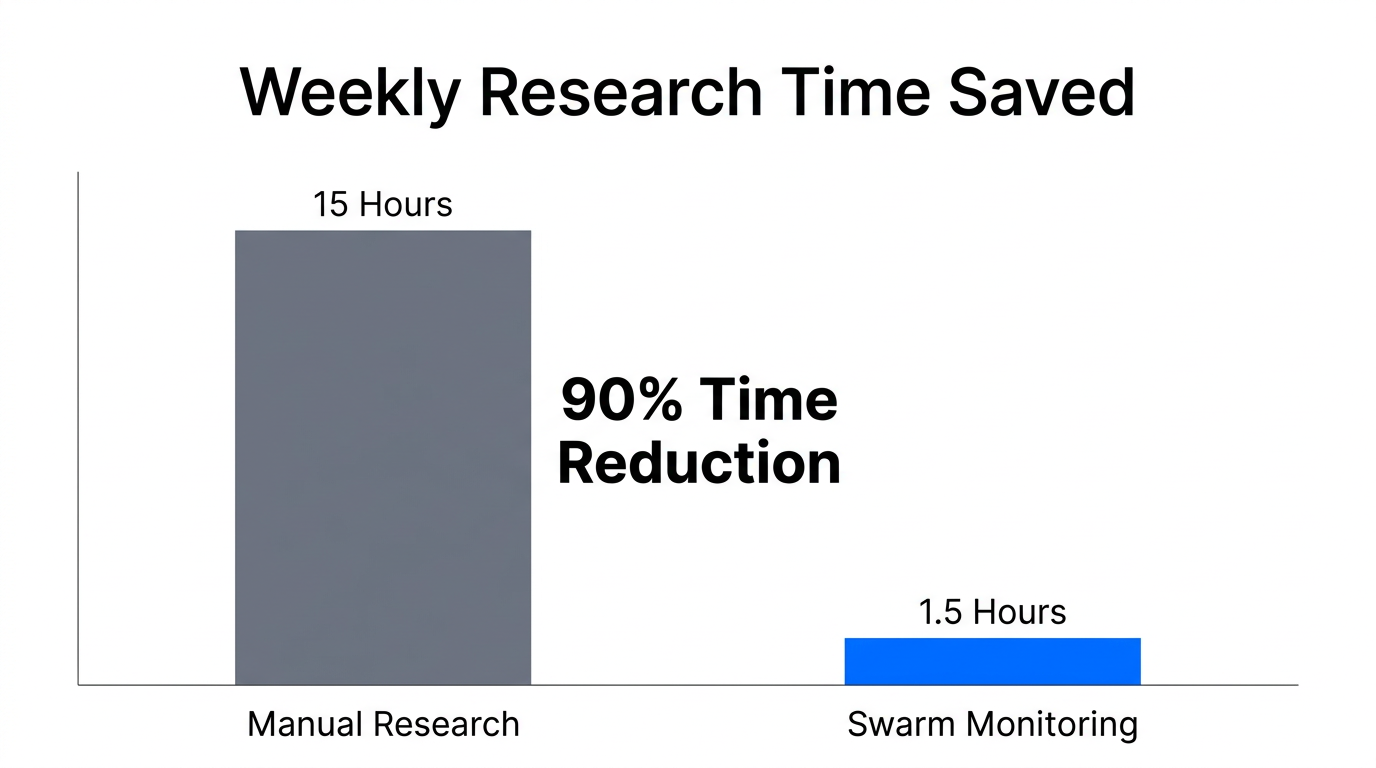
A mid-sized SaaS company recently transitioned their GTM research from a manual team of three interns to a swarm of five OpenClaw agents. Previously, it took the team 40 hours per week to compile a comprehensive market update. By utilizing Ollama for local model inference, they were able to run these agents for pennies on the dollar.
The result? The team now spends only 2 hours per week "babysitting" the agents—verifying the terminal output and refining prompts. As expert Likhit Kumar points out, the challenge shifts from finding data to verifying the agent's reported success. Agents occasionally report a task as "complete" when it actually encountered a soft failure, such as a captcha or a paywall. By implementing a "Verification" step in their prompt workflows, the company maintained 98% data accuracy while reducing human labor by 95%.
This efficiency allows GTM teams to focus on high-level strategy. For example, once the swarm identifies a competitor's weakness in a specific niche, the team can immediately jump into Stormy AI to find influencers who can record UGC content highlighting that exact competitive advantage, creating a lightning-fast feedback loop from intelligence to execution.
"The key to GTM success in 2026 is the speed of the loop: Research > Insight > Content > Distribution. OpenClaw handles the first two; your team handles the rest."Final Takeaway: Building Your 2026 GTM Advantage
Final Takeaway: Building Your 2026 GTM Advantage
Deploying OpenClaw agent swarms is not just a technical upgrade; it's a strategic imperative. By leveraging sandboxed Docker deployments and the local-first architecture, growth teams can build a private, 24/7 intelligence engine that respects data privacy while moving at the speed of modern AI. Whether you are monitoring pricing, tracking feature releases, or analyzing customer sentiment on UserIntuition.ai, the ability to automate research is the ultimate multiplier.
Start small: automate one competitor's pricing page today using openclaw. Run the doctor command to ensure you're secure. Once you see the first automated briefing hit your inbox, you'll never go back to manual market research again. The future of GTM is autonomous, private, and powered by swarms.