
In 2026, the digital landscape has undergone a radical transformation. The era of "look at me" content is dead, buried under the weight of algorithmic updates that prioritize utility, speed, and immediate value. If you are still writing from your own perspective—what we call "ego-writing"—you are effectively invisible. To break through the noise, you must master a content distribution strategy 2026 requires: the Empathetic Lens. This technical marketing guide breaks down the frameworks used by creators like Dicky Bush, who scaled a writing-based business portfolio to $10 million by treating words as a scalable vehicle for problem-solving.
The Shift from Ego-Writing to Problem-Solving
Shift your mindset from self-centered writing to creating content that truly serves others.
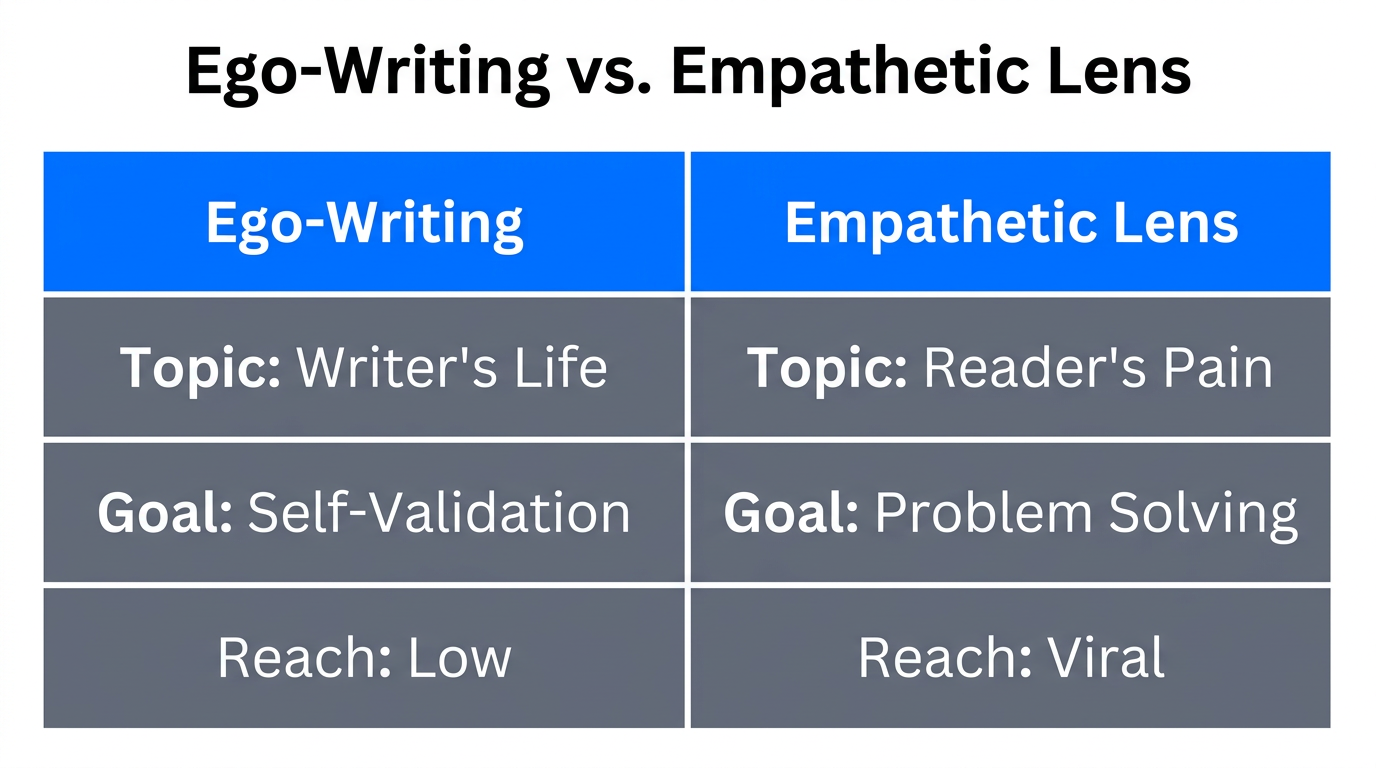
Most writers fail because they treat their social media profiles like a diary. They share what they did, what they ate, and what they think without considering the reader's immediate needs. In 2026, viral algorithms on platforms like X (formerly Twitter) and LinkedIn have pivoted to reward content that provides instant utility. This shift requires a transition to "problem-solving" content that triggers engagement because it answers a specific question for a specific audience.
"The reader does not care about you, how much time you spent on the piece, or your credentials. They only care about what the writing can do for them."
To implement an empathetic lens, you must zoom out and view every sentence through the eyes of a reader who is stumbling into your post with a problem. This is the foundation of modern social media copywriting. Every word must serve the reader’s journey from pain to solution. When you solve a problem for someone, you earn their attention; when you solve it repeatedly, you earn their trust and, eventually, their wallet according to Nielsen Norman Group’s research on digital reading habits.
The 2-Minute Rule: Solving Problems at Scale
Overcome procrastination and build a consistent writing habit by starting with simple actions.In the high-speed environment of 2026, you don't have the luxury of a slow build-up. Your audience growth tactics must revolve around the "2-minute rule." This framework dictates that you should aim to solve a reader's specific problem within 120 seconds of them engaging with your content. Whether it’s a 10-post thread or a short-form video script, the payoff must be rapid.
If you are creating TikTok content or deep-dive threads, the internal structure should follow this logic:
- The Hook: Identify the specific pain point (0-5 seconds).
- The Promise: State exactly what the reader will learn (5-15 seconds).
- The Solution: Deliver actionable steps or a new mental model (15-100 seconds).
- The Closing: Provide a clear next step or "Aha!" moment (100-120 seconds).
| Feature | Ego-Writing (Old School) | Empathetic Writing (2026) |
|---|---|---|
| Primary Focus | The Author's Life | The Reader's Problem |
| Time to Value | 3-5 Minutes | Under 120 Seconds |
| Algorithm Goal | Broad Awareness | High-Intent Utility |
| Conversion Rate | Low (Passive) | High (Active Trust) |
Using Type Share and Analytics to Identify Patterns
Successful writing in 2026 isn't based on guesswork; it's based on data-backed viral writing frameworks. Tools like Type Share allow writers to use proven templates and track performance across multiple platforms simultaneously. By analyzing which formats (lists, how-to guides, contrarian takes) get the most traction, you can double down on what works.
Dicky Bush notes that he uses Type Share as a central hub for hosting, analytics, and templates. The goal is to eliminate "blank page syndrome" and move directly into execution. When you see a post getting retweeted by high-profile accounts, like the famous Naval Ravikant breakdown mentioned in the Starter Story research, you have found a pattern that resonates. Don't reinvent the wheel—take that same structure and apply it to a new problem.
"You never know what's going to go viral. You just have to keep showing up and hitting publish until the flywheel starts to spin."
The 30-Day Streak: Breaking Through Audience Plateaus
Discover how a 30-day writing challenge scaled a digital business to millions.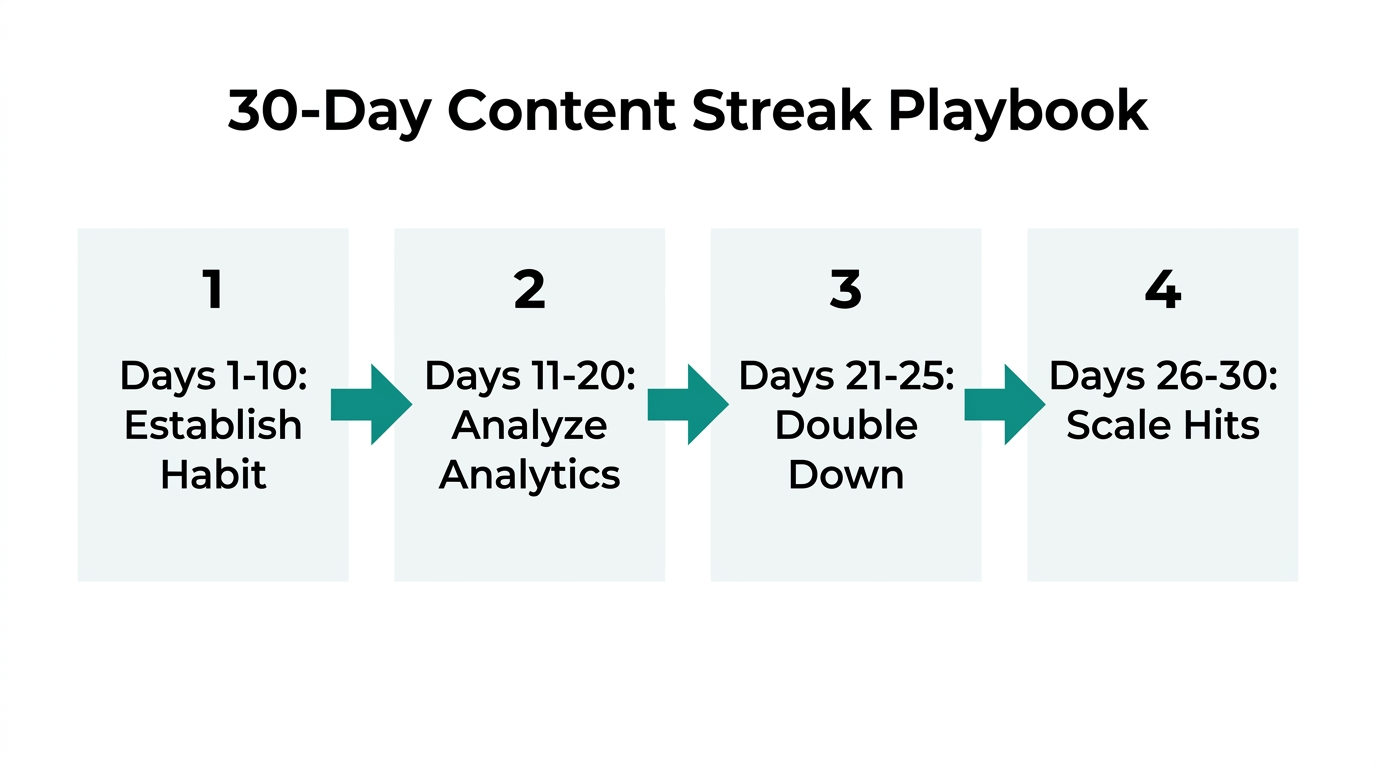
Consistency is the only hedge against algorithmic volatility. Most creators quit just before the "breakthrough" moment. To master your content distribution strategy 2026, you need a daily publishing framework. This is the core philosophy behind Ship 30 for 30, a community that has helped thousands of writers build a daily habit.
Step 1: The Sacred Hours
Identify a time in your day where you are untouchable. For many, this is the "4:30 AM to 6:30 AM" window. During this time, turn off all notifications and focus solely on expansion. Use tools like Notion or Apple Notes to capture ideas throughout the day, then spend your sacred hours turning those notes into polished pieces.
Step 2: Just-In-Time Learning
Avoid "productive procrastination." Do not read 50 books on leadership if you don't have a team. Instead, focus on the single skill you need today. If you are launching a newsletter on Beehiiv, only study subject line optimization until your open rates stabilize. This "just-in-time" approach keeps your momentum high.
Step 3: Leverage AI Interns
In 2026, you shouldn't be writing alone. Use AI tools to serve as your "personal writing intern." Platforms like Stormy AI can help you discover which creators in your niche are already winning, allowing you to study their patterns and apply them to your own writing. While Stormy AI excels at influencer discovery and outreach, its analytics engine provides a clear look at what content is currently moving the needle in the UGC space.
Converting Social Heat into High-Intent Subscribers
Going viral is a vanity metric unless it leads to owned distribution. The transition from a viral X thread to a Klaviyo or Kit (formerly ConvertKit) email list is where the $10 million businesses are built. In 2026, the best way to do this is through the "Value-Add Bridge."
Instead of a generic "sign up for my newsletter" at the end of a thread, offer a specific lead magnet that solves the next logical problem. For example, if you wrote a thread on "How to find your first 100 customers," your bridge should be a template or a checklist for those 100 customers. This ensures that your newsletter subscribers are high-intent and ready for your eventual product offer.
"Writing is the foundation for every single piece of content, product, video, and podcast. Master it, and you write your own income ticket for life."
Monetization: Ghostwriting as the Entry Point
Learn the high-earning potential for modern writers in the evolving digital economy.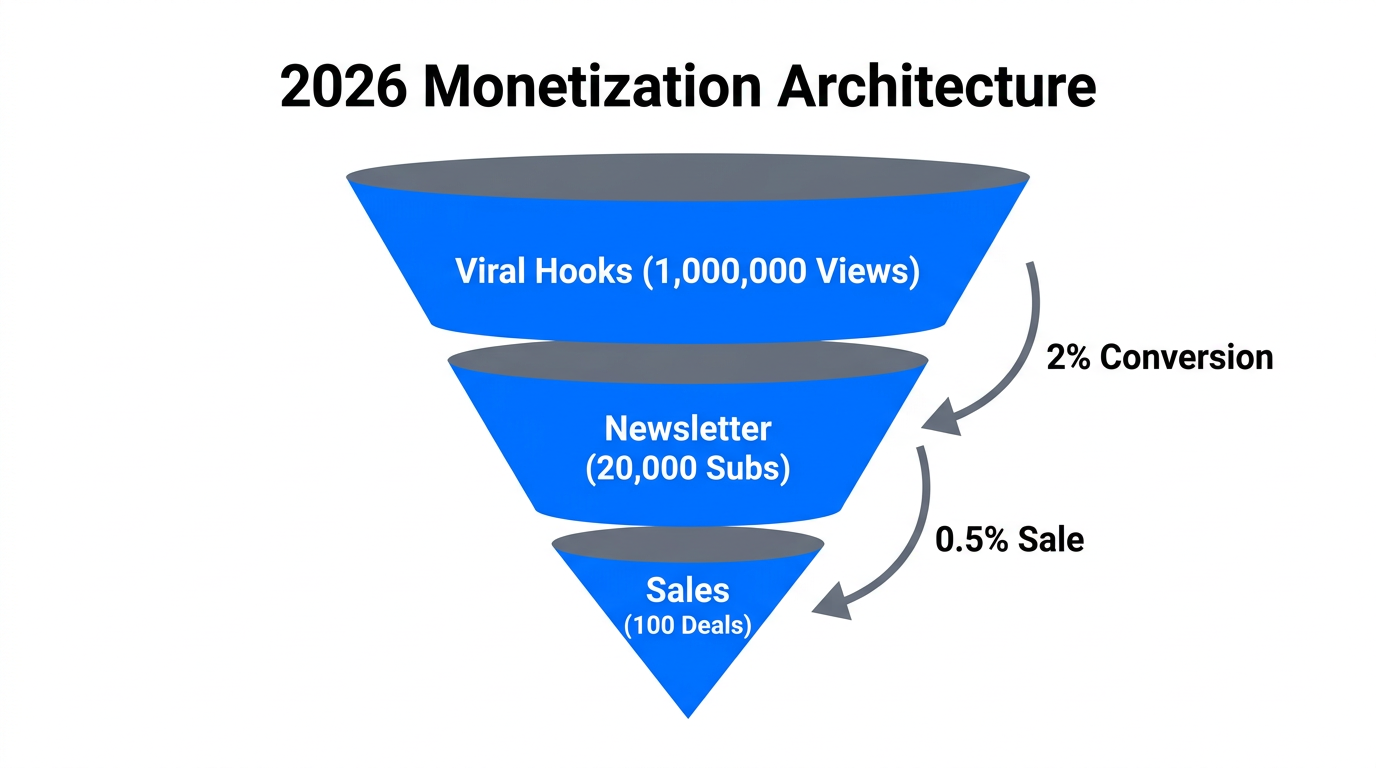
If you are a beginner looking to hit $10,000 a month, the fastest route isn't selling your own course—it's ghostwriting. By building the skill of empathetic writing on your own account, you can then "borrow" someone else's audience and write for them. High-level executives and founders have the audience but lack the 120-minute daily window to write. This trend has exploded, as noted in Forbes’ analysis of executive branding.
You can charge $5,000+ per month for a single ghostwriting client by applying the same viral writing frameworks you've mastered. This provides the financial abundance needed to build your own personal brand without the pressure of immediate monetization, often processed through Stripe. Modern platforms like Stormy AI are invaluable here, as they allow you to vet potential clients' audience quality and engagement rates before you even reach out to offer your services.
Final Thoughts: The Path to Mastery
Mastering the empathetic lens is not about being the most talented writer in the room; it is about being the most useful. By combining a 30-day publishing streak with the 2-minute rule and data-driven tools like Type Share, you create a content engine that works for you 24/7. In 2026, your ability to solve a stranger's problem in 120 seconds is your most valuable asset. Stop waiting for the "perfect time" to start. Kill your 'wants' and start publishing today.