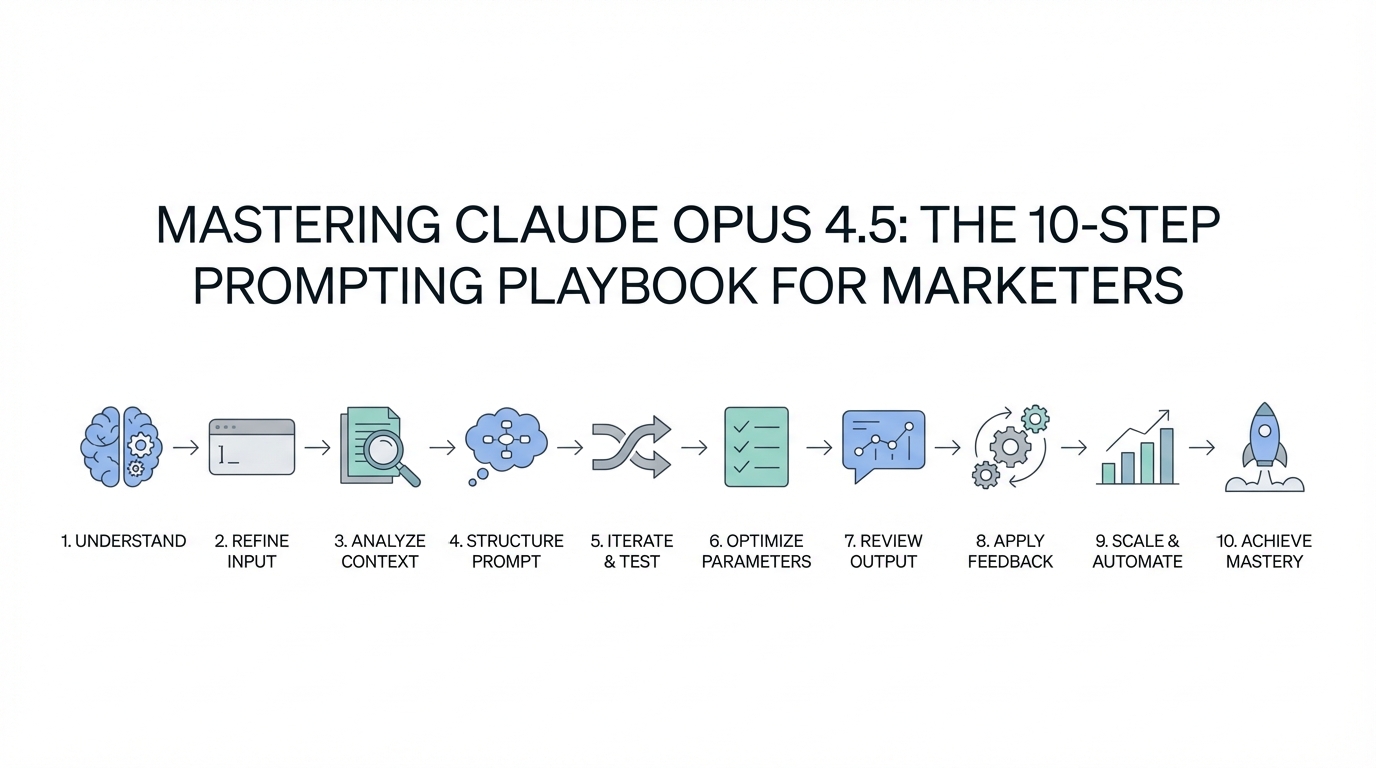
Marketing in the age of artificial intelligence has shifted from a battle of keywords to a battle of context. Most professionals are still stuck in the "one-prompt trap," firing off vague requests and receiving what industry veterans now call "AI slop"—generic, uninspired content that fails to move the needle. However, Anthropic has quietly released a roadmap for high-performance interaction with their latest models. By mastering Claude Opus 4.5 tips and specific prompting frameworks, marketers can transform Claude from a simple chatbot into a high-level strategic partner. This playbook breaks down the ten essential techniques to 10x your marketing output quality.
Step 1: Adopt the Tone of Collaboration
One of the most common mistakes marketers make is treating an LLM like a basic search engine or, worse, a subordinate that needs to be commanded with blunt force. Anthropic’s internal research suggests that a tone of collaboration yields significantly better results. When you use a tone that is friendly, clear, and firm, the model provides more direct and helpful answers. Conversely, aggressive or overly brief prompts often lead the model to "de-escalate," resulting in overly cautious, pre-canned, and less useful responses.
Instead of saying "Fix the grammar in this now," which is vague and demanding, try an architected brief. A better approach is: "Please review the following text for grammatical errors and suggest corrections. My goal is to make it sound more professional and confident." This provides the necessary context and respect that allows Claude to act as a teammate. For those managing high-growth brands at Idea Browser, this shift in tone is the difference between a generic draft and a boardroom-ready document.
Step 2: The Principle of Explicitness

The Principle of Explicitness is the foundation of the Anthropic Claude prompting guide. To eliminate generic results, your request must be a clear, action-oriented command that includes three specific pillars: an action verb, a specific quantity, and a target audience definition. Vague requests like "I need blog post ideas" are passive and lead to unfocused output.
To 10x your results, use this formula: [Action Verb] + [Quantity] + [Subject] + [Audience] + [Constraint]. For example, if you are planning a campaign for Google Ads, don't just ask for copy. Ask: "Generate 10 headlines for a search campaign targeting small business owners in the SaaS space. Each headline must be under 30 characters and emphasize our 24/7 customer support." Every constraint you add acts as a layer of useful guidance for the AI.

Step 3: Defining the Boundaries
A well-defined box produces a more creative result than an empty field. When the possibilities are infinite, Claude—like any creator—can lean toward clichés. By defining boundaries, you force the AI into more specific and creative solutions. This is particularly useful for social media marketers working on platforms like Instagram or TikTok.
If you need a brand story, don't just ask for a story about a product. Ask for a story "no more than 300 words, in the style of Ernest Hemingway, featuring a protagonist who discovers the product in a remote mountain village, and do not use the word 'innovative'." Constraints on length, style, character, and forbidden words are the tools that sharpen the AI’s focus.
Step 4: The 'Draft, Plan, Then Act' Framework
The most advanced LLM prompting techniques involve a multi-step workflow. Instead of trying to get a perfect final product in one go, use the AI to generate an outline or rough version first. This allows you to course-correct early in the process. This strategy is essential for complex tasks like building an Apple Search Ads strategy or a comprehensive content calendar.
The playbook for this framework is simple: Step 1: Propose an outline. Step 2: Refine the plan with specific additions. Step 3: Execute the final version. By asking Claude to "propose an outline for a market research report" first, you can spot missing sections before the AI spends time (and tokens) generating the full text. This iterative process is the most reliable path to high-quality results.
Step 5: Demand Structured Output

Marketers deal with data, and data is often unreadable in prose format. Claude is fluent in many formats beyond paragraphs, including Markdown tables, CSV, and JSON. If you are comparing competitors for a LinkedIn B2B strategy, don't settle for a list. Request a table.
An architected brief would look like this: "Provide a list of the top 3 competitors in the project management software space. For each, include their primary pricing tier, their core unique selling proposition, and one major user complaint. Present this in a Markdown formatted table." This structure ensures the information is ready for immediate use in your strategy decks or CRM notes.
Step 6: Explaining the "Why"
The golden rule of AI for marketing strategy is that context is king. Explaining the motivation behind an instruction helps Claude understand your true intent. If you ask for five marketing slogans for a coffee brand, the AI doesn't know your values. If you explain that your beans are ethically sourced for environmentally conscious millennials, the output will shift dramatically.
By providing the "why," you enable the model to align its creative choices with your brand's mission. This is especially vital when setting up targeting on platforms like Meta Ads Manager, where understanding the psychology of the audience is more important than the text itself.
Step 7: Mastering Brevity and Verbosity
You are in total control of the output length, but you must be explicit about it. Claude can act as The Expert, The Brief, or The Simplifier. For a college-level deep dive, ask it to "think step-by-step to ensure accuracy" and provide detail. For a quick executive summary, command it to "be concise and use bullet points."
A common trick used by growth marketers is to ask for multiple versions: "Explain our new feature in three ways: once for a technical engineer, once for a C-suite executive, and once for a five-year-old." This gives you a range of messaging that can be adapted across your entire marketing funnel.
Step 8: Providing a Scaffold
A "scaffold" is a template or example that guides Claude's structure and style. If you have a specific way you like your weekly reports formatted, don't describe it—show it. Provide a template with placeholders like [Main Thesis], [Key Points], and [Conclusion]. When you provide a rigid structure, you ensure the summary or report is not only accurate but formatted exactly as your team requires.
Step 9: Speaking the AI Language (Cheat Codes)
There are specific "power phrases" that trigger more sophisticated reasoning in Claude Opus 4.5. These are essentially cheat codes for marketing workflows. Using terms from the field of AI training activates powerful internal behaviors.
- "Think step by step": Forces the model to lay out its reasoning, which is essential for complex budget allocations or marketing logic, based on the Chain of Thought framework.
- "Critique your own response": Asks the model to find flaws in its first draft and improve them—effectively giving you a second, better version for the price of one.
- "Adopt the persona of an expert": Primes the model to use domain-specific vocabulary and frameworks, perfect for niche B2B marketing.
Step 10: The Divide and Conquer Strategy

For complex tasks, such as a 10-page campaign proposal or a full product launch plan, act as the conductor rather than the writer. Do not ask for the whole document in one prompt. Instead, break it down into logical subtasks: create the blueprint (table of contents), write the sections one by one, and then prompt for the synthesis to ensure a consistent tone.
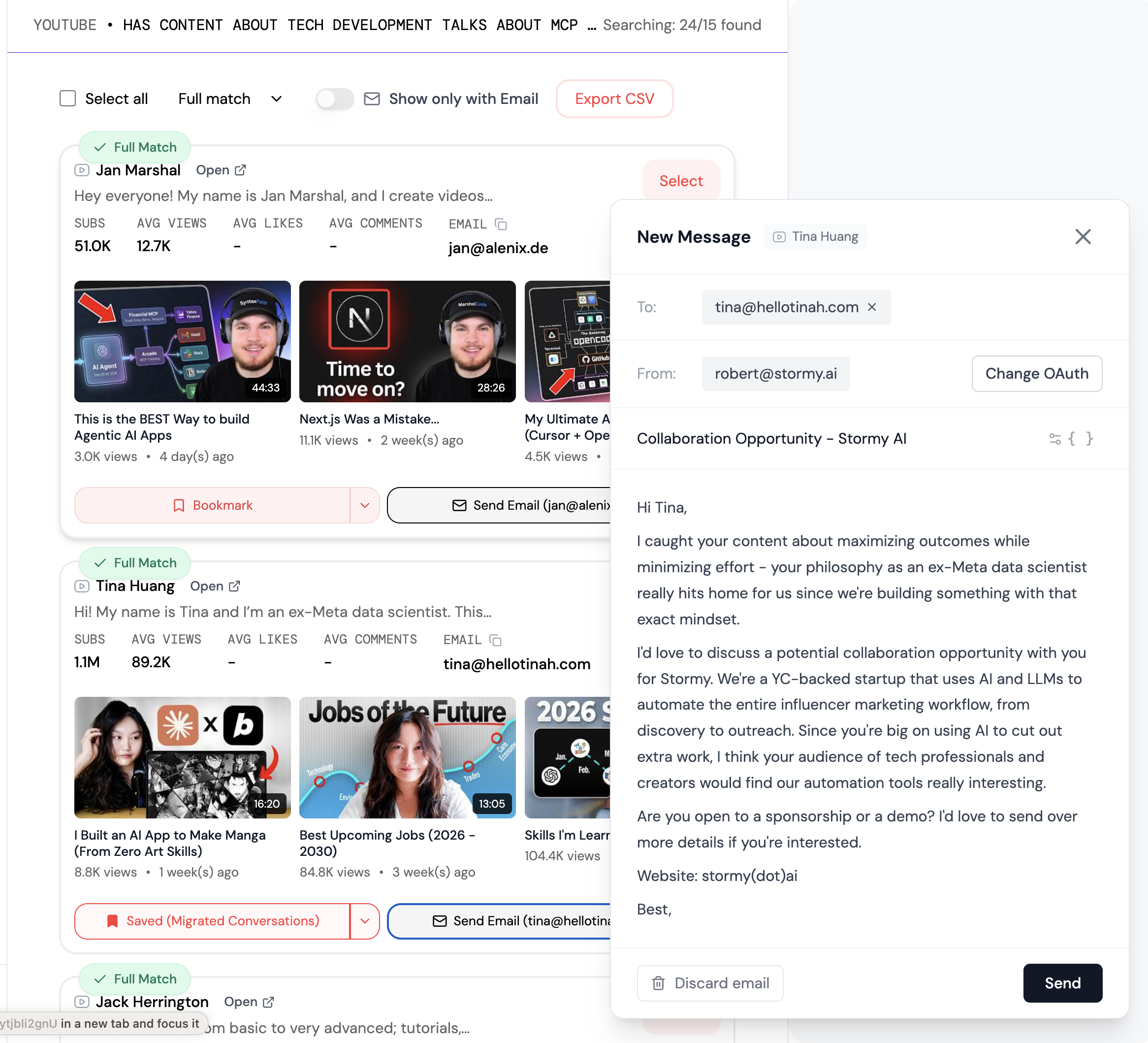
This Claude 4.5 marketing workflow is particularly powerful when sourcing and managing creators for UGC (User-Generated Content). For instance, when planning an influencer campaign, you might use the first step to define your creator criteria. Then, tools like Stormy AI can help source and manage those UGC creators at scale, finding the perfect matches based on the constraints you defined in your AI-driven strategy. Finally, you can use Claude to synthesize the communication plan for those influencers.
Conclusion: Putting the Playbook to Work
Mastering Claude Opus 4.5 is about moving from passive requests to architected briefs. By implementing these ten techniques—from the tone of collaboration to the divide and conquer strategy—you can ensure your marketing output is professional, targeted, and free of "AI slop." Whether you are designing a new brand for YouTube or managing complex creator relationships through a creator CRM, these prompting rules are your secret weapon for 10x growth. Start by choosing one complex task today and apply the "Draft, Plan, Then Act" framework—you will see the difference in the very first response.