The era of the gated whitepaper and the dry corporate case study is officially over. As we move toward 2026, SaaS marketing has undergone a radical transformation, shifting from faceless brand messaging to authority-led growth. B2B buyers no longer trust "ads" in the traditional sense; they trust practitioners and peers who solve the same problems they face every day. This shift has triggered what many are calling the "LinkedIn Gold Rush," where savvy brands are leveraging influencer marketing to bypass traditional gatekeepers and build immediate credibility with decision-makers.
The New Era of B2B Authority: Why LinkedIn is Non-Negotiable
For SaaS companies, LinkedIn has emerged as the definitive platform for performance. The global influencer marketing market is projected to reach $34.1 billion by 2026, up from just $10 billion in 2020, according to data from Statista. Within this massive growth, B2B is taking a dominant share. Currently, 85% of B2B marketers report using influencer programs as a primary growth channel, as trends in B2B social strategy continue to evolve.
The ROI data is equally compelling. Brands are earning an average of $5.78 for every $1 spent on influencer campaigns, according to the Influencer Marketing Benchmark Report. In the B2B SaaS sector specifically, brands often see 2–5x higher engagement rates compared to standard branded content. This isn't just about reach; it's about converting trust into pipeline at a fraction of the cost of traditional lead generation.
The LinkedIn Thought Leader Ads Strategy: Bridging the Credibility Gap
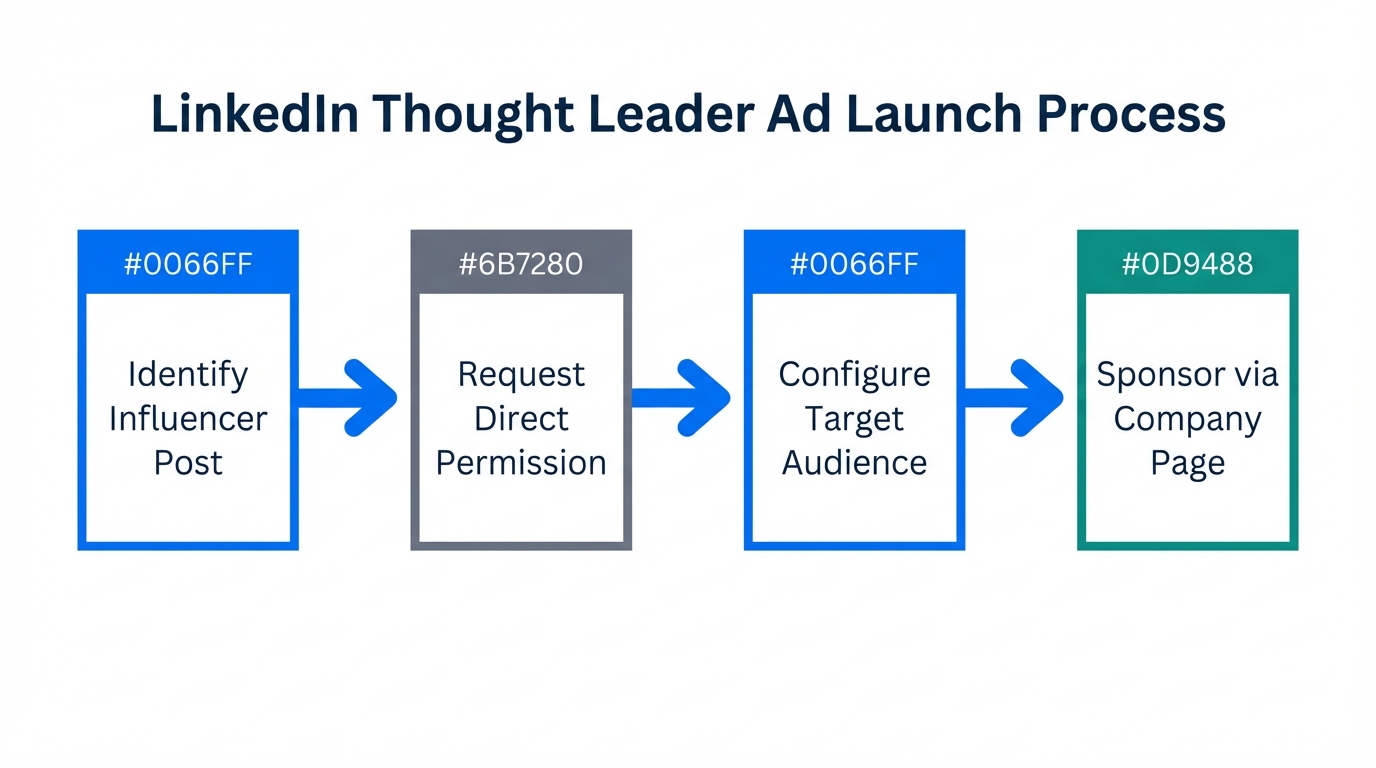
One of the most powerful tools currently available in the advertising toolkit is LinkedIn Thought Leader Ads. This format allows a brand to sponsor a post from a non-employee (such as an influencer or industry consultant). Unlike traditional banner ads or sponsored company posts, these ads appear as organic content from a person the user likely already respects.
This format solves the biggest hurdle in SaaS marketing: the skepticism gap. When a brand says their tool is great, it’s a claim. When an industry practitioner shows their workflow using that tool, it’s a recommendation. Expert Chris Walker, CEO of Refine Labs, has famously noted that SaaS buyers no longer trust gated content—they trust the peers and pros they follow daily.
How to Execute Thought Leader Ads Effectively
- Identify Practitioner Influencers: Don't look for celebrities. Find the people who are actually doing the work. As Andrew Bolis emphasizes, B2B influence is about being a "practitioner," not a "personality."
- The "Product Access" Mandate: Never ask an influencer to promote your tool without giving them a deep-dive login. Their credibility relies on showing how they use specific features to solve real problems.
- Sponsor Organic Success: Wait for an influencer to post a high-performing organic piece of content about your niche, then use Thought Leader Ads to amplify that specific post to your target ICP (Ideal Customer Profile).
"The best B2B influencers are those who solve the same problems your software solves, acting as an unofficial sales team that educates users before they even sign up."
Implementing the Zero-Click Content Framework
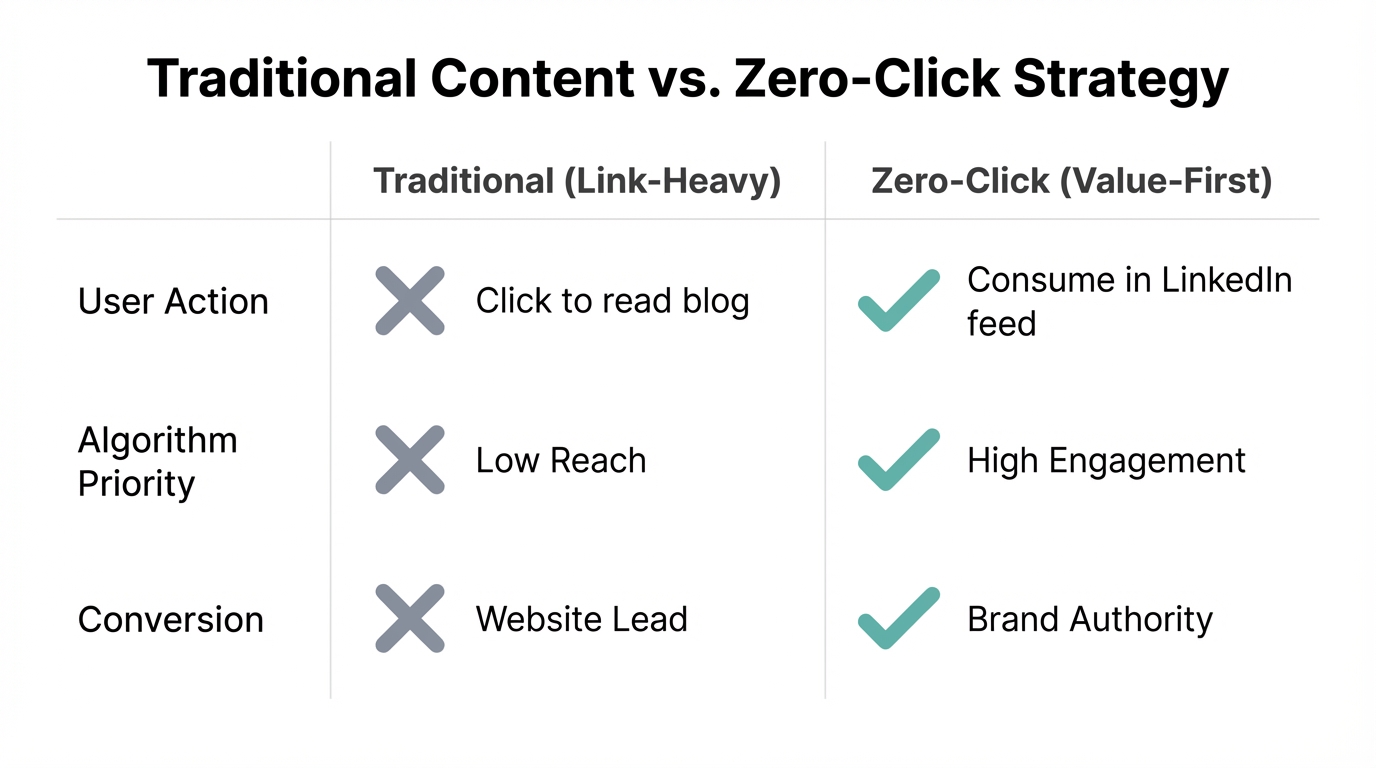
A major trend for 2025–2026 is Zero-Click Content marketing. This framework, popularized by Amanda Natividad at SparkToro, prioritizes providing the full value of a post directly on the platform, rather than baiting users to click an external link. In a world where platforms like LinkedIn and TikTok prioritize "on-platform" time, zero-click content often sees 10x more reach than link-heavy posts.
For SaaS brands, this means encouraging influencers to create full tutorials in LinkedIn carousels or short-form videos. Instead of saying "Read our blog post to see how to automate X," the influencer creates a carousel that shows all 5 steps of the automation directly in the feed. This builds immediate trust. When the user eventually does click (or searches for your brand later), they are already pre-sold on your value proposition.
| Content Type | Traditional Approach | Zero-Click Strategy |
|---|---|---|
| LinkedIn Posts | Link to a blog post with a CTA to read more. | Full tutorial in a 10-slide carousel. |
| Video Content | Teaser video leading to a YouTube link. | Complete "How-to" video with subtitles. |
| Case Studies | Gated PDF behind a lead gen form. | Summary of results and methodology in the post body. |
Case Study: How Storylane Achieved a 50% Lower CPM
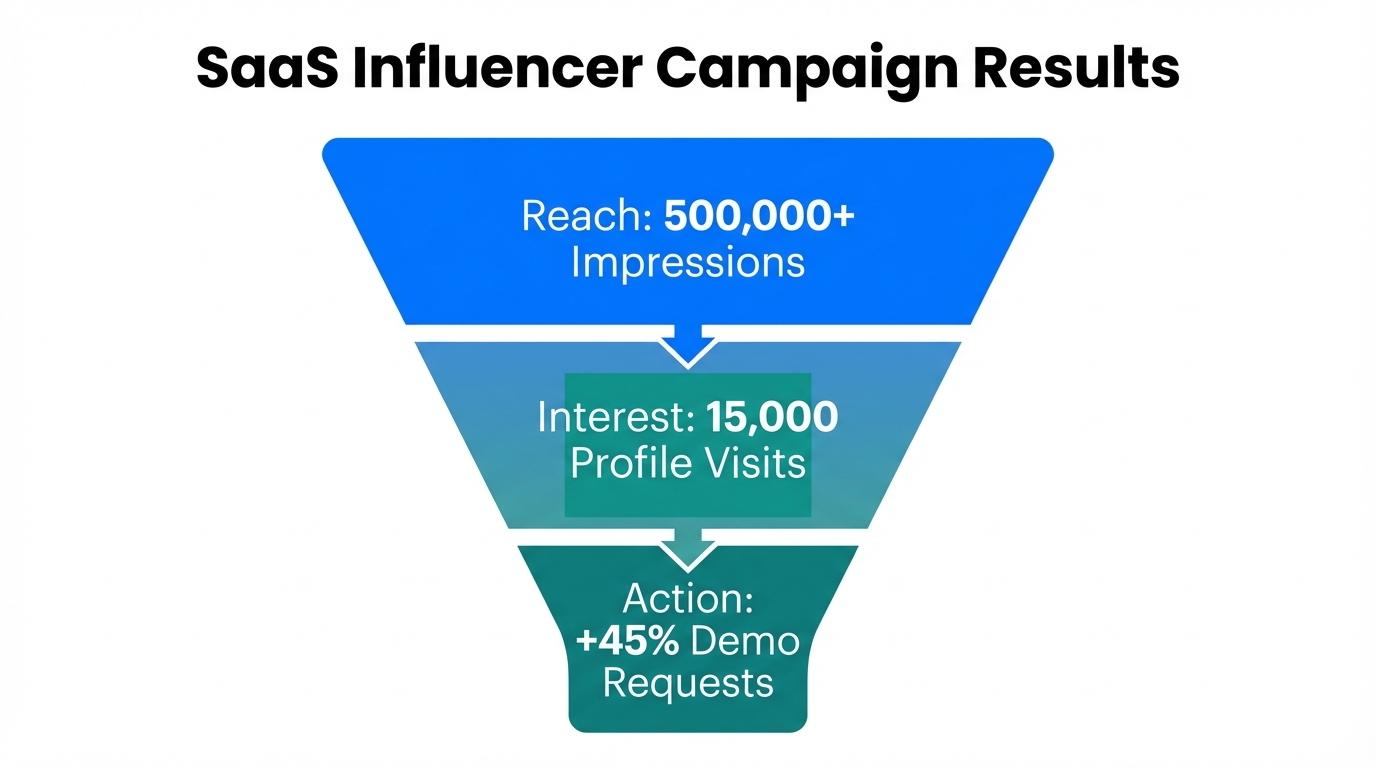
Storylane, a leader in the interactive demo space, provides a masterclass in modern SaaS LinkedIn marketing. Their strategy wasn't built on a single viral post, but a 3-prong approach that combined employee advocacy, external influencers, and customer-led content.
By treating their own employees as influencers and sponsoring external LinkedIn creators through Thought Leader Ads, Storylane generated over 700,000 monthly impressions. Most importantly, they achieved a CPM of approximately $30—nearly 50% lower than the $65+ CPMs often seen on traditional LinkedIn sponsored content channels. This demonstrates that authenticity is more than a buzzword; it's a financial advantage.
Combining Employee Advocacy with External Influencers
To maximize organic reach, you must treat your employees as your first layer of influence. PLG expert Elena Verna advocates for influencer marketing as a "trust layer" for Product-Led Growth. When your internal experts (Product Managers, Engineers, Founders) share their insights alongside external creators, you create a network effect.
Brands like ClickUp take this a step further by having influencers meet with their Customer Success teams before any content is created. This ensures the influencer doesn't just know the tool—they know the optimal workflows that drive the most value. Similarly, Zapier has hosted community events to build long-term relationships with creators, resulting in deeper user research and more authentic advocacy.
"The goal is to move away from 'one-night stand' sponsorships toward long-term partnerships that feel like an extension of your own team."
Tools for Discovery and Vetting
Finding the right partners is the most difficult part of B2B influencer marketing. Chasing follower counts is a common mistake; a creator with 5,000 CTO followers is worth 10x more than a general tech influencer with a million followers. To scale your efforts, platforms like Stormy AI streamline creator sourcing and outreach by using natural language search to find the perfect niche match across LinkedIn and other social platforms.
When vetting creators, you should look for "practitioner signals":
- Engagement Quality: Are the comments coming from your target ICP, or are they just generic praise?
- Niche Authority: Does the creator consistently talk about the problem your SaaS solves?
- Content Style: Do they already use a zero-click format, or are they stuck in the old "link in bio" mindset?
For specific LinkedIn discovery, Favikon is a helpful platform for ranking B2B-specific creators. For managing the logistics of newsletter and LinkedIn sponsorships, Passionfroot offers a streamlined way to handle the business side of creator relationships.
Avoiding Common SaaS Marketing Mistakes
Even with the best tools, many SaaS brands fail by being too restrictive. Over-scripting is the quickest way to kill a campaign. If you force an influencer to use "corporate speak," their audience will immediately tune out. Authenticity is the only currency in this space; give them the talking points, but let them use their own voice.
Furthermore, avoid setting vague KPIs. While "brand awareness" is a nice byproduct, successful SaaS campaigns must track MQLs, Trial Sign-ups, and Customer Acquisition Cost (CAC). Modern platforms like Stormy AI allow you to track individual post performance and campaign analytics to ensure every dollar spent is driving measurable growth.
Conclusion: The Playbook for 2026
Mastering B2B influencer marketing on LinkedIn requires a shift from broadcasting to advocacy. By combining the power of Thought Leader Ads with the value-first approach of Zero-Click Content, SaaS brands can lower their CPMs and build a sustainable trust layer that traditional advertising can't touch. Start by identifying your internal advocates, partnering with niche practitioners, and always prioritizing value over the click. The LinkedIn Gold Rush is here—and it belongs to the brands that humanize their growth strategy.