For years, growth marketers treated App Store Optimization (ASO) like a static checklist. You picked your keywords, stuffed them into the metadata, and waited for the downloads to roll in. But as we move into 2025, the landscape has fundamentally shifted. With Apple’s recent transition to a monthly reporting cadence and the rise of semantic indexing, chasing high-volume terms without a strategy is a recipe for invisibility. To increase organic app downloads today, you must understand the nuance of search intent and keyword volatility.
The stakes are higher than ever. Current data shows that roughly 70% of App Store visitors find their next favorite app via search, and a staggering 65% of all downloads occur immediately after a search query, according to research from MobileAction. If your ASO strategy 2025 doesn't account for how Apple calculates and reports volume, you are essentially flying blind in a market where 30% of the share belongs to mobile games—accounting for over 34 billion downloads—as noted by AppTweak.
Understanding the Apple Search Popularity Index
The foundation of any search strategy on iOS is the Apple Search Ads popularity index. This is a relative score ranging from 5 to 100. A score of 5 indicates negligible search volume, while 100 represents the most searched terms on the platform (think "Instagram" or "TikTok"). However, the way we interpret these numbers changed significantly following what many in the industry call the "September 2025 SAP Crash."
Apple recently shifted its reporting API, moving from daily search volume updates to a Monthly Search Term Rank Report. This shift caused a perceived 77% drop in keywords showing high popularity scores. According to insights from ASO.dev, any keyword with a score below 35 is now frequently hidden or marked as a "5," making it harder for developers to spot emerging trends before they saturate.
"2025 is a transition year where practitioners must focus on thematic clusters rather than chasing individual high-volume terms." — Thomas Petit
The 70/30 Split: Branded vs. Generic Search Intent
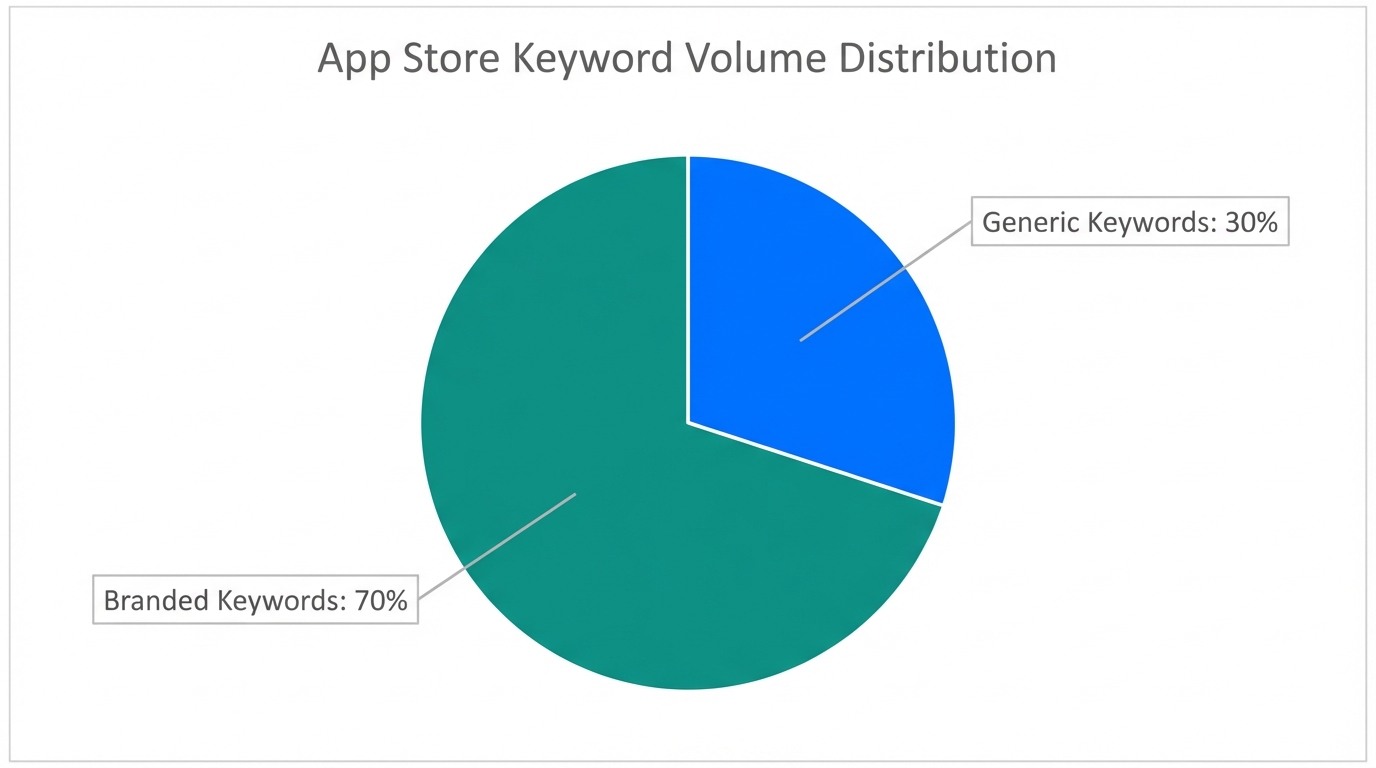
One of the most critical realizations for a growth marketer is that app store search intent is heavily weighted toward known brands. Approximately 70% of total search volume on the App Store is for branded terms like "Gmail," "Spotify," or "Canva," per data from ASOMobile. This leaves the remaining 30% for generic or functional terms (e.g., "photo editor," "budget tracker").
While it is tempting to try and rank for a competitor's brand name, the conversion rate (CVR) is typically abysmal because the user has a specific destination in mind. Instead, the real growth opportunity lies in capturing that 30% functional market. By targeting high-intent, long-tail keywords, apps have seen up to 32% growth in organic installs because the relevance to the user's problem is much higher, as highlighted by Dot Com Infoway.
| Search Category | Volume Share | Typical Conversion Rate | Strategy Focus |
|---|---|---|---|
| Branded Terms | 70% | High (for the brand) | Defensive positioning |
| Generic/Functional | 30% | Moderate to High | Organic Growth & ASO |
| Long-Tail Phrases | <10% | Very High | Niche Dominance |
The 25-Character Rule: Maximizing Title Visibility
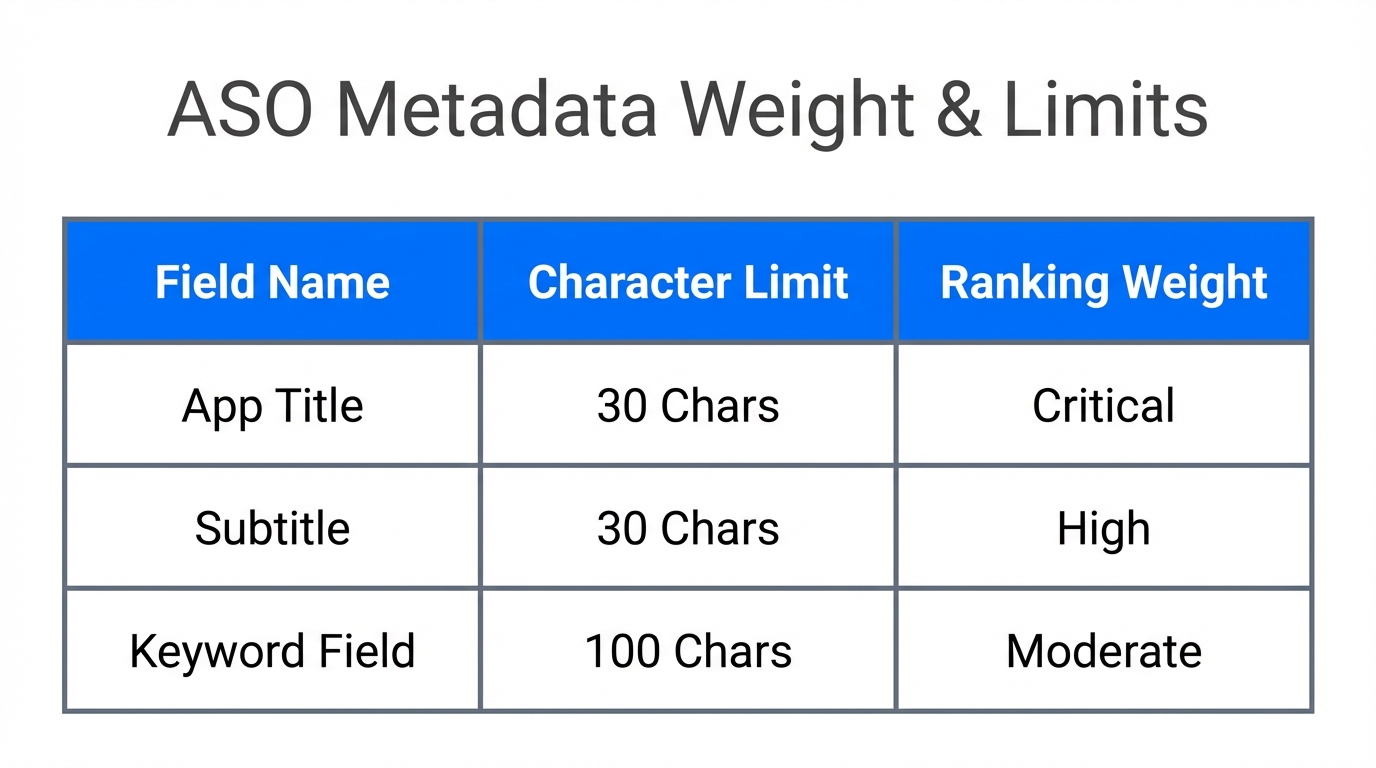
In 2025, the placement of your keywords is just as important as the volume they carry. Apple's algorithm has placed increased weight on the first 25 characters of the App Title. Leading with a primary functional keyword rather than just your brand name can increase organic visibility by up to 20% for new or mid-tier apps.
Take the example of Kiwi.com, which improved its visibility in international markets by moving high-volume keywords from the end of its subtitle to the front of its title. This signals to the algorithm—and the user—exactly what the app does within the first glance. For brands looking to scale this process, using AI-powered creator discovery platforms can help identify which functional terms are currently trending in user-generated content (UGC), allowing you to align your metadata with how real people talk about your solution.
When you are sourcing UGC creators to drive traffic to your App Store page, platforms like Stormy AI streamline creator sourcing and outreach, helping you find influencers who naturally use these high-volume functional terms in their content, creating a seamless bridge between social discovery and App Store conversion.
The Monthly Metadata Audit Playbook
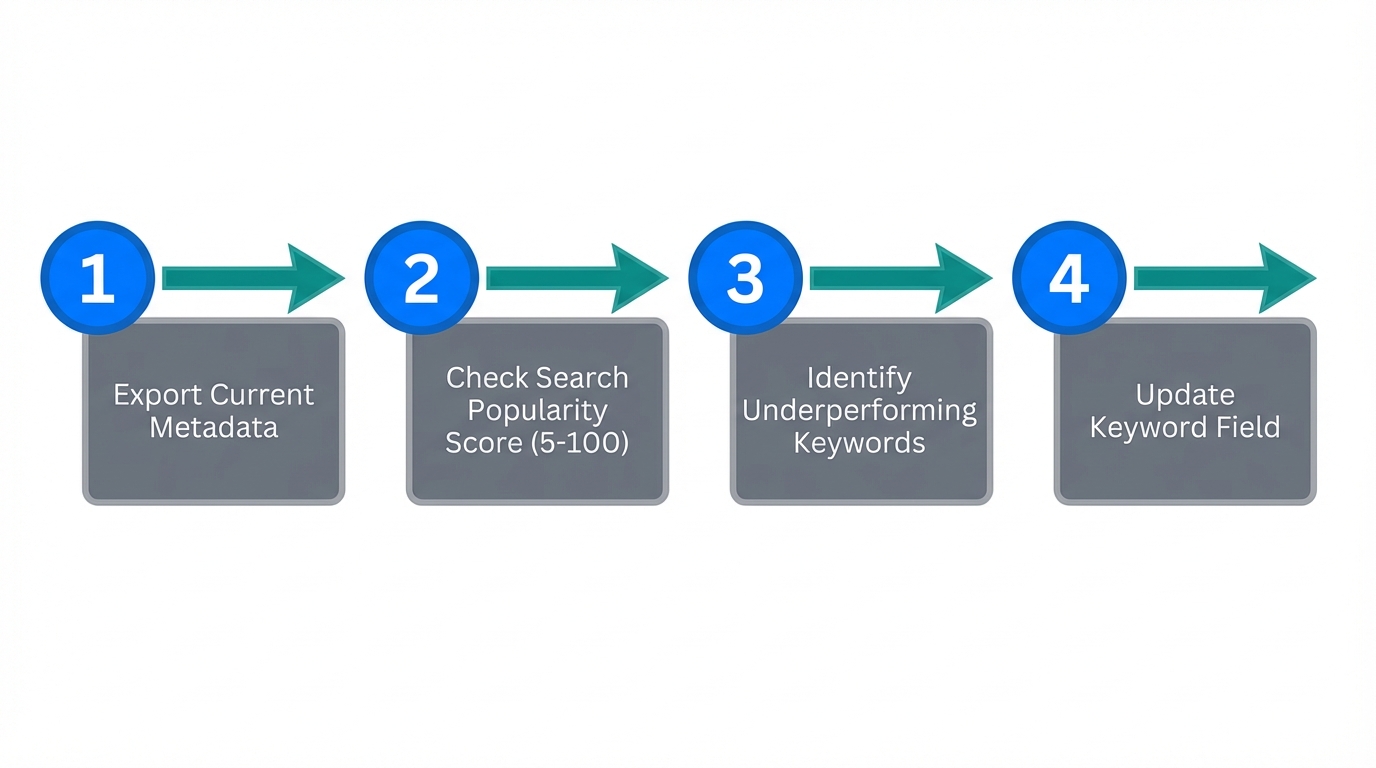
Because app store keyword volume is now more volatile due to the monthly reporting shift, a "set-and-forget" approach will lead to a slow decay in rankings. Experts recommend a comprehensive metadata audit every four weeks to stay competitive. Apps ranked between 150 and 250 are 4x more likely to waste space on filler words like "the," "and," or "with," which Apple's algorithm largely ignores.
Step 1: Identify Keyword Gaps
Use tools like ASOTools to find keywords your competitors (specifically those ranked #10–#50) are ranking for but you are not. Do not focus on the top 1% like Uber or TikTok; their volume is driven by brand power, not ASO.
Step 2: Validate with Apple Search Ads (ASA)
Before committing a primary keyword to your title, run a small test campaign in Apple Search Ads. The Apple Search Ads popularity index within the dashboard provides the most accurate reflection of current demand. If a keyword has a high volume but a low conversion rate in your ads, it will likely hurt your organic ranking if you use it in your metadata.
Step 3: Update the 100-Character Keyword Field
Unlike Google Play, the iOS App Store provides a hidden 100-character keyword field. This is the #1 missed opportunity for many developers. Ensure there are no duplicate keywords between your Title, Subtitle, and this hidden field. Apple's algorithm treats duplicates as spam and ignores them, wasting valuable real estate.
Leveraging AI and Semantic Indexing
The "AI pivot" is the most significant trend of the decade. By late 2025, over 100 top apps across 15 different categories added "AI" terms to their metadata to capture the massive surge in search volume, according to Sensor Tower. But it’s not just about the word "AI." Apple's algorithm has moved toward semantic clusters, meaning it understands the thematic intent of your app rather than just exact keyword matches.
Furthermore, Apple now utilizes Optical Character Recognition (OCR) to index text inside your screenshots. This means the keywords you feature in your visuals now contribute to your ranking. However, be cautious: over-stuffing text in your screenshots can lead to a "relevancy penalty" if the system determines the content is no longer user-friendly.
"ASO is now a system, not a checklist. Volume is meaningless without Conversion Rate (CVR) Relevancy. If you rank high but users don't click, Apple will demote you instantly." — Gabe Kwakyi, Incipia
Validating Volume Before You Build
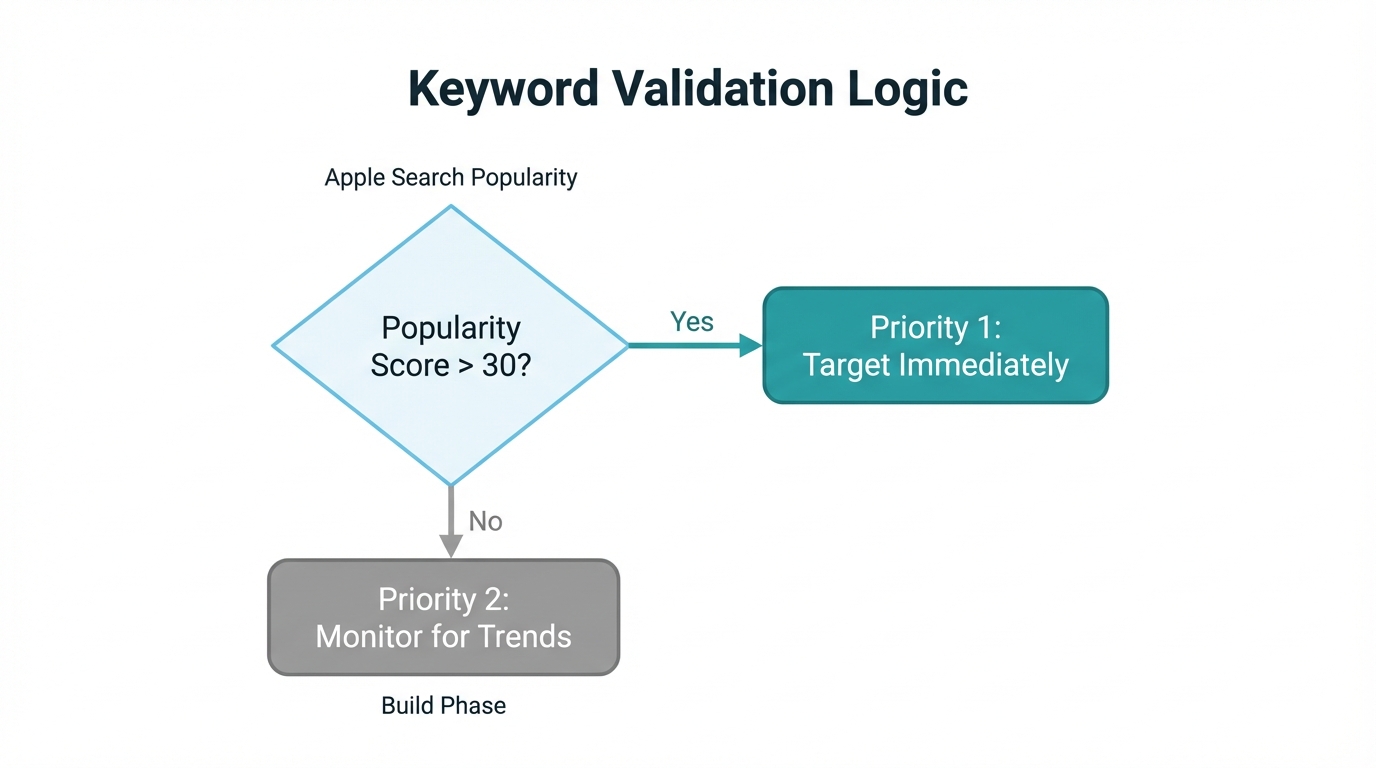
Smart developers are now using the "Trending Keywords Method" to build apps around keywords that are spiking in volume but have zero competition. For example, the term "hair product scanner" or specific "shadow work" tools saw massive spikes before any major players entered the space. By monitoring these shifts in the SplitMetrics popularity benchmarks, you can find "blue ocean" opportunities.
Once you've identified a niche with high app store keyword volume, managing the lifecycle of that app's growth requires more than just ASO. You need a way to build a community and drive external traffic. A creator CRM like Stormy AI allows you to manage relationships with UGC creators who can validate these niches through social proof, further boosting your organic search authority through increased click-through rates.
The Future of ASO is Dynamic
Mastering app store keyword volume in 2025 requires a balance of technical precision and creative strategy. You must navigate the shift to monthly reporting, respect the 25-character rule for titles, and constantly audit your metadata to avoid the "filler word" trap. Remember that while 70% of searches are branded, the 30% of generic search traffic is where new leaders are born.
To succeed: audit monthly, validate with ASA, and focus on conversion relevance. By treating ASO as a living ecosystem rather than a one-time setup, you ensure your app stays visible, relevant, and profitable in an increasingly crowded marketplace.