Mastering Agentic Commerce: How to Build an AI-Ready Ecommerce Tech Stack in 2026
In 2026, agentic commerce is the new standard. Learn how to build an AI-ready ecommerce tech stack using automation, hyper-personalization, and unified commerce.
The year 2026 has arrived, and the ecommerce landscape has officially shifted from the "experimental" phase of AI into a period of pure execution, hyper-personalization, and machine-readability. For modern brands, success no longer means simply maintaining an online storefront; it means building a data-rich ecosystem designed to serve both human customers and the AI agents that shop on their behalf. With the global ecommerce market projected to reach $8.1 trillion by the end of this year, the competition is no longer just for eyeballs—it’s for algorithmic preference.
The Rise of Agentic Commerce: When AI Becomes the Buyer
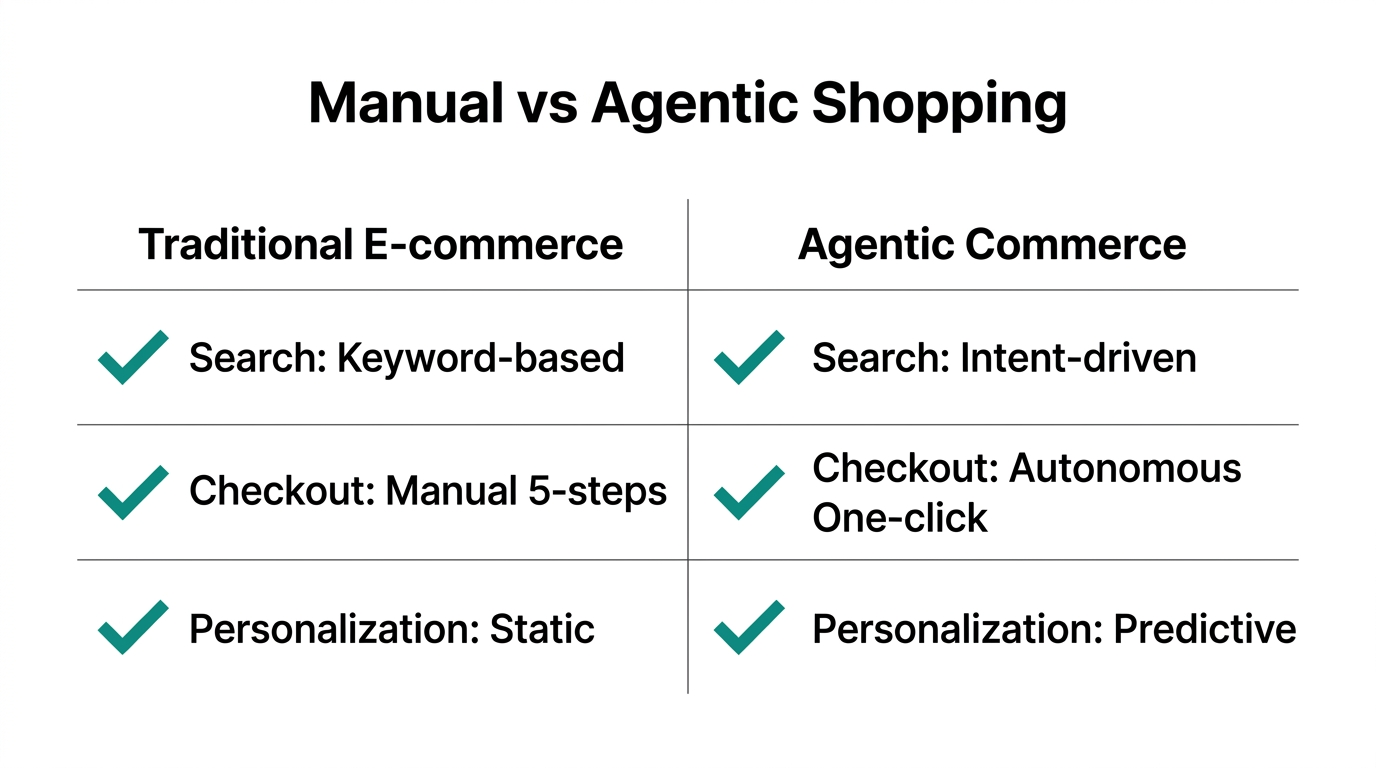
We are currently witnessing the birth of "Agentic Commerce." In this new paradigm, AI is no longer just a search tool; it is a proactive buyer. AI agents, such as Agentforce by Salesforce, are now capable of researching products, negotiating terms, and completing entire purchase cycles without human intervention. This isn't a futuristic concept—it is a reality where 25% of shoppers now use AI-powered chatbots as their primary shopping assistants.
"Agentic Commerce is the shift from 'searching for products' to 'delegating the purchase.' Your store must now be as readable to a machine as it is beautiful to a human."
For brands to thrive, they must implement an ecommerce AI automation strategy that prioritizes machine-readability. If an AI agent cannot parse your product specifications, shipping times, or sustainability credentials, your brand simply doesn't exist to that buyer. This is particularly critical in the B2B sector, which is expected to hit $36 trillion globally by the end of 2026.
Building the Foundation: The Unified Commerce Strategy
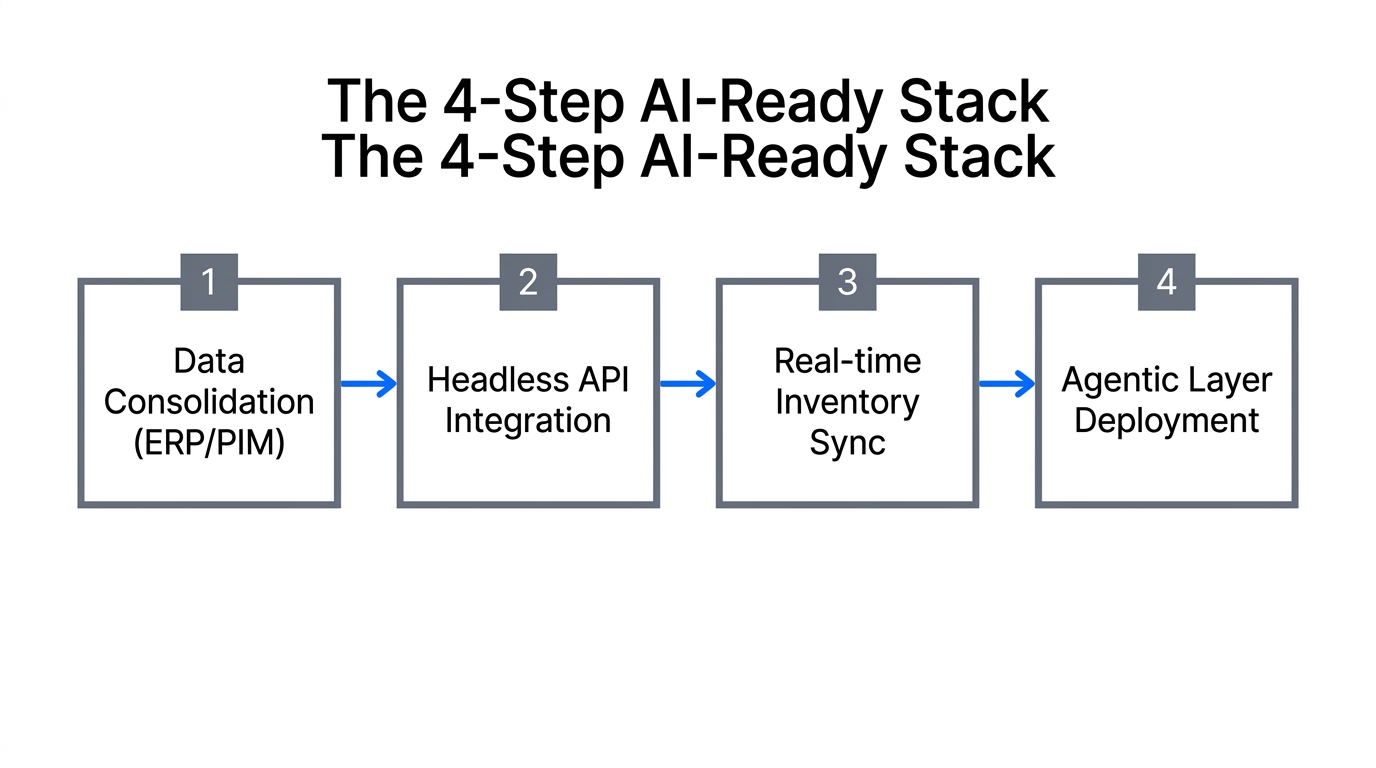
In 2026, the term "omnichannel" has been replaced by Unified Commerce. A unified commerce strategy creates a single source of truth for inventory, customer data, and order management across every touchpoint. This transparency is essential for AI agents that require real-time accuracy before committing to a purchase.
| Platform | Best Use Case | Key 2026 Feature |
|---|---|---|
| Shopify | Scale-up & Direct-to-Consumer | Native AI-agent discovery integrations |
| BigCommerce | Enterprise B2B & Large Catalogs | Multi-storefront data syndication |
| WooCommerce | Content-Heavy & Custom Sites | Open-source AI-plugin flexibility |
Choosing the right platform is only the beginning. To prevent data silos—a mistake that leads to inconsistent pricing and customer frustration—modern stacks must integrate every tool. Brands like Brooklinen have mastered this by offering a seamless experience from their online store to their physical "experiential centers," ensuring the customer profile is updated in real-time regardless of where the interaction happens.
Hyper-Personalization at Scale: Moving Beyond First Names
Generic marketing is dead. In 2026, customers expect brands to utilize real-time behavioral data to customize every aspect of the shopping journey. According to Publicis Sapient, hyper-personalization is now the primary driver of retention for top-tier ecommerce brands.
To achieve this, your stack needs AI personalization tools 2026 leaders rely on:
- Klaviyo: By leveraging Klaviyo's AI-driven predictive analytics, brands can send hyper-targeted SMS and email sequences based on the exact moment a user is most likely to convert.
- Jasper: Use Jasper to generate high-volume, SEO-optimized product descriptions that adapt their tone based on the demographic data of the visiting user.
- Stormy AI: While your internal tools handle the customer data, finding the right creators to drive that traffic is best managed through an AI-powered platform like Stormy AI, which automates the discovery and outreach to influencers who actually align with your hyper-niche audience.
"Hyper-personalization isn't about knowing a customer's name; it's about predicting their next need before they even realize they have it."
Optimizing for Zero-Click Search and Visual Discovery
As Jason Goldberg of Publicis Groupe predicts, "Zero-Click Search" is the dominant reality of 2026. Users (and their agents) are getting answers directly from search engine results pages and AI interfaces without ever clicking through to a website. This forces brands to optimize for voice and visual search discovery.
Mobile commerce continues to lead this charge, with mobile devices expected to drive over 40% of all sales this year. If your site isn't optimized for "thumbs" and voice commands, you face a 70% abandonment rate from mobile users. Furthermore, US social commerce sales will exceed $100 billion in 2026, meaning your products must be discoverable on platforms where users spend their time, like TikTok and Instagram.
Reducing Support Overhead by 70% with Autonomous Agents
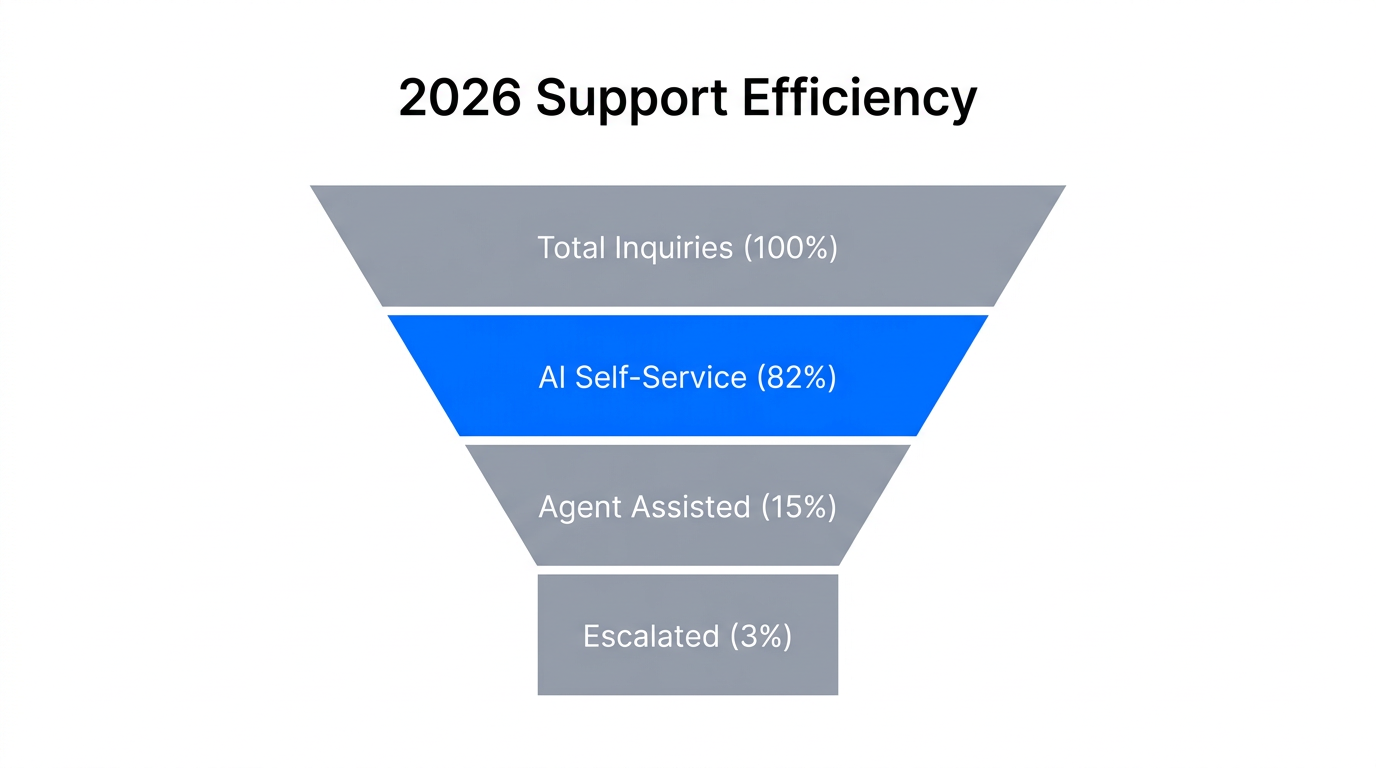
One of the most immediate ROI wins in 2026 is the automation of customer service. By implementing Tidio and its Lyro AI, brands are currently handling up to 70% of support tickets without a single human agent. These tools use natural language processing to resolve queries about shipping, returns, and product compatibility instantly.
Other tools like Fin.ai allow for deep integration with your brand's knowledge base, providing human-level nuance with machine-level speed. This operational excellence is what Rick Watson of RMW Commerce argues is the key to protecting margins in a high-competition year.
The Data Frontier: Digital Product Passports (DPP)
Sustainability is no longer a marketing buzzword; it’s a legal requirement in many regions. Driven by EU regulations, the Digital Product Passport (DPP) has become a staple of the 2026 tech stack. These "digital birth certificates" document a product's entire supply chain, and they are a vital data point for AI agents tasked with finding "eco-friendly" or "ethically sourced" products.
Failure to provide this data doesn't just alienate conscious consumers; it results in algorithmic exclusion from AI shopping assistants that filter for sustainability metrics.
Countering AI Saturation with Community-Led Growth
As AI-generated content saturates the web, human connection has become a premium commodity. The most successful brands in 2026 are those building "brand homes"—spaces where customers can interact with each other and the brand directly. Whop and Circle have become essential for hosting these communities.
Look at Liquid Death: they treated a commodity (water) like an identity product by fostering a cult-like community. By combining a strong community with a modern tech stack, they achieved high LTV (Lifetime Value) that resists the churn typical of AI-driven comparison shopping.
Your 2026 AI-Ready Ecommerce Checklist
To ensure your business is ready for the era of agentic commerce, follow this playbook for 2026:
- Validate Demand: Use Semrush to ensure you aren't one of the 80% of businesses that fail due to lack of market research.
- Standardize Data: Ensure every product has a Digital Product Passport and structured schema for AI agents.
- Automate Outreach: Use Stormy AI to discover and manage creator relationships at scale, bypassing the noise of automated ad platforms.
- Unify Your Stack: Integrate your CRM and inventory into a single source of truth to avoid the high 70% cart abandonment rate caused by inventory errors.
- Incentivize Values: Use tools like EcoCart to offer carbon-neutral shipping, making your brand more attractive to both humans and AI filters.
The brands that win in 2026 will be those that realize the customer is no longer just a person behind a screen—it's an ecosystem of human desire and machine efficiency. Build your stack to serve both, and you'll dominate the future of commerce.