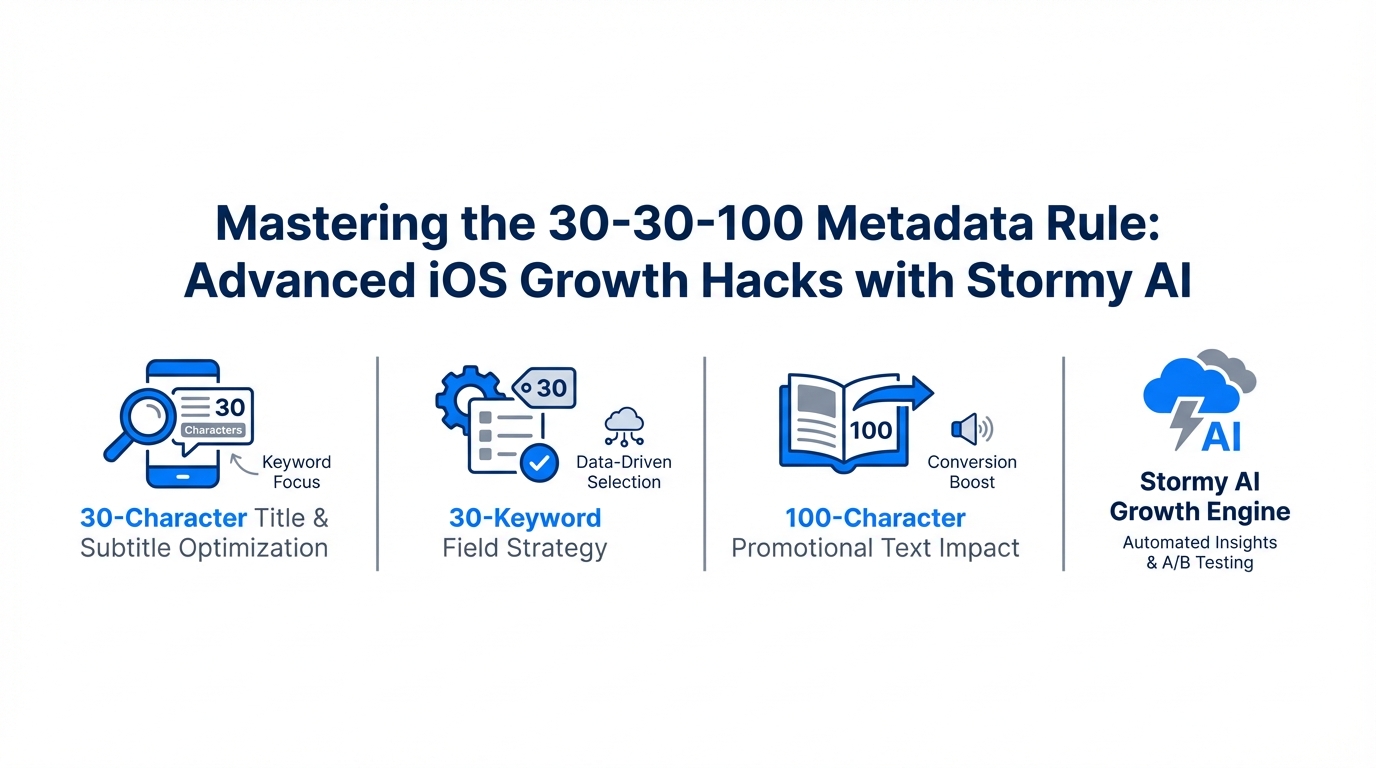
In the hyper-competitive ecosystem of the Apple App Store, visibility is the ultimate currency. With over 2 million apps vying for attention, the difference between a top-tier ranking and digital obscurity often comes down to how well you speak the algorithm's language. Statistics show that approximately 70% of App Store visitors use search to find new apps, and an incredible 65% of all downloads occur immediately after a search query. This means that if you aren't optimizing for search, you are essentially invisible to two-thirds of your potential market. The secret to scaling lies in maximizing your metadata footprint through technical precision and strategic keyword placement.
The 30-30-100 Framework: Strategic Keyword Placement
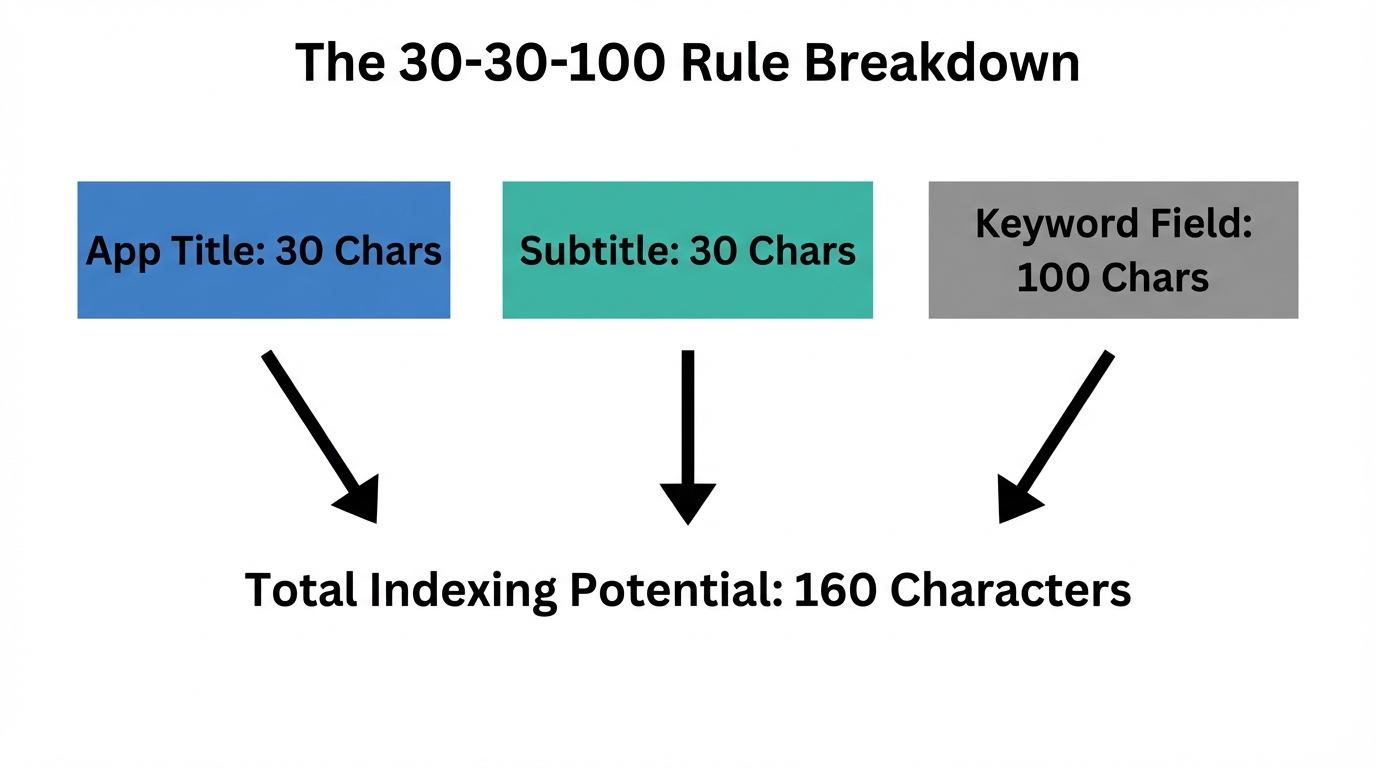
The foundation of any successful iOS growth strategy is what experts call the "30-30-100 Rule." This framework is designed to exploit the specific character limits Apple provides for different metadata fields while prioritizing the weight the algorithm assigns to each. While many developers guess at their keywords, high-growth apps treat these characters like prime real estate. While 70% of total search volume is driven by branded terms like TikTok or Instagram, the remaining 30% of generic traffic is where new apps find their growth potential. The 30-30-100 rule helps you capture that generic intent.
- App Title (30 Characters): This is your most powerful ranking factor. Your title should lead with your #1 high-volume generic keyword. For example, instead of just "Dreamy," use "Dreamy – Sleep Tracker & Sounds." This ensures the algorithm immediately associates your app with its core function.
- Subtitle (30 Characters): Use secondary keywords that define your unique value proposition. This field carries significant weight and should complement the title without repeating it.
- Keyword Field (100 Characters): This is a hidden comma-separated list. It is your opportunity to capture long-tail search terms and secondary variations of your main keywords.
Keyword De-duplication: Saving Every Character
One of the most common mistakes in app store title optimization is keyword repetition. Apple’s algorithm is sophisticated enough to combine terms across different fields. If you use the word "Fitness" in your title, repeating it in your subtitle or keyword field is a wasted growth opportunity. You aren't getting "extra points" for repetition; you are simply losing space for a different keyword that could bring in more users.
Effective keyword de-duplication requires a surgical approach to your 160 available characters. If your title is "Meditation & Mindfulness," your keyword field should include terms like "stress, anxiety, sleep, calm, zen"—never repeating "meditation." This allows the algorithm to index you for combinations like "Meditation for sleep" or "Mindfulness for anxiety" automatically. Every character saved is a new chance to rank for a niche search term that your competitors might be ignoring.
"The iOS algorithm is additive, not repetitive. If a word exists in your Title, it is already 'unlocked' for every keyword combination in your metadata. Use your 100-character field for new discovery, not reinforcement."
The Secondary Locale Hack: Doubling Your Footprint
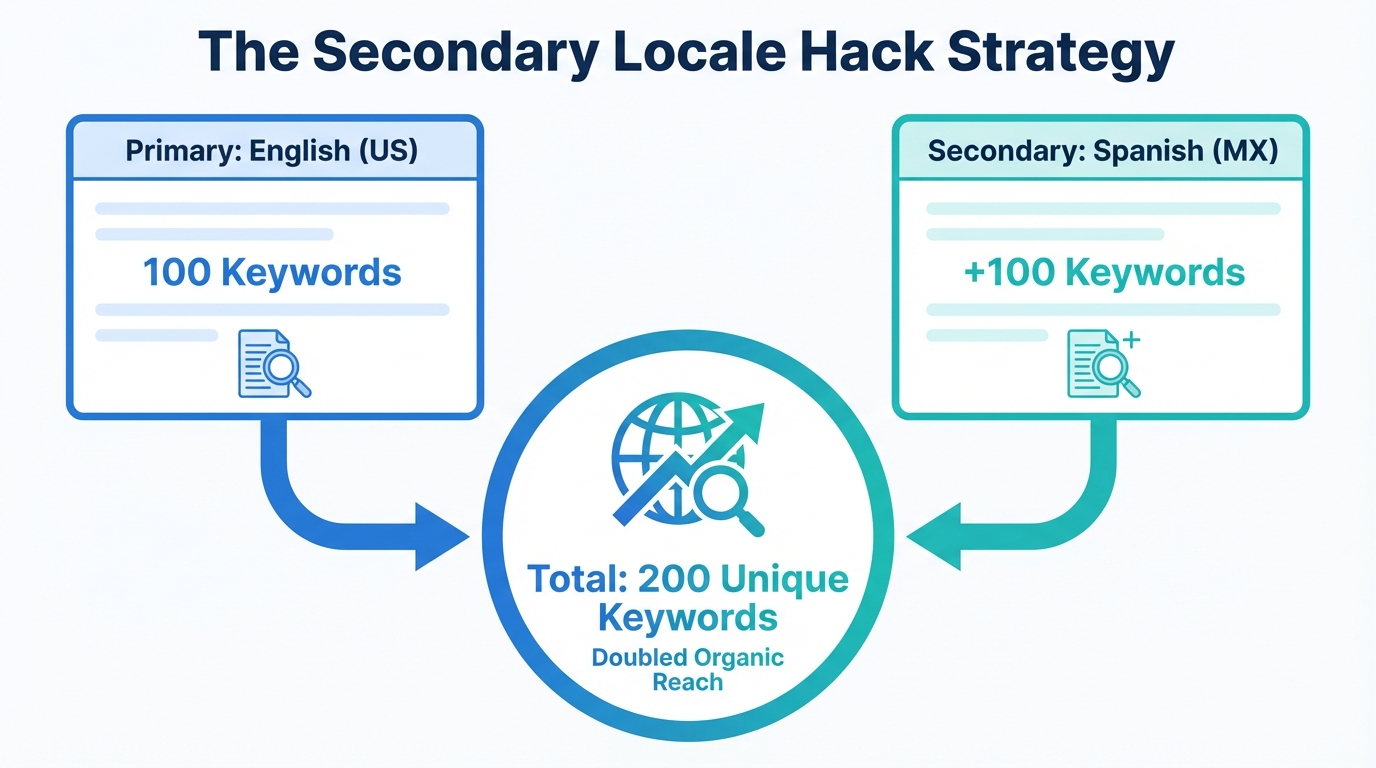
For those targeting the US market, there is a technical loophole known as the ASO secondary locale hack. For the US App Store, Apple actually indexes keywords from two different localizations: English (US) and Spanish (Mexico). This means that by filling out the metadata for the Spanish (Mexico) locale with English keywords, you effectively double your keyword real estate from 160 characters to 320 characters for the US storefront.
| Locale | Purpose | Index Influence |
|---|---|---|
| English (US) | Primary Metadata | 100% (US Store) |
| Spanish (Mexico) | Secondary Metadata | 100% (US Store) |
| English (UK) | Primary Metadata | 100% (UK/Global) |
To execute this hack, you don't need to translate your app into Spanish. You simply go into the App Store Connect localization settings, add Spanish (Mexico), and input a completely different set of high-volume English keywords into the Title, Subtitle, and Keyword Field. Modern AI-powered tools like Stormy AI can help you source these secondary keyword sets by analyzing trending UGC content and creator captions to find the phrases real users are using to describe your niche.
Avoiding the 'Set-and-Forget' Trap: The 28-Day Audit
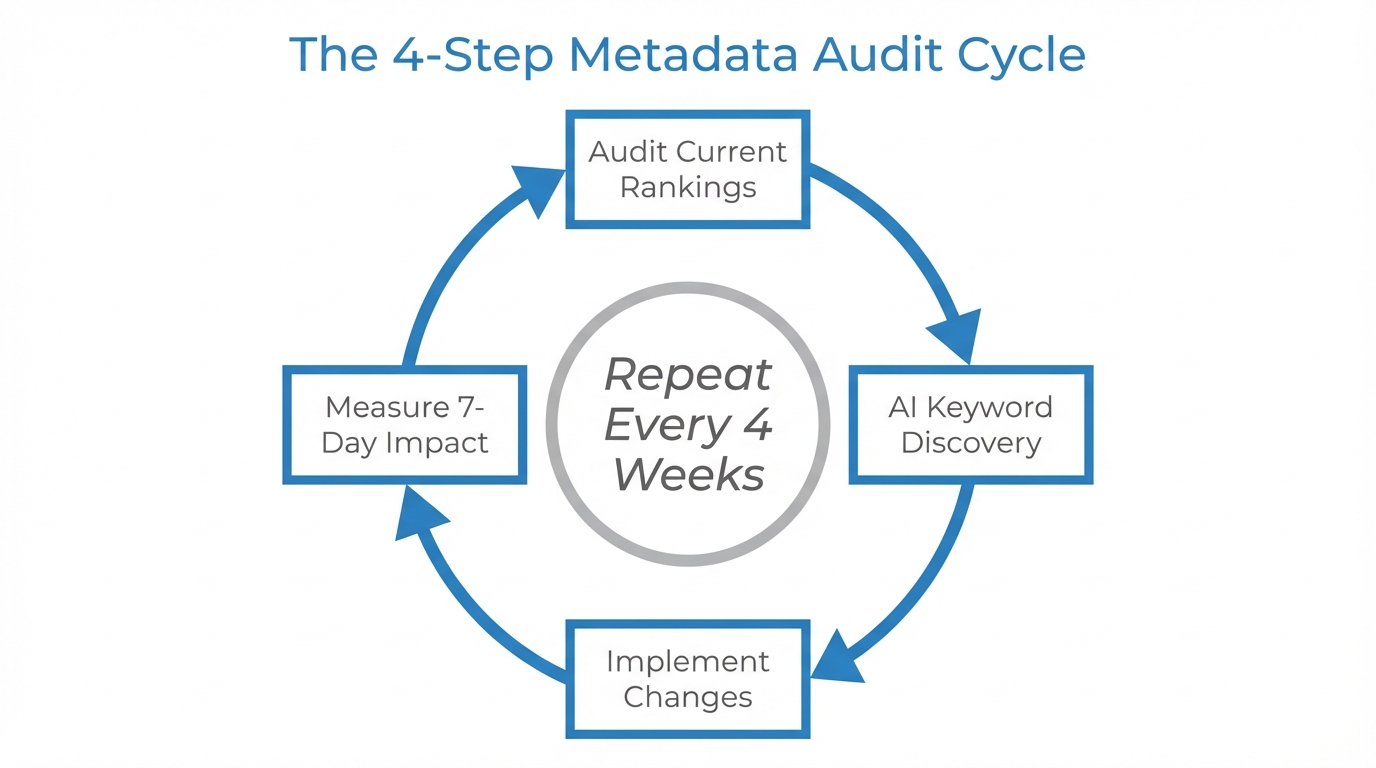
App Store Optimization is not a one-time task; it is a continuous cycle of testing and refinement. Search trends shift rapidly based on seasonality, cultural moments, and competitor movements. In fact, a major shift occurred in late 2025 when Apple transitioned its Search Ads Popularity (SAP) API from daily to a Monthly Search Term Rank Report. This change caused a perceived 77% drop in keywords showing high popularity scores, as the data now reflects 30-day averages rather than daily spikes.
Because of this volatility, you must implement a 28-day metadata audit cycle. This involves:
- Rank Tracking: Monitoring where you stand for your primary and secondary keywords.
- Sentiment Analysis: Checking if new semantic clusters (e.g., "AI-powered" vs "Smart") are gaining traction.
- Competitor Benchmarking: Analyzing the keywords used by apps ranked #10–#50 in your category to find achievable high-volume terms with lower competition.
- Metadata Refresh: Swapping out underperforming keywords for new "rising stars" identified through predictive AI.
The Future: Semantic Indexing and AI Intent
As we move into 2026, the App Store is moving away from simple lexical matching toward semantic indexing. This means the algorithm is beginning to understand the intent behind a search rather than just looking for exact word matches. If your app is optimized for "workout planner," the algorithm may automatically rank you for "gym routine" or "exercise log" based on thematic relevance. This is why it is critical to use tools like AppTweak or Sensor Tower to understand the semantic clusters your app belongs to.
Additionally, Apple is now using Optical Character Recognition (OCR) to index the text within your screenshots. This means that keyword-rich captions in your gallery are no longer just for conversion; they are actually contributing to your organic ranking. High-contrast text on your first two screenshots should include your primary keywords to double down on your metadata efforts. Tracking these visual changes alongside your keyword rank is essential for a holistic growth strategy, which can be managed effectively through platforms like Appfigures.
"The most successful apps don't just target keywords; they target intent. Semantic clusters are the new frontier of ASO."
Mastering the Growth Stack
Executing high-level ASO requires a blend of technical knowledge and the right toolset. By implementing the 30-30-100 rule, utilizing the Spanish (Mexico) secondary locale hack, and maintaining a strict 28-day audit cycle, you can significantly outperform competitors who rely on guesswork. Metadata is the bridge between your product and your users; build it with precision.
To take your growth strategy further, consider how your organic search efforts tie into your broader marketing funnel. While ASO drives the initial discovery, collaborating with creators can amplify your brand's authority. Platforms like Stormy AI can help you discover and manage UGC creators who can create the very content that drives those high-volume search queries in the first place. Pair your technical metadata strategy with a robust creator outreach plan using Stormy AI for creator management or Canva for creative briefs, and you'll have a growth engine that is truly unstoppable.