In 2026, the cold outreach landscape has transformed from a game of volume to a high-stakes war of precision. The days of 'batch and blast' are long gone, buried under the weight of Google and Yahoo’s 2026 enforcement of the 0.10% spam threshold. If you’re a growth marketer today, hitting even 0.30% in spam complaints doesn't just get you a warning—it results in a permanent domain blacklisting across major ESPs. As companies race to implement AI-first GTM engineering, the OpenClaw framework has emerged as the gold standard for bypassing modern AI prose detection and maintaining technical deliverability.
The Death of 'Batch and Blast': The Rise of Micro-Segments
As we move through 2026, the global AI marketing market is projected to reach over $107.5 billion by 2028, according to MarketsandMarkets research. This massive influx of capital has led to a saturation of automated content. To cut through the noise, elite growth agencies have abandoned thousand-lead lists in favor of "Micro-Segments."
A micro-segment typically targets 50-100 high-value prospects based on hyper-specific triggers. Instead of targeting all "Heads of Marketing," an AI-first agency might target "Heads of Marketing who have hired more than 5 people in the last 90 days and recently changed their tech stack to include Snowflake." This level of granularity is no longer optional; it is the only way to keep engagement high enough to stay below the 0.1% spam ceiling enforced by modern providers.
"Relevance is the new personalization. AI allows us to be relevant at a scale that was physically impossible for human teams just two years ago."
Using OpenClaw-Style Pattern Randomization to Bypass Filters
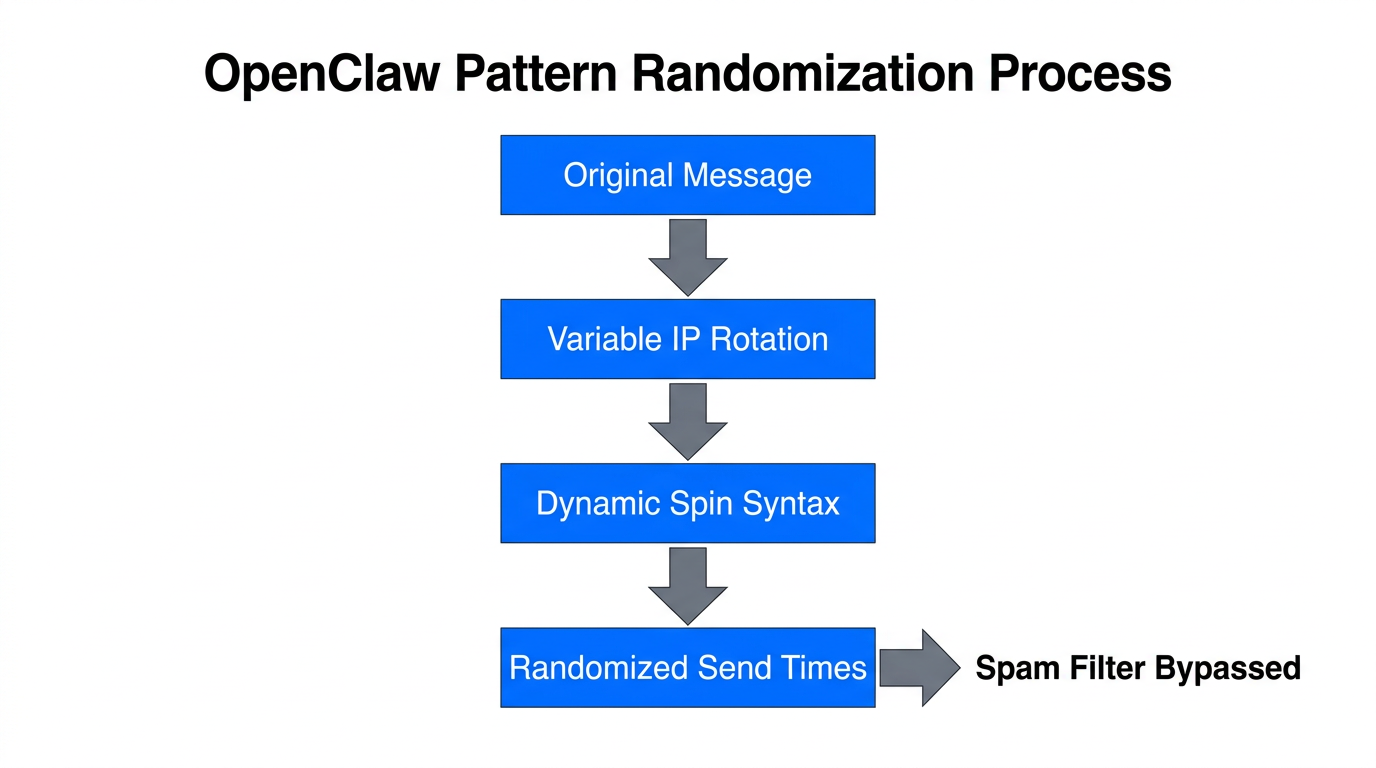
The OpenClaw framework, which gained massive traction after its creator joined OpenAI in early 2026, focuses on the concept of pattern randomization. Google's AI-powered spam filters can now detect "AI-generated prose patterns" with frightening accuracy. If you send 500 emails that all follow the same linguistic structure—even if the variables like name and company are different—you will be flagged.
To combat this, agencies use dynamic Spintax (spinning syntax) layered with LLM-generated variations. Instead of one template, the OpenClaw method uses an AI agent like ChatGPT or Claude to generate 20-30 different ways to say the same thing, ensuring that no two emails look the same to a machine learning filter. This is often referred to as "breaking the fingerprint." Research into AI detection shows that teams using pattern randomization see a 35% boost in overall inbox placement compared to those using static templates.
Technical Setup: Burner Domains and Isolated Infrastructure

In the 2026 GTM stack, your primary company domain should never be used for outbound. Elite agencies utilize tools like Instantly.ai or Smartlead to manage a fleet of "Burner Domains."
The standard 2026 configuration involves:
- Isolating Risk: Using 5-10 subdomains per client to distribute deliverability risk.
- Domain Aging: Automated "warmup" periods of 3-4 weeks before any live outreach.
- DMARC/DKIM/SPF Strictness: Absolute compliance with technical protocols via Cloudflare to avoid immediate rejection.
By distributing volume across multiple domains, if one domain accidentally hits a spam trap or receives too many complaints, the entire campaign doesn't die. This isolated infrastructure is the safety net that allows for autonomous scaling.
| Feature | 2024 Strategy | 2026 OpenClaw Strategy |
|---|---|---|
| Daily Volume | 1,000+ per domain | Max 30-50 per domain |
| Personalization | {{First_Name}} tag | AI-Triggered "Reason for Outreach" |
| Content | Static Templates | Dynamic Spintax / Pattern Randomization |
| Infrastructure | Primary Domain | Burner Subdomain Fleet |
Avoiding the 2026 AI Churn Crisis: The HITL Vibe Check
While automation is the engine, Human-in-the-loop (HITL) "vibe checks" are the steering wheel. Data from Autobound suggests that AI SDR tools are seeing 50%–70% annual churn because many users set them up and walk away, leading to what is known as "AI Blindness."
Prospects in 2026 are highly attuned to AI-generated content. An email that mentions a "recent 10-K report" but fails to connect it to a human-centric "so what" is flagged as spam at record rates. To avoid this, successful teams perform manual audits of AI-generated drafts before they are sent. This ensures the voice and intent align with a real human conversation.
"The 2026 AI Churn Crisis isn't about the technology failing; it's about humans failing to monitor the technology. If your AI starts hallucinating fake facts about a prospect, your deliverability is toast."
The Unit Economics of AI-First GTM
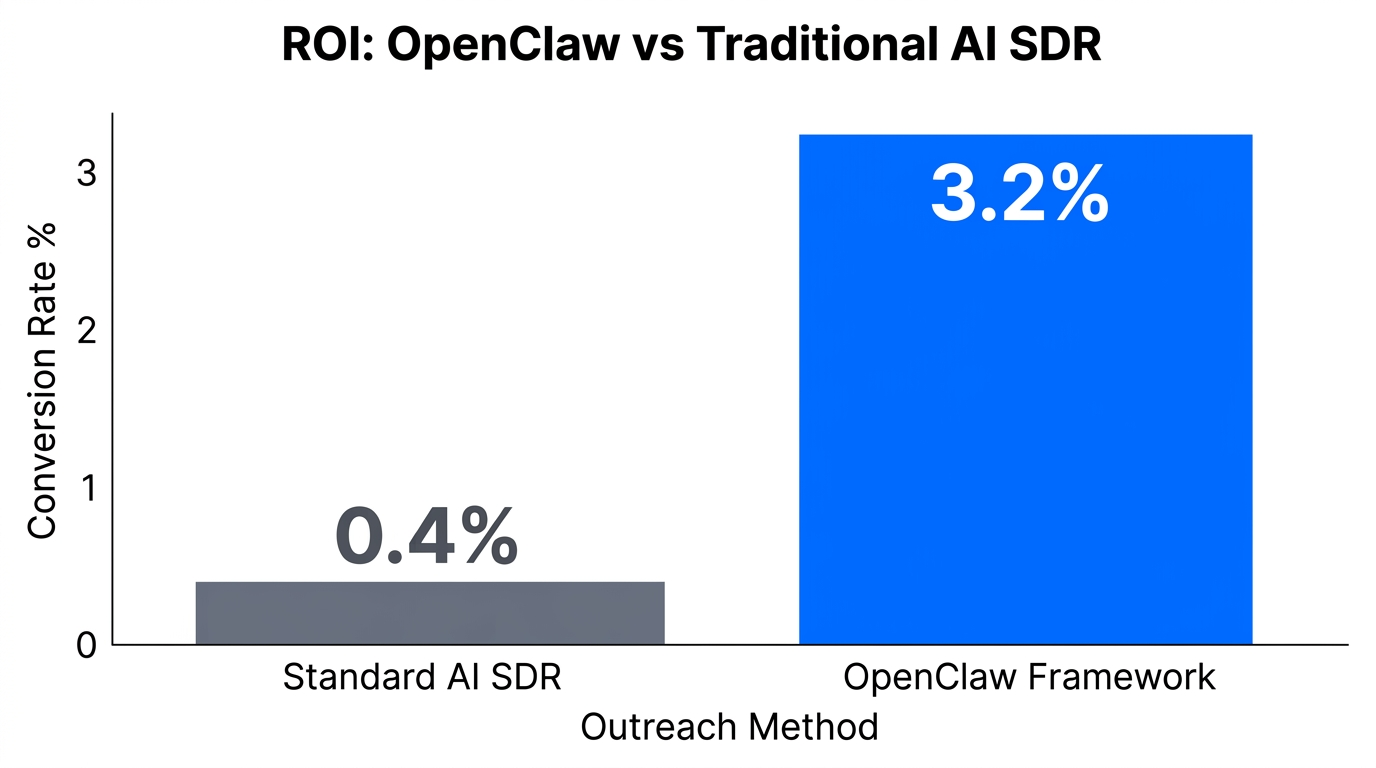
Why go through all this trouble? The ROI of a properly configured OpenClaw stack is undeniable. The cost per qualified lead drops by nearly 85% when transitioning from traditional human SDRs to an AI-augmented stack.
| Metric | Human SDR (2026) | AI SDR Agent (OpenClaw Stack) |
|---|---|---|
| Annual Cost | $98,000 – $173,000 | $6,000 – $24,000 |
| Cost Per Qualified Lead | ~$262 | ~$39 |
| Response Time | 42 – 47 Hours | < 60 Seconds |
For organizations looking to scale their influencer outreach or partnership programs, these same principles apply. Platforms like Stormy AI have revolutionized this by allowing brands to discover creators using natural language prompts and instantly vetting them for audience quality, ensuring that your micro-segments are built on a foundation of clean, high-intent data.
The 5-Step OpenClaw Playbook for 2026
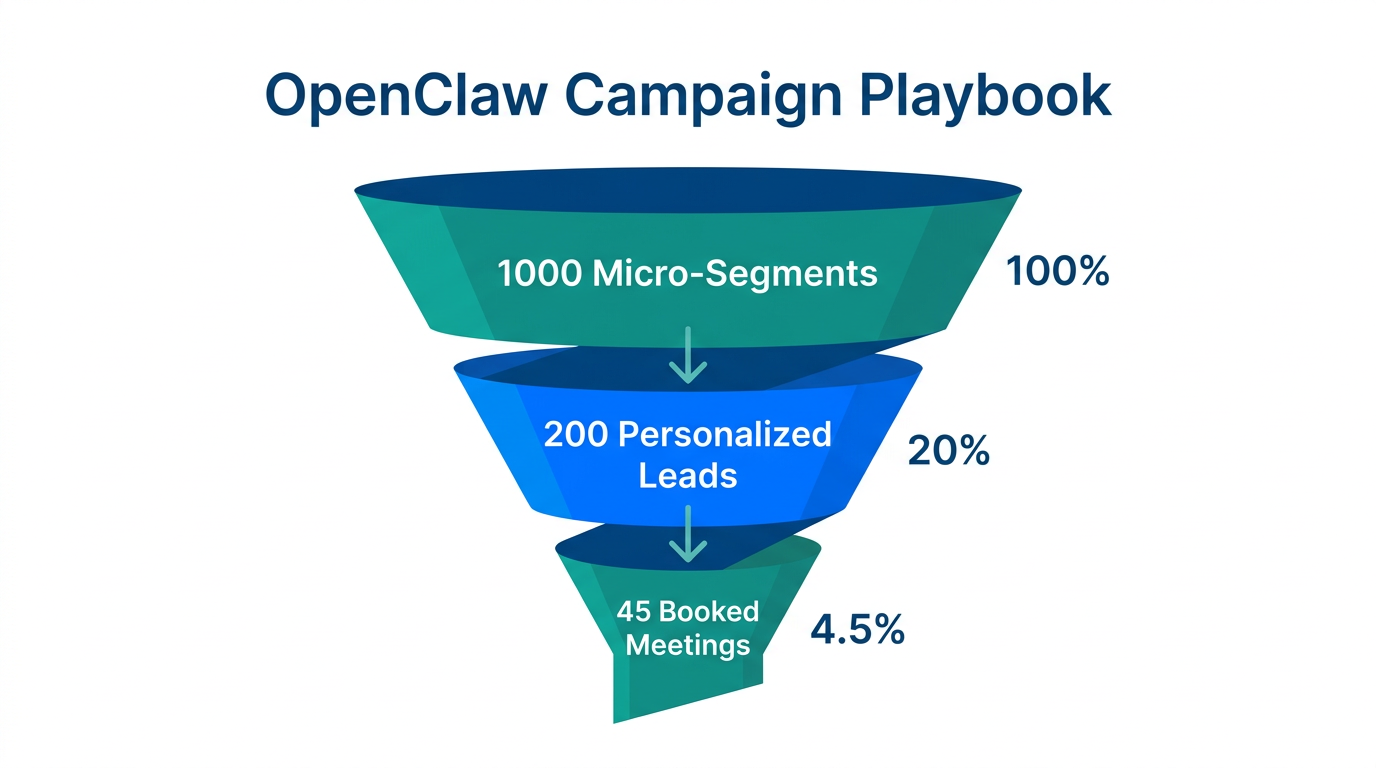
If you want to implement this strategy today, follow this sequential playbook:
- The Hook: Use technology-lookup tools like BuiltWith to find companies using a competitor’s software.
- The Enrichment: Use Clay to find the LinkedIn profile of the relevant decision-maker and verify their email through a waterfall process.
- The Intelligence: Feed the last 3 LinkedIn posts of the prospect into an LLM to identify a common theme or professional passion.
- The AI Prompt: Generate 20 variations of the outreach using dynamic Spintax to ensure no two emails are identical.
- The Launch: Sequence the lead into a tool like Smartlead using isolated burner subdomains.
The Future of AI Email Deliverability
The role of the SDR is not disappearing; it is evolving into that of a Technical RevOps Orchestrator. If you are still manually writing emails or sending 5,000 generic blasts a day, your domains are already on a collision course with a blacklist. By adopting the OpenClaw framework—focusing on micro-segments, pattern randomization, and isolated infrastructure—you can achieve a level of relevance and deliverability that was once impossible.
As Gartner predicts that 72% of B2B organizations will replace or augment their human-only teams with AI workflows by late 2026, the competitive advantage will go to those who master the technical nuances of deliverability. Start small, verify your data using tools like Stormy AI, and always keep a human in the loop to ensure your brand's voice doesn't get lost in the machine.