In the world of software development, the dream is often portrayed as building the next unicorn—a complex, multi-layered platform designed to disrupt an entire industry. However, a quieter, more efficient revolution is happening in the world of micro-SaaS ideas. Developers like Leandro are proving that you don't need a massive team or a million-dollar seed round to build a life-changing business. By focusing on the "One Thing" rule, Leandro built SyncToSheets, a simple add-on for the Google Workspace Marketplace that generates $9,000 in monthly recurring revenue (MRR) with over 70,000 users. This playbook explores how you can leverage existing ecosystems to bypass traditional customer acquisition hurdles and build profitable side projects that scale.
Identifying Feature Gaps in Major APIs


The foundation of a successful micro-SaaS isn't necessarily a brand-new invention; it is often a bridge between two existing, powerful tools. Leandro identified a "feature gap" between Notion and Google Sheets. When Notion released its official API, users were desperate to move their data into Sheets for better calculation and reporting capabilities, but a native, seamless solution didn't exist. This is where the opportunity lies for anyone wondering how to build a SaaS with minimal overhead: look for where users are already complaining about missing functionality in their favorite tools.
To validate these gaps, you must go where the users live. Leandro spent time in subreddits dedicated to Notion, searching for keywords like "CSV," "Export," and "Google Sheets." By finding repetitive pain points, he confirmed that his micro-SaaS ideas weren't just theoretical—they were actively being searched for by frustrated users. This manual validation is the precursor to any technical build. Validating an MVP in two weeks is possible only when you have a clear target audience that is already vocal about their needs on platforms like Reddit or X.
The Zapier Method: Finding Opportunities in Workflow Friction
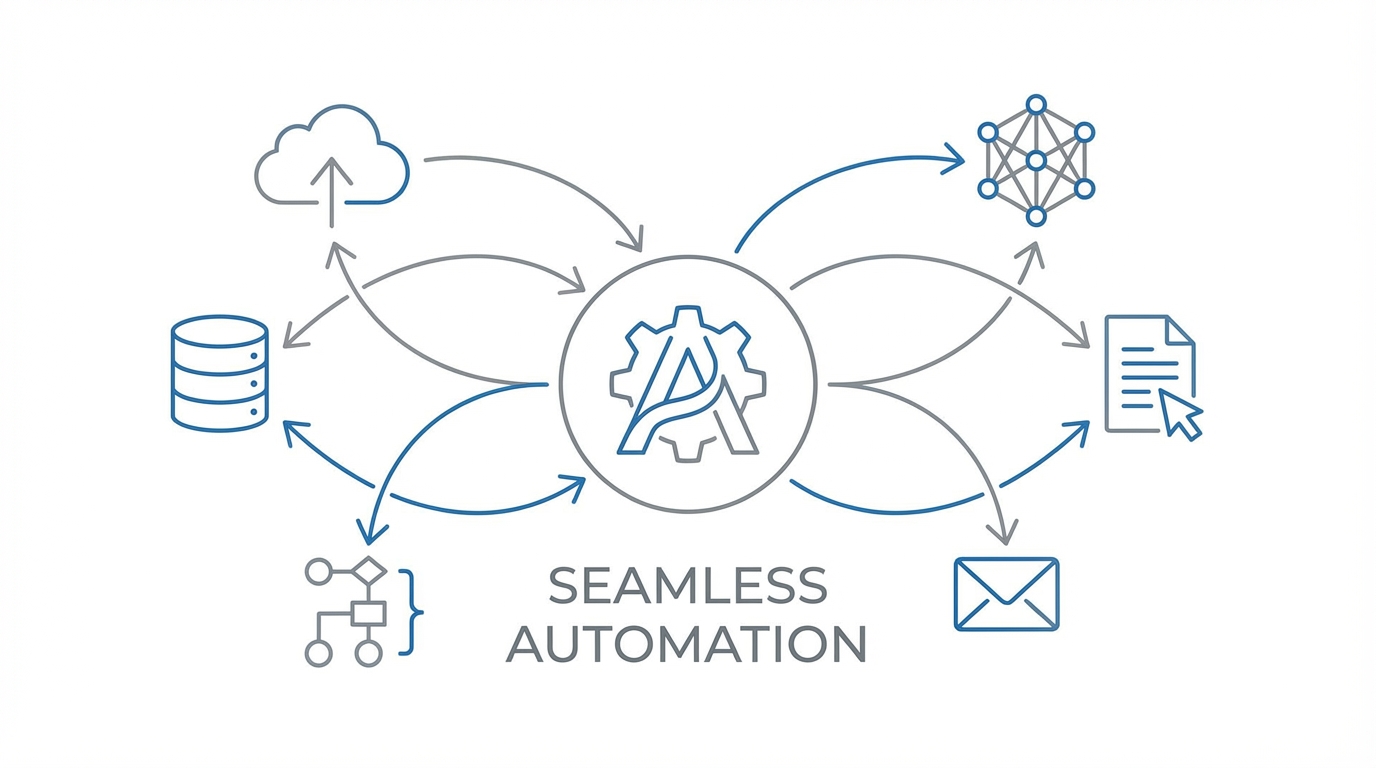
If you are struggling to find your first idea, the Zapier Method is a goldmine for discovery. Zapier connects thousands of apps, but many of those connections—called "Zaps"—are clunky. For example, syncing a database often requires multiple steps for creating, updating, and deleting records. A micro-SaaS that replaces a complex five-step Zap with a single, native integration solves a massive pain point. You can analyze the most popular app pairings on Zapier and ask: "Can I make this one-click instead of ten-step?"
Just as developers look for gaps in software workflows, modern marketers look for gaps in their creator search. For instance, if you are building an app for the Shopify ecosystem, you’ll need to find creators who specifically talk about e-commerce and dropshipping. This is where Stormy’s AI search becomes invaluable. Instead of manually scouring social media, you can use natural language prompts to find influencers in niche categories who can help validate and promote your new tool to the right audience. Finding the right distribution partners early is just as important as finding the right API gap.
The Google Workspace Marketplace: 70K Users Without Ads
One of the hardest parts of how to build a SaaS is the "cold start" problem—getting your first 1,000 users. Leandro bypassed this by utilizing a saas distribution strategy centered on marketplaces. By publishing on the Google Workspace Marketplace, your app is indexed where millions of users are already looking for solutions. This provides organic, intent-based traffic that far outweighs the results of expensive social media ads.
Beyond the marketplace, Leandro used a tool called F5Bot to monitor Reddit for specific keywords. Every time someone mentioned a problem his app solved, he would jump in with a helpful, non-spammy response. This high-touch, low-cost outreach is essential for profitable side projects. For those looking to scale this type of personal outreach, Stormy’s AI outreach can automate the process of finding and contacting potential beta testers or industry influencers. Instead of manual monitoring, you can set up an autonomous AI agent that handles personalized emails and follow-ups while you focus on the code.
Leveraging Native Monetization vs. Third-Party Processors
When it comes to getting paid, the micro-SaaS playbook offers two paths: native marketplace billing or third-party processors. For platforms like the monday.com marketplace, monetization is native—they handle the billing and taxes, allowing you to focus purely on the product. This is ideal for developers who want a "set it and forget it" revenue stream. However, in regions where Stripe is unavailable, like Argentina, developers often turn to Paddle as a Merchant of Record to handle global compliance and payments.
Leandro’s experience shows that charging from day one is critical for validation. He discovered that a free plan often attracts users who aren't actually deriving enough value to pay. When he eventually removed his free plan, his revenue jumped from $5,000 to $8,000 MRR almost overnight. This counterintuitive move proves that retention is driven by solving high-pain problems, not by being free. If a user isn't willing to pay $10 a month for your solution, you likely haven't found a deep enough "feature gap."
The 'One Thing' Rule: Why Simplicity Scales
A common mistake in how to build a SaaS is feature bloat. Developers often think that adding more buttons will increase the app's value. Leandro’s app does exactly one thing: it syncs Notion to Google Sheets. That’s it. By focusing on this narrow utility, he could perfect the user experience (UX)—adding features like conditional formatting and data validation that make the sync feel native to both platforms.
This simplicity also makes the app easier to maintain. With a 90% profit margin, the main expense is cloud infrastructure (using Google Cloud and Firebase). When your app only does one thing, your customer support burden is lower, your codebase is cleaner, and your marketing message is clearer. It is much easier to explain "I sync X to Y" than "I am an all-in-one productivity suite for remote teams."
Validation and Vetting Your User Base
Building in a vacuum is the fastest way to fail. You need to find your first five users before you write the first line of code. Leandro suggests using Upwork as a research tool—look at what companies are hiring developers to build manually, then turn those custom solutions into a productized SaaS. Once you have a prototype, use tools like Tidio to have live chat conversations with your first users. These insights are more valuable than any analytics dashboard.
For those building tools for creators or apps that rely on UGC, vetting is just as important as validation. You don't want to build a product for a market filled with bot accounts or low-quality engagement. Stormy’s influencer analysis allows you to vet the audience quality of any creator you plan to partner with, ensuring that your saas distribution strategy is built on a foundation of real human users. Detecting fake followers and engagement fraud automatically ensures that your marketing budget (or your time) isn't being wasted.
The Micro-SaaS Tech Stack

To keep costs low and development fast, Leandro utilized Apps Script, a JavaScript-based language that extends Google Workspace services. This allows for rapid UI development within the Google ecosystem without needing a complex frontend framework. Combined with VS Code and the Cursor AI editor, a single developer can build a production-ready app in weeks, not months.
- Language: TypeScript / Apps Script
- Database & Hosting: Google Cloud & Firebase
- Email: SendGrid for transactional updates
- Analytics: Mixpanel to track user actions
- Payments: Paddle (Merchant of Record)
By keeping the stack simple, you ensure that your profitable side projects remain "side projects" in terms of maintenance while providing "full-time" income. This allows you to work in "spikes"—focusing on heavy development for a week and then letting the app run on autopilot for the next three.
Tracking Growth and Performance

As your micro-SaaS grows, you need to transition from "building" to "monitoring." SEO becomes a major traffic driver. Writing blog posts that solve specific problems (e.g., "How to connect Notion to Google Sheets") creates a perpetual traffic machine. You should track which of these efforts are actually moving the needle. In the same way that post tracking is vital for social media campaigns, it is vital for SaaS founders to know where their users are coming from.
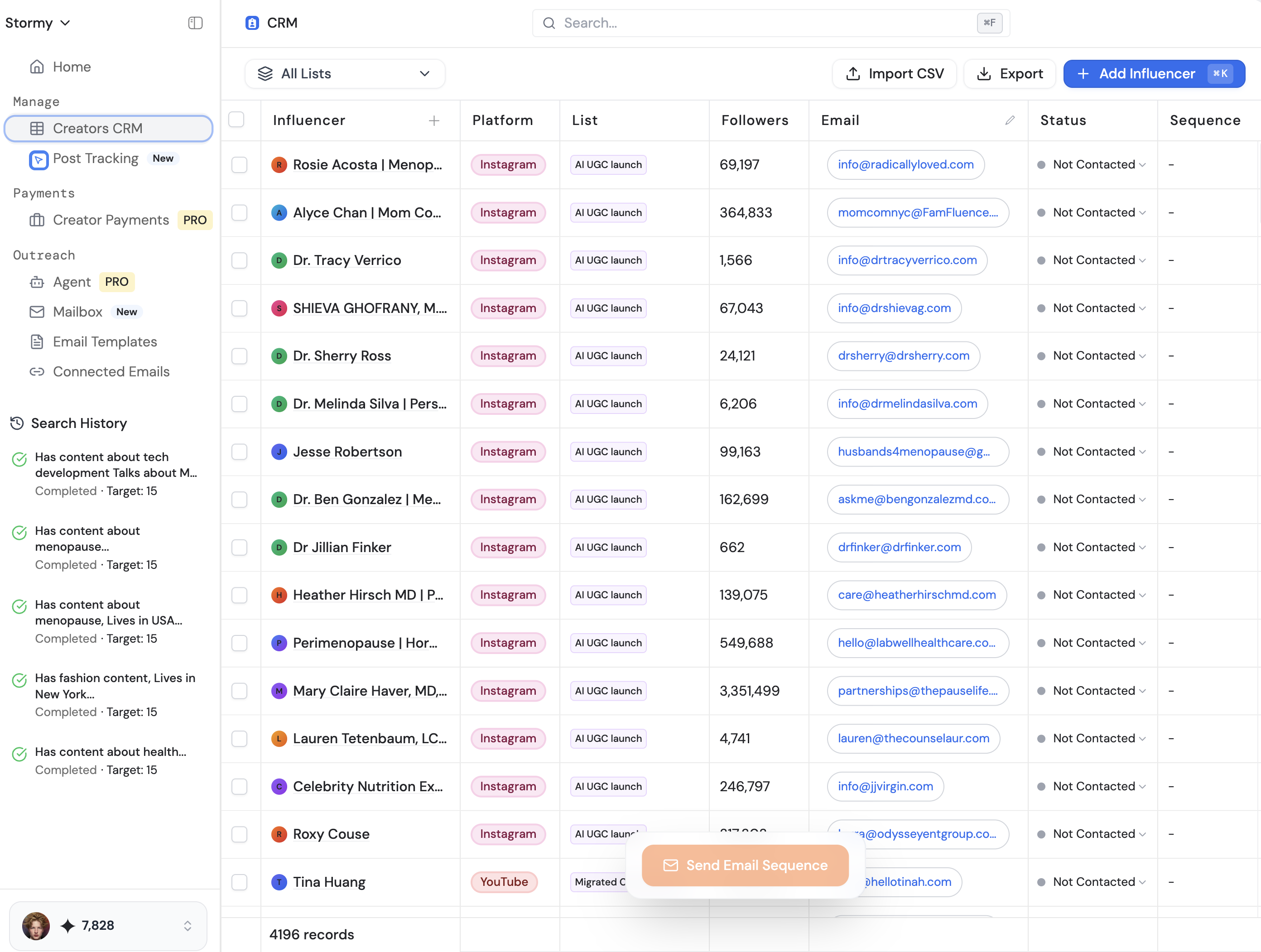
If you're using creators to drive installs for your app, Stormy’s post tracking can monitor views, likes, and engagement across TikTok, YouTube, and Instagram. This level of granular data helps you understand which distribution channels have the highest ROI, allowing you to double down on what works and cut what doesn't. Managing these relationships is simplified with Stormy’s creator CRM, which tracks every interaction and payment in one central dashboard.
Conclusion: Start Small to Win Big
The success of SyncToSheets is a testament to the power of the micro-SaaS playbook. By identifying a specific feature gap, leveraging the Google Workspace Marketplace, and sticking to the "One Thing" rule, Leandro built a $9k/month business that offers him freedom and flexibility. For aspiring founders, the message is clear: don't wait for a revolutionary idea. Look for a messy workflow, a missing API bridge, or a frustrated subreddit. Build the solution in two weeks, charge for it immediately, and use modern AI tools like Stormy AI to scale your outreach and discovery. The next great micro-SaaS is hiding in plain sight—you just have to look for the gap.