When we talk about the most successful marketing campaigns in history, we often look at the latest Meta ad trends or high-budget Super Bowl spots. However, one of the most effective customer acquisition loops ever built was launched nearly a century ago. Think and Grow Rich by Napoleon Hill has sold over 100 million copies, consistently landing on bestseller lists decades after its 1937 release. But the real story isn't just about the advice inside the pages; it is about a masterclass in sales funnel psychology and the use of the front-door offer model to build a multi-million dollar empire.
While the book is framed as a compilation of success secrets from industrial titans like Andrew Carnegie, modern research suggests the backstory was largely fabricated. Napoleon Hill, as it turns out, was a character with a prolific history of failed ventures and questionable claims. Yet, from a growth marketing perspective, his ability to package common knowledge as a proprietary system is unparalleled. By analyzing the Think and Grow Rich marketing strategy, modern founders can extract timeless tactics for building curiosity, managing high-ticket upsells, and driving long-term customer retention.
The 'Front-Door Offer' Strategy: Low-Cost Entry, High-Ticket Upsell
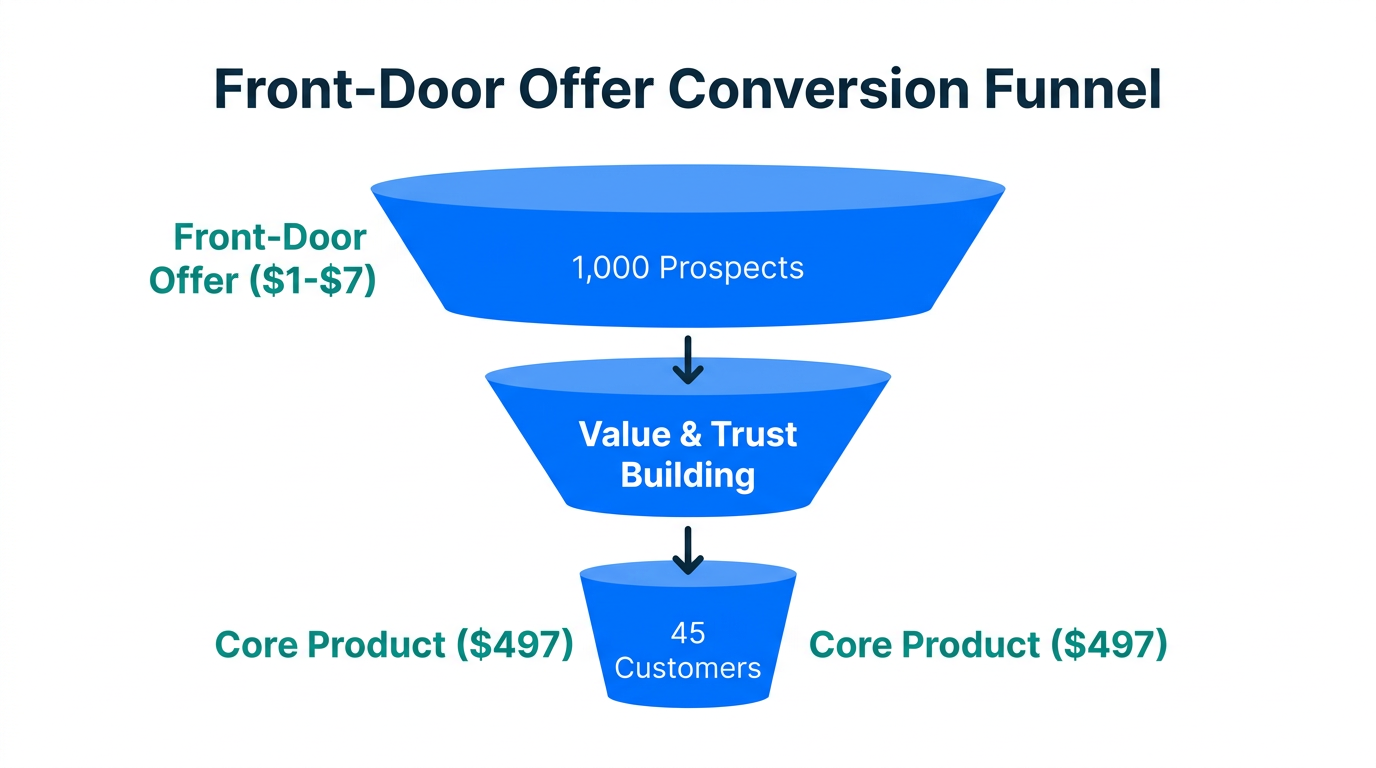
In modern SaaS and digital product marketing, we call this a "tripwire" or a lead magnet. In Hill's day, it was the $10 book. Think and Grow Rich was never intended to be the final product; it was the front-door offer model designed to bring thousands of leads into Hill's ecosystem. Once a reader was hooked on the philosophy, they were funneled into his more expensive 14-volume course, The Law of Success, and high-priced seminars.
This is a classic growth marketing tactic: provide immense perceived value at a low price point to build trust, then leverage that trust to sell premium services. Successful companies today use this same structure. For instance, a brand might offer a free audit or a low-cost tool through a customer acquisition loop to capture the lead before moving them into a high-contract agreement. The goal is to lower the barrier to entry so significantly that the customer feels they would be losing money by not saying yes.
"Napoleon Hill didn't just write a book; he engineered a multi-decade funnel that traded curiosity for cash."
The Power of 'Open Loops' and the Unnamed Secret
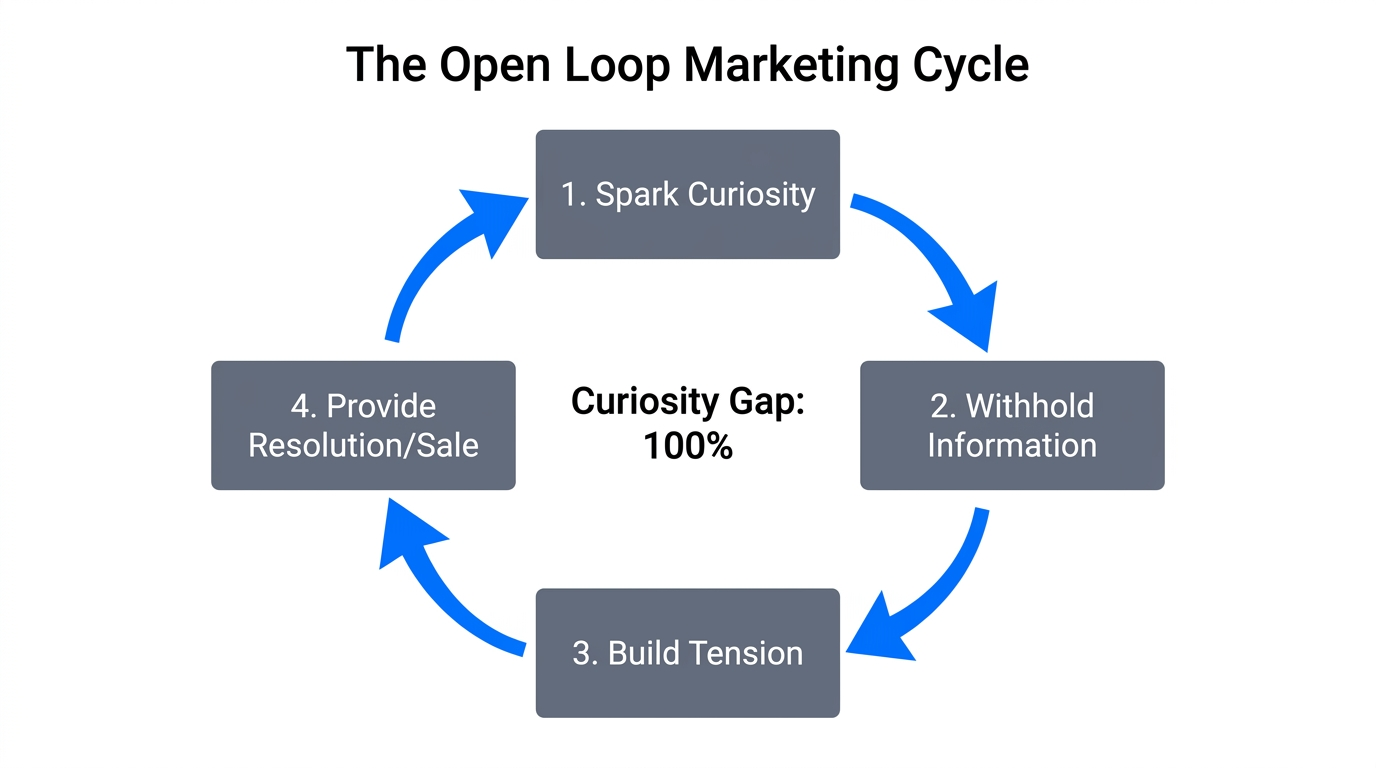
One of the most brilliant aspects of the Think and Grow Rich marketing strategy is the constant mention of "The Secret." Throughout the book, Hill tells the reader that Andrew Carnegie shared a singular secret to success with him, and that this secret is hidden within the pages for the reader to find. However, he never explicitly names it. This is what marketers call an open loop.
Open loops are psychological triggers that keep the human brain engaged until the "loop" is closed. By hinting at a secret that is "coming soon" or "hidden in plain sight," Hill ensured that readers would not only finish the book but also re-read it multiple times and eventually buy his other materials to find the answer. In modern content marketing, open loops are used in email subject lines, podcast cliffhangers, and long-form threads on platforms like LinkedIn and X.
To apply this to your own growth marketing tactics, consider how you can create proprietary language. Instead of saying you offer "better SEO," call it the "Inverted Discovery Method." This forces the prospect to ask, "What is that?" and keeps the loop open until they engage with your sales material.
Separating the Art from the Artist: Why the Principles Still Work
Despite the revelations that Napoleon Hill’s meetings with Andrew Carnegie and FDR likely never happened, the principles in his book remain functional. This highlights a critical lesson for marketers: the packaging of the information is often as important as the information itself. Hill took universal concepts like persistence, affirmations, and the 'mastermind' group and gave them a compelling, albeit fictional, origin story.
The concept of the "Mastermind"—a term Hill popularized—is now a staple of the high-end coaching industry. Even if the historical context was flawed, the psychological utility of surrounding oneself with high-performers is backed by modern social science. When building your brand, you don't need to reinvent the wheel; you need to curate and package existing truths in a way that resonates with your specific audience's pain points.
| Strategy | The Hill Approach (1930s) | Modern Digital Approach |
|---|---|---|
| Lead Gen | Low-cost paperback book | Free AI tools or UGC-driven newsletters on Beehiiv |
| Retention | Open loops about "The Secret" | Email sequences and community access via Notion |
| Authority | Fabricated celebrity endorsements | Verified case studies and influencer partnerships |
| Monetization | Expensive 14-volume courses | High-ticket masterminds or SaaS subscriptions handled via Stripe |
Applying the Persistence Framework: Quantity Leads to Quality
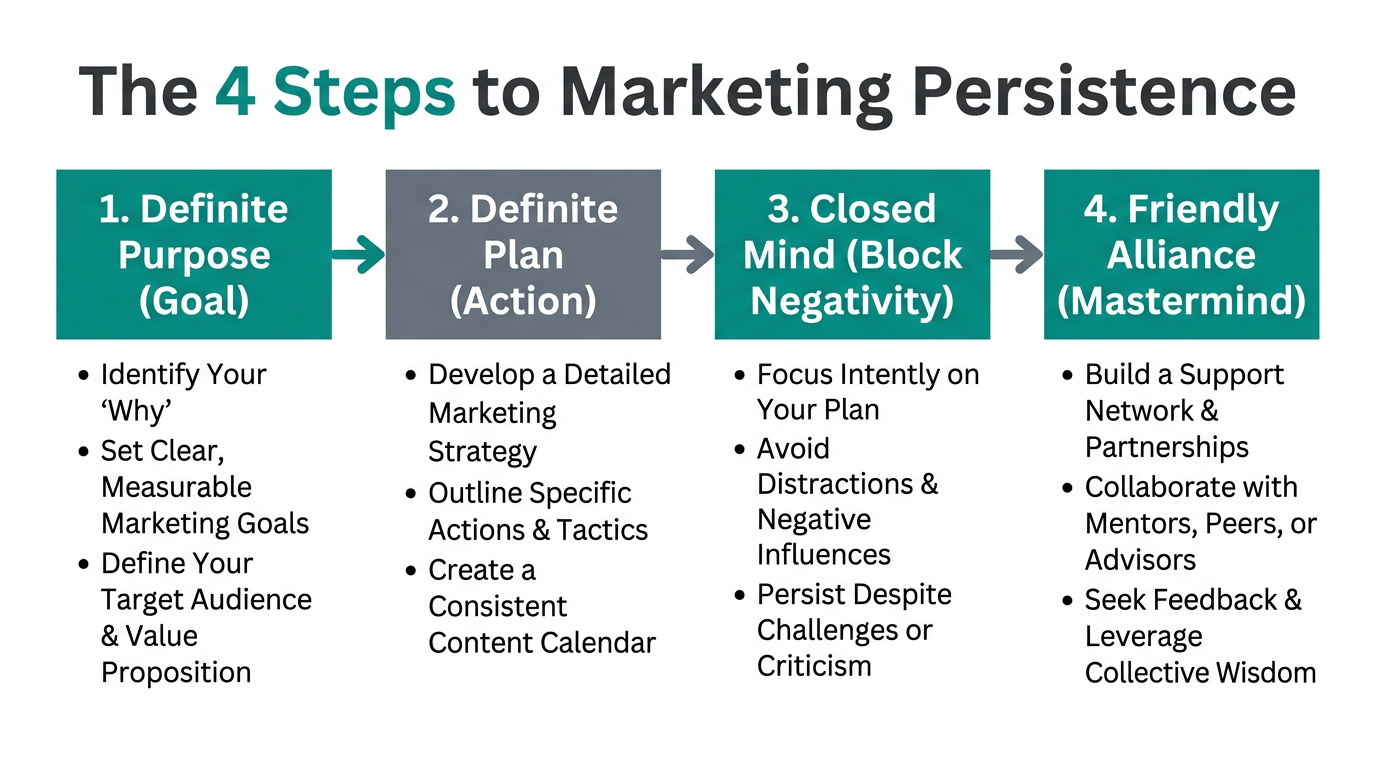
Napoleon Hill dedicated entire chapters to persistence and grit. While he may have been a con man, he was a persistent one. He attempted over 15 different businesses—from lumber yards to automobile colleges—before finding his hit with Think and Grow Rich. This mirrors the trajectory of many modern tech founders.
Consider Peter Levels, the founder of Nomad List. Levels is famous for launching over 70 projects, with only 4 becoming major financial successes. His hit rate is only 5%. This is the Quantity over Quality paradox. In creative work and customer acquisition, you often have to make a "high volume of pots" before you create a masterpiece.
The "Pottery Experiment"—a famous study where one group was graded on the number of pots made and the other on the quality of a single pot—proved that the quantity group actually produced the higher quality work. They had more shots on goal and learned through iteration. When you are sourcing creators or testing ad creatives on TikTok Ads Manager, the same rule applies. You cannot predict the winner; you can only increase your volume of attempts.
"The function of the overwhelming majority of work is simply to teach you how to make the small fraction of your art that soars."
Vetting Authenticity in the Age of AI and Gurus
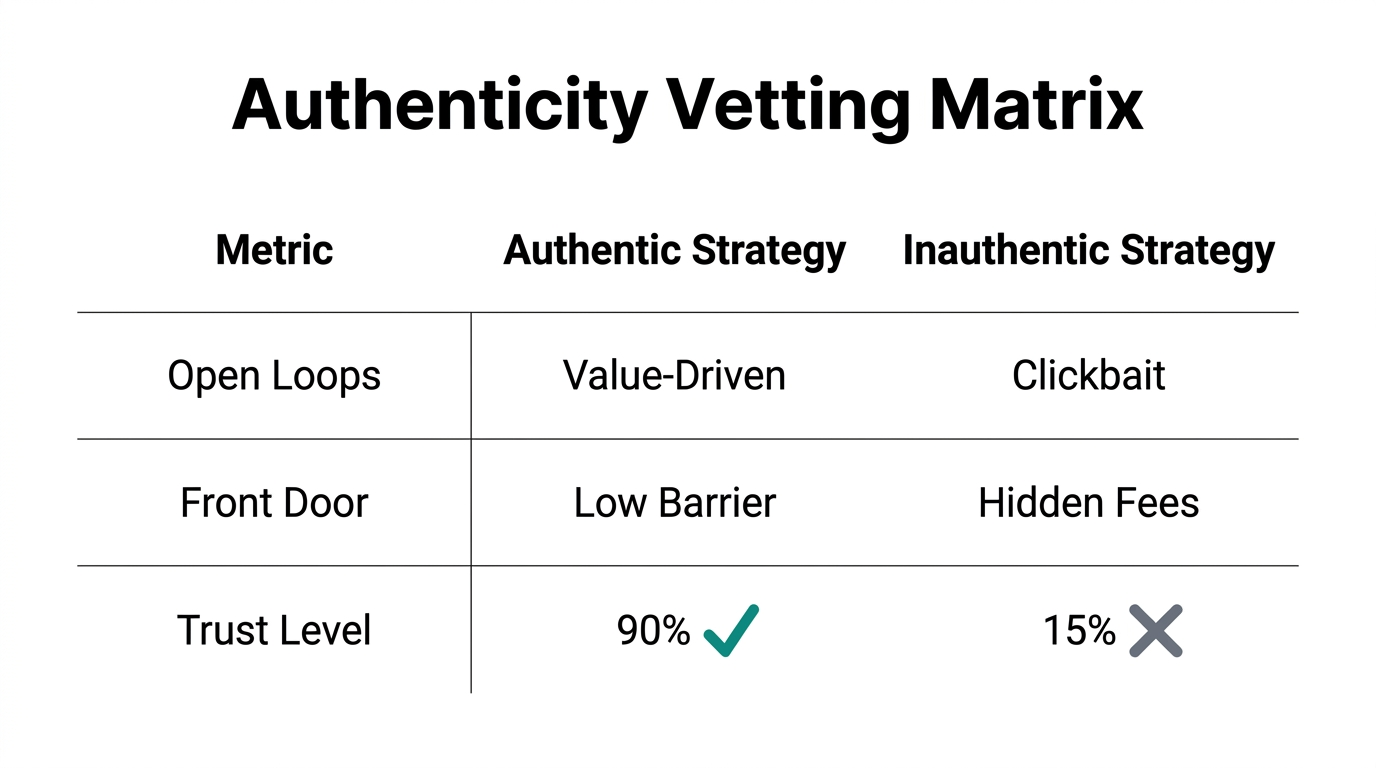
In a world where "fake it until you make it" has been the mantra since the days of Napoleon Hill, how do brands maintain trust? Today, consumers are more skeptical than ever. They can spot a manufactured backstory from a mile away. This is why authenticity and vetting are becoming the most valuable currencies in marketing.
If you are running influencer campaigns or sourcing UGC creators for your mobile app, you cannot afford to work with frauds. This is where tools like Stormy AI become essential. Just as Hill fabricated his endorsements, many modern influencers inflate their metrics with fake followers. Using an AI-powered discovery engine to vet creators ensures that your customer acquisition loops are built on real engagement, not vanity metrics.
From Hill to Vanta: The Evolution of the Playbook
We see the "Hill Playbook"—minus the fraud—being used by today's most successful CEOs. Christina Cacioppo, the CEO of Vanta, built dozens of small projects before finding a massive win with automated security compliance. She treated her learning process like a job, committing to the quantity of iterations until she found the one "pot" that mattered.
Even the recent success of AI-native projects developed through platforms like OpenAI follows a similar path. Modern platforms like Stormy AI streamline creator sourcing and outreach by applying these same principles of high-volume iteration and data-backed vetting to influencer marketing.
Conclusion: Building Your Own Growth Loop
The marketing genius of Think and Grow Rich wasn't in its "secrets," but in its psychological structure. By using a front-door offer model, creating open loops to drive curiosity, and maintaining a framework of persistence, Napoleon Hill built a brand that outlived his own scandalous reputation.
For modern growth marketers, the lessons are clear:
- Lower the friction for your first offer to bring customers into your funnel.
- Use proprietary language and open loops to keep users engaged with your content.
- Focus on quantity in your testing phases—whether it's ad creative or new product features—knowing that your hit rate will likely be low.
- Vet your partners rigorously. Use platforms like Stormy AI to ensure that the creators representing your brand have the authentic reach they claim.