What if I told you that a blank Google Doc could be the foundation of a multi-million dollar media empire? In 2026, this isn't a hypothetical; it's a reality for thousands of creators. While the traditional media landscape continues to fragment, niche email newsletters have emerged as the most resilient and profitable assets in the creator economy. Leading the charge are operators like Alex Garcia, who scaled Marketing Examined into a powerhouse generating over $800,000 annually across five distinct publications, and Lenny Rachitsky, whose Lenny's Newsletter has redefined high-ticket expertise through a subscription-first model.
The secret to newsletter monetization 2026 isn't just about collecting email addresses; it's about building a high-trust distribution flywheel that serves as the top-of-funnel for sponsorships, paid products, and high-ticket services. Whether you are aiming for a $1M sponsorship run or a $99/year premium membership, the blueprint remains the same: own the audience, control the attention, and diversify the revenue.
The Economics of Newsletter Monetization in 2026
In 2026, the value of an email subscriber has shifted from quantity to quality. Brands no longer care about 1 million unengaged followers; they want 10,000 decision-makers. This shift has fundamentally changed the email newsletter sponsorships landscape. According to Alex Garcia, if you have 10,000 subscribers in a tight niche, you can command over $1,000 per ad slot. That is a $100 CPM (Cost Per Mille), which is 5x higher than the industry average for generic social media placements.
This high-valuation model exists because newsletters provide a direct line to the consumer's brain without the interference of a social media algorithm. When a reader opens an email from a trusted source, the "implied endorsement" of a sponsor carries massive weight. This is why tools like TikTok Ads Manager or Meta Ads are increasingly used as acquisition channels for newsletters rather than the final destination for ad spend. You buy the lead once on social media and monetize them forever in your inbox.
"You could build a nine-figure company with newsletters, especially in the B2B space. The part nobody talks about is that the newsletter is top-of-funnel for anything else you want to build."Pricing Your Inventory: The Thousand-Dollar Rule
Learn the specific breakdown of how newsletters price their premium content inventory.
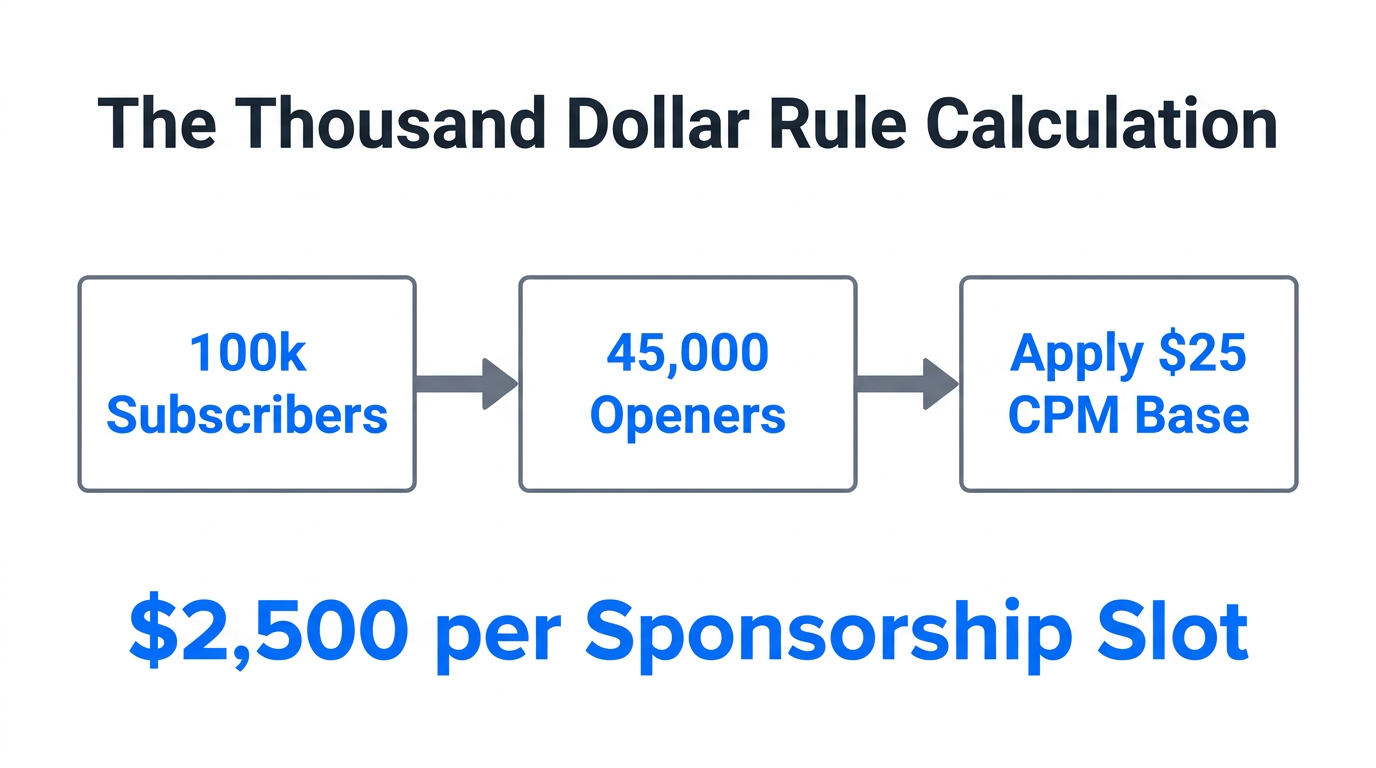
How do you actually price your ad slots? Many new creators undersell themselves by looking at outdated benchmarks. In 2026, the scarcity of high-intent attention has driven prices up. Garcia notes that even with a modest 10,000-subscriber base, brands will pay $1,000+ per slot because they are buying access to a vetted community.
| Subscriber Count | Niche Type | Target CPM | Per Slot Revenue |
|---|---|---|---|
| 10,000 | B2B Tech / SaaS | $100 - $150 | $1,000 - $1,500 |
| 10,000 | General Interest | $25 - $40 | $250 - $400 |
| 50,000 | Marketing / Growth | $60 - $80 | $3,000 - $4,000 |
| 100,000+ | Enterprise / Finance | $100+ | $10,000+ |
To justify these prices, you must provide deep analytics. Advertisers in 2026 aren't just looking for open rates; they want attribution data. Using platforms like Google Analytics and tracking pixels within your newsletter is essential. This is where ad sales for newsletters becomes a data-driven science rather than a pitch-driven art.
The Sponsorship Flywheel: Inbound vs. Outbound
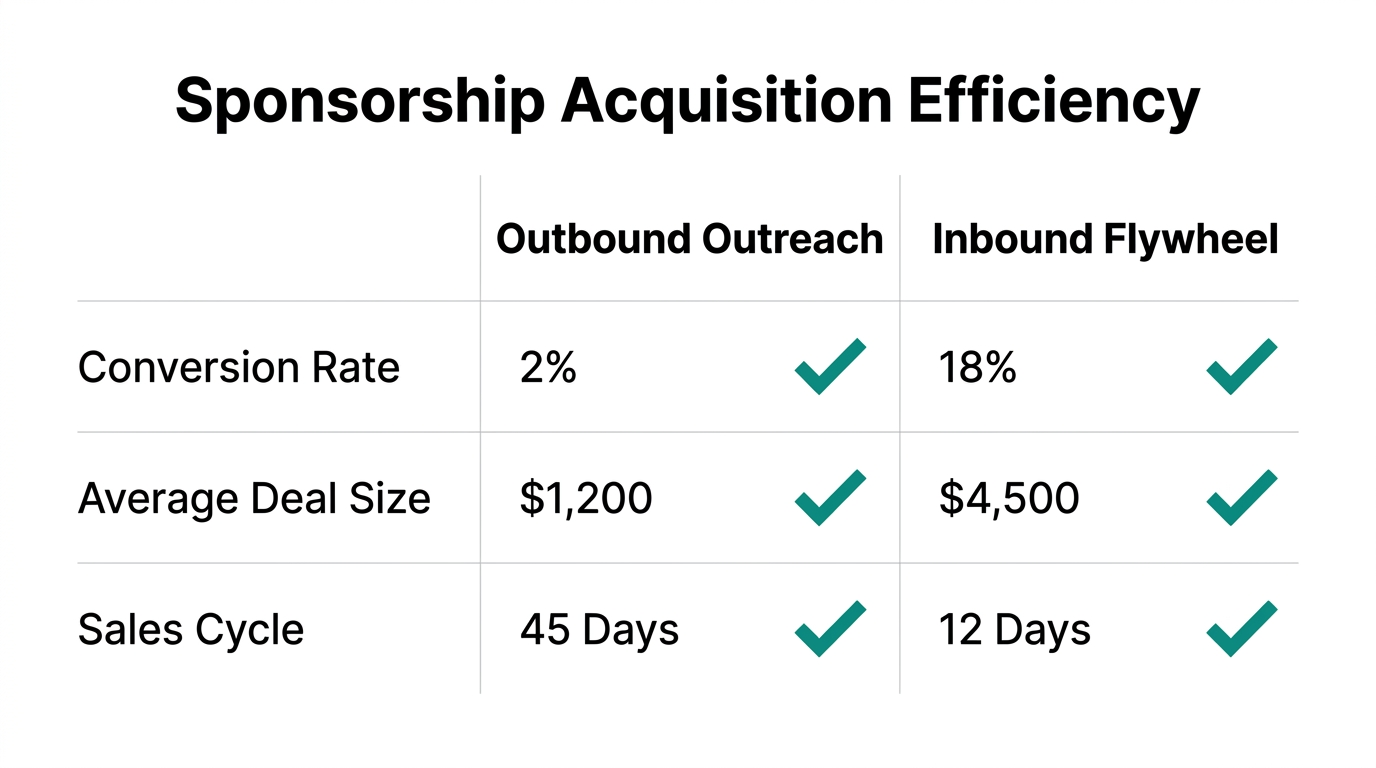
A million-dollar newsletter business runs on two engines: a frictionless inbound intake and an aggressive outbound sales process. Alex Garcia’s strategy involves making it incredibly easy for readers to become sponsors.
Step 1: The Inbound Friction-Less Page
Your "Sponsor Us" page shouldn't be a generic contact form. It should be a sales page that showcases your audience demographics, open rates, and past success stories. Include a direct checkout or a link to book a call via Calendly. When your readers are CEOs and founders, they are often your best potential sponsors.
Step 2: The Outbound Competitor Hack
Don't wait for the phone to ring. To scale to seven figures, you need to proactively pitch. The best way to find advertisers is to analyze your competitors. Find every other newsletter in your niche, see who is sponsoring them on platforms like Paved, and reach out to those exact companies. They have already proven they have a budget for newsletter ads; you just need to prove your audience is a better fit.
For many agencies and growth leads, managing this manually is the bottleneck. Modern marketing teams use AI discovery tools to speed up this process. For example, platforms like Stormy AI allow you to instantly discover creators and newsletters that your competitors are already collaborating with, making it easier to build a targeted outbound list of high-paying sponsors in seconds.
"The fastest way to grow is 'hand-to-hand combat'—reaching out to people, DMing on LinkedIn, and finding the 10x potential in small, unscalable actions."Analyzing the Lenny's Newsletter Business Model
Discover the specific case study of a newsletter generating significant annual revenue.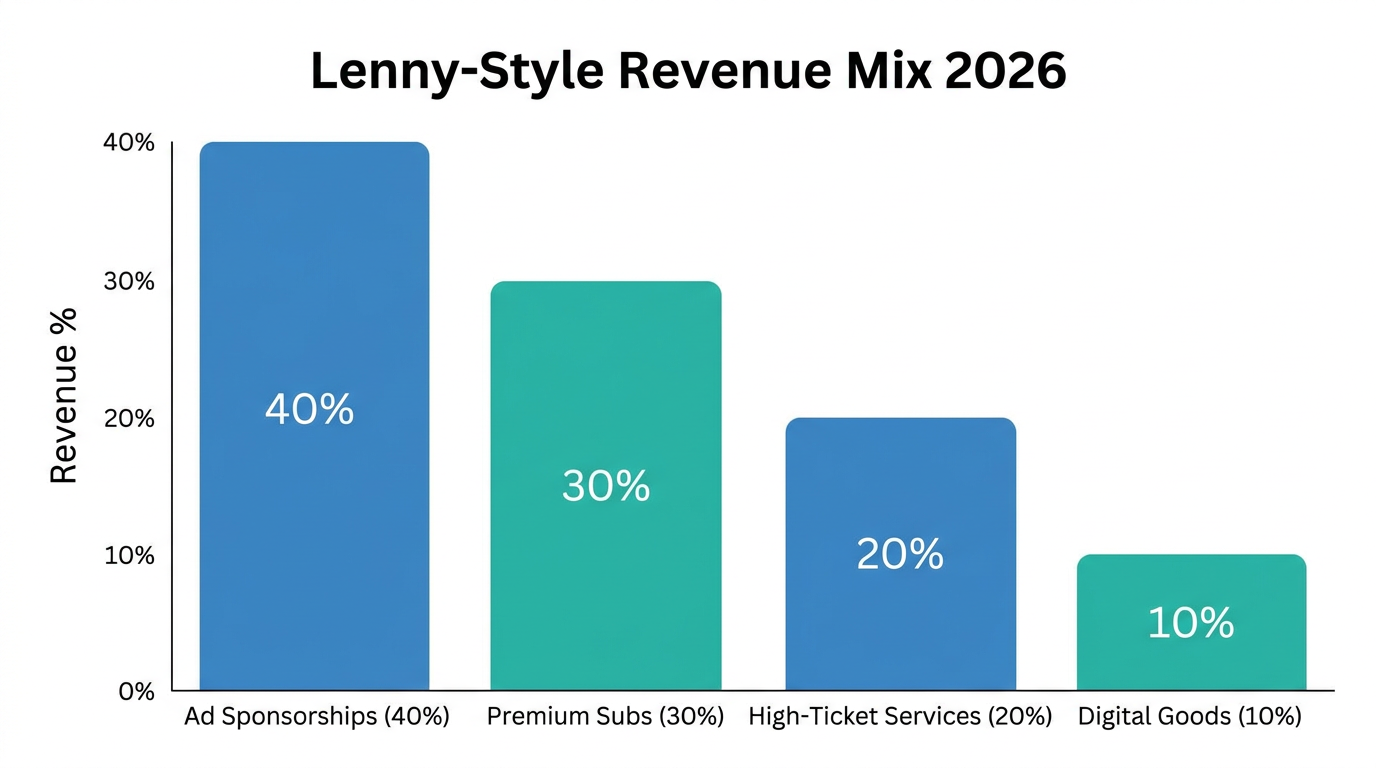
While Alex Garcia focuses on the sponsorship model, Lenny Rachitsky has perfected the paid subscription model on Substack. In 2026, the "Lenny Model" is the gold standard for creator economy revenue streams. It relies on a simple but powerful psychological trigger: the Freemium Loop.
- Free Content: High-value, actionable advice sent weekly to the widest possible audience. This serves as the top-of-funnel (TOFU).
- Paywalled Expertise: Exclusive deep dives, community access, and templates available only to paid subscribers ($15-$30/month).
- The Upsell: Once a user pays for the newsletter, they are primed for high-ticket courses or private consulting.
Lenny's model works because it creates recurring revenue that isn't dependent on sales cycles. In 2026, the most successful newsletters use a hybrid approach: they run sponsorships on their free version to cover overhead and drive profit, while using the paid version to build a loyal "inner circle" of high-LTV (lifetime value) customers.
Diversifying into High-Ticket Services and PLG
A newsletter is more than a publication; it is a testing ground for product-led growth (PLG). Alex Garcia uses his newsletters to test interest in new services. If a specific topic (like landing page optimization) gets high engagement, he spins it off into a dedicated service or product. This "Agency-as-a-Service" model allows you to leverage your newsletter to land $10k+ monthly retainers without spending a dollar on traditional sales.
Tools like Zapier and Notion are the backbone of this operation. Zapier connects your email service provider (ESP) to your CRM, allowing you to track which subscribers are clicking on high-intent links so your sales team can follow up instantly. In 2026, the best newsletter operators are essentially running data-driven lead generation machines.
2026 Trends: Performance-Based Sponsorships and AI Discovery
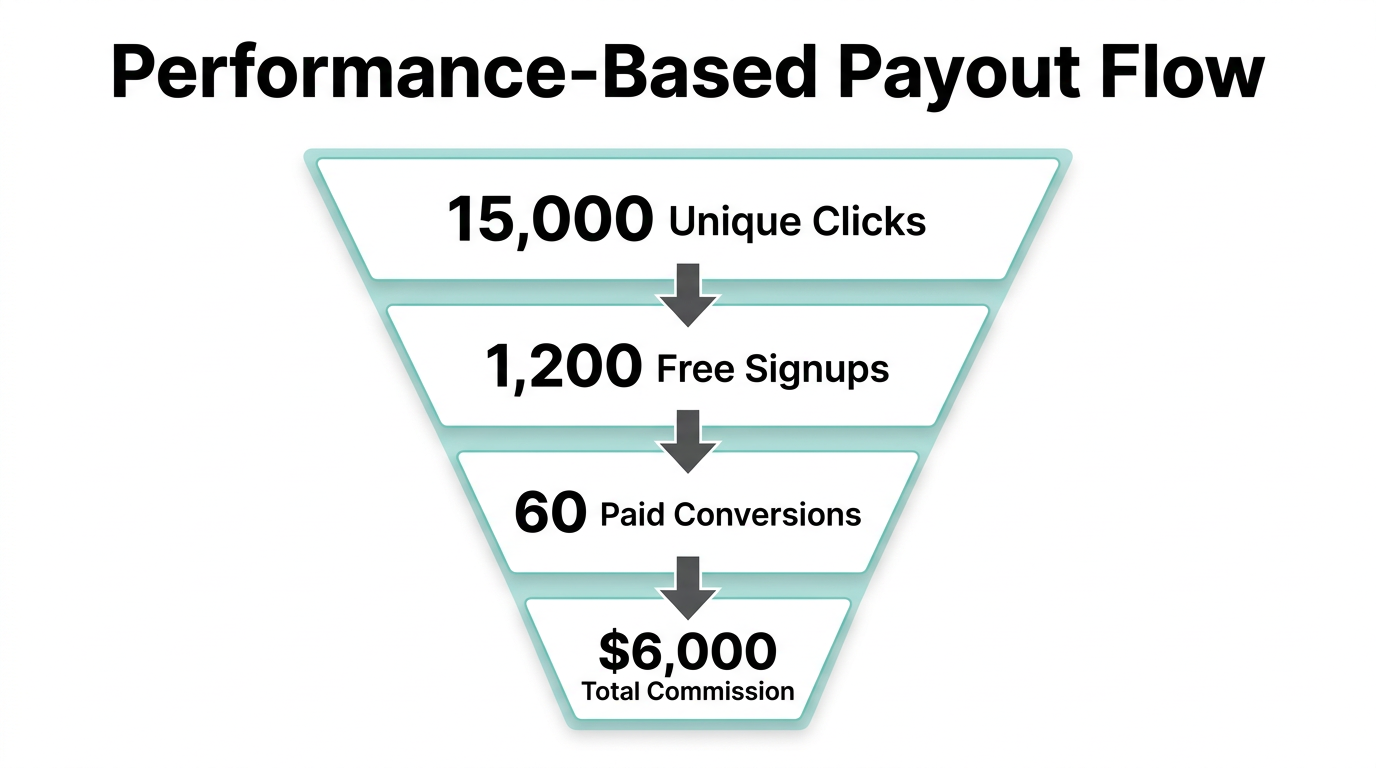
The biggest shift we’ve seen in 2026 is the move toward performance-based deals. Brands are moving away from flat fees and toward a hybrid model: a base fee plus a bonus for every lead or sale generated. This aligns the creator's incentives with the advertiser's goals.
Furthermore, AI-powered discovery has leveled the playing field. Brands no longer manually search for newsletters; they use AI agents to find creators with specific audience demographics. If you want to be discovered by big-budget advertisers, your newsletter needs to be indexed on platforms where sponsors are looking. Using a tool like Stormy AI helps brands find your newsletter based on natural language prompts (e.g., "find me marketing newsletters with 50%+ open rates in the fintech niche"), ensuring your inventory stays booked months in advance.
"Be intentional with your time. Build things, test things, and use your newsletter as the laboratory for your next million-dollar idea."The Newsletter Tech Stack for 2026
Explore the essential four tools and ESPs needed for a modern newsletter.To run a $1M newsletter business with a lean team, you need a robust tech stack. Garcia recommends four core pillars:
- The ESP (Email Service Provider): Platforms like Beehiiv or ConvertKit for sending and growth features.
- Communication: Slack for managing your writing team and ad sales.
- Operations: Notion to control the content calendar and sponsor database.
- Automation: Zapier to tie the entire ecosystem together.
By automating the administrative side of sponsorships—from invoicing via Stripe to automated follow-ups—you can focus on what actually moves the needle: writing great content and building relationships with advertisers.
Conclusion: Building Your Million-Dollar Asset
Building a $1M newsletter business in 2026 is not about luck; it is about intentionality. By combining the sponsorship-heavy model of Marketing Examined with the premium subscription layers of Lenny's Newsletter, you create a diversified revenue engine that is immune to platform shifts.
Start with "hand-to-hand combat" to get your first 1,000 subscribers. Use X/Twitter threads or TikTok content to fuel your growth. Once you hit 10,000 subscribers, treat your ad inventory like prime real estate. Whether you choose to monetize through email newsletter sponsorships or paid memberships, the goal remains the same: provide so much value that your audience (and your advertisers) couldn't imagine their inbox without you.
Ready to scale your creator business? The tools and strategies are at your fingertips. Now, go turn that blank Google Doc into an empire.