For years, growth teams have been held hostage by the limitations of "no-code" glue. We’ve all been there: stringing together brittle sequences in Zapier, fighting with rate limits in Make, or waiting weeks for a busy dev team to scrape a new lead source. But as we move into 2026, the paradigm has shifted. We are entering the era of Marketing Automation 2.0, where the barrier between a marketing hypothesis and a live, custom-coded distribution engine has been obliterated by agentic AI. The modern growth lead is no longer just a strategist; they are a terminal-native architect leveraging tools like Claude Code to build autonomous systems that hunt, enrich, and convert at scale.
The Shift from Manual Tool-Chaining to Terminal-Native Delegation
The core frustration of traditional marketing automation was the "integration tax." If a tool didn't have a native API or a pre-built connector, your strategy was dead on arrival. In 2026, growth teams are bypassing these bottlenecks by using terminal-native delegation. Instead of asking an AI to write a script that you then have to debug and deploy, tools like Claude Code (running on the latest Opus 4.5/4.6 models) act as autonomous members of your team.
By operating directly in the terminal, these agents can access your entire growth stack's codebase, identify bugs in your lead scrapers, and even optimize your Meta Ads Manager scripts without you ever leaving the command line. This isn't just autocomplete; it's a GTM strategy automation powerhouse that understands the architectural context of your entire distribution engine.
"The move from 'AI as a chatbot' to 'AI as a terminal-native agent' is the single biggest leap in growth engineering since the invention of the tracking pixel."
Skill Hot-Reload: Updating Distribution Scripts in Real-Time
Market conditions change in minutes. A new social platform trends, an API changes its schema, or a competitor launches a landing page you need to monitor. In the old world, this required a ticket to engineering. With Claude Code Version 2.1.0, growth teams utilize Skill Hot-Reload.
This feature allows you to update the "skills" or logic of your custom distribution scripts instantly. If your LinkedIn scraper breaks because of a DOM change, you simply point Claude at the error. It doesn't just suggest a fix; it rewrites the logic and hot-reloads the tool into your production environment. This level of agility is why growth hacking with AI has become the standard for high-growth startups. You are no longer building static tools; you are maintaining a living, breathing distribution organism that adapts as fast as the platforms it targets.
Building Autonomous 'Background Agents' for Market Research
One of the most powerful additions to the 2026 growth stack is the ability to run Background Agents. These are not simple cron jobs. They are agentic sessions that can run 30-minute "marathons" to execute complex market research or data enrichment tasks autonomously.
- Market Intelligence: Set an agent to crawl the top 100 Shopify stores in your niche, analyze their tech stack using BuiltWith, and identify gaps in their mobile strategy.
- Data Enrichment: Feed a list of raw domains to an agent and have it find the head of marketing, verify their email via CheckThat.ai, and draft a personalized outreach sequence.
- Competitor Tracking: Monitor price changes or new feature rollouts across your competitive landscape and push summaries directly to your Notion workspace.
Comparing the AI Coding Giants for Growth Teams
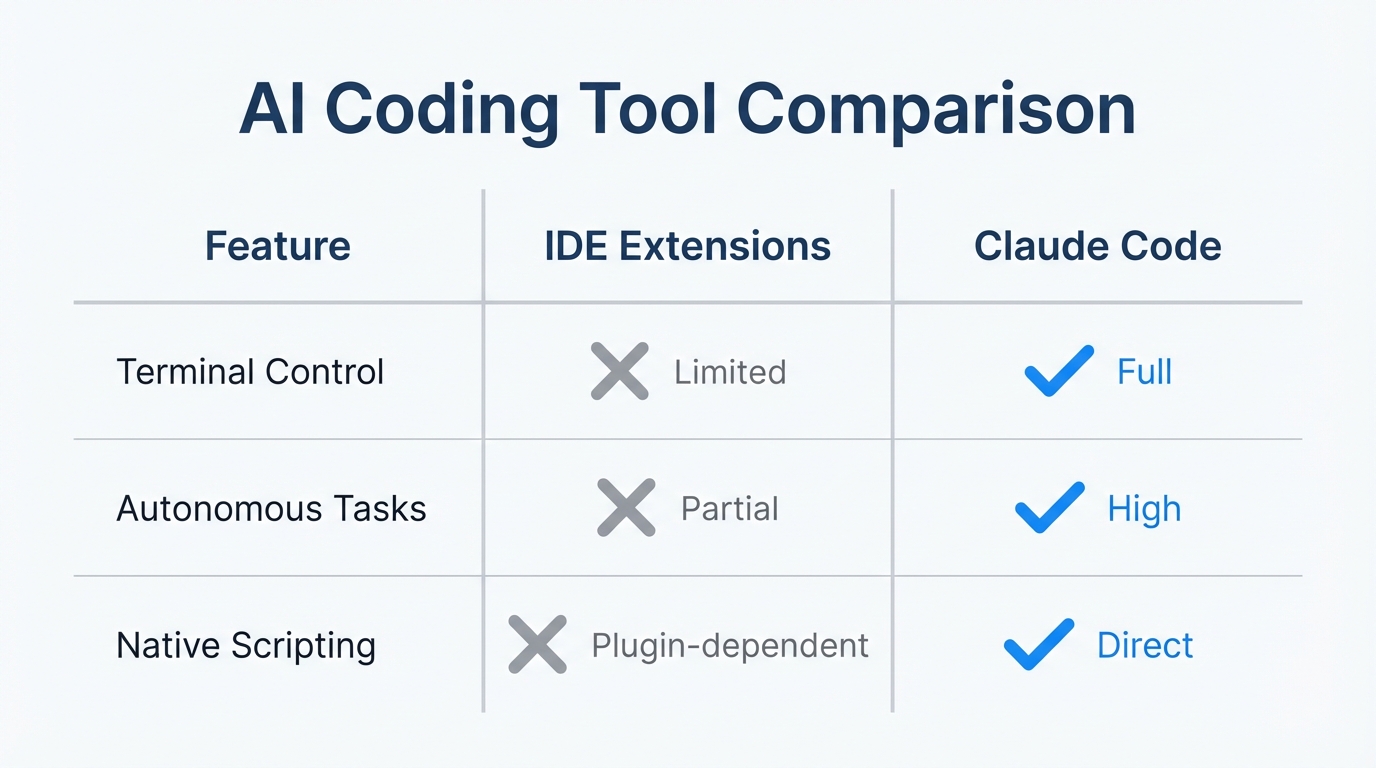
While Claude Code excels at terminal-native delegation, other tools like Cursor and GitHub Copilot have carved out their own niches in the growth stack. Choosing the right tool depends on whether you are prototyping a new landing page or maintaining a massive automation repo.
| Feature | Claude Code | Cursor (Ultra) | GitHub Copilot Pro+ |
|---|---|---|---|
| Best For | Terminal Delegation | Multi-file Prototyping | Enterprise Ecosystem |
| Agent Capability | 30-min Marathons | 8 Parallel Agents | Issue-to-PR Flow |
| Market Share | Rising (80.9% SWE-bench) | $500M ARR (2025) | 42% Paid User Share |
| Key Advantage | Skill Hot-Reload | Parallel Refactoring | GPT-5.2/Claude 4 Toggle |
For most growth teams, the combination of Cursor for UI/UX work and Claude Code for deep backend automation is the winning formula. As noted by industry reports, 59% of developers now use three or more AI tools weekly to balance speed and reasoning.
The 'Session Teleportation' Advantage for Distributed Teams
Growth teams are increasingly decentralized. A lead gen script might be started by a growth engineer in London and need a finishing touch from a data scientist in San Francisco. Claude Code's Session Teleportation allows teams to sync their terminal sessions across devices and users seamlessly.
This means if an automated distribution engine hits a snag, any team member can "teleport" into that exact terminal state, see the logs, and let the AI agent resume its work. This eliminates the "it works on my machine" excuse that has plagued marketing technology for decades. When you pair this with a solid CRM, your entire team has visibility into not just the leads, but the actual code generating them.
"Distribution is no longer about who has the biggest budget, but who has the most efficient automated engine. Session teleportation is the logistics layer of that engine."
Playbook: Automating the Jump from Hypothesis to Live Tool
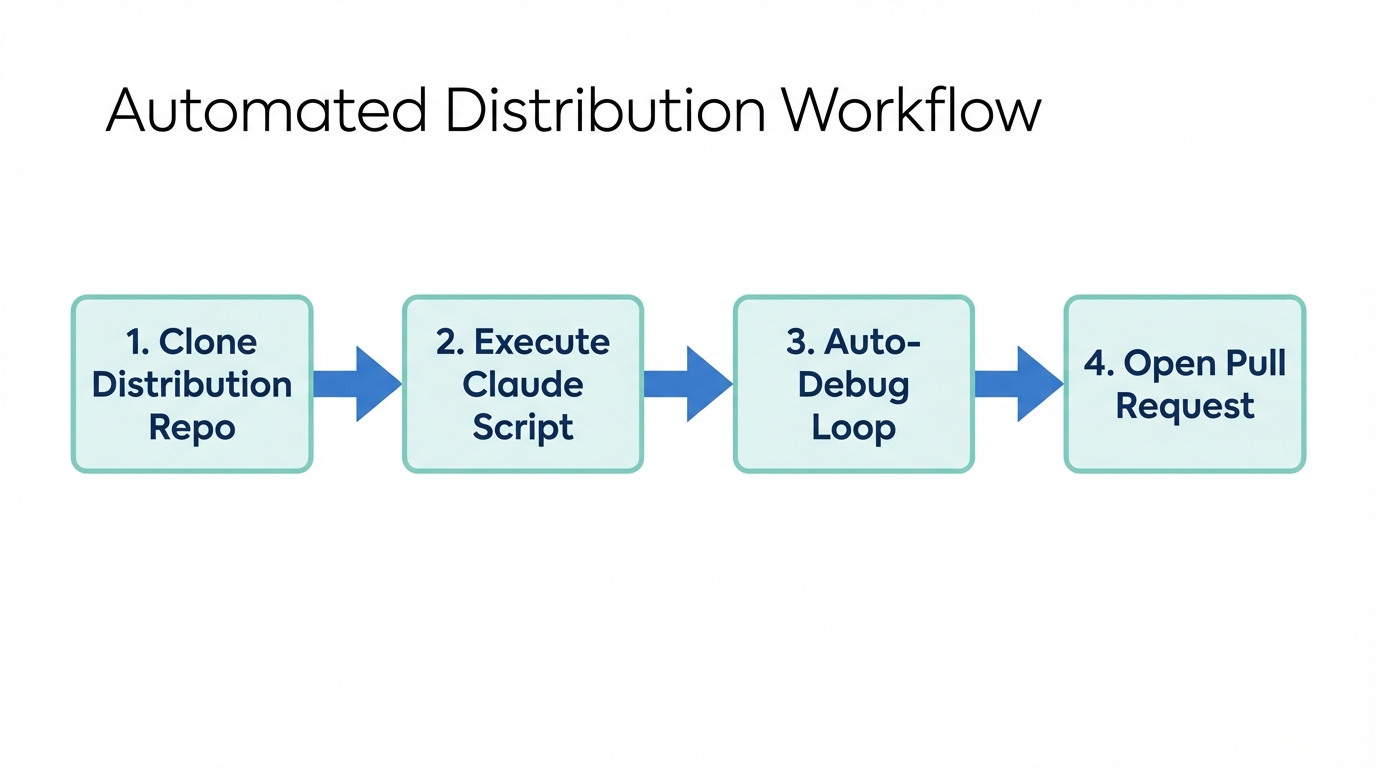
In 2026, the workflow for a GTM strategy automation experiment looks like this:
- Step 1: Define the Hypothesis. Open a GitHub Issue detailing your goal (e.g., "We need a script that monitors Twitter for 'AI marketing' keywords and auto-replies with a link to our latest case study").
- Step 2: Trigger the Agent. Use Claude Code to read the issue. It will plan the architecture, select the necessary libraries (like Zapier for final delivery), and begin coding.
- Step 3: Automated Vetting. For high-stakes outreach, you need to ensure the targets are high quality. This is where platforms like Stormy AI streamline creator sourcing and outreach. You can have your agent feed potential creator leads into Stormy to detect fake followers and engagement fraud before the agent ever sends an email.
- Step 4: Review and Deploy. The agent creates a Pull Request. You review the logic (aided by AI code summaries), approve, and the automated distribution engine is live.
Avoiding 'Workslop' and Security Traps
With great power comes great technical debt. Because AI generates code 2.5x faster than humans can review it, there is a rising risk of "Workslop"—verbose, unoptimized code that works today but breaks tomorrow. Recent discussions in the developer community warn that this unreviewed code often ignores established architectural patterns.
Furthermore, security remains a massive hurdle. Statistics show that 45% of AI-generated code still contains vulnerabilities. When building tools that handle customer data or API keys for platforms like Stripe, growth teams must implement strict security governance. Never let an AI agent deploy code to a production environment without a manual security audit, especially when handling PII (Personally Identifiable Information).
Conclusion: The Future of Marketing Automation
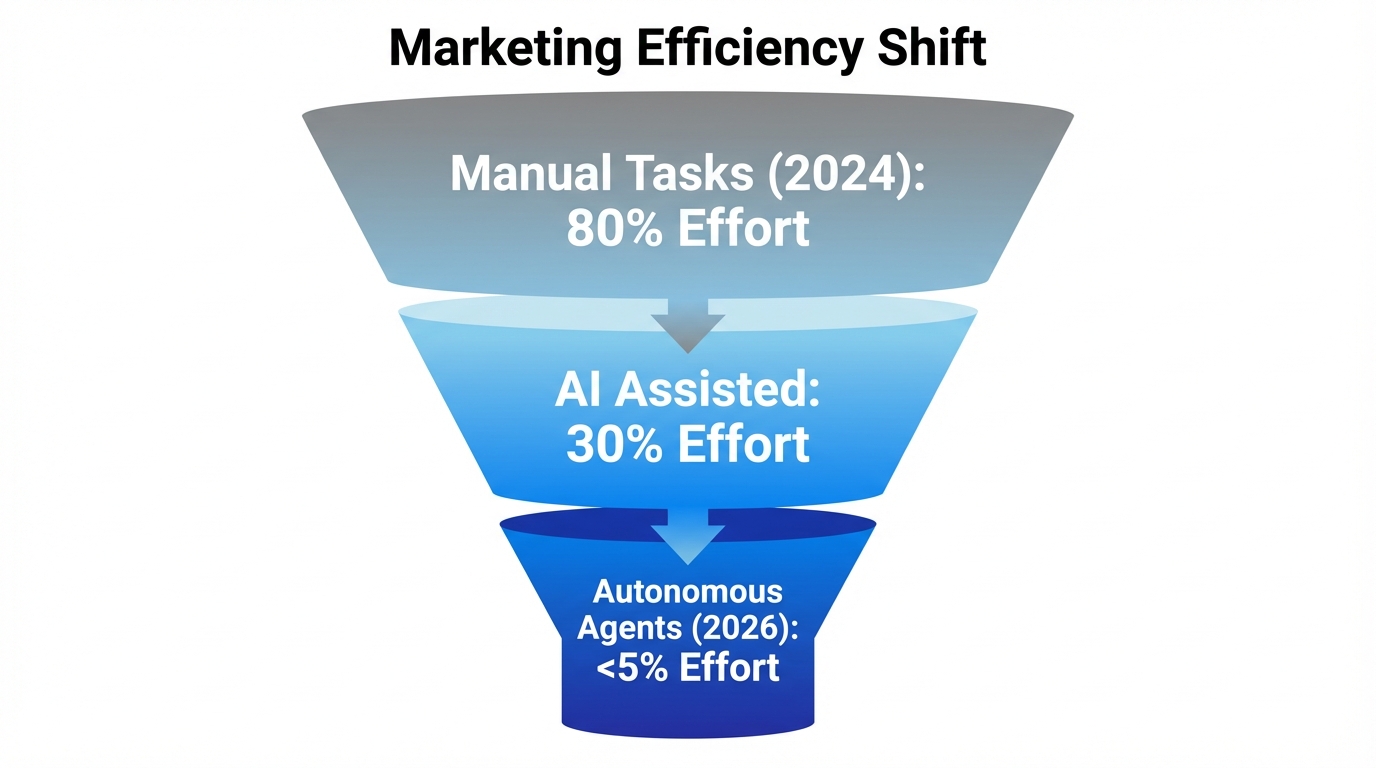
The role of the marketer is being redefined. We are moving away from being operators of other people's software and becoming creators of our own. By mastering Claude Code for growth teams, you are essentially hiring a 24/7 engineering department that never sleeps, never complains, and can build custom distribution engines in the time it takes to grab a coffee.
Whether you are using TikTok Ads Manager to fuel your growth or building a bespoke creator outreach system, the goal remains the same: automate the mundane so you can focus on the creative. Start small. Build a single scraper. Automate one data enrichment task. Before you know it, you won't just have a marketing strategy—you'll have a proprietary distribution engine that your competitors can't touch.