How to Build a Marketing AI Operating System using Claude Code and MCP in 2026
In 2026, the '100x Marketer' uses a centralized Marketing AI Operating System. Learn how to use Claude Code, MCP, and .skill files to automate your entire workflow.
In 2026, the marketing landscape has shifted from simple chat interfaces to sophisticated AI agents. The founders and marketing leaders who are winning aren't just 'prompting' LLMs; they are building a centralized marketing AI operating system. By moving away from fragmented SaaS dashboards and toward a local, file-based architecture using Claude Code and the Model Context Protocol (MCP), businesses are seeing 10x to 20x productivity gains. This isn't just about saving time—it's about goal-to-result execution where the AI plans, acts, and delivers without constant babysitting.
The Evolution from Chat to Marketing AI Agents
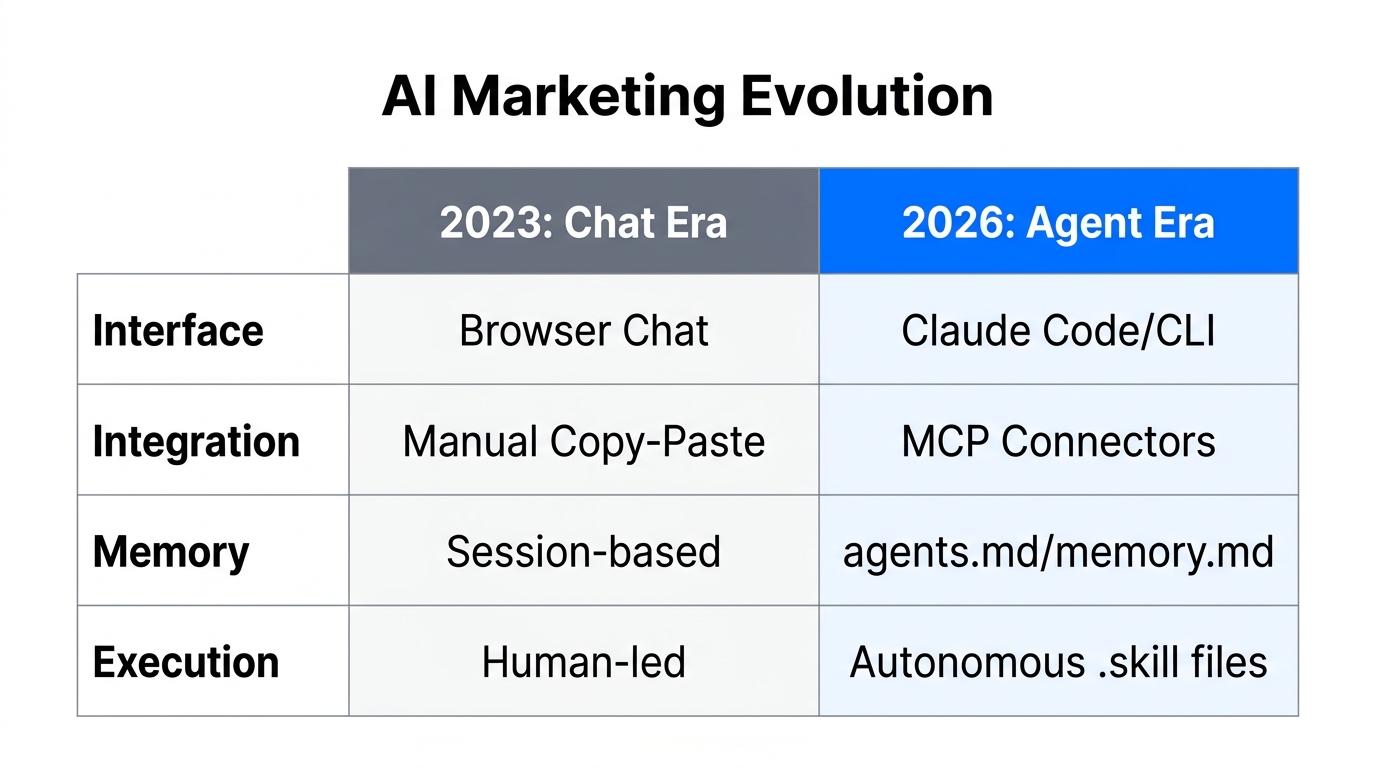
To understand the power of a 2026 marketing stack, we must distinguish between chat models and agents. A chat model is question-to-answer (think ping-pong), whereas an agent is goal-to-result. When you give an agent a task, it enters an autonomous loop: Observe, Think, and Act. It doesn't stop after one response; it keeps iterating until the task is complete based on your specific parameters.
"Chat is like ping-pong, back and forth. An agent is giving a goal and trusting the loop to execute until the result is delivered."
This loop is facilitated by what we call an 'agent harness.' Popular platforms like Claude Code, GitHub Copilot, and Anti-gravity serve as the 'car' you drive. Once you learn the mechanics of agentic workflows—the pedals, the steering, the brakes—you can jump into any of these harnesses and be productive immediately. This shift to creator economy automation is what separates the modern growth lead from the legacy marketer.
Designing Your Marketing AI Operating System
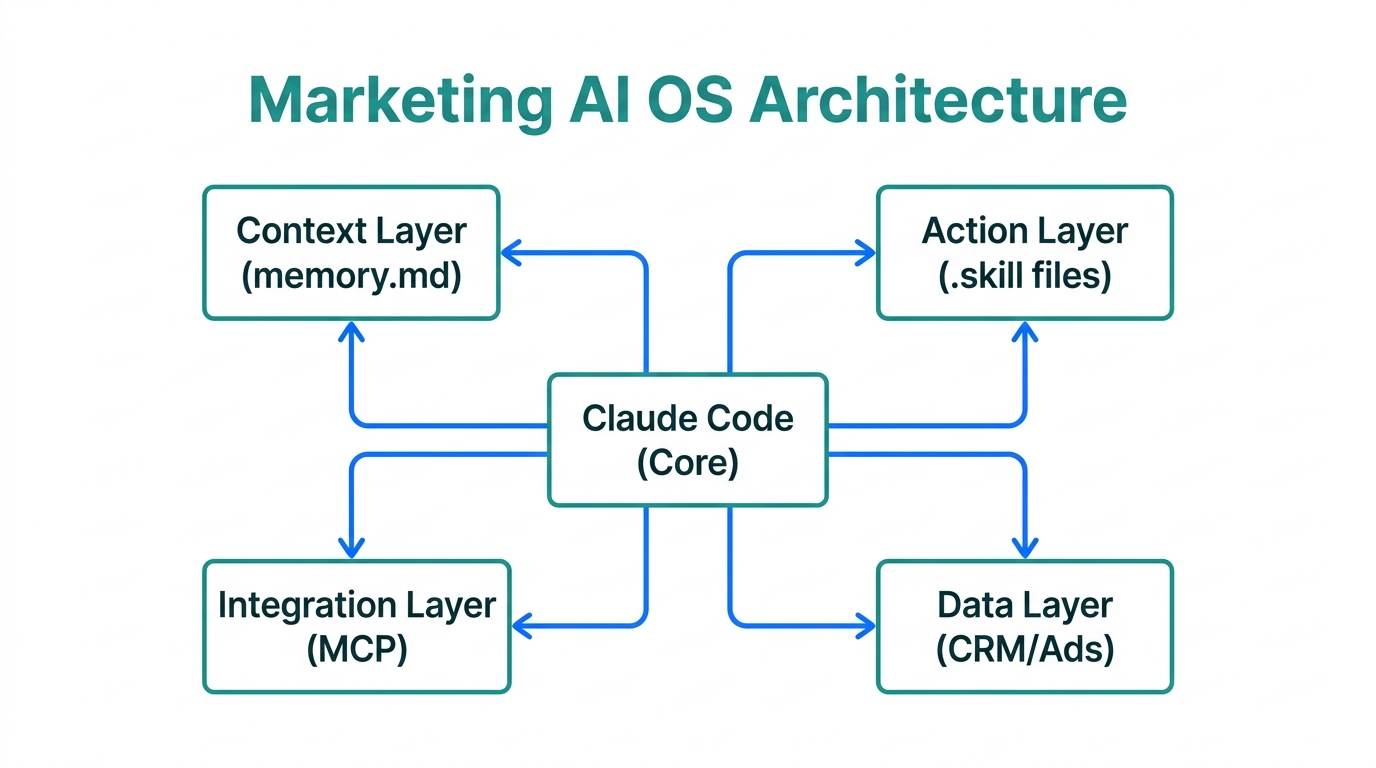
The foundation of a marketing AI operating system isn't a complex database; it's a simple folder structure on your local computer. This 'local-first' approach ensures your AI has direct access to your company's SOPs, brand assets, and historical data. We recommend organizing your workspace by 'Heads of Department' to maintain clear boundaries and context.
| Folder Level | Department / Role | Key Assets |
|---|---|---|
| Top Level | Executive Assistant | Daily briefs, email management, scheduling |
| Marketing | Head of Growth | Brand voice, ICP, Meta Ads strategy |
| Operations | Chief of Staff | Project management, hiring SOPs, legal docs |
| Creative | Content Lead | Canva templates, video scripts, UGC briefs |
By using Notion or local markdown files to house these departments, you create a 'second brain' that the AI can traverse. This structure prevents 'context pollution,' where the AI might accidentally pull relationship advice into a professional landing page copy task. For specialized workflows like influencer sourcing, platforms like Stormy AI streamline creator sourcing and outreach autonomously within this department structure.
Context Engineering: The agents.md and memory.md Framework
Learn how to use agents.md files to give your AI persistent context and memory.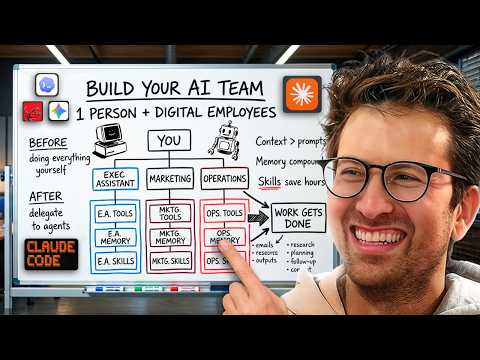
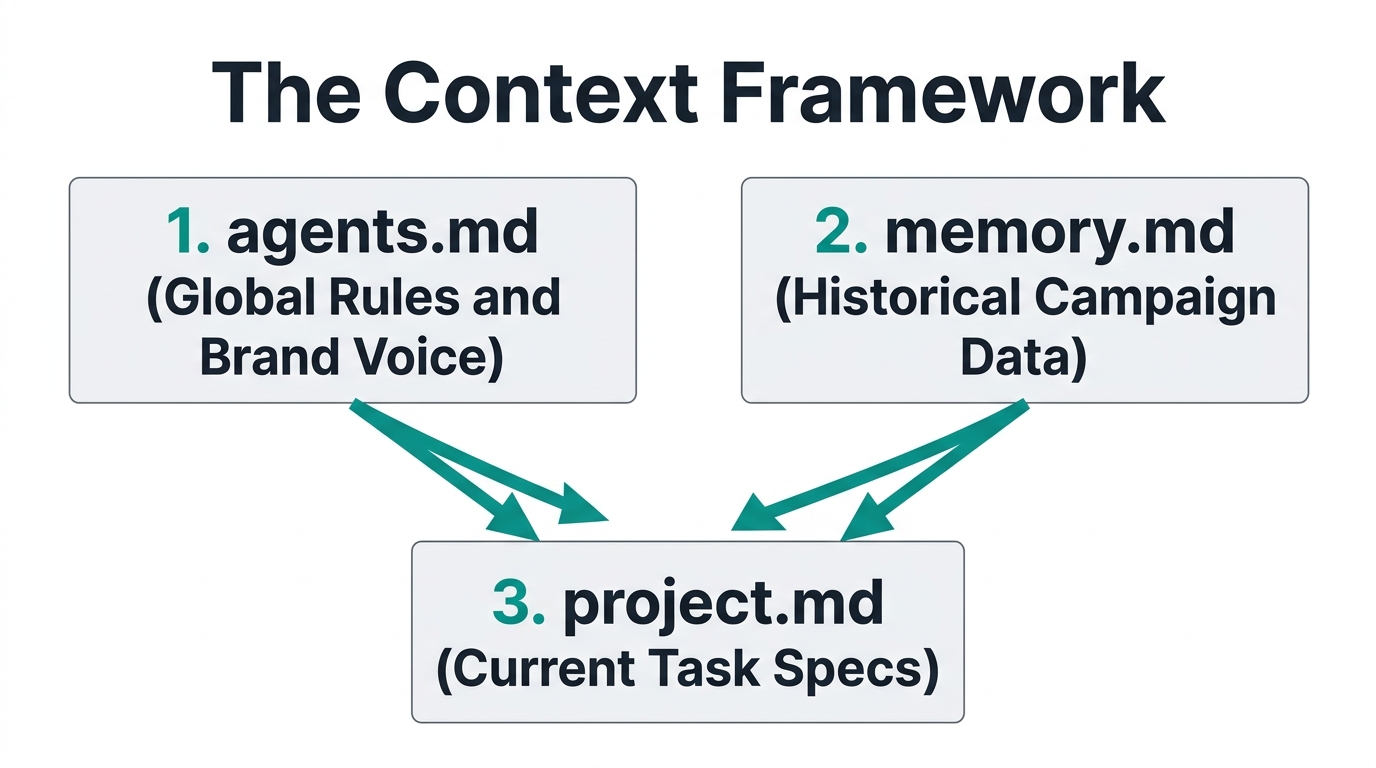
In 2026, prompt engineering has been replaced by context engineering. Instead of writing 500-word prompts, you provide your agent with permanent context files. The most critical is the agents.md file (or claude.md for Claude Code users). This acts as the 'System Prompt' that is always active, defining the agent's role, your business goals, and your tool preferences.
However, an agent without memory is just a temporary worker. To build a true AI agent workflow 2026 style, you must implement a memory.md file. This file creates a self-improving loop where the agent records your corrections and preferences over time. If you tell the agent once to 'never use dark mode' or 'always sign off with warm regards,' it updates its memory file and never makes that mistake again.
"Context engineering is the secret to 100x productivity. If the agent knows everything about your business, your prompts can be stupidly simple."
claude.md: "When I correct you or you learn something new, update the relevant section in memory.md." This makes your AI employee smarter every day.MCP Tool Integration: Connecting the 2026 Stack
Discover how Model Context Protocol connects your AI agents to all your favorite tools.The real 'magic' happens when you connect your AI OS to your actual business tools. This is done via the Model Context Protocol (MCP). Before MCP, connecting Claude to Notion or Gmail required custom API development. Now, MCP acts as a universal translator, allowing Claude to speak directly to any app in your stack.
A typical 2026 marketing stack integration includes:
- Communication: Gmail and Slack for automated outreach and updates.
- Financials: Stripe for creating payment links and checking MRR.
- Meetings: Granola for transcribing calls and extracting action items.
- Project Management: Notion or Linear for tracking tasks.
- Research: Perplexity for real-time web scraping and competitive analysis.
Imagine this workflow: Claude Code reads your Granola meeting notes, realizes a prospect needs a proposal, generates a Stripe payment link, sets up a new project in Notion, and drafts the follow-up email in Gmail—all from one single command.
The Power of Skills: Turning SOPs into Execution
See how to transform complex business SOPs into executable skills for your AI agents.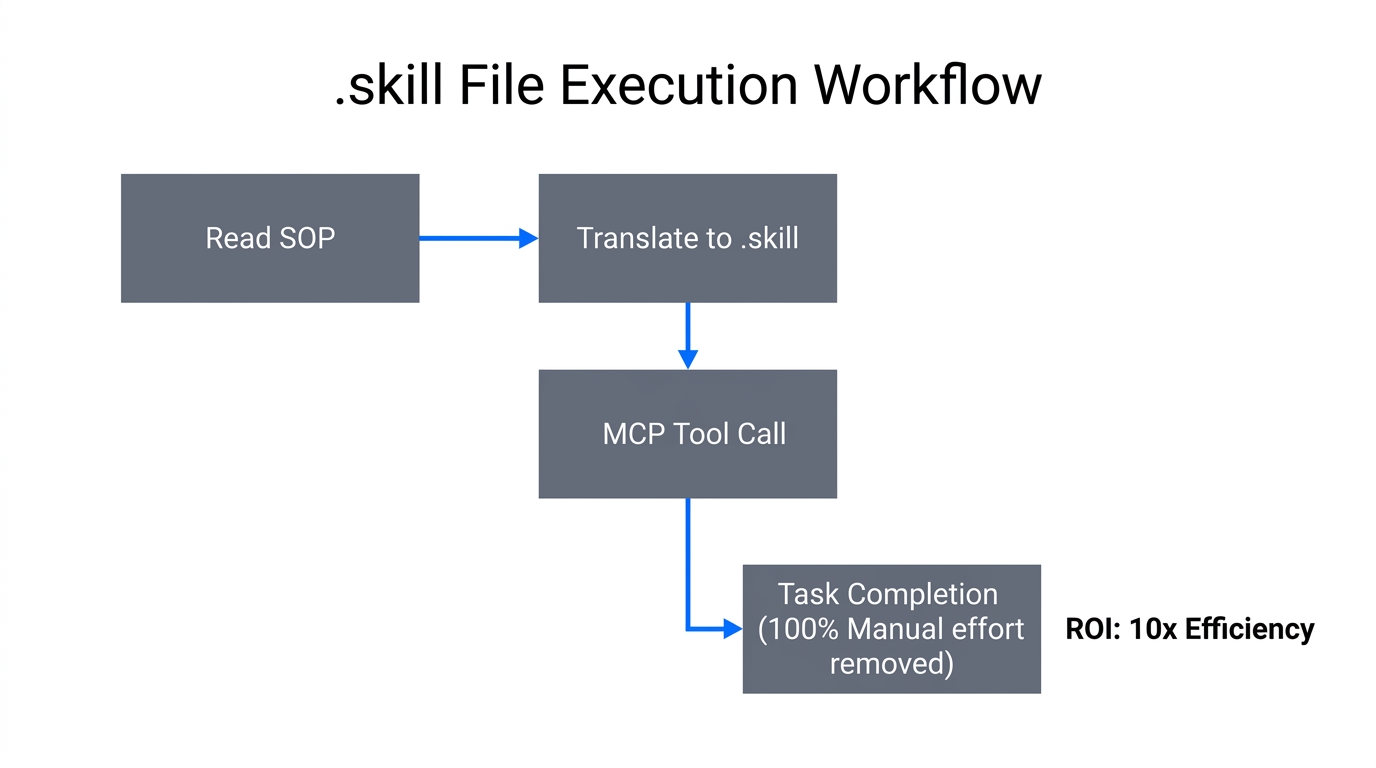
If agents.md is the role and MCP is the tool, then .skill files are the SOPs. A skill is a packaged markdown file that teaches the AI a specific, repetitive process. Instead of explaining how to write a viral hook or how to analyze a competitor's TikTok Ads every time, you turn that process into a reusable skill.
How to Create a Marketing Skill:
- Manual Walkthrough: Perform the task manually with Claude once (e.g., "Go to this URL, scrape the headlines, and categorize them").
- The Skill Creator: Use a 'Skill Creator' meta-skill to package that session into a
.skillfile. - Reference Material: Include a
/referencesfolder with examples of 'good' results (e.g., past viral posts or top-performing ad copy).
By building a library of skills—such as a 'Referral Skill' or an 'Ads Analyst Skill'—you ensure consistent execution across your entire brand. This is the heart of Claude Code for business utility. For those managing heavy influencer marketing, integrating Stormy AI as a core skill allows the agent to handle the entire lifecycle from discovery to automated email follow-ups while you sleep.
"Skills are the SOPs of the future. Once you explain a process to your AI OS, you never have to explain it again."
Becoming the 100x Marketer: Scheduled Automation
Scale your productivity by scheduling automated tasks and recurring workflows with AI agents.The final step in mastering your marketing AI operating system is moving from reactive to proactive. By using 'Scheduled Tasks' or Cron jobs, you can set your skills to run on a schedule. This is how you achieve the '100x employee' status.
Examples of scheduled AI tasks in 2026:
- Daily Briefing (9:00 AM): Run the 'Daily Brief' skill to summarize Gmail, Slack, and Notion into a 5-minute Slack update.
- Competitive Intelligence (Weekly): Scrape Reddit and Twitter for industry trends using Perplexity and draft a newsletter in Beehiiv.
- Ad Performance (Daily): Check Meta Ads Manager via MCP, flag underperforming creatives, and task the creative agent to draft new variations in CapCut.
Conclusion: Building Your Future-Proof Stack
Building a marketing AI operating system in 2026 isn't about finding one perfect tool; it's about building a flexible framework of markdown files and tool connectors. Start by creating an 'Executive Assistant' folder, onboarding them with an agents.md file, and connecting your core tools via MCP. As you find yourself repeating tasks, turn them into .skill files and schedule them to run autonomously.
If you're ready to automate the most time-consuming part of growth—influencer marketing—start by using Stormy AI to discover and outreach to creators. Then, bring those relationships into your AI OS to manage the long-term collaboration history. The future of marketing isn't just about AI; it's about the systems you build to harness it.