In the current landscape of 2026, the barrier between a developer and a $100,000-per-month app isn't just code—it's distribution. While most founders are burning thousands on unoptimized meta ads that fail to convert, a new breed of 'Creator-Founders' is dominating the App Store by reverse-engineering what already works. Take Casper, a creator who partnered with a developer to build Payout, an app that generated $217,000 in just five months by simply identifying winning video formats and automating the lead flow. This playbook breaks down the exact viral app marketing strategy used to turn views into recurring revenue without the traditional 'ad' feel, capitalizing on the creator economy's projected growth.
Step 1: The Audit—Distinguishing Organic Hits from Boosted Flops
 2:20
2:20Before you record a single second of video, you must identify which formats are actually driving downloads. In 2026, social media feeds like TikTok are flooded with sponsored content, but not all 'viral' videos are created equal. To successfully reverse engineer TikTok trends, you need to look at the like-to-view ratio. This is the ultimate truth-teller for organic reach.
According to Casper's framework, if a video has 2 million views but only 2,000 likes, it was likely boosted with heavy paid spend by a brand. However, if a video has 50,000 likes and 2 million views, you’ve found organic gold. That high engagement ratio signals that the algorithm—and more importantly, the audience—actually likes the content. This is the signal you need to copy. Platforms like Stormy AI can help you track these metrics across thousands of creator profiles instantly, allowing you to vet which influencers are genuinely moving the needle based on real-time engagement benchmarks.
Step 2: The 'Invisible Ad' Scripting Technique
11:12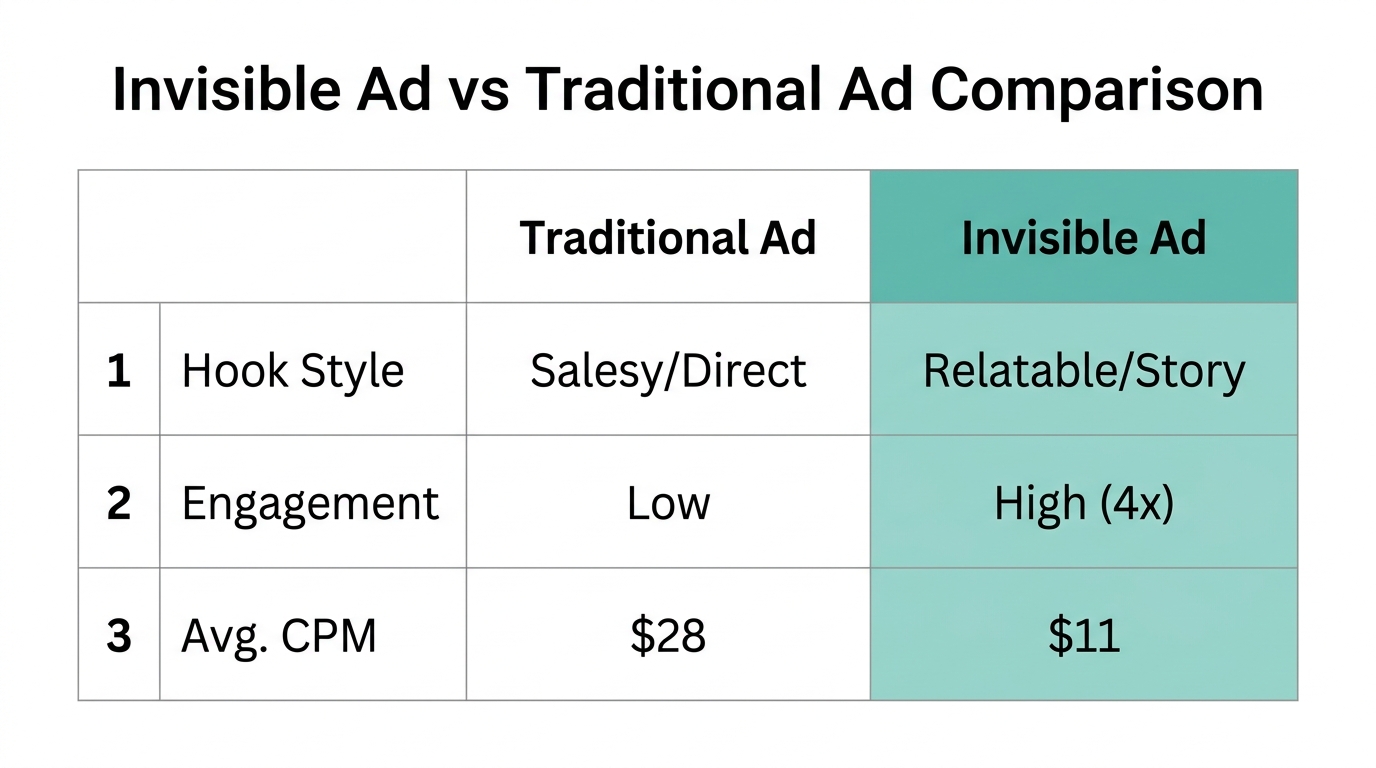
The fastest way to make a user scroll past your video is to sound like an advertisement. In 2026, consumers have developed 'ad-blindness' to traditional CTAs. The solution is the 'Invisible Ad' technique. The core rule? Never say the name of your app out loud during the video.
Instead of saying, "Download the Payout app today," Casper suggests using phrases like, "First, I go to this app" or "You can use a tool like this one." By positioning the app as a friendly, helpful resource rather than a product you're selling, you bypass the viewer's natural defense mechanisms. This keeps the 'vibe' of a helpful tip or life hack, which dramatically increases retention. You can use tools like CapCut to add fast-paced captions that reinforce this helpful narrative without screaming 'sponsored'.
"The moment you say the name of the app, you trigger the 'Ad, Ad, Ad' alarm in the viewer's brain. Stay subtle to stay relevant."
Step 3: The 'Skit-to-How-To' Transition for Max Retention
24:33Retention is the only metric that matters in the first 3 seconds. Casper’s most successful format, which generated nearly $10,000 from a single video, utilizes a specific transition: the Skit-to-How-To. It starts with a relatable or high-stakes dialogue (the skit) and transitions into a screen-recorded tutorial (the how-to).
The Hook (0-5 Seconds)
Use a dialogue-based hook. For a finance app, it might be: "Hey Amazon, is it true I can get this for 50% off?" or "Is it true I can make $1,000 from this lawsuit?" This creates an immediate open loop in the viewer's mind. They want to know the 'secret' the company is supposedly hiding.
The Pivot (5-15 Seconds)
Once the hook is set, transition immediately into the mechanics. This is where you show the app in action. Use deliberate movement—Casper notes that 'eyes are attracted to movement,' similar to finding a squirrel in the woods. Keep your hands moving slightly and use emojis to maintain 'visual rhythm' so the viewer doesn't get bored and scroll off.
| Video Phase | Action | Goal |
|---|---|---|
| The Hook | Dialogue/Skit | Stop the scroll |
| The Pivot | "Go to this app" | Establish the solution |
| The Process | Screen recording | Show ease of use |
| The Close | Comment Trigger | Lead Generation |
Step 4: ManyChat Automation for Instagram 2026
The most critical part of this viral app marketing strategy is the conversion bridge. Traditional 'link in bio' calls-to-action are conversion killers; they reduce video retention and add friction. Instead, use ManyChat automation for Instagram 2026 to handle lead distribution automatically.
Ask the audience to "Comment CLAIM" or "Comment LINK" to get the app. This does two things: it explodes your engagement (telling the algorithm the video is popular) and it allows you to slide directly into the user's DMs. Casper's data shows that out of those who request the link via comment, there is a staggering 50% click-through rate (CTR) to the App Store. From there, the conversion from download to a paid subscription usually hovers around 7%, which is significantly higher than average mobile ad conversion rates.
To set this up, connect your Instagram to ManyChat and create a 'Keyword Trigger' flow using the Instagram Messaging API. When a user comments your keyword, the AI instantly sends a personalized DM with the direct download link. This ensures the notification stays in their inbox until they click it.
"We had 25,000 people comment 'claim' on one video. That turned into over 6,500 direct clicks to the app. You can't get that volume with a link in bio."
Step 5: The Pitch—How to Land A-Player Creators
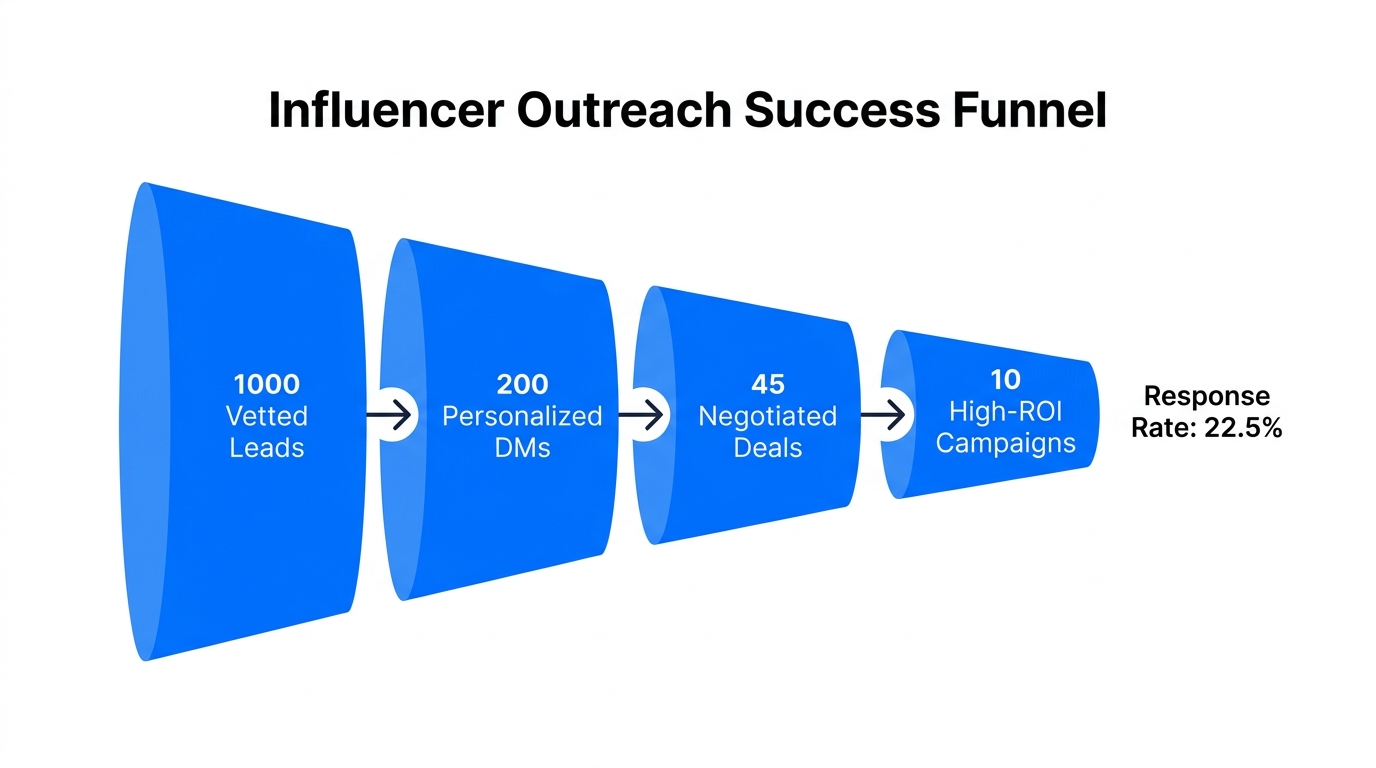
As a developer, you might be tempted to offer a flat fee for a shoutout. In 2026, top-tier creators are moving away from $500 brand deals and toward equity partnerships. If you want a creator to iterate on your distribution until it hits, they need skin in the game.
The winning pitch? Find a creator who has already done a successful brand deal for a competitor (validated via the like-to-view ratio). Reach out and say: "I built a better version of the app you promoted in [Video Link]. I want to give you 50% equity. All you have to do is make these videos over and over again. I'll handle the product; you handle the distribution." This is almost impossible for an A-player creator to refuse because it's a low-input, high-upside deal. For those looking to find these partners, Stormy AI's automated outreach agent can find and contact creators matching your app's niche while you sleep.
Step 6: Scaling for Longevity and App Store Charting
46:16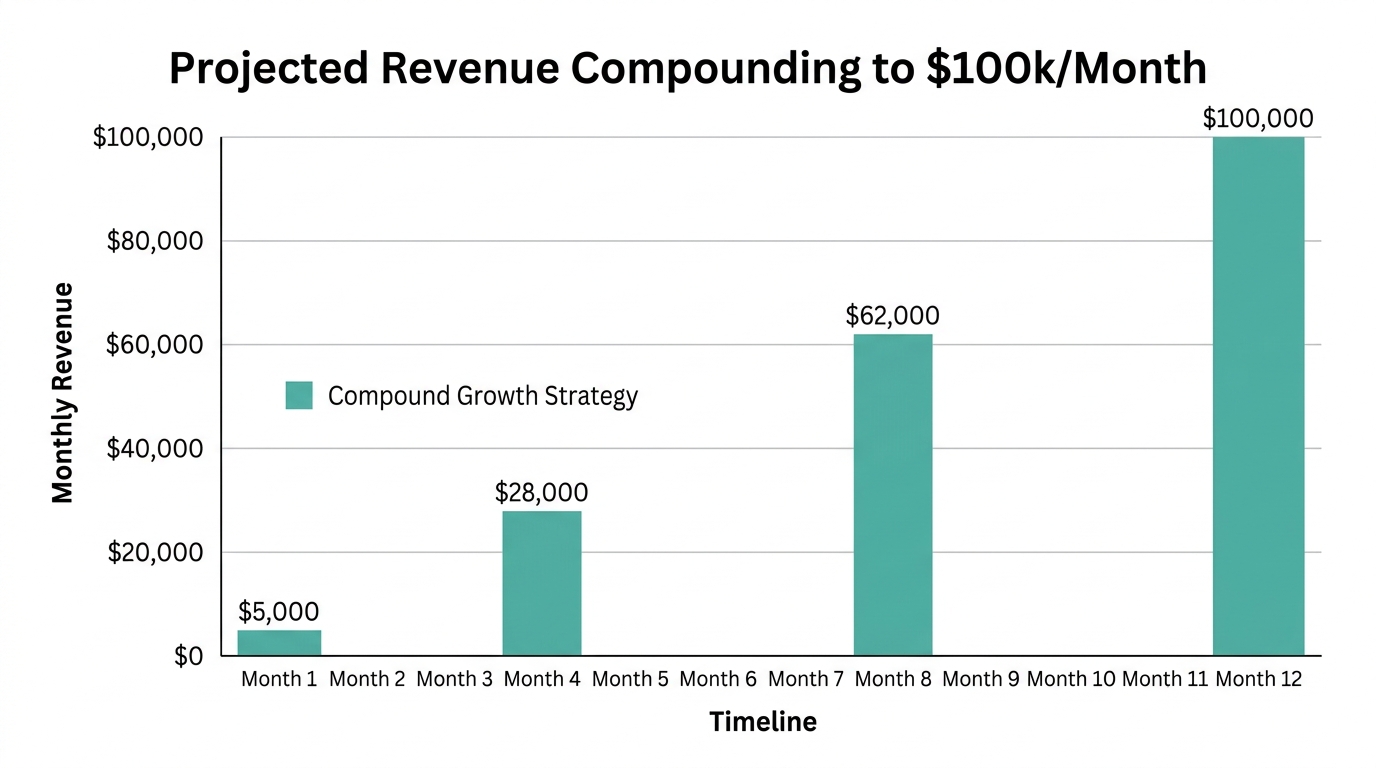
A common misconception is that short-form content dies after 48 hours. Casper's data proves otherwise: a video posted 500 days ago can still generate 30-50 views per hour, leading to 10-20 'passive' downloads every single day. Media is a form of leverage that compounds over time.
To accelerate this, use the 'Coordinated Push' tactic. Coordinate with 5-10 creator friends to post about your app on the same day. This sudden influx of traffic can cause your app to 'chart' in the App Store (e.g., hitting the Top 50 in Finance). Once you rank, the App Store’s own organic search traffic takes over, creating a secondary growth loop. You can monitor these experiments and ranking shifts using tools like Appfigures or Paywall Experiments to see how your revenue spikes correlate with these viral moments.
Conclusion: From Code to Creator-Led Growth
Reversing virality in 2026 isn't about luck; it's about identifying validated patterns and automating the boring parts. By focusing on the like-to-view ratio, mastering the 'Invisible Ad' script, and deploying ManyChat automation, you can turn a simple app idea into a $100k/month powerhouse. Remember, as the technical landscape becomes more accessible through AI, the real winner will be the one who owns the distribution. Start by auditing your competitors on Superwall or finding your next co-founder on Stormy AI, and begin building your media leverage today.