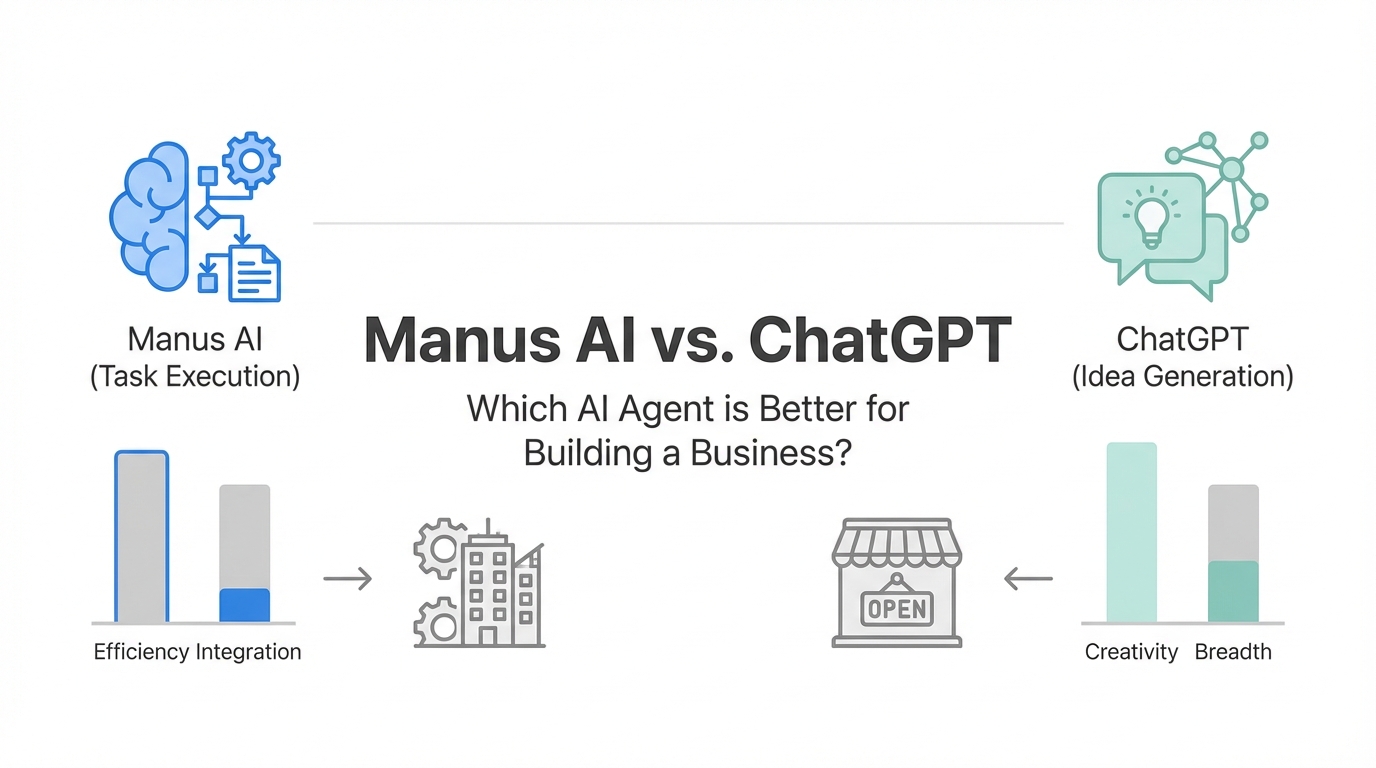
The transition from generative AI to agentic AI is the most significant shift in productivity since the release of the first large language models. While we spent 2023 and 2024 learning how to 'chat' with machines, 2025 is the year we start employing them. For entrepreneurs looking to build a million-dollar business in record time, the choice of tools has narrowed down to a fundamental debate: do you want a brilliant conversationalist like ChatGPT, or a multi-agent powerhouse like Manus AI? This article breaks down the architectural differences, research capabilities, and real-world execution of manus ai vs chatgpt to help you choose your next ai co-founder tools.
Multi-Agent Architecture vs. Single-Prompt Chat
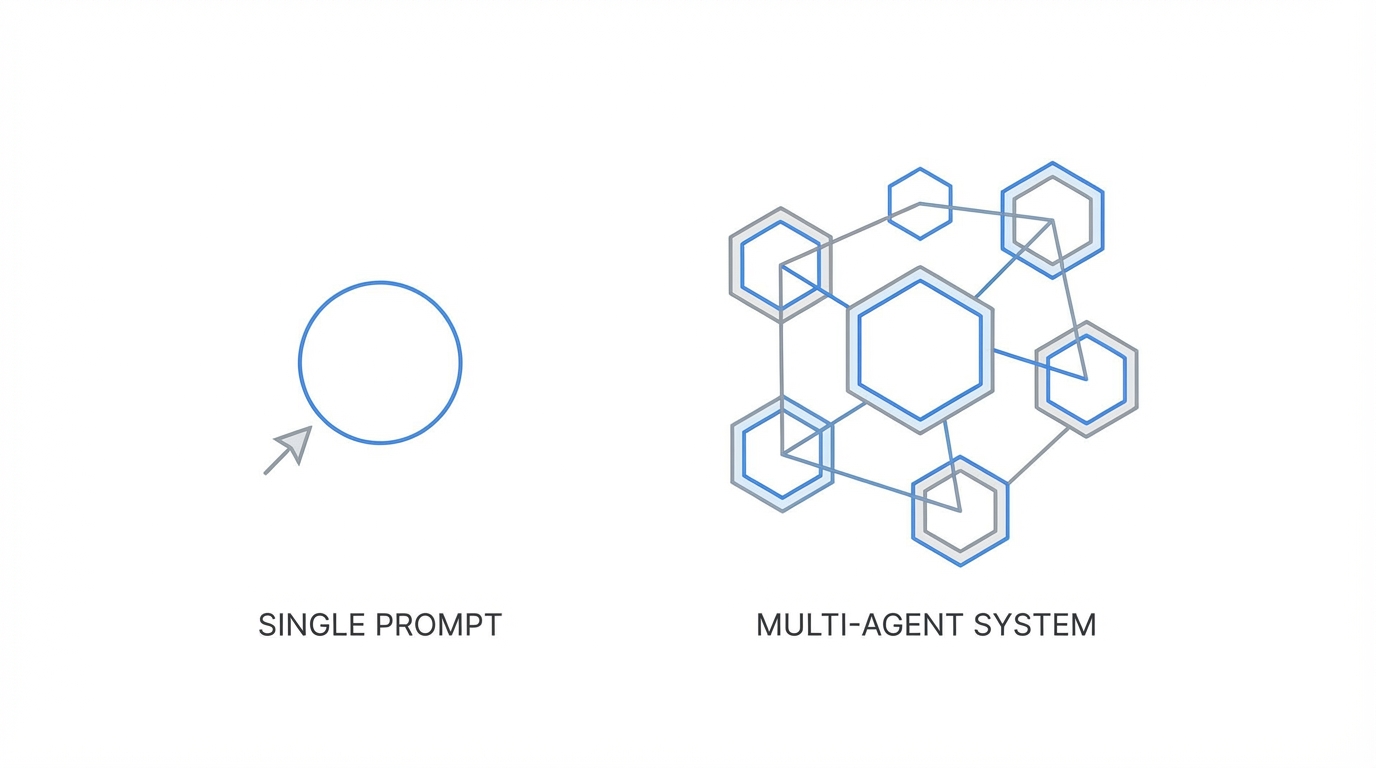

To understand the power of multi agent ai systems, we first have to look at how they differ from the standard chat interface. When you use ChatGPT, you are essentially talking to a single, albeit massive, 'brain.' It processes your prompt and returns a response based on its internal weights and training data. Even with its recent upgrades, it remains a linear experience: prompt in, response out. In contrast, autonomous ai agents 2025 like Manus AI operate on a multi-agent framework. This means that when you give it a complex task, it doesn't just 'think'—it delegates.
Imagine you are trying to research a new market. A multi-agent system triggers one agent to browse current trends on Reddit, another to scrape the latest Y Combinator batch for competitor analysis, and a third to synthesize those findings into a business plan. This asynchronous multitasking allows the AI to perform complex workflows without you needing to sit and wait for a single output stream. It is the difference between hiring a freelancer and hiring a full-service agency.
The Browser Revolution: Bypassing Static Knowledge
One of the biggest hurdles for any best ai for entrepreneurs is the training data cutoff. Even the most advanced LLMs can feel outdated when you're looking for 'alpha' in fast-moving markets. This is where Manus AI takes a significant lead. It uses an integrated browser to perform real-time research, navigating complex sites just like a human would. In recent tests, Manus was able to navigate the Y Combinator directory, filtering for Winter 2025 startups in the B2B space to identify gaps in the market.
Instead of relying on generic knowledge, these agents can comb through subreddits like r/smallbusiness or r/entrepreneur to find actual customer pain points. This 'grounded' research is vital for building a business that actually solves a problem. For instance, while Salesforce or McKinsey might offer high-level industry reports, an AI agent can find a specific thread on Reddit where fifty people are complaining about a lack of regulatory compliance tools for small healthcare clinics. That is validated demand that ChatGPT simply cannot see without a live web connection and autonomous navigation.
Terminals, VS Code, and Product Execution
Building a business isn't just about the 'idea'—it's about execution. Standard LLMs are great at writing code snippets, but they often struggle when it comes to deploying that code or managing a full project structure. Modern ai co-founder tools have integrated development environments (IDEs) and terminals built directly into their interface. When Manus AI builds an MVP, it isn't just giving you a block of code to copy-paste. It is actually opening VS Code, creating the file structure, and running a terminal to test the deployment.
This level of integration is a game-changer for minimal viable product (MVP) design. You can watch the AI build a landing page in real-time, complete with animated hero sections and lead magnets. While tools like V0 are excellent for UI design, a multi-agent system can handle the logic, the design, and the server-side execution all at once. For the non-technical founder, this lowers the barrier to entry to almost zero, allowing you to focus on product taste rather than syntax errors.
Performance Benchmarks: The 15-Minute Prompt

The way we measure 'speed' in AI is changing. With ChatGPT, we are used to a 30-second response time. If it takes longer, we think it's broken. However, for multi agent ai systems, the benchmark is different. A high-quality business plan or a market deep-dive might take 10 to 15 minutes. This is because the agent is actually performing work: browsing dozens of websites, cross-referencing data points from the US Census Bureau, and validating trends via Google Trends.
While 15 minutes feels like an eternity in 'chat' time, it is lightning fast in 'human' time. A human analyst would take three days to produce the same quality of work. Entrepreneurs need to shift their mindset: you aren't waiting for a text response; you are waiting for a completed task. This 'long-tail' prompting allows for much higher depth of insight, moving past surface-level fluff into actionable business strategies.
Practical Use Cases: Beyond Generic Advice
To truly see the power of these systems, we have to look at specific, high-value tasks. One standout use case is financial analysis. An autonomous agent can take an Nvidia earnings report, examine the revenue composition across segments like compute and networking, and build a structured table showing year-over-year growth. This replaces the need for expensive junior analysts at firms like JPMorgan or Goldman Sachs.
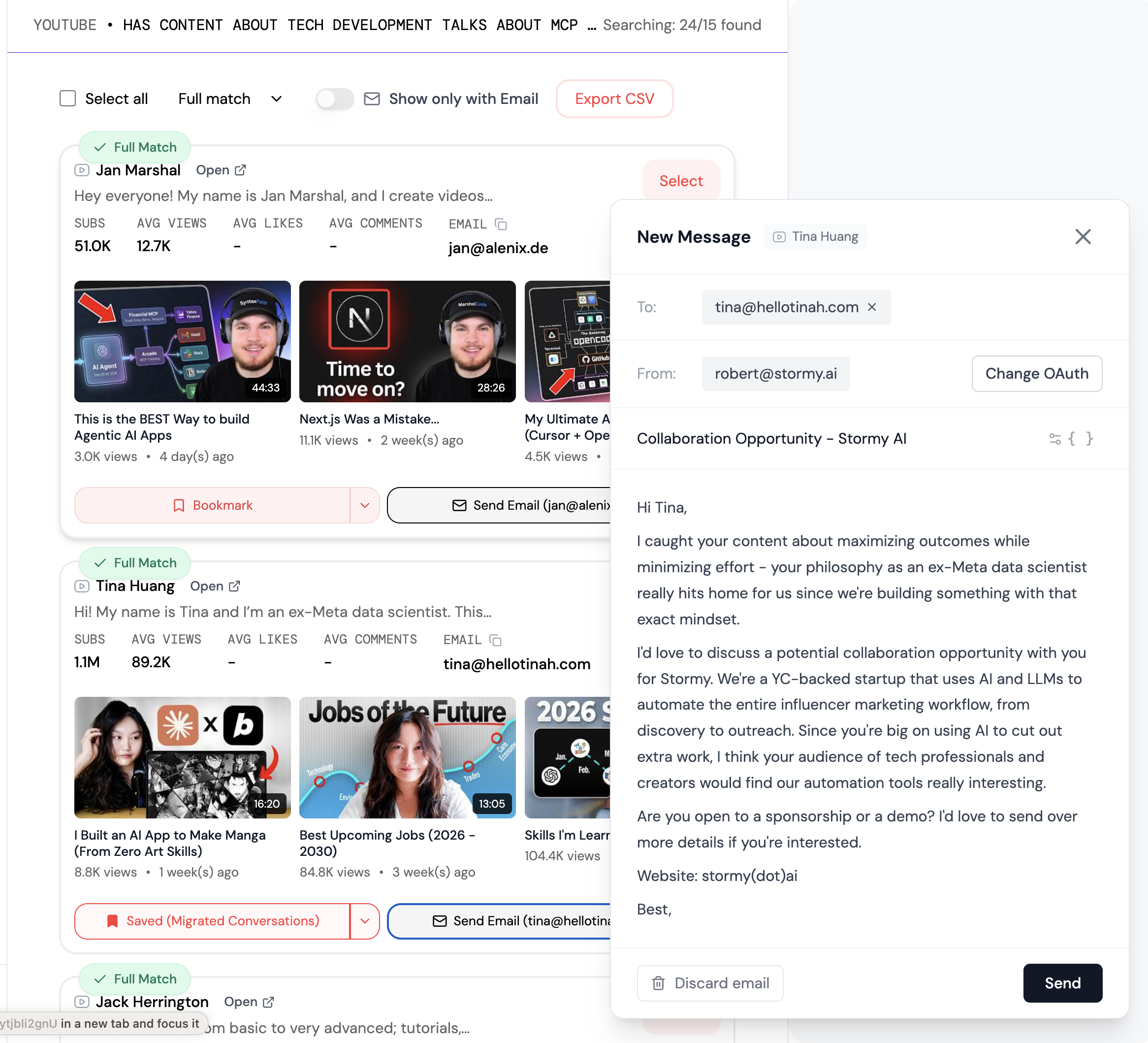
Another incredible application is automated content workflows. For example, if you are running a marketing-heavy startup, you can upload a raw audio file and have the agent identify key quotes, create a two-minute highlight reel, and generate a full transcript. Once your content is ready, tools like Stormy AI can help you source and manage UGC creators to distribute that content across platforms like TikTok and Instagram, ensuring your app install campaigns get the reach they deserve.
Validating Your Million-Dollar Idea
The ultimate goal for most users comparing manus ai vs chatgpt is to find a business idea that can scale. The most successful founders are focusing on vertical-specific AI solutions—tools tailored for healthcare, legal, or retail rather than general-purpose bots. By analyzing Reddit growth data, agents can pinpoint 'micro-consulting' opportunities where small business owners are desperate for expert advice but can't afford a $500-an-hour consultant.
When you find a niche—like regulatory compliance monitoring for regulated industries—you can use an AI co-founder to build the Smart Consult AI platform. This involves creating AI consulting agents that provide expert-level guidance at a subscription price. To grow this business, you’ll need a robust creator outreach strategy. Using the AI discovery and vetting features on Stormy AI, you can identify influencers who specifically talk to small business owners and automate your personalized email outreach to secure partnerships while you sleep.
The Verdict: Taste vs. Tech

In the battle of manus ai vs chatgpt, the winner depends on your role. If you need a creative sparring partner for quick brainstorming, ChatGPT remains the gold standard. But if you are building a product from scratch and need autonomous execution, autonomous ai agents 2025 are the clear choice. However, there is a catch: AI is not a 'set and forget' solution. You still need entrepreneurial taste.
You must know the right questions to ask, how to push back on generic data, and how to refine an MVP until it feels premium. Whether you are analyzing a Y Combinator batch or designing a high-conversion landing page, the AI is your junior analyst. Your job is to mentor it into a senior contributor. By combining the execution power of autonomous agents with the management and outreach capabilities of platforms like Stormy AI, you can build, launch, and scale a business in months rather than years. The era of the AI-driven solo founder has officially arrived.