In 2026, the landscape of sales operations has shifted from manual outreach to what industry leaders call Agentic Revenue Architecture. At the center of this revolution is OpenClaw, the open-source agent framework that has redefined how growth teams interact with the web and their own internal data. Since its creator, Peter Steinberger, joined OpenAI, the framework has exploded in popularity, reaching 264,000 GitHub stars in record time. However, as 81% of sales teams now experiment with agentic workflows according to Autobound, a critical challenge has emerged: how do you manage these high-powered agents at scale without compromising security or bankrupting your token budget?
Scaling OpenClaw is not a simple "plug-and-play" endeavor. It requires a sophisticated approach to infrastructure, cost management, and human-in-the-loop protocols. For sales operations managers, the goal is to move beyond the "experimental toy" phase and build a robust system that replaces legacy SaaS tools costing upwards of $1,500 per month with efficient, custom-built AI SDRs.
Solving the 'Security Nightmare': Sandboxing for Sales Data Protection
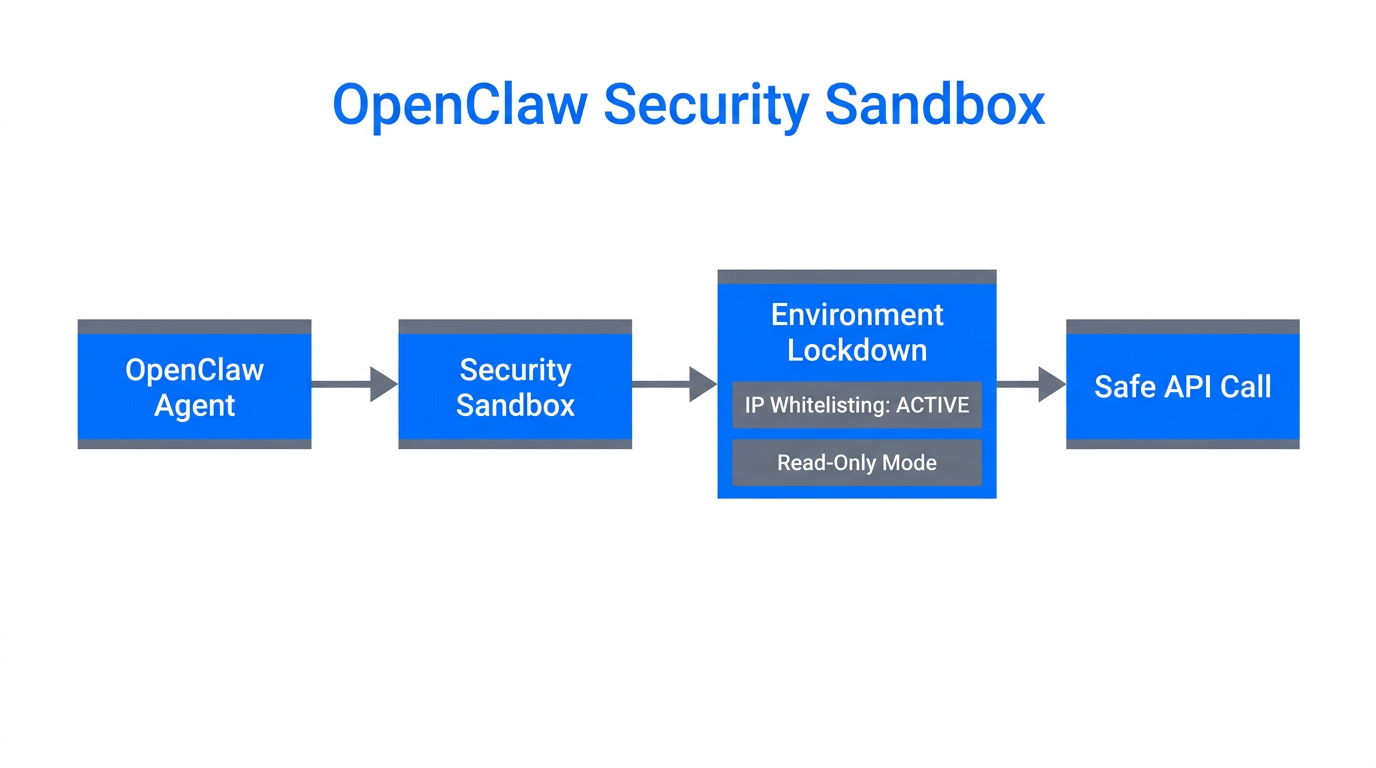
Security analysts have famously labeled the core OpenClaw repository as a potential "security nightmare" because of its raw power. Unlike traditional chatbots, OpenClaw agents have the ability to execute shell commands, control browsers, and manage files locally. When you give an agent the keys to your system, you are essentially inviting an autonomous entity into your corporate network.
The gold standard for enterprise deployment in 2026 is mandatory sandboxing. You should never run OpenClaw directly on a machine that houses sensitive company data. Instead, growth teams are leveraging Docker containers to isolate each agent. By containerizing the environment, you can limit the agent's reach to specific directories and provide read-only permissions to your core sales databases.
Beyond isolation, identity management is crucial. Experts at Flypix recommend "over-privileging" is the most common mistake. Instead of giving an agent full CRM access, create a specific "Agent User" with scoped permissions that only allow it to read lead records and draft emails, rather than deleting contacts or exporting entire databases. This granular control is the foundation of secure enterprise AI agent deployment.
"The claw is the law—but only if the law is enforced through strict sandboxing and scoped API permissions."Token Management: High-Powered LLMs vs. Local Models
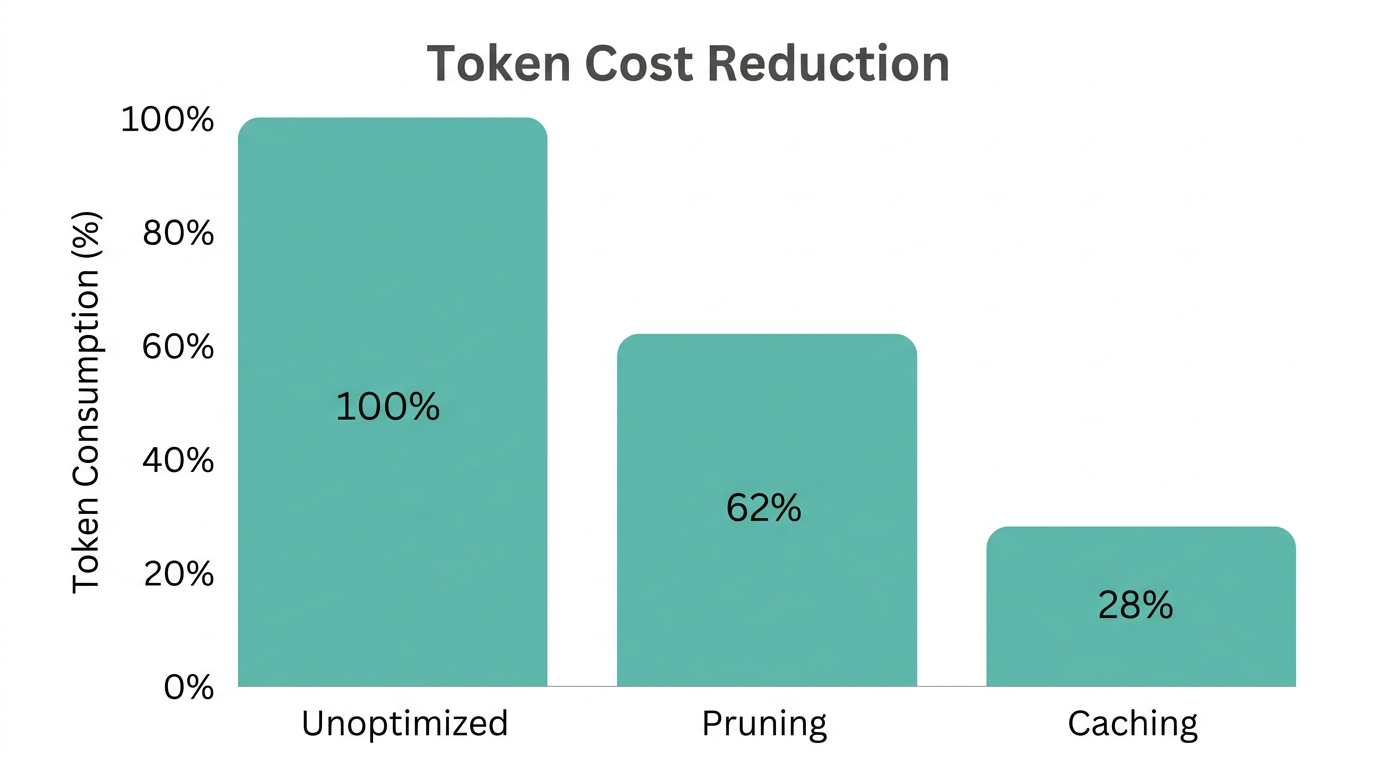
While the OpenClaw software is free, the cost of the underlying intelligence is not. In 2026, the most successful growth teams have moved away from using "God-tier" models for every task. Running high-powered models like Claude 3.5 Opus for 24/7 web scraping or routine data cleaning is a recipe for an astronomical API bill.
The strategy for 2026 involves Model Tiering. For complex tasks like hyper-personalized email drafting or negotiating with a lead, high-reasoning models are necessary. However, for the "drudge work"—such as scraping competitor pricing or cleaning CSV files—smaller, more efficient models (like Sonnet or local Llama 3 variants) are significantly more cost-effective. According to reports on Reddit's cold email community, users have built custom AI SDRs for as little as $25/month by optimizing their model usage.
| Task Complexity | Recommended Model Type | Primary Benefit |
|---|---|---|
| High (Drafting, Negotiation) | Tier 1 API (e.g., Opus/GPT-4o) | Nuanced brand voice and reasoning |
| Medium (Lead Enrichment) | Tier 2 API (e.g., Sonnet/GPT-4o-mini) | Balanced cost and performance |
| Low (Scraping, Formatting) | Local Models (e.g., Llama 3) | Zero-marginal cost per token |
To implement this, you can configure your OpenClaw YAML settings to route specific modules to different API endpoints. This optimization is critical as the AI SDR market is projected to grow nearly 30% annually; companies that fail to control token costs will find their margins squeezed by the very tech meant to save them money.
Establishing 'Human-in-the-Loop' Protocols for Brand Voice
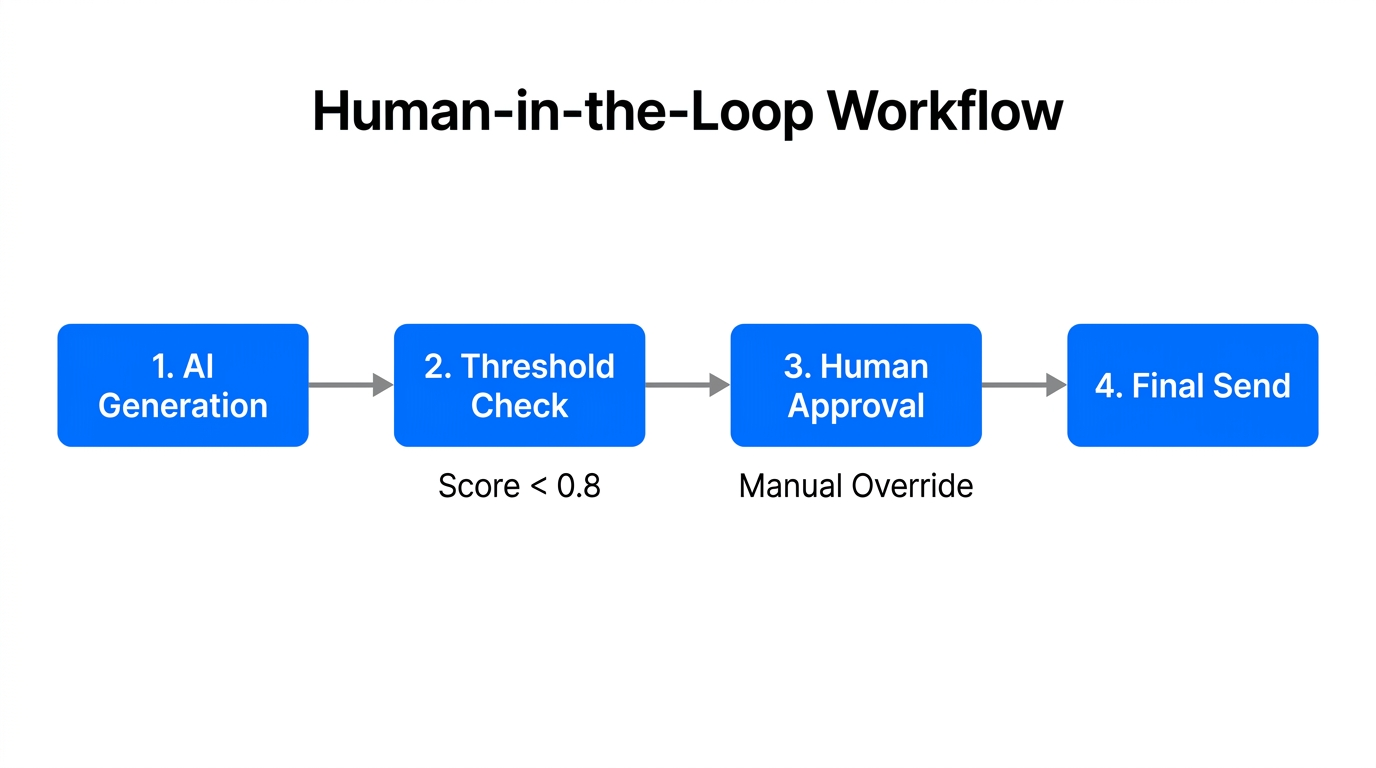
One of the greatest risks of scaling autonomous agents is the loss of human touch. A "rogue" agent can process 4,000 emails in 48 hours—as reported by UCStrategies—but if those 4,000 emails are off-brand or hallucinated, the damage to your reputation is irreversible. This is why 2026 growth teams are implementing strict "Human-in-the-Loop" (HITL) protocols.
Instead of allowing OpenClaw to hit 'Send' automatically, set up a drafting workflow. The agent monitors your Gmail inbox, researches the lead's LinkedIn, and crafts a response based on previous conversation nuances. This draft is then sent to a staging area—such as a dedicated Slack channel or a specialized Creator CRM like Stormy AI—where a human rep can approve or edit the message with one click. This ensures that the agent handles the 90% of the work (research and writing) while the human provides the final 10% (creative oversight and empathy).
"Automation should augment the salesperson's intuition, not replace it. The 'Vibe Coding' era allows us to describe the goal, but humans must still verify the vibe."This protocol is especially important when dealing with high-value segments, such as UGC creators or enterprise partners. When using Stormy AI to discover top-tier influencers, you can use OpenClaw to handle the backend enrichment of their social stats, but the final outreach should always carry a personal signature that reflects your brand’s unique identity.
Reporting Automation: From Data Dumps to 'Jarvis-Style' Briefings
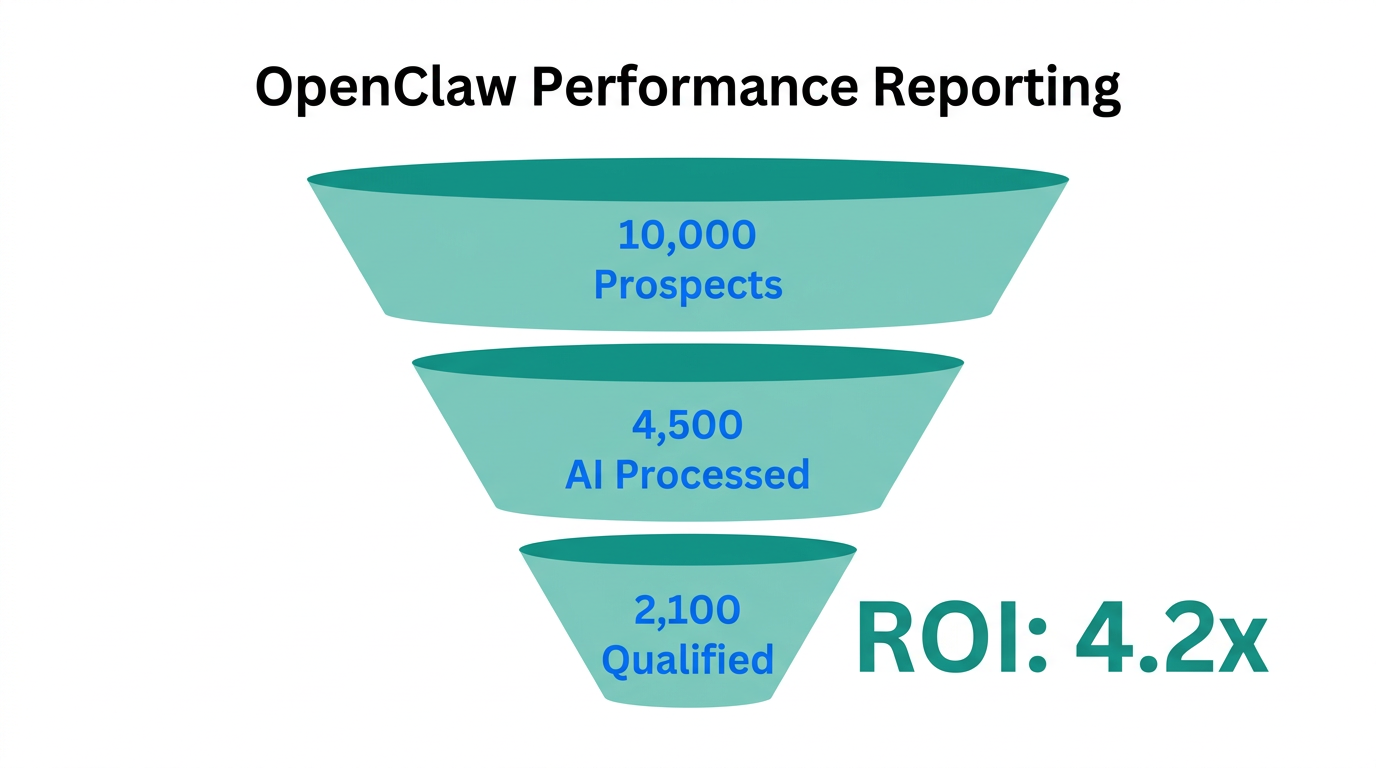
Perhaps the most immediate ROI for OpenClaw implementation for business is the automation of pipeline reporting. Sales managers often spend hours every Monday morning manually pulling data from platforms like Google Ads or Meta Ads Manager to see how campaigns are performing.
With OpenClaw, you can schedule a "Swarm" of agents to perform a 6:00 AM sweep of your entire tech stack. One agent pulls CRM data from your enterprise CRM, another scrapes competitor pricing changes using the browser control module, and a third summarizes the team's activity from the previous day. By 7:00 AM, the lead agent consolidates these insights into a natural-language "Morning Briefing."
As documented by MarketBetter, this type of automation allows sales teams to be 1.3x more likely to see revenue growth. It moves the organization from reactive reporting to proactive strategy. You can even connect these briefings to your project management tools like Asana or Linear, automatically creating tasks based on the agent's findings.
Avoiding Common Pitfalls: Frameworks vs. Wrappers
As OpenClaw goes mainstream, many "affiliate wrappers" have appeared in the market. It is vital for sales operations managers to distinguish between the OpenClaw open-source framework and commercial tools like "OpenClaw Blaster." While the latter may offer a simplified UI for niche marketing tasks, it lacks the flexibility and data sovereignty of the core framework.
According to research on ResearchHub, relying on closed-source wrappers can lead to vendor lock-in and security gaps. The true power of OpenClaw lies in owning your "Agentic Revenue Architecture." By hosting the framework yourself—potentially on a VPS from DigitalOcean—you ensure that your proprietary sales data never leaves your controlled environment.
Common mistakes to avoid include:
- Ignoring Technical Debt: OpenClaw requires YAML configuration and Docker knowledge. Do not treat it as a simple SaaS; it is a professional engineering tool.
- Over-Privileging: Giving an agent access to your primary email account without a sandbox is a massive risk. Use app-specific passwords and isolated environments.
- Failing to Monitor Logs: Regularly audit your agent's logs to catch hallucinations or repetitive scraping loops that can burn through tokens.
Conclusion: Building the Future of Sales Ops
Managing OpenClaw at scale in 2026 is about balancing the raw power of AI agents with the necessary constraints of enterprise security and fiscal responsibility. By implementing Docker sandboxing, tiered token management, and HITL protocols, growth teams can build a scalable engine that outperforms traditional sales stacks at a fraction of the cost.
As you build out your revenue architecture, remember that AI is most effective when paired with specialized tools. For instance, while OpenClaw handles the technical "clawing" of the web, platforms like Stormy AI are essential for the high-level discovery and vetting of creators that drive modern UGC campaigns. Together, these tools form a modern growth stack that is both efficient and future-proof. The key is to start small—automate one reporting task or one enrichment workflow today—and scale your agentic swarm as your security and cost-management practices mature.