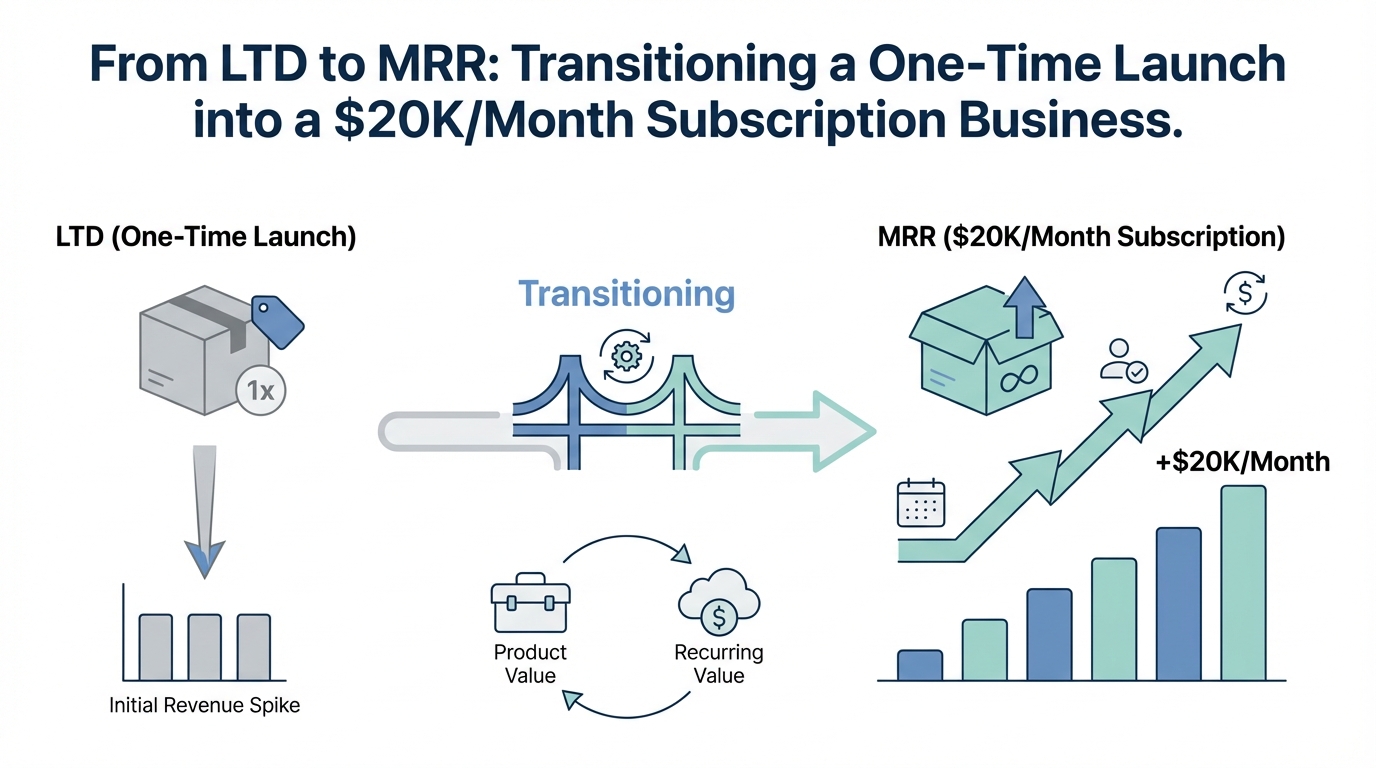
For many SaaS founders, the "Lifetime Deal" (LTD) is a polarizing topic. Some view it as a desperate move that sacrifices long-term growth for quick cash, while others see it as the ultimate validation engine. For Deven, the co-founder of Supergrow, it was the latter. In an interview with Starter Story, Deven revealed how a three-day launch generated $65,000 in upfront cash and provided the essential feedback loop needed to build a sustainable $20,000/month subscription business. Moving from a one-time payment model to SaaS recurring revenue growth requires a strategic pivot from "selling features" to "building a community of evangelists."
The LTD Strategy: A Cheat Code for Early Validation


Many indie hackers struggle with distribution. When Deven launched Supergrow, he had fewer than 600 followers on social media. By partnering with RocketHub, he bypassed the slow grind of organic growth and gained immediate access to a massive list of deal-hungry buyers. This move from LTD to subscription wasn't just about the money; it was about getting 300 active users into the product overnight. Unlike free users, who often ghost developers when they encounter a bug, LTD buyers are invested. Because they have paid real money, they are much more likely to provide the "brutal feedback" necessary for product-market fit, as Deven noted in his founder interview.
While RocketHub took a 40% cut of the $65,000 revenue, the trade-off was worth it for a founder with zero audience. This cash infusion allowed Deven to focus entirely on development without the pressure of immediate bills. For those looking to replicate this success, the key is to limit the timeframe and the number of users. Supergrow only ran their LTD for 72 hours, ensuring they didn't over-leverage their future support capacity. To find similar early-stage creators to champion your launch, Stormy's AI search can identify micro-influencers in your specific niche who specialize in SaaS tools and productivity, providing a secondary layer of distribution beyond the LTD platforms.
Turning LTD Buyers into Community Ambassadors

One of the most overlooked benefits of a lifetime deal is the creation of a "street team." When Deven eventually launched on Product Hunt, he didn't start from zero. He had a core group of 10 to 15 "super-users" from his LTD cohort who had become true evangelists. These users didn't just upvote; they shared the product in WhatsApp groups, on LinkedIn, and on Twitter. This organic buzz helped Supergrow secure the "Product of the Week" title, which brought in another 50 recurring subscribers. This Product Hunt launch strategy relies on leveraging existing relationships rather than hoping for a viral moment.
To manage these relationships effectively at scale, smart founders are moving away from manual spreadsheets. Using Stormy's creator CRM allows you to track which of your early adopters are the most active on social media, making it easy to identify who should receive early access to new features or personalized outreach for your next big launch. By treating your LTD buyers as stakeholders rather than just customers, you transform a one-time transaction into a long-term marketing asset. This approach is central to modern customer retention tactics for companies transitioning into recurring models.
Data-Driven Iteration: Identifying Retention vs. Churn

Once the initial rush of the launch fades, the hard work of retention begins. Deven and his team utilized a sophisticated stack of analytics tools to monitor how users interacted with Supergrow. By integrating Microsoft Clarity for session recordings and Mixpanel for product analytics, they could see exactly where users were getting stuck. They realized that while many were drawn to the AI content creation features, the retention "sticky point" was the ability to convert raw thoughts into polished, LinkedIn-ready posts that mimicked the user's specific writing style.
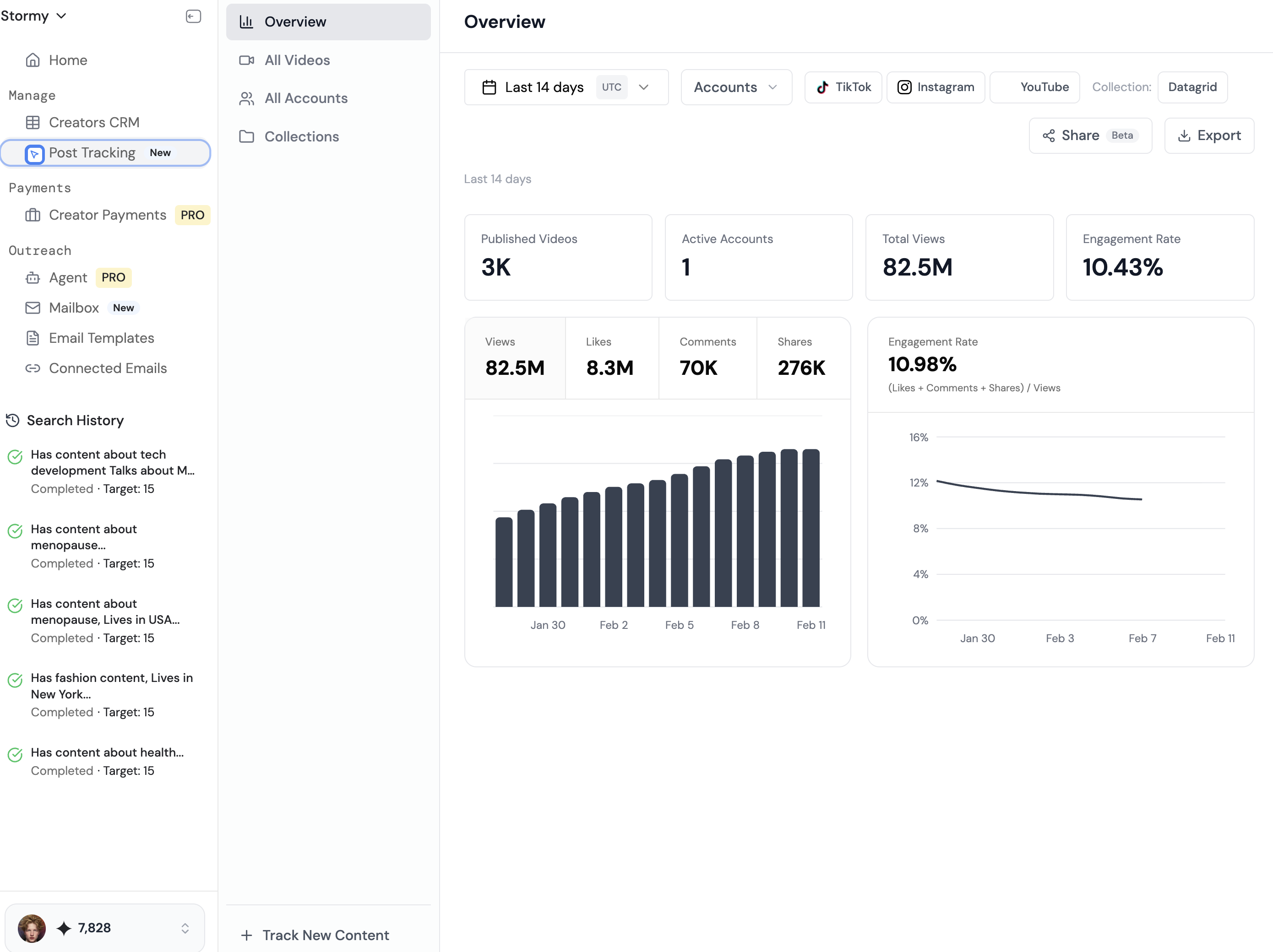
Data showed that only about 10% of LTD buyers became weekly active users. Instead of trying to please everyone, Deven focused on the specific needs of that 10%. They studied the competitors—such as Taplio and AuthorUp—and realized that while these legacy tools had many features, the core "content creation piece" was often lacking. By focusing on that 1% incremental improvement in writing quality, they made the tool indispensable for professional personal branding. To see how these posts perform in the wild, founders can use Stormy's post tracking to monitor the reach and engagement of content generated by their tool, providing real-world proof of value that can be used in future marketing materials.
The Support-to-Feature Pipeline
A critical operational tactic Deven employed was the "manual to automated" pipeline. He spent one to two hours every single day on Intercom, talking directly to his users. When a customer struggled with a specific content format, Deven would manually help them draft the content. He would then take that manual workflow and hand it to his development team to be built as a permanent feature. This ensured that the product roadmap was always dictated by real-world friction rather than founder intuition. This high-touch approach is a hallmark of successful Starter Story Build projects, where solving a simple, validated problem is the priority.
Managing this level of outreach manually is exhausting, which is why many scaling businesses now utilize Stormy's AI outreach to automate personalized follow-ups. Whether you are checking in on a churned user or asking for a testimonial from a happy LTD buyer, AI agents can handle the heavy lifting while you focus on high-level product strategy. This automation is what allows a small team of founders and a few freelancers to maintain such high SaaS profit margins while still offering top-tier customer support.
The Profitable Tech Stack: Rails, Supabase, and Stripe
To maintain a 60-70% profit margin at $20,000/month, the underlying tech stack must be both robust and cost-effective. Deven's stack is a masterclass in modern indie hacking efficiency:
- Backend & Frontend: Ruby on Rails, React, and Tailwind CSS.
- Database & Auth: Supabase for Postgres and authentication.
- Hosting: Railway for scalable application hosting.
- Payments: Stripe for managing recurring subscriptions.
- Landing Page: Framer for rapid design iterations.
By using Railway and Supabase, the team avoids the heavy overhead of traditional enterprise cloud providers. Most of their $4,000 - $5,000 monthly expenses go toward marketing, affiliates, and a small pool of freelancers for design and product tasks. This lean operation ensures that the majority of the $20K MRR remains as profit, providing a stable foundation for further scaling. For developers who want to skip the coding hurdles, the Starter Story Build program offers a path to using AI tools to build and ship these types of applications in record time.
Transitioning to Subscriptions and Upselling

The final stage of the transition is the move away from the "discount" mindset. Once the LTD period ended, Supergrow shifted entirely to a subscription-based model. They now have over 800 recurring customers paying monthly fees. The transition was aided by "up-selling" LTD users into premium add-ons or agency tiers that weren't included in the original deal. Because the LTD users already trusted the product, they were the easiest group to convert into higher-paying segments when their business needs outgrew the basic plan. This is a core strategy for achieving long-term SaaS recurring revenue growth.
To continue this growth, Deven focuses on driving 15,000+ monthly visits to his landing page through content and affiliates. By using Stormy's influencer analysis, founders can vet potential affiliate partners to ensure their audience quality is high and free from engagement fraud, ensuring that every dollar spent on marketing contributes to the bottom line. As Supergrow continues to scale, the combination of a validated market, a loyal community of early adopters, and a lean tech stack serves as a blueprint for any founder looking to turn a one-time launch into a recurring revenue engine.
Key Takeaways for Founders
- Validate First: Don't invent a new category. Find a market where people are already spending money and offer a 1% better experience.
- Use LTDs for Cash & Feedback: Treat the upfront revenue as a runway to perfect the product, and the users as your first "customer success" department.
- Automate the Grind: Use AI tools for outreach and post tracking to keep your team lean and your profit margins high.
- Obsess Over Support: Use tools like Intercom to turn manual problem-solving into your product roadmap.
- Evangelize Your Users: Your first 300 users are your best marketing department. Give them a reason to talk about you on Product Hunt and LinkedIn.
The journey from a struggling entrepreneur to a $230,000/year business owner didn't happen by accident for Deven. It happened by listening to the market, leveraging the right platforms at the right time, and choosing a tech stack that allowed for maximum profitability. Whether you're just starting out or looking to pivot your current project, the lesson is clear: focus on the user, solve a real problem, and don't be afraid of the lifetime deal—if you use it as a bridge, not a destination.