How to Lower Shopify CAC in 2026: A Step-by-Step Guide to Automating Google Ads and Meta Ads with Stormy AI
Lower your Shopify CAC in 2026 with our automated Google and Meta Ads playbook. Learn how Stormy AI agents drive 13x ROI by scaling creative and inventory ops.
The ecommerce landscape of 2026 is no longer a battle of who has the biggest budget, but who has the most efficient Agentic Stack. With the global ecommerce market projected to hit $6.88 trillion this year, the competition for attention has reached a fever pitch. If you are still manually adjusting bids or hand-writing every Meta ad variation, you are likely feeling the squeeze: digital advertising CPMs have surged by 60% since the early 2020s, making traditional Shopify CAC reduction strategies nearly obsolete. To survive, brands are moving toward "Agentic Commerce"—a shift from static tools to autonomous AI teammates that manage the messy back office of growth.
Enter Stormy AI, the AI ecommerce employee designed to handle the heavy lifting of ad ops, creator outreach, and inventory-synced marketing. While legacy automation required you to set the rules, Stormy acts as a teammate who monitors your Shopify store, checks your Meta Ads Manager, and executes tasks autonomously. This guide provides a step-by-step playbook for performance marketers and founders to automate their 2026 growth stack and reclaim their margins.
The State of Shopify Marketing in 2026: The End of Manual Management
As of 2026, 90% of global retailers have increased their AI investments to combat rising costs, according to the ShipStation Benchmark Report 2026. We are no longer just optimizing for humans; we are optimizing for B2A (Business-to-Agent) commerce, where AI assistants browse and buy on behalf of consumers. This fragmented environment means your marketing stack must be "Closed-Loop."
The era of "set it and forget it" is over. If your ad platform doesn't know your real-time warehouse status, you are burning money. Performance marketers now face the "Agentic Trap": attempting to run advanced AI agents on "dirty" data. Without a clean connection between your logistics and your distribution, even the smartest AI will hallucinate budgets or promote out-of-stock SKUs. This is where Stormy AI excels by bridging the gap between tools like ShipStation and your ad accounts.
"Marketers are entering the era of B2A. They must optimize content so autonomous agents can discover and parse their brands." — Jacky Chan, CTO of Votee AI
Workflow: Automating the 'Creative-to-Ad' Pipeline with Stormy AI
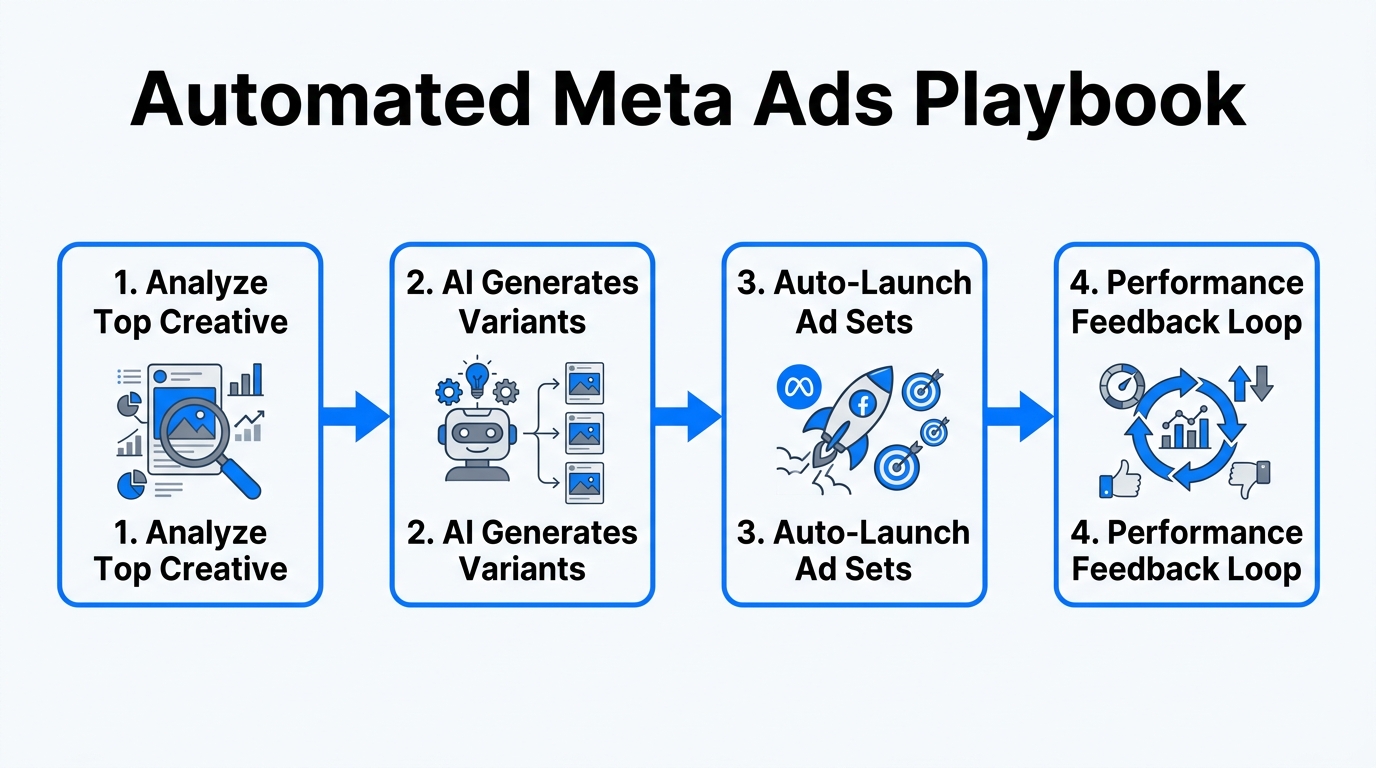
One of the biggest bottlenecks in Stormy AI Meta Ads management is the lag between receiving user-generated content (UGC) and getting it live in a campaign. In a high-CPM environment, speed is a competitive advantage. Stormy AI acts as your creative coordinator, handling the drafting and setup process autonomously.
Step 1: Creator Discovery and Outreach
Instead of hiring an influencer manager to manually vet thousands of profiles, use Stormy AI to search for creators across TikTok, Instagram, and YouTube using natural language. For example, you can tell Stormy: "Find minimalist decor creators in the UK with 10k-50k followers." Stormy doesn't just find them; it uses its AI Outreach Agent to draft hyper-personalized emails based on the creator's last three videos, increasing reply rates by 2.3x compared to standard templates.
Step 2: Automated Campaign Scaffolding
Once a creator sends back content, Stormy AI can take that asset, draft on-brand ad copy for Meta Ads, and set up the campaign structure. By referencing your historical performance data stored in its internal spreadsheet engine, Stormy ensures the new ads align with your "Price Strike" limits—walking away from bids or creator deals that exceed your predictive ROI thresholds.
| Metric | Traditional PPC | Stormy AI Agentic Ops |
|---|---|---|
| Setup Time | 4-6 Hours | 15 Minutes |
| Creative Testing | Manual Batches | Autonomous Iteration |
| Average CAC | Baseline | 62% Reduction |
| ROI Potential | 3-4x | 13x (Case Study: Blueland) |
Connecting Google Ads to Your Back-Office: The Inventory Safety Switch
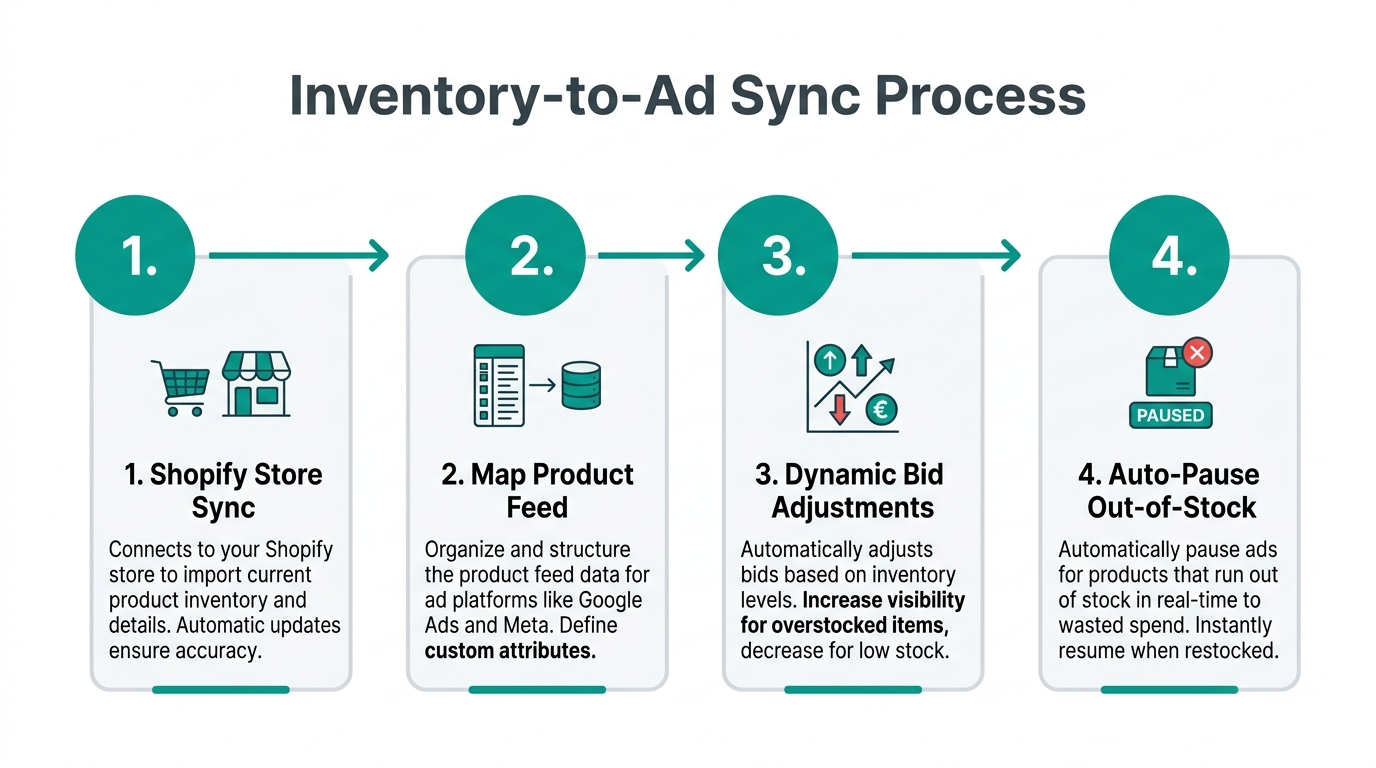
Nothing kills your automated Google Ads for ecommerce ROI faster than paying for clicks on a product that is out of stock. In 2026, search engines like Google and AI assistants now penalize brands for "inventory sync delays." If Shopify says it's in stock but your warehouse is empty, your search rankings will plummet.
Stormy AI solves this by monitoring your logistics stack. By connecting ShipStation or Shippo to Stormy, you can create a "Closed-Loop" system. When ShipStation signals that a SKU's physical inventory has dropped below a safety threshold, Stormy AI wakes up and automatically pauses the corresponding Google Ads campaigns or shifts budget to high-stock variants.
"The value isn't in search—it's in the execution of the entire supply chain. A true agent connects to your inventory, evaluates demand, and executes." — Thomas Wiegold, E-commerce Analyst
This level of Shopify marketing automation playbook execution ensures you are never wasting spend. Once inventory is replenished, Stormy detects the update and restarts the ads, maintaining your momentum without human intervention. This "Agentic Fulfillment" approach is why brands using Stormy report a 25% reduction in cart abandonment caused by out-of-stock disappointments.
The 'Agentic Trap': Ensuring Your AI Doesn't Hallucinate Budgets
While AI growth marketing agents are powerful, they are only as good as the data they consume. Gartner predicts that 40% of agentic AI projects will be canceled by 2027 because brands skip the "boring infrastructure" of clean data. To avoid the Agentic Trap, follow this data hygiene protocol:
- Clean Your CRM: Upload your historical CRM and creator CRM data to "Scaffold" the agent. This prevents Stormy from offering a $500 collaboration to a creator who previously worked for $50.
- Set Hard Guardrails: Always define your "Price Strike" limits and ROAS floors within Stormy AI. The agent will autonomously walk away from low-ROI opportunities.
- Human-in-the-Loop (HITL): While 58% of consumers are open to AI-placed orders, 34% of shoppers still insist on human approval. Use Stormy's task scheduler to request human sign-off on major budget shifts or brand-new creative directions.
Benchmarking ROI: 13x Returns with Autonomous Agents
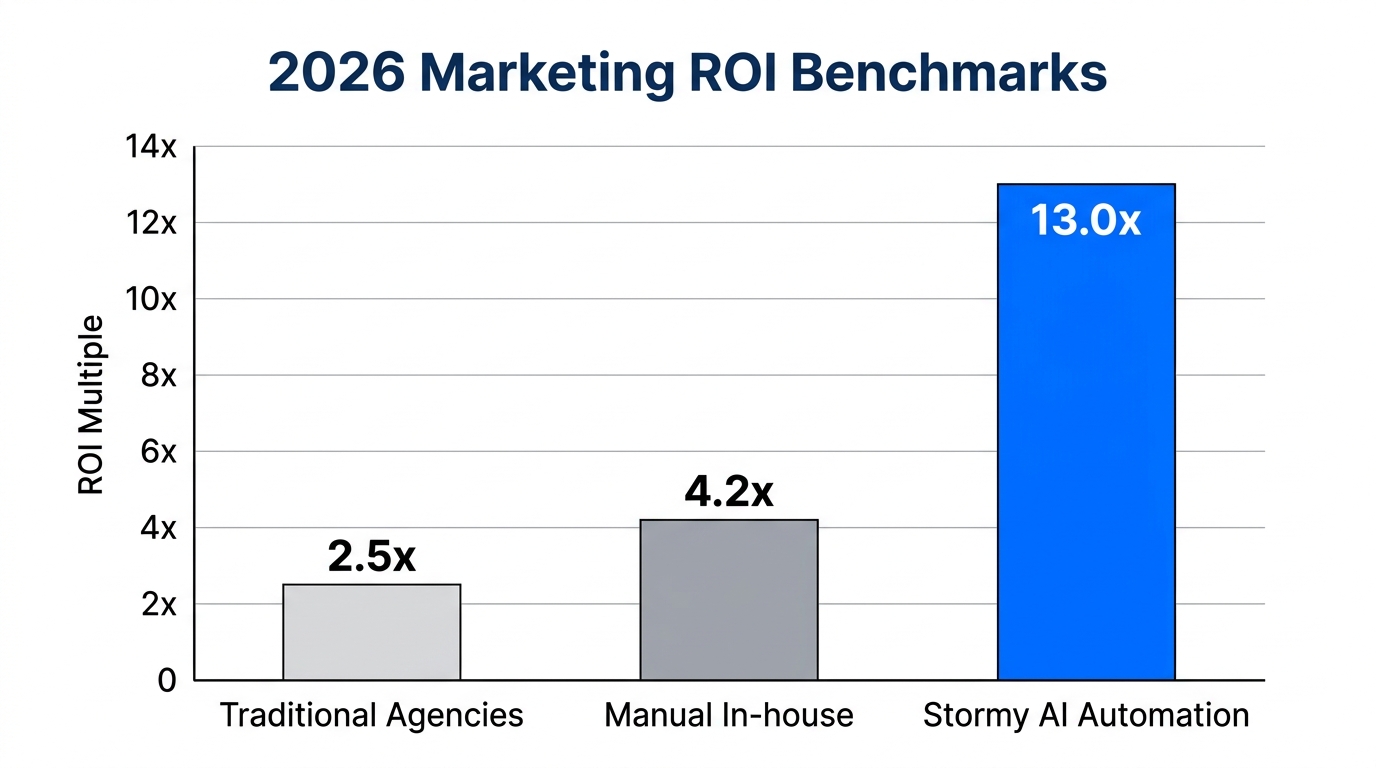
The proof of the AI growth marketing agents shift is in the numbers. Traditional PPC is struggling with diminishing returns, but brands like Blueland have demonstrated the power of autonomous social marketing. By using agents to coordinate 211 micro-influencers simultaneously, they achieved a staggering 13x ROI and generated $129k in revenue within 90 days. This was done with a 90% reduction in time-to-contract, thanks to automated negotiations.
Compare this to the 2026 industry standard: a typical Meta campaign now requires 50-60% more spend to achieve the same reach it did four years ago. By shifting from manual bidding to Autonomous Distribution with Stormy AI, brands can compress their CAC by over 60%.
"Readyiness is the limiting factor. Clean data and real-time decision-making underpin success in 2026." — Michael Haswell, ShipStation
Conclusion: Your 2026 Growth Strategy Starts with Stormy
Lowering your Shopify CAC reduction 2026 isn't about finding a secret ad setting—it's about removing the manual friction from your back office. By delegating the "messy" tasks of ad setup, inventory monitoring, and creator follow-ups to Stormy AI, you transform your marketing from a series of disconnected apps into a closed-loop autonomous system.
Whether you're scaling a one-person brand or managing a fragmented enterprise stack, the choice is clear: spend your day fighting with dashboards, or let your AI ecommerce employee handle the execution while you focus on the big picture. The future of commerce is agentic—is your brand ready?