In the high-stakes world of performance marketing, the difference between a scaling campaign and a failing one often comes down to the speed of iteration. Most growth teams are drowning in data but starving for insights, spending 80% of their time on manual tasks like bid adjustments and headline testing. However, a seismic shift is occurring. Organizations are moving away from simple generative tools toward autonomous AI agents that don't just suggest changes—they execute them. By deploying a sophisticated performance playbook, brands are now able to reduce cost per acquisition (CPA) by 30% while simultaneously increasing their creative output.
The New Era: Moving from Generative to Agentic AI
For the past two years, marketers have used AI primarily for content generation—writing a few headlines or generating an image. But 2025 marks the era of Agentic AI. According to market research, the global AI in marketing market is valued at billions and is projected to skyrocket by 2030. This growth is driven by a move toward autonomy.
An AI agent differs from a standard tool because it is goal-oriented rather than task-oriented. Instead of telling a tool to "write five ads," a growth marketer tells an agent to "maintain a CPA under $25 while spending $5,000 daily." The agent then perceives the goal, reasons through the real-time performance data on platforms like Meta Ads Manager, and takes independent actions—such as reallocating budget to top-performing sets or pausing creative that has high frequency but low conversion.
"AI agents are about to make the agile marketing debate irrelevant. They don't just plan; they ship in sprints, measure, and iterate constantly."
The Multi-Agent Node Framework: Research, Creative, and Optimization
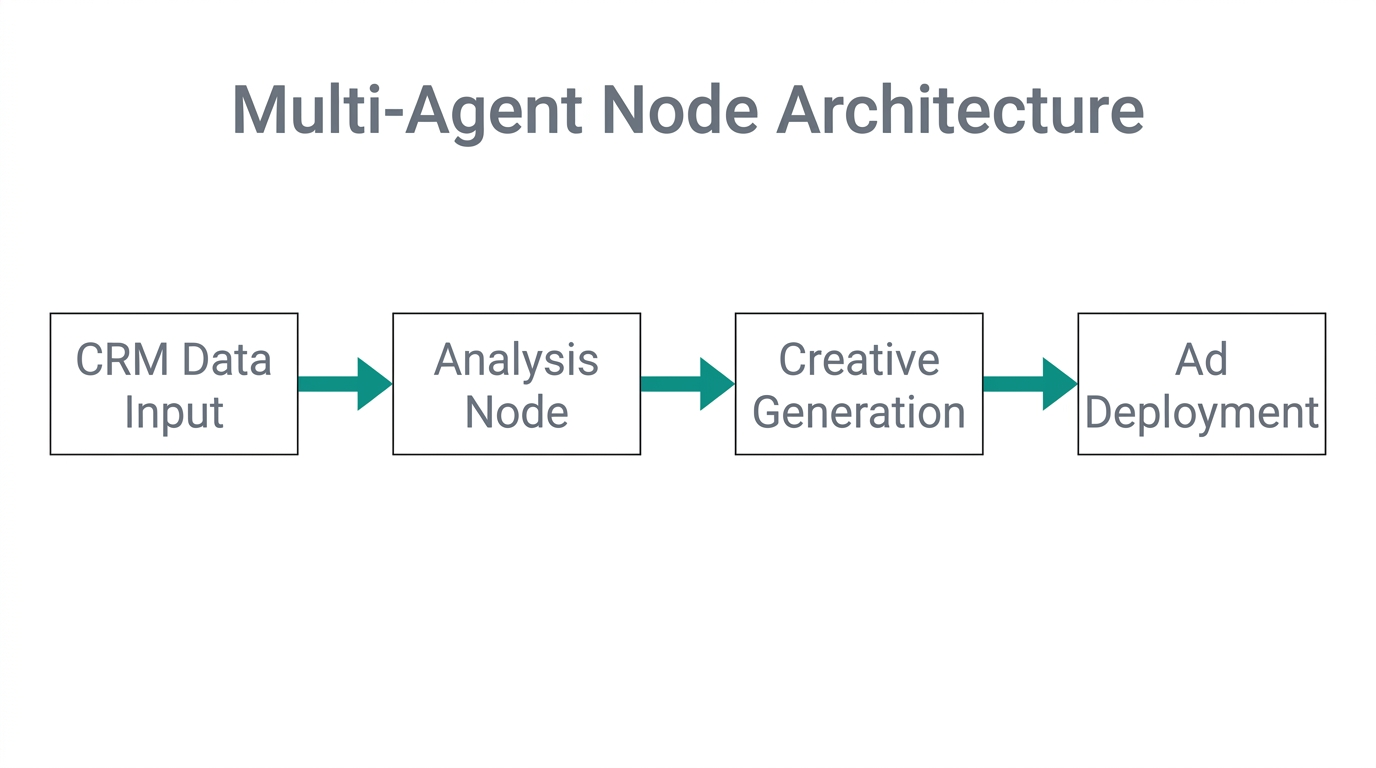
To achieve a 30% reduction in CPA, sophisticated teams are moving away from a single-tool approach to a Multi-Agent Node framework. This architecture allows different specialized agents to communicate and pass data back and forth, creating a self-improving loop. Tools like Relevance AI allow marketers to build these no-code chains where each node handles a specific part of the ad campaign optimization process.
- The Research Agent: This node scrapes competitor ads, analyzes search trends, and identifies high-intent "Search Themes." Experts at Performance Marketing World predict that keywords will eventually be deprecated in favor of these intent signals.
- The Creative Agent: Taking inputs from the Research Agent, this node generates hyper-personalized ad variants. Using platforms like Jasper AI, it can adjust CTA tone or background imagery based on user sentiment.
- The Optimization Agent: This node monitors the live performance. If the CTR drops, it triggers the Creative Agent to produce a new batch of variants. This creates programmatic advertising automation that never sleeps.
| Feature | Traditional Manual Marketing | Agentic AI Marketing |
|---|---|---|
| Optimization Frequency | Daily/Weekly | Real-time (Seconds) |
| Creative Testing | A/B Testing (Static) | Multivariate (Dynamic) |
| Data Usage | Historical Reporting | Predictive Intent Signals |
| CPA Management | Manual Bid Caps | Autonomous Budget Pacing |
Connecting Structured CRM Data for Precision Targeting
An AI agent is only as good as the data it consumes. To reduce cost per acquisition, you must feed your agent high-funnel and low-funnel signals. Connecting your CRM—whether it is HubSpot or Salesforce—is non-negotiable. Modern agents like HubSpot Breeze use CRM-driven data for lead scoring, allowing the agent to bid more aggressively for prospects who look like your highest lifetime value (LTV) customers.
By integrating first-party data, agents can move beyond broad demographics. They can target "lookalike" audiences based on actual purchase behavior rather than just interests. This shift to signal-based targeting is why marketing ROI with AI is seeing such a dramatic uptick. When the agent knows exactly which leads converted into high-paying clients, it can optimize the entire Google Ads funnel to find more of those specific users.
Case Study Analysis: How JB Impact and Meta Advantage+ Slashed CPA
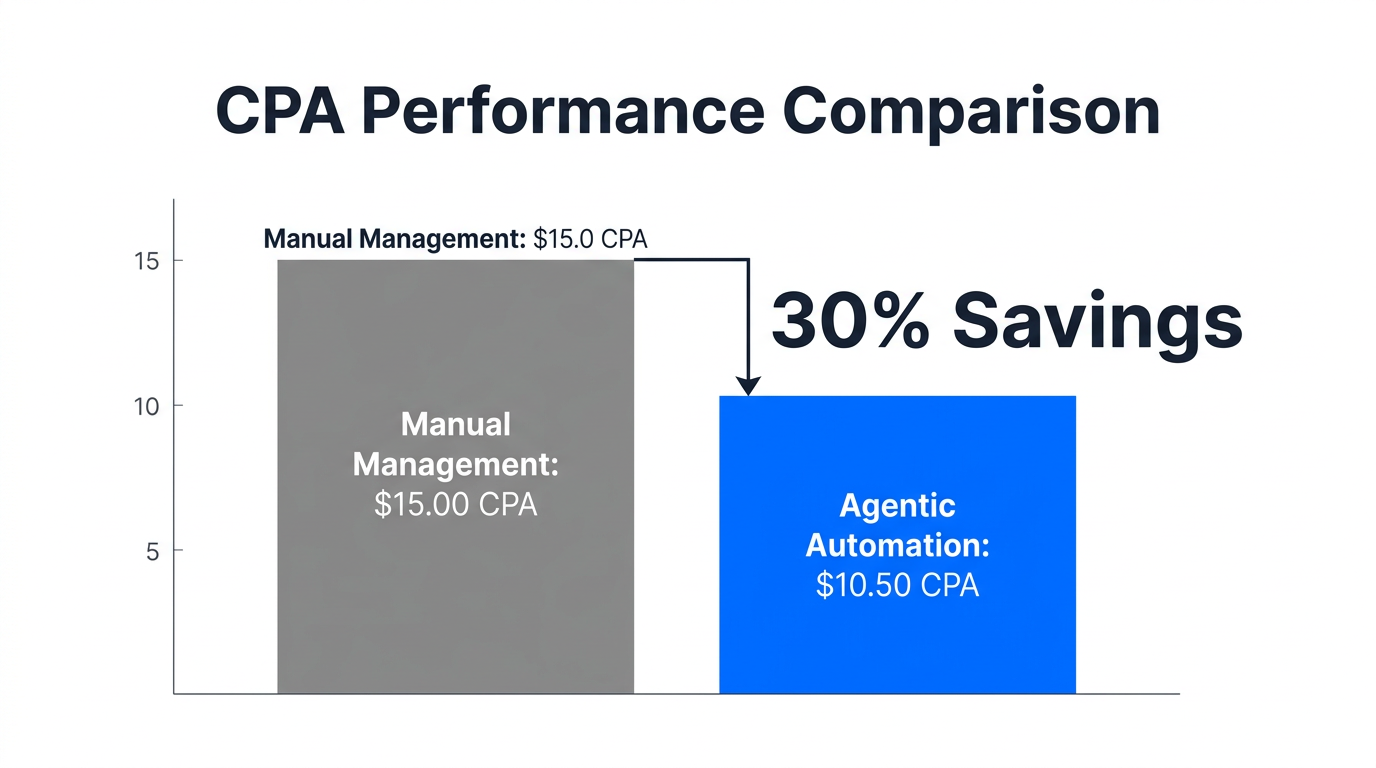
Real-world results validate the theory. For instance, the agency JB Impact implemented AI agents for Google Ads and achieved a 30% reduction in CPA alongside a staggering 41% increase in click-through rates (CTR). By automating the grunt work of bid management and creative testing, the team could focus on high-level strategy.
Similarly, Meta Advantage+, which functions as an autonomous shopping agent, has reached a massive annual run rate. Users of this agent-driven tool see an average 17% improvement in cost-per-acquisition. These results highlight that ad campaign optimization is no longer about human intuition—it's about the speed of an agent's response to market volatility. Platforms like Stormy AI can further assist these efforts by sourcing high-quality UGC creators whose content can be fed into the AI agent's creative cycle, ensuring a constant stream of fresh, high-performing assets.
"52% of executives have already deployed AI agents. Early adopters are now dedicating 50% of their future AI budgets specifically to agentic capabilities." — Google Cloud Study
The Step-by-Step Agentic Playbook for 30% Lower CPA
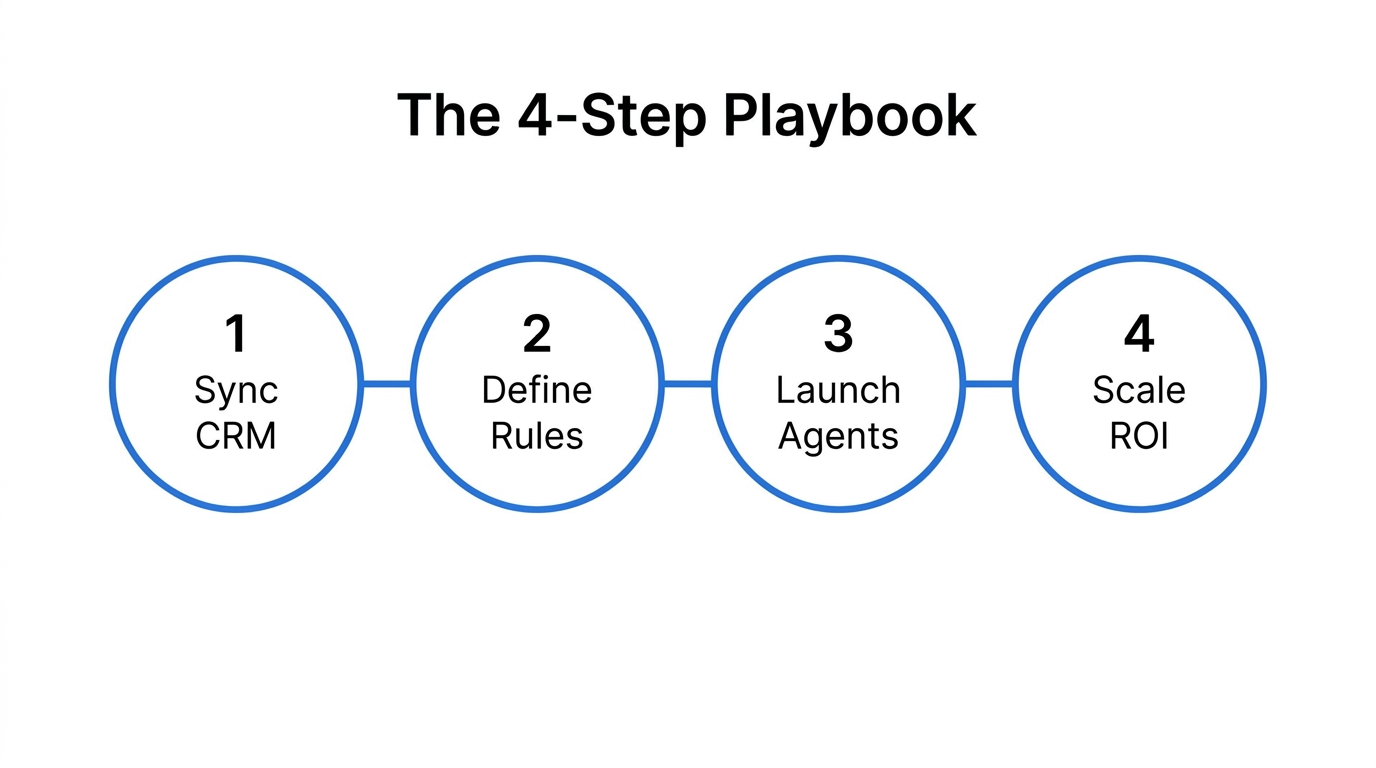
Implementing an AI agent isn't a "set and forget" task. It requires a structured approach to ensure the programmatic advertising automation aligns with your business goals.
Step 1: Define Outcomes, Not Tasks
The most common mistake is treating an agent like a junior copywriter. Instead of asking for headlines, set a hard performance goal. Command your agent to: "Optimize my TikTok Ads to maintain a <$15 CPA while maintaining a frequency below 3.0." This gives the agent the parameters it needs to reason through data and make autonomous decisions.
Step 2: Connect Your Data Ecosystem
Integrate your CRM, your website analytics (like Google Analytics), and your ad accounts. Agents need clean, structured data to avoid "data creep." If you are running ASO or app install campaigns, ensure tools like AppsFlyer are feeding conversion data back to the agent in real-time.
Step 3: Deploy the Multi-Agent Node
Set up a chain where your Research Agent identifies new trends and your Creative Agent builds variants. By connecting your performance tools with commerce platforms like Shopify, you ensure the agent has full visibility into the customer journey from click to sale.
Step 4: Establish the "Human-in-the-Loop" Framework
While the agent handles the "grunt work" of bidding and variants, humans must provide strategy elevation. This includes reviewing brand ethics, emotional resonance, and high-level creative direction. Every month, audit the agent’s logic to ensure it hasn't developed biases or drifted from the core brand voice.
Common Mistakes to Avoid in Agentic Automation
Despite the massive potential for marketing ROI with AI, many teams fail due to poor implementation. The first pitfall is poor data quality. If you feed an agent biased or outdated CRM data, it will produce flawed targeting. Second is the "set and forget" mentality. Without a monitoring framework, agents can cause budget spikes if they encounter technical glitches in the ad platform's API.
Finally, avoid over-automation. Launching 1,000 ad variants at once without a clear A/B testing structure makes it impossible for humans to learn why a certain ad worked. Use the agent to scale what works, not to create chaos. By combining the discovery power of tools like Stormy AI with the execution power of autonomous agents, growth marketers can finally stop chasing data and start driving massive ROI.
Conclusion: The Future of Performance
Lowering your CPA by 30% is no longer a pipe dream; it is the natural result of moving from manual workflows to autonomous AI agents for ads. By implementing the Multi-Agent Node framework, connecting structured CRM data, and maintaining a strong human-in-the-loop oversight, you can out-pace competitors who are still manually adjusting bids. As we head toward 2026, the brands that win will be those that allow AI to handle the execution while humans handle the vision. Start building your agentic stack today to secure your place in the next generation of growth marketing.