In the hyper-competitive landscape of 2026, the Apple App Store has matured into a 2-million-app ecosystem where the barrier to entry isn't just code—it's discoverability. For startups and independent founders, the dream of ranking #1 for a generic term like "Fitness" or "Meditation" is effectively dead. Industry giants with multi-million dollar budgets have locked down the high-volume head terms, leaving smaller players to fight for scraps. However, a massive opportunity remains hidden in plain sight. With 65% to 70% of all downloads still originating from organic search queries, the path to success lies in mastering long-tail iOS App Store keywords. This guide explores how to bypass branded dominance by targeting high-intent niche terms that the giants are too big to notice.
The Branded Dominance Trend: Why Generic Keywords are a Trap
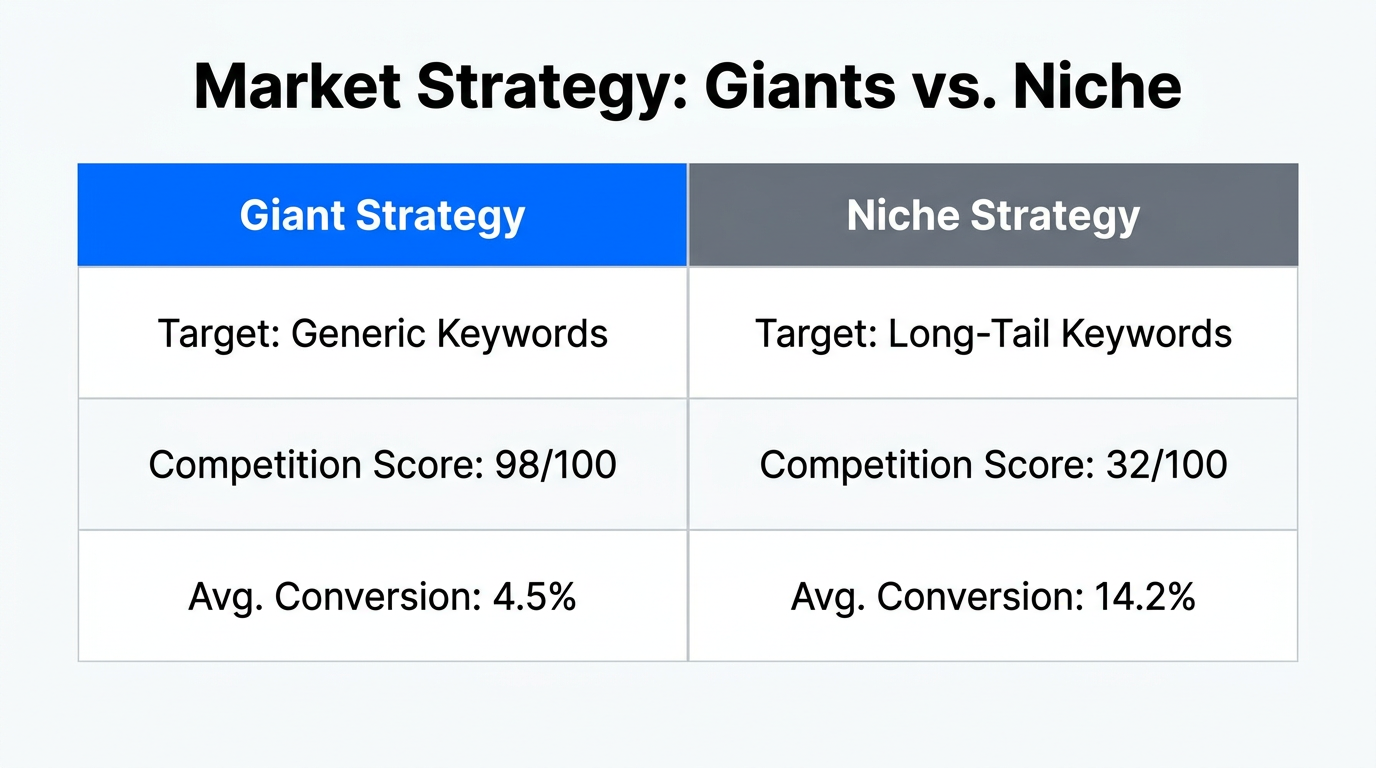
As we move through 2026, the data from Statista is clear: the top 20 keywords in the US App Store are almost exclusively branded. Terms like Instagram, Snapchat, TikTok, and Threads dominate the search volume charts. For a new app, trying to compete for "Social Media" is a recipe for invisibility. The algorithm favors established players with massive historical data and high ranking velocity.
By shifting focus toward niche app marketing 2026 strategies, developers can tap into "Semantic Clusters." Apple’s algorithm has evolved; it no longer just tracks exact matches. It groups keywords into thematic buckets. If your app is the authority on "mindfulness for high-stress executives," you will naturally begin to rank for related high-volume terms even if they aren't in your primary metadata, provided your engagement metrics are stellar. Experts at ASOMobile note that focusing on these high-intent clusters is the only way to build initial momentum in 2026.
"The era of 'keyword stuffing' is over. In 2026, Apple's AI understands intent better than ever, making long-tail specificity the ultimate competitive advantage for indie devs."
The 32% Growth Rule: The Power of 4-Word Phrases
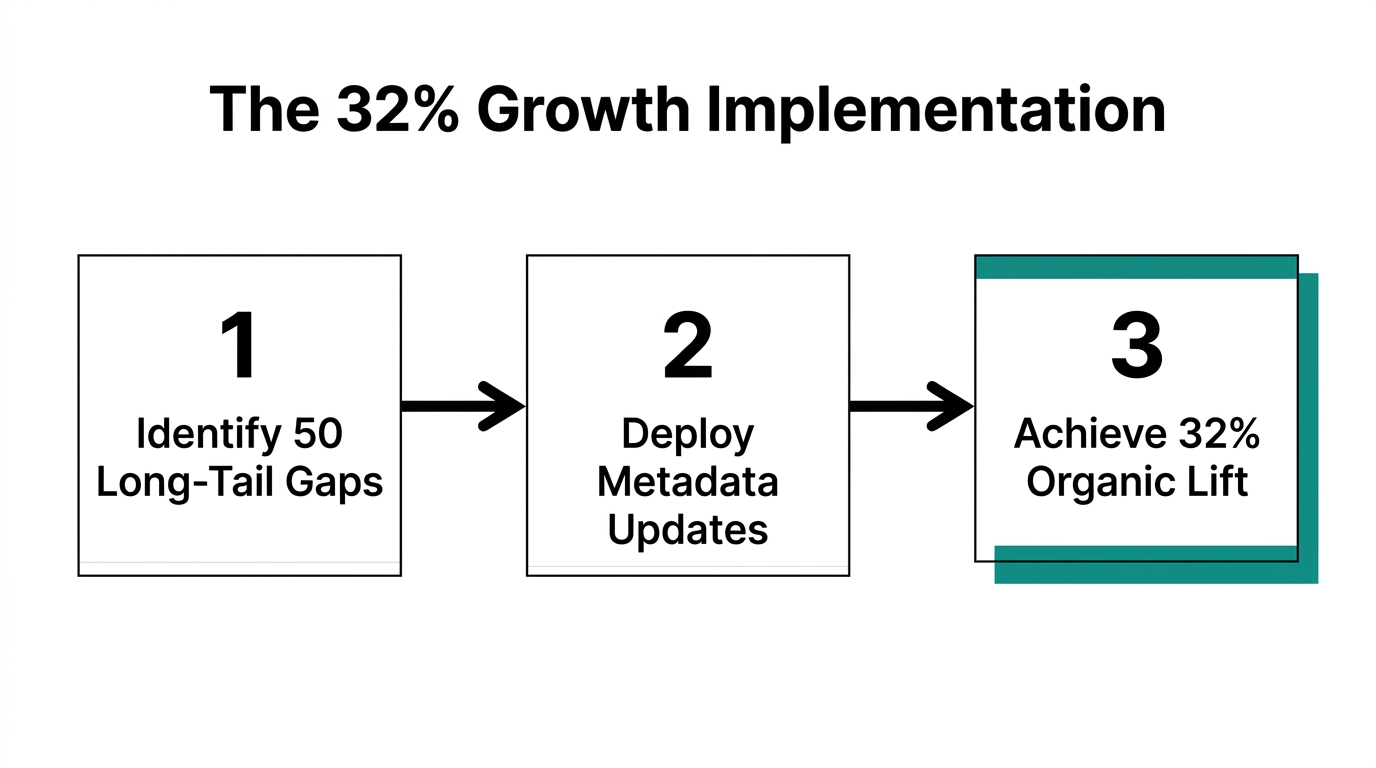
Recent case studies have identified what ASO experts call the "32% Growth Rule." Apps that pivot their metadata to focus on 3-4 word long-tail phrases—such as "daily gratitude journal with prompts" instead of just "journal"—see an average 32% increase in organic installs within the first 60 days. This works because it perfectly aligns with high user intent. A user searching for a specific solution is far more likely to download the first relevant result they see.
To implement this, you must understand the new Search Ads Popularity (SAP) thresholds. As of late 2025 and into 2026, Apple has re-indexed many keywords. Terms that used to show a moderate popularity score of 20-30 are now often hidden or displayed as a "5" unless they meet a traffic threshold of SAP 35 or higher. This makes ASO.dev an essential tool for monitoring these real-time shifts in popularity. Targeting a long-tail keyword with an SAP of 40 is significantly more valuable than fighting for a head term with an SAP of 90 where you’ll never reach the top 10 results.
| Keyword Type | Avg. Conversion Rate | Competition Level | Recommended Strategy |
|---|---|---|---|
| Head Term (e.g., "Yoga") | 2-5% | Extreme | Avoid for new apps |
| Mid-Tail (e.g., "Yoga for Men") | 8-12% | High | Use in Subtitle |
| Long-Tail (e.g., "Yoga for lower back pain") | 25-35% | Moderate/Low | Primary Title Focus |
Leveraging LLMs for Competitor Gap Analysis
One of the most powerful app store competitor analysis tactics in 2026 involves using Large Language Models (LLMs) like Claude or ChatGPT to identify what market leaders like Calm or TikTok are ignoring. By scraping thousands of competitor reviews and running them through an AI sentiment analysis, you can find "pain point keywords." If users of a top fitness app are constantly complaining about a lack of "offline interval timers," that specific phrase becomes your golden long-tail keyword.
Platforms like App Guardians emphasize that human researchers often miss these linguistic nuances. AI can group these sentiments into actionable metadata suggestions. This is where Stormy AI can also play a role; by analyzing the language used by UGC creators and their commenters in your niche, you can discover the exact phrasing your target audience uses before those terms even hit the mainstream ASO tools.
"The best keywords aren't found in a database; they're found in the frustrations of your competitor's users."
Transcreation: Capturing Global Niche Markets
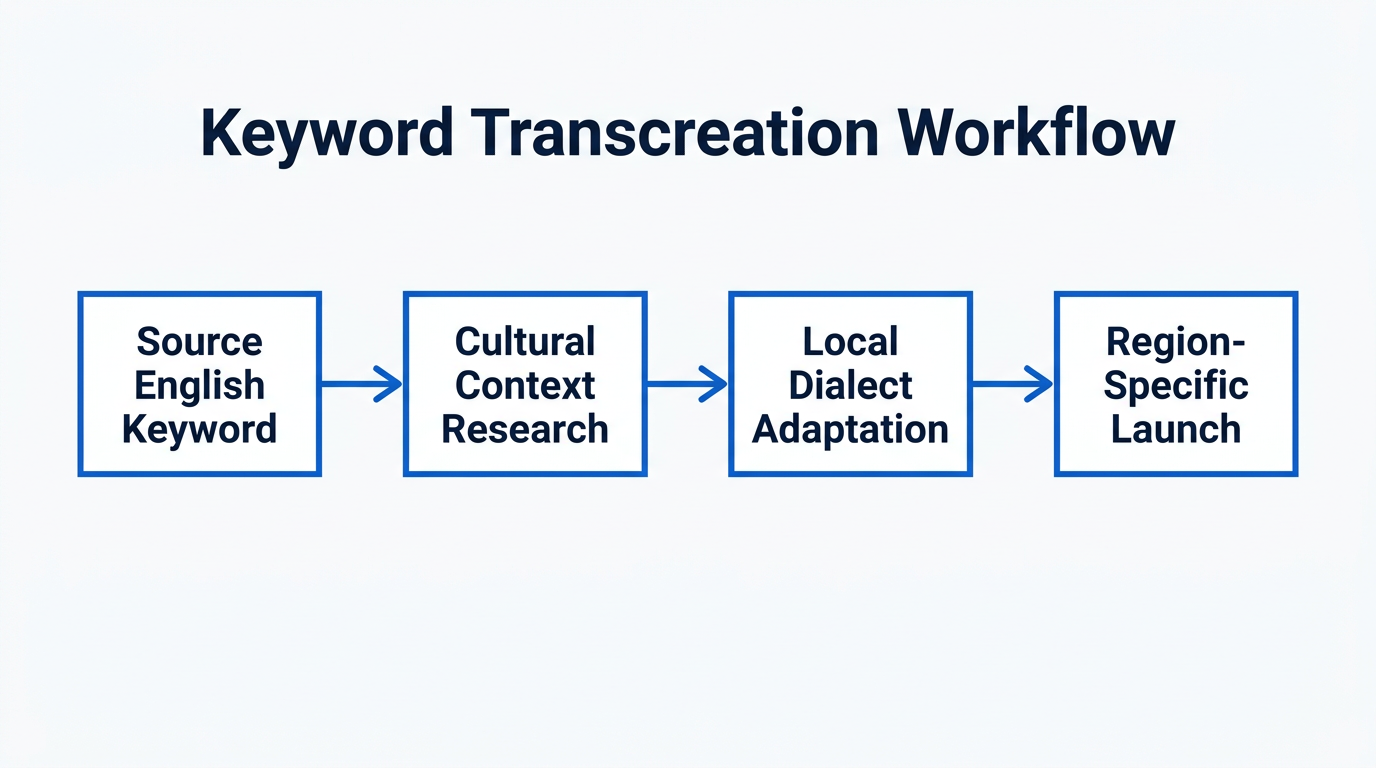
To scale a niche app without a massive budget, you must look beyond your primary territory. However, simple translation is a rookie mistake. In 2026, we use transcreation. This means adapting your long-tail strategy to the cultural and linguistic search habits of each region. For example, while "soccer drills for kids" might be a high-intent term in the US, the same intent in the UK is captured by "junior football training drills."
Using long-tail ASO strategy across different locales allows you to become a "big fish in a small pond" in multiple markets simultaneously. According to research shared on Dev.to, localized metadata that utilizes transcreated long-tail terms can increase international downloads by up to 40% with zero additional ad spend.
Maintaining Ranking Velocity with 4.5+ Star Signals
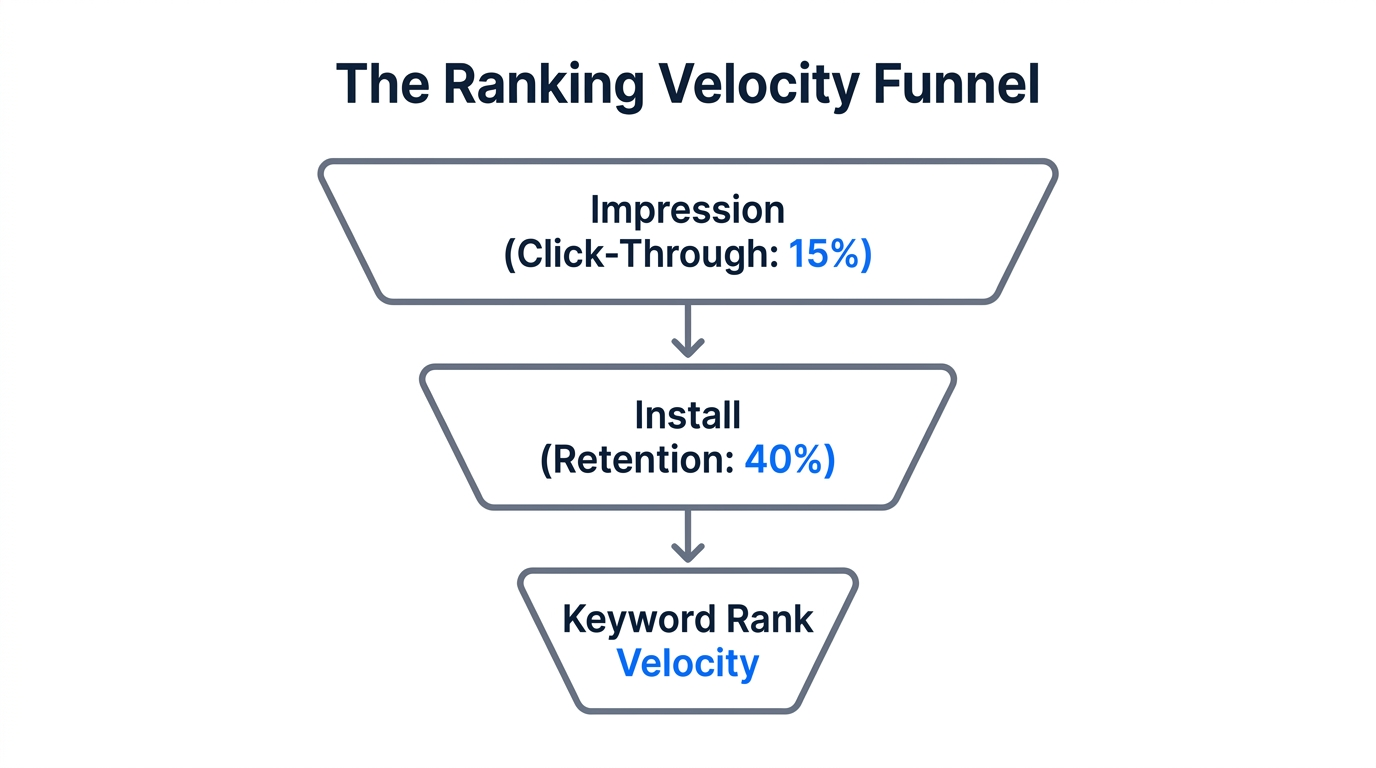
In 2026, discoverability is tied directly to performance. Apple’s algorithm prioritizes "Ranking Velocity"—the speed at which you acquire and retain users. A critical factor in this is your average rating. Apps with 4.5+ stars see a dramatically higher conversion rate from keyword searches. If your app has a 3.8-star rating, even the best app store discoverability strategy will fail because the algorithm will suppress your rankings in favor of better-rated competitors.
Furthermore, a major 2026 trend is Screenshot Text Indexing. Apple is increasingly indexing the text within your creative assets. This means your screenshots are no longer just for conversion; they are part of your SEO. If your screenshot says "Best Budget Meal Planner," the algorithm treats that as a ranking signal. By combining this with Custom Product Pages (CPPs), you can show specific screenshots to users who searched for specific long-tail terms, creating a 1:1 match between search intent and visual proof.
Essential Tools for Niche App Discovery
To execute this playbook, you need a modern stack that goes beyond basic tracking. In 2026, the best developers are pairing ASO intelligence with Stormy AI for creator-led growth and the following tools for technical optimization:
| Tool | Primary Use Case | Direct Link |
|---|---|---|
| AppTweak | Keyword intelligence & ASA tracking | Visit AppTweak |
| MobileAction | Competitor CPP analysis | Visit MobileAction |
| Appfigures | Review sentiment & index tracking | Visit Appfigures |
| SplitMetrics | A/B testing screenshot indexing | Visit SplitMetrics |
The 2026 Niche Playbook: Summary
Competing with giants in the iOS App Store is not about outspending them—it's about out-thinking them. By moving away from generic, high-volume terms and embracing a long-tail ASO strategy, you can capture high-intent users who are ready to convert. Remember the core pillars for 2026:
- Focus on Intent: Target 3-4 word phrases with an SAP of 35+.
- Utilize AI: Use LLMs to find gaps in competitor reviews and creator content.
- Transcreate: Adapt your long-tail keywords to local cultures, not just languages.
- Optimize for Velocity: Maintain 4.5+ star ratings and use text-indexed screenshots to reinforce your keywords.
ASO is no longer a "set-it-and-forget-it" task. It is a cycle that requires updating every 4-6 weeks to stay ahead of seasonal trends and algorithmic shifts. By staying agile and focusing on the niche, your app can thrive in the shadows of the giants.