In 2026, the traditional narrative of the 'grind' is being rewritten. While conventional wisdom screams about the necessity of hyper-focus, a new breed of entrepreneurs is finding massive success by embracing 'shiny object syndrome' as a tactical advantage. These founders aren't just chasing distractions; they are systematically identifying, validating, and scaling high-margin local service businesses with clinical precision. By leveraging a modern go-to-market strategy 2026, they are generating upwards of $8,000 per day in free cash flow without ever signing a lease until the demand is proven.
The 'Math-as-a-Service' (MaaS) Framework: Building Outdoor Casinos
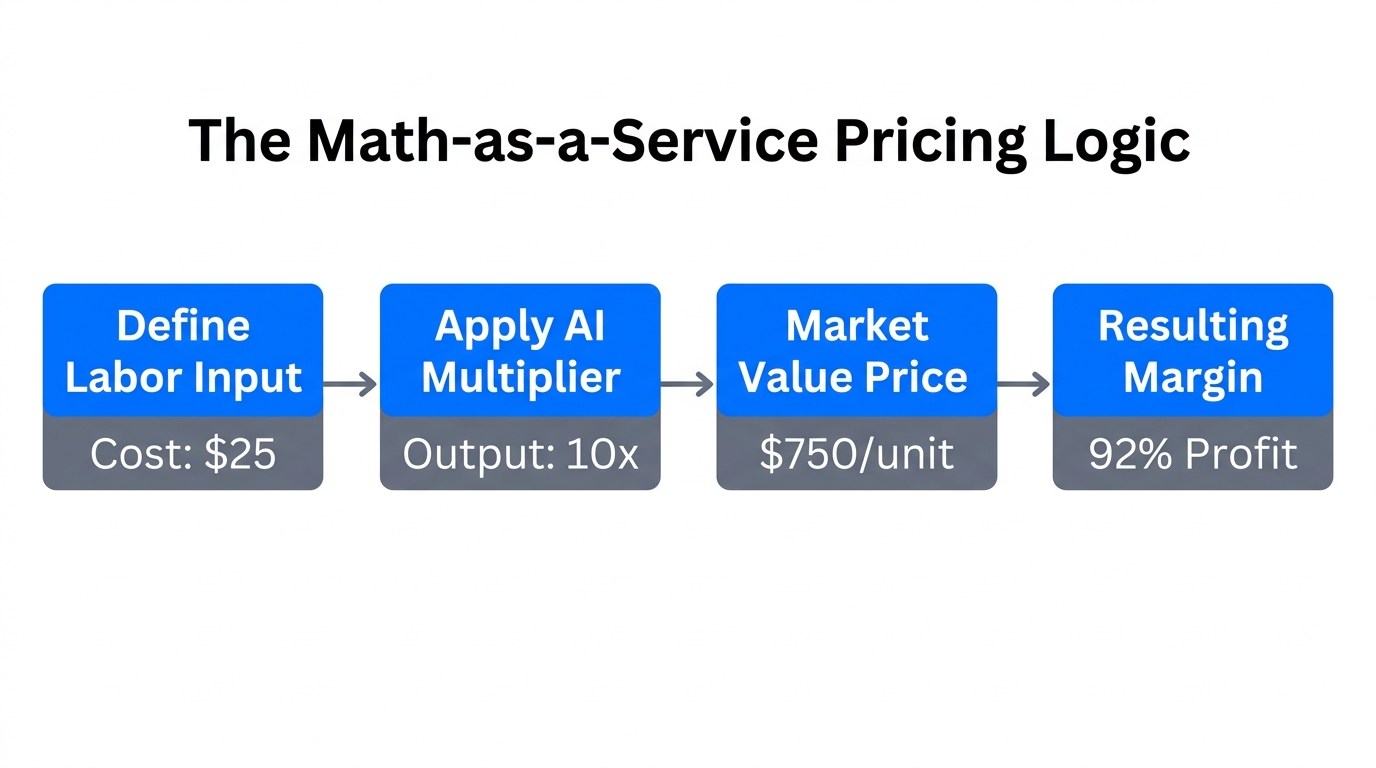
One of the most lucrative ways to identify a high-margin service gap is to look for 'Math-as-a-Service' models. This involves identifying businesses where the 'house' has a statistical edge disguised as a high-skill challenge. A prime example is the floating hole-in-one golf challenge. Imagine a floating putting green situated 110 yards off a coast or in a lake near a high-traffic area. The business pays out $10,000 for a hole-in-one, but the statistical probability of an amateur hitting that shot is 1 in 25,000.
By charging $40 for 25 balls, the math favors the operator heavily. In markets like New Zealand, these single-stand businesses net between $300,000 and $500,000 in annual profit with minimal overhead—essentially one person with an iPad and a sensor in the hole. The key to this local business market research is piggybacking on existing audiences. Instead of building from scratch, these founders find existing golf courses or tourist traps and offer the '19th Hole' as a plug-and-play service, taking a 30% revenue share for zero additional work from the host.
"The business is math. These are games where the house just said: 'Cool, we'll take a statistical edge and you get to play and have fun.'"
The $75 Facebook Ad Test: Validating Physical Spaces Without a Lease
 51:36
51:36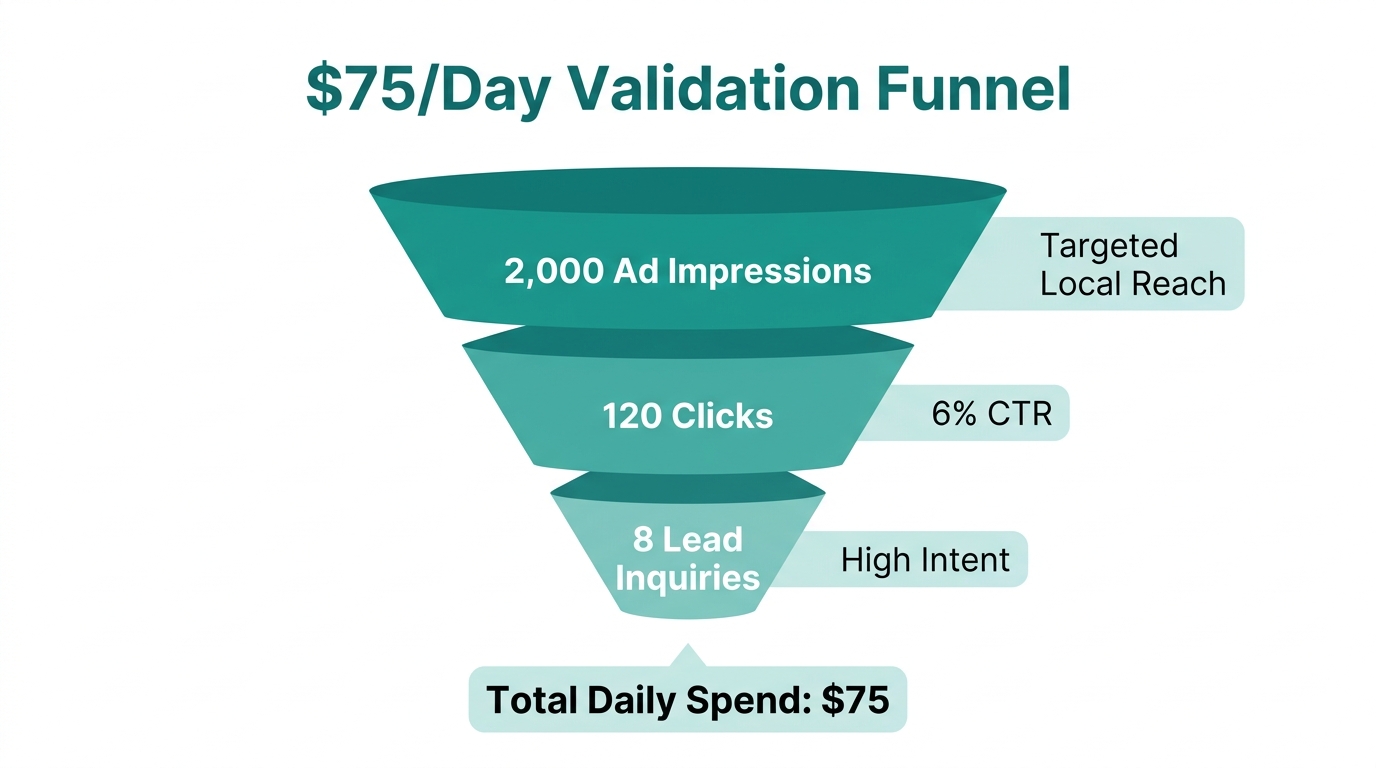
One of the biggest risks in service business scaling is capital expenditure on real estate. In 2026, the smartest founders use Meta Ads Manager to validate demand before they ever talk to a landlord. Consider the 'Secret Pickleball' model: a private, 24/7 key-card access indoor court in an industrial warehouse.
To validate this, you don't need a building; you need a $75/day ad budget. By running three different Facebook Ads variants targeting a 6-mile radius, you can test if the local population is willing to pay. In one successful test case, a founder used Facebook instant forms and a deep Typeform survey to capture name, email, and skill level. If you can acquire a lead for $12 when the Lifetime Value (LTV) of a $149/month membership is over $1,000, the business is a go.
| Metric | Target Value | Validation Status |
|---|---|---|
| Ad Spend per Day | $75.00 | Validated |
| Cost per Acquisition (CPA) | $12.00 | Highly Profitable |
| Monthly Membership Fee | $149.00 | Market Standard |
| Net Margin | 80-90% | A-Class Service |
Scraping for Gaps: Identifying B2B Service Bottlenecks
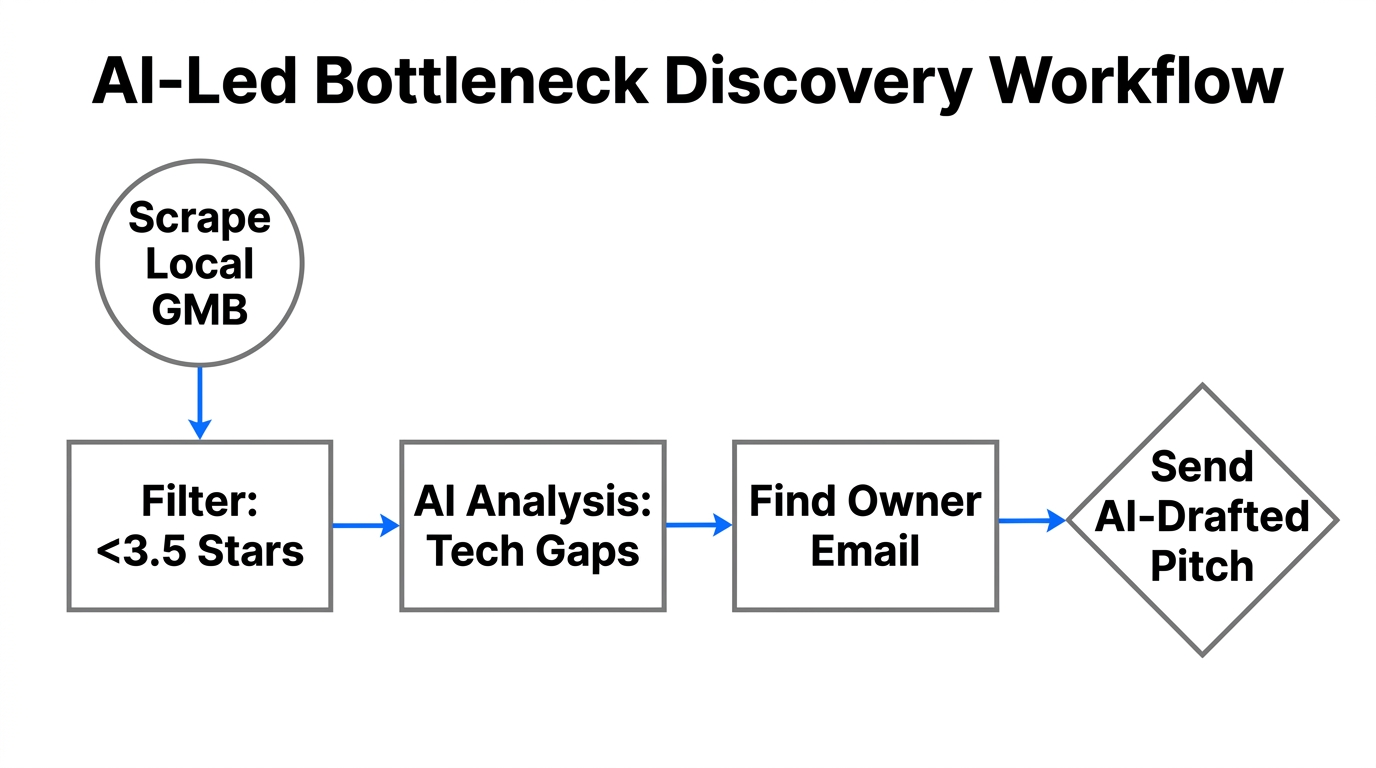
Sometimes the best high-margin gap isn't a new consumer product, but a B2B bottleneck. Take the tree-trimming industry: every tree-trimming company needs to get rid of stumps, but many don't want to own or transport the heavy grinders required. This creates a massive gap for a dedicated B2B stump-grinding service.
Using entrepreneurship growth hacks, you can scrape every tree-trimming business in a city like Houston (approximately 1,000 entries) and use a VA or an AI voice agent to call each one. The script is simple: 'Do you grind your own stumps or would you outsource it for $7 per inch?' When half of the businesses that answer say they would gladly outsource, you have a proven market. This is where tools like Stormy AI can be incredibly useful; while Stormy is primarily for finding creators, its AI-powered discovery and outreach features reflect the same logic: finding the right people in a specific niche and automating the initial touchpoint to find the 'yes' before you invest.
"The secret to winning is weak competition. Find a business with a fax machine and compete against them by simply answering the phone."
The 'Shameless Cloner' Belief: Why Innovation is a Trap
66:00A core belief for 2026's most successful service entrepreneurs is the 'Shameless Cloner' philosophy. To become a billionaire, you must innovate. But to become a millionaire, you must copy-paste. Many founders fail because they try to put a 'unique twist' on a model that already works. If a 'banana stand' on a tourist island is clearing $7M a year, don't try to add 15 different fruit options. Copy the chocolate-covered banana exactly.
The reason for this is risk minimization. Every 'twist' is a new variable that can cause the business to fail. By cloning a successful model verbatim—whether it's a 3PL, a gutter cleaning business, or an iPhone repair shop—you inherit the proven mechanics. Over time, you will naturally discover the necessary tweaks as you hit operational bottlenecks, but starting with innovation is often a recipe for disaster. Use Shopify to launch the storefront and keep it simple. If it's working for someone else in a different city, it will likely work for you if you follow the blueprint exactly.
Operating with Parkinson’s Law: Increasing Your Stress Capacity
60:53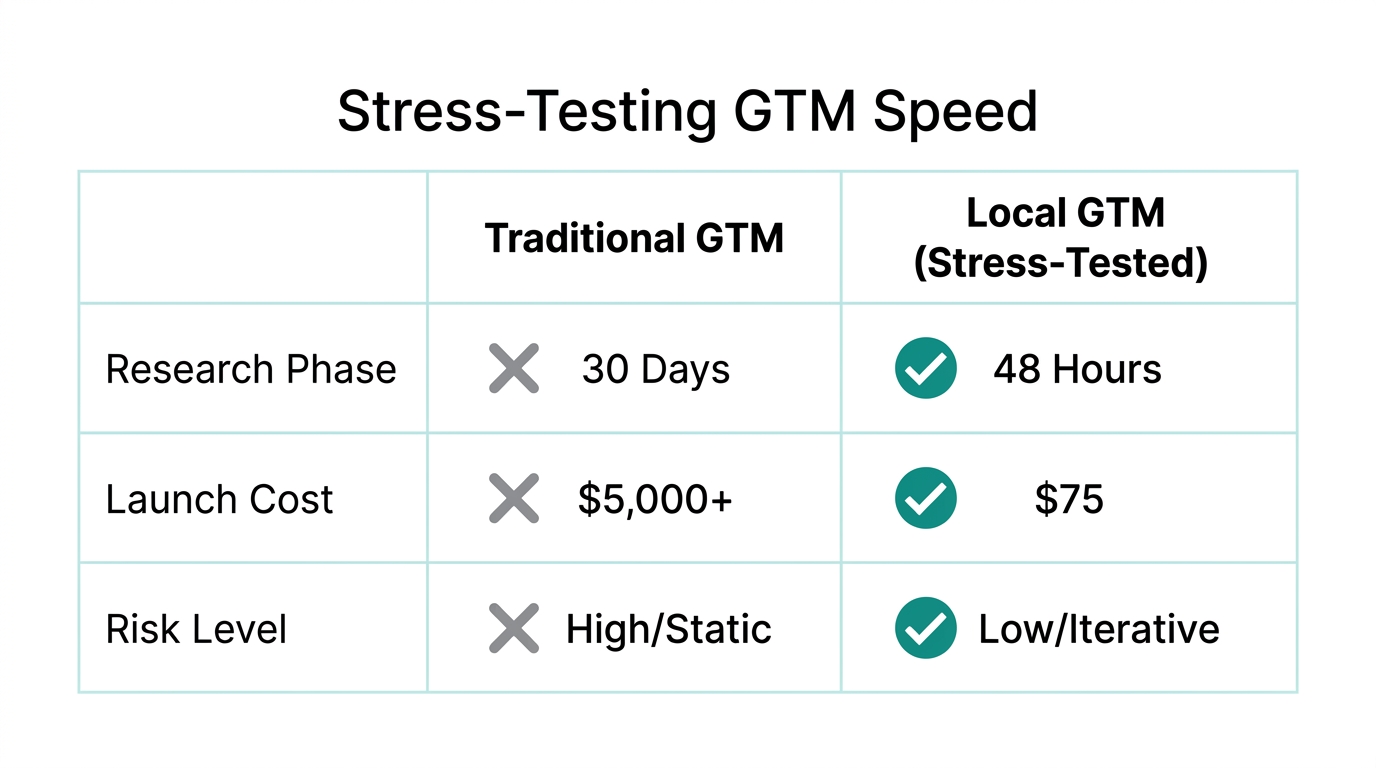
To execute multiple 'shiny object' businesses simultaneously, you must understand Parkinson’s Law: work expands to fill the time available for its completion. Most entrepreneurs operate at 30% of their actual potential because they fear stress. The 'Restaurant Hostess Analogy' explains this perfectly: a hostess at a slammed Manhattan restaurant considers a table of 15 to be a 'slow Tuesday,' while a hostess in a quiet town diner might have a panic attack over the same request.
By intentionally taking on 'too much,' you increase your baseline for what is 'normal.' This service business scaling technique allows you to manage four or five revenue streams without burning out, simply because your capacity for complexity has evolved. In 2026, the winners are those who use automation tools—like the AI agents found on Stormy AI to handle creator outreach or Zapier to connect their CRM—to offload the 'thinking' so they can focus on the 'doing.'
Your 2026 Local GTM Playbook
- Identify a MaaS Opportunity: Look for businesses with a statistical edge or B2B bottlenecks (like stump grinding or pet cremation).
- Run the $75 Test: Use Meta Ads Manager and an instant form to collect leads in a 6-mile radius.
- Analyze the Signal: If the CPA is under $15 and the LTV is over $500, move to step 4.
- Be a Shameless Cloner: Do not innovate. Find the most successful version of this business in another state and copy their pricing, their site, and their service model.
- Scale the Stress: Don't wait for the first business to be perfect. Once it is operational, find the next 'shiny object' and repeat.
The path to $8,000 per day isn't found in a textbook; it's found in the 'nooks and crannies' of the local economy. Whether it's reselling goods on Facebook Marketplace or setting up an automated pickleball court, the tools are cheaper and more accessible than ever. Stop overthinking the 'unique value proposition' and start validating with real dollars. For those looking to use influencer marketing to boost these local brands, platforms like Stormy AI provide the exact discovery tools needed to find local creators who can make your 'visually viral' business go mainstream.