In the current digital economy, distribution is the ultimate competitive advantage. While many entrepreneurs spend months locked in a basement building features, the most successful B2B SaaS founders are doing the opposite: they are building audiences before they ever write a line of code. Take the story of Lara Costa, co-founder of Cleo. By leveraging a high-impact personal branding strategy, her team generated $30,000 in Monthly Recurring Revenue (MRR) within just four days of launching. This wasn't luck; it was the result of a calculated LinkedIn marketing for founders approach that prioritizes trust over transactions. If you want to achieve founder-led growth, you need a repeatable system that turns your expertise into a distribution moat.
The Rise of Founder-Led Growth and the Distribution Moat
For years, the standard playbook for B2B content marketing involved heavy spending on Google Ads and hope-based SEO. However, in 2026, the cost of customer acquisition on traditional channels has skyrocketed. Modern buyers no longer trust faceless corporations; they trust individuals. This shift has made LinkedIn marketing for founders the most effective way to secure your first thousand customers. By sharing your journey and insights, you create a "distribution moat" that competitors cannot simply buy their way into.
Platforms like Stormy AI, an AI-powered platform for creator discovery, have observed that the most successful marketing campaigns now blend organic creator content with high-intent social strategies. Whether you are looking for UGC creators for your mobile app or trying to establish yourself as a thought leader, the principle remains the same: attention is the new currency. If you can crack distribution, you give yourself the opportunity to win in any market, no matter how crowded.
The 4-3-2-1 Framework: A Playbook for LinkedIn Mastery

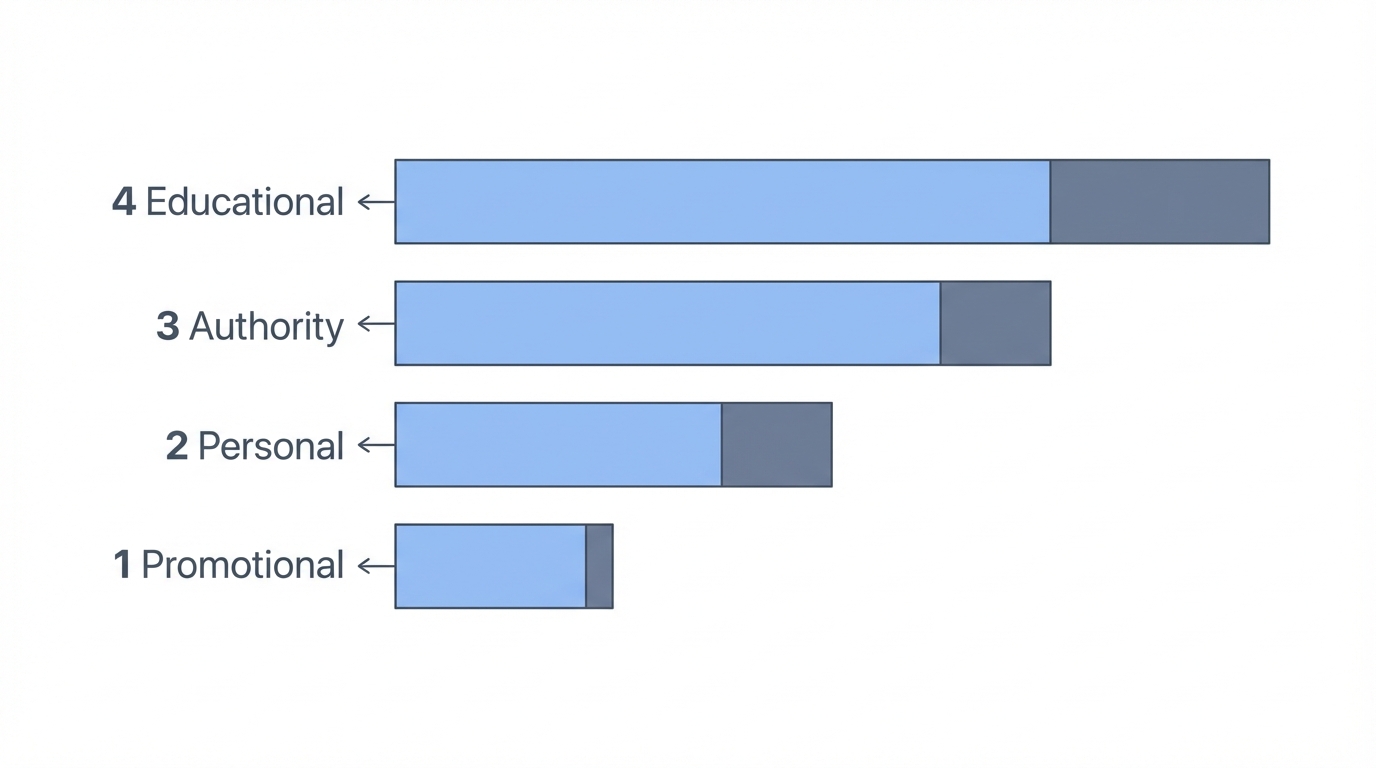
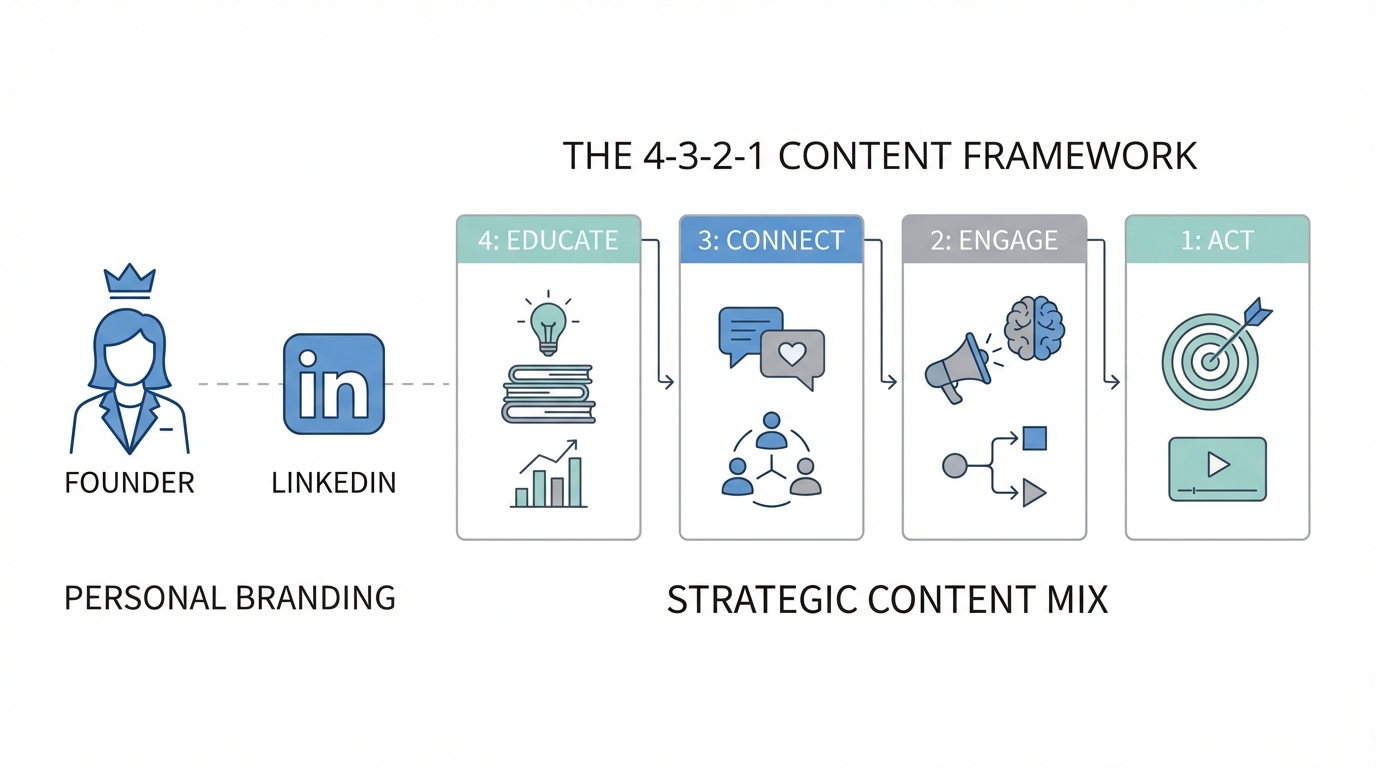
Consistency is the graveyard of most personal brands. Founders often start strong but burn out when they don't see immediate viral results. The 4-3-2-1 Framework is designed to prevent this by focusing on quality over quantity. It provides a sustainable structure for LinkedIn lead generation without requiring you to live on the platform 24/7. Here is how the framework breaks down:
Step 1: 4 Posts Per Week
Many gurus suggest posting every single day, but for a busy founder, this is a recipe for low-quality content. Instead, aim for four high-impact posts per week. This frequency is enough to stay relevant in the LinkedIn algorithm without overwhelming your schedule. Focus on creating value-dense content that solves specific problems for your audience.
Step 2: 3 Content Pillars
Your content should not be a random stream of consciousness. It needs to fall into three specific categories: Educational, Storytelling, and Sales Generating. Educational content proves your competence, storytelling builds an emotional connection, and sales-generating content (like lead magnets) moves followers into your sales funnel.
Step 3: 2 Audience Types
You aren't just writing for customers; you are writing for a community. You must balance your content for your Ideal Client Persona (ICP) and your Ideal Follower Persona (IFP). We will dive deeper into this distinction later, but the core idea is that your ICP pays the bills, while your IFP provides the engagement that helps the algorithm show your content to more ICPs.
Step 4: 1 Lead Magnet
Every week, you should have one clear path for people to move from LinkedIn to your private ecosystem. This is typically a lead magnet—a free resource like a PDF, a Next.js template, or a recorded Cal.com consultation—that requires an email address in exchange for high-value information.
ICP vs. IFP: Why You Need Both for LinkedIn Success
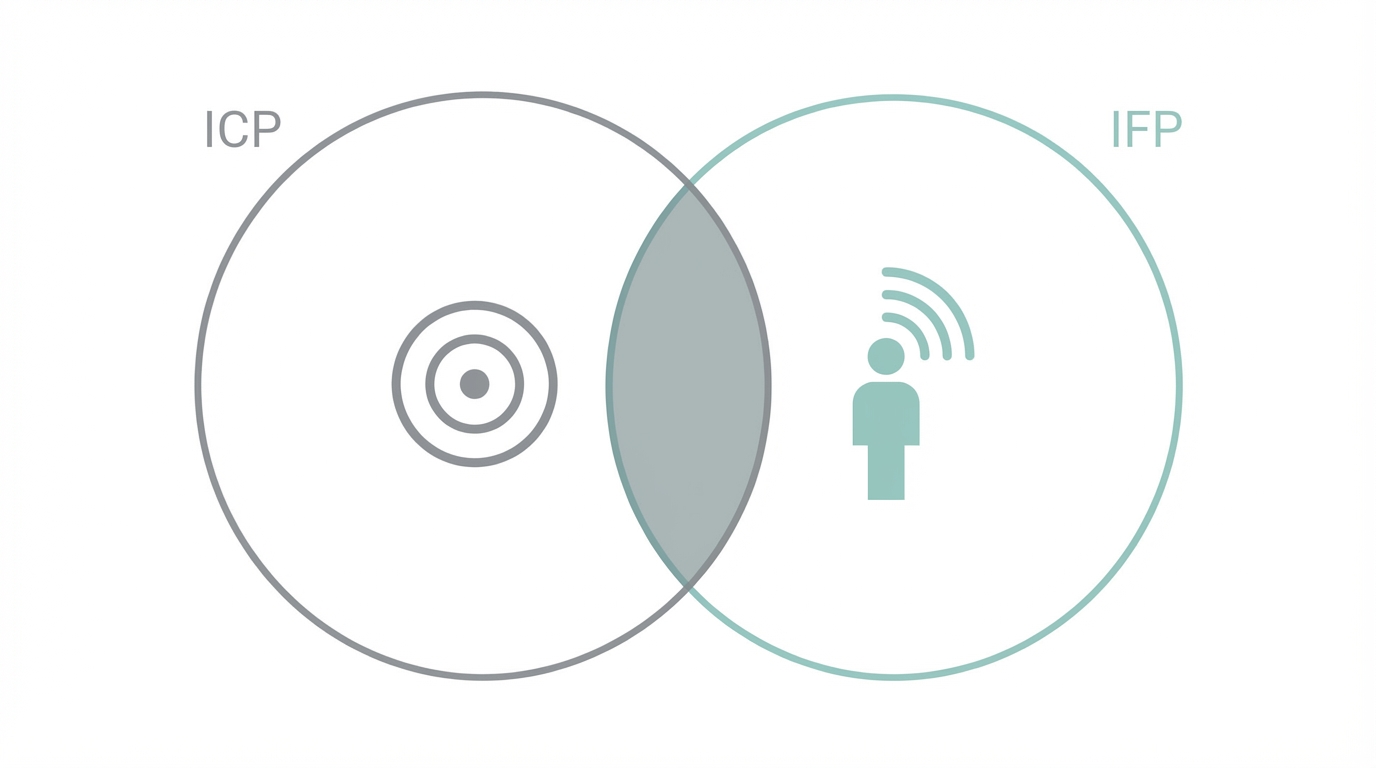
A common mistake in personal branding strategy is focusing exclusively on the person who will buy your software. While that sounds logical, it often leads to dry, overly technical content that gets zero engagement. To win on LinkedIn, you need to understand the difference between your Ideal Client Persona (ICP) and your Ideal Follower Persona (IFP). Using Stormy AI, you can actually paste any profile URL and get an AI-powered quality report to ensure you are engaging with real accounts rather than bots or engagement fraud.
Your ICP is the decision-maker who has the budget to buy your product. They are looking for ROI, efficiency, and solutions to high-level business problems. However, your IFP consists of peers, juniors, and industry enthusiasts who might never buy your product but will like, comment, and share your posts. This engagement is critical because the LinkedIn algorithm uses these signals to determine if your post is worth showing to your ICP. Without an IFP, your ICP will never see your content. Successful founder-led growth requires nurturing both groups simultaneously.
Edu-selling: How to Solve Problems Without Using Direct CTAs
One of the most powerful concepts in B2B content marketing is "edu-selling." This is the art of teaching your audience how to solve their biggest problems while subtly positioning your product as the best tool for the job. Instead of a hard sell, you provide a tactical masterclass in every post.
For example, instead of saying "Buy my AI writing tool," you might write a post titled "How to write 10 LinkedIn posts in 30 minutes using AI." You walk the reader through the logic, the prompts, and the strategy. At the very end, you might mention that you use a tool like Claude or your own software to automate the process. This builds immense trust because you have already provided value before asking for a single cent. It transforms your LinkedIn lead generation from a pitch into a service.
Identifying Your Unfair Advantage to Stand Out
With millions of posts shared daily, you cannot afford to be generic. To stand out, you must identify your unfair advantage. This is the intersection of your unique story and your technical expertise. Are you a developer who built a product using Vercel and Clerk? Share the technical hurdles you faced. Are you an agency owner who scaled to $1M? Share the management frameworks you used.
Your story is the only thing your competitors cannot copy. When you combine your personal narrative with educational content, you create a brand that feels human and relatable. Research shows that users are far more likely to engage with a founder who admits to mistakes than one who only posts polished PR updates. Authenticity is a key component of a modern personal branding strategy.
Step-by-Step: Building Your First 1,000 Followers
Securing your first 1,000 followers is the hardest part of LinkedIn marketing for founders. Once you hit this milestone, you have a self-sustaining engine of distribution. Here is the playbook to get there:
- Optimize Your Profile: Your profile is your landing page. Ensure your headline clearly states who you help and how. Use a professional headshot and a banner that reinforces your B2B content marketing goals.
- Engage Before You Post: Spend 15 minutes a day commenting on the posts of larger creators in your niche. This puts your name in front of their audience.
- Use the 4-3-2-1 Framework: Start posting your four updates per week. Use bold highlights for key takeaways to make your posts skimmable.
- Leverage Lead Magnets: Create a simple Google Doc or a Loops email sequence that offers a quick win for your audience.
If you are struggling to find the right creators to engage with, Stormy AI provides an AI search engine across TikTok, Instagram, and LinkedIn to find matching influencers in the SaaS and mobile app space who align with your brand. You can even set up an AI agent within the platform to handle personalized outreach and follow-ups on a daily schedule while you sleep.
From Content to Revenue: The Weightlist and Webinar Strategy
Content creates awareness, but email lists and webinars create revenue. Lara Costa's success with Cleo was driven by building a waitlist rather than launching to the public immediately. This strategy creates scarcity, FOMO, and curiosity. By requiring users to join a waitlist, you validate demand before the product even goes live.
Once you have a list, use webinars to convert them. A 40-minute session—split between 20 minutes of education and 20 minutes of a product demo—is incredibly effective for LinkedIn lead generation. During the launch phase, consider offering a lifetime discount or exclusive access to the first 500 users to drive immediate action. Using a platform like Polar can help manage these early subscriptions and landing pages seamlessly.
The Founder Tech Stack for Content and Operations
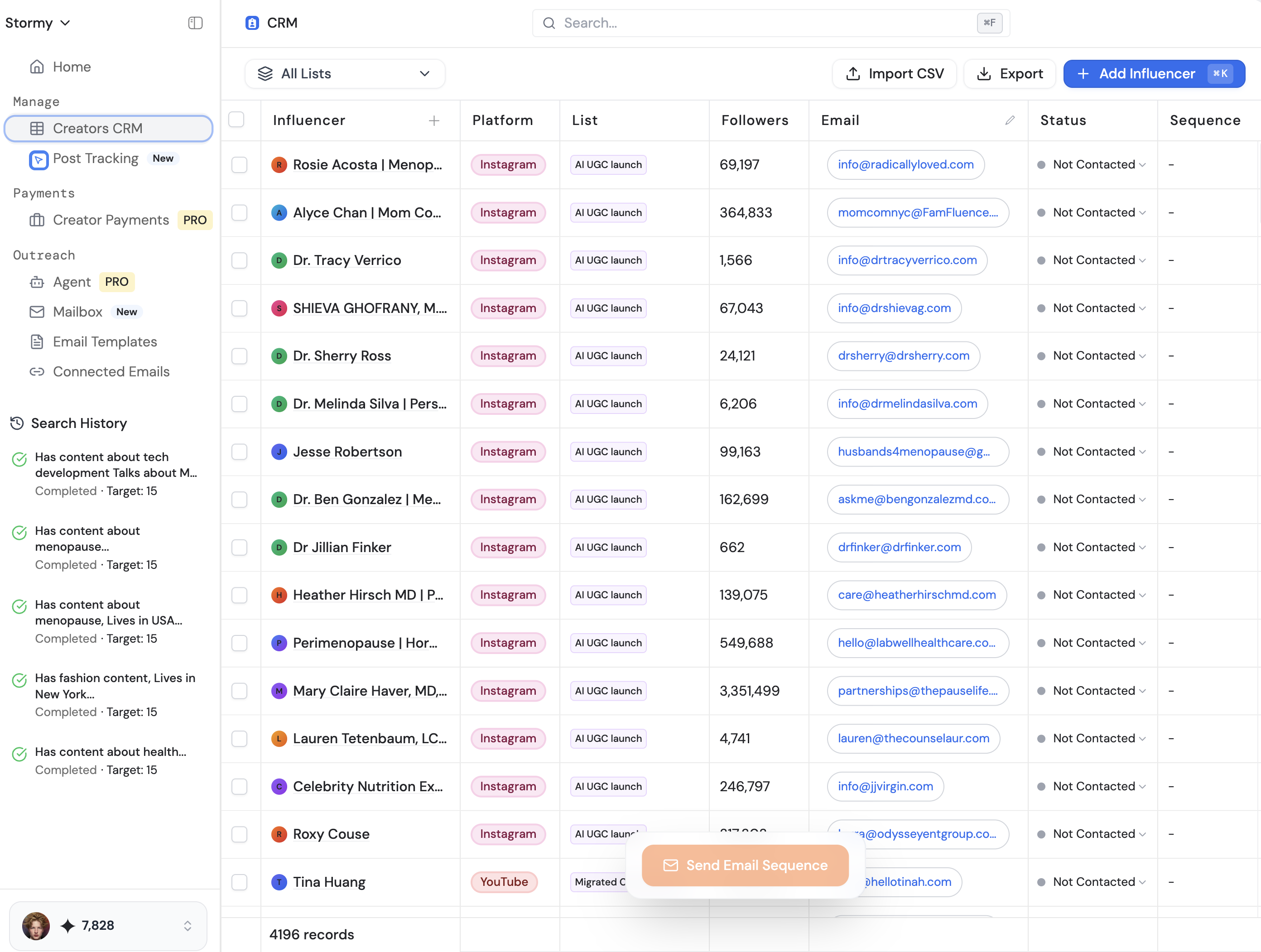
To run a successful founder-led growth engine, you need a streamlined tech stack. While legacy tools like Captiv8 or Tagger were built for a different era of marketing, modern founders need AI-native platforms. Here is the recommended stack for 2026:
- Communication: Slack for team coordination and real-time customer support.
- Creator CRM & Outreach: Stormy AI to manage creator relationships, send AI-personalized emails, and track all interactions in one place.
- Email Marketing: Loops for nurturing your waitlist and sending educational newsletters.
- Development & Hosting: Vercel for fast, scalable hosting of your landing pages.
- Ads & Growth: When you're ready to scale beyond organic, look into Apple Search Ads for mobile-first user acquisition.
Conclusion: Start Before You Are Ready
The biggest mistake you can make in LinkedIn marketing for founders is waiting for the "perfect" moment to start. Your personal branding strategy will evolve as you grow, but you need data to iterate. By implementing the 4-3-2-1 Framework today, you are not just posting on social media; you are building an asset that will pay dividends for years to come. Focus on edu-selling, identify your unfair advantage, and move your followers toward a dedicated waitlist. In the world of B2B SaaS, those who own the audience own the market. Whether you use Stormy AI to find creators to amplify your reach or to track your post analytics, the first step is to simply be useful to your audience. Start today, and build your distribution moat one post at a time.