In the hyper-accelerated startup landscape of 2026, the speed of information has outpaced the human capacity to process it. Founders and marketers who still rely on manual Google searches or occasional browsing of Product Hunt are already behind. The gap between what is possible with AI and what most teams are actually doing has created a massive arbitrage opportunity for those who know how to deploy automated competitor tracking.
By leveraging Lindy.ai and its breakthrough "agent swarm" technology, you can build a 24/7 market research department that monitors competitor traffic, hiring trends, and funding rounds without lifting a finger. This isn't just about saving time; it's about shifting from an emotional, reactive posture to a data-driven, sober strategy that wins markets.
The Death of Manual Competitive Intelligence
 0:00
0:00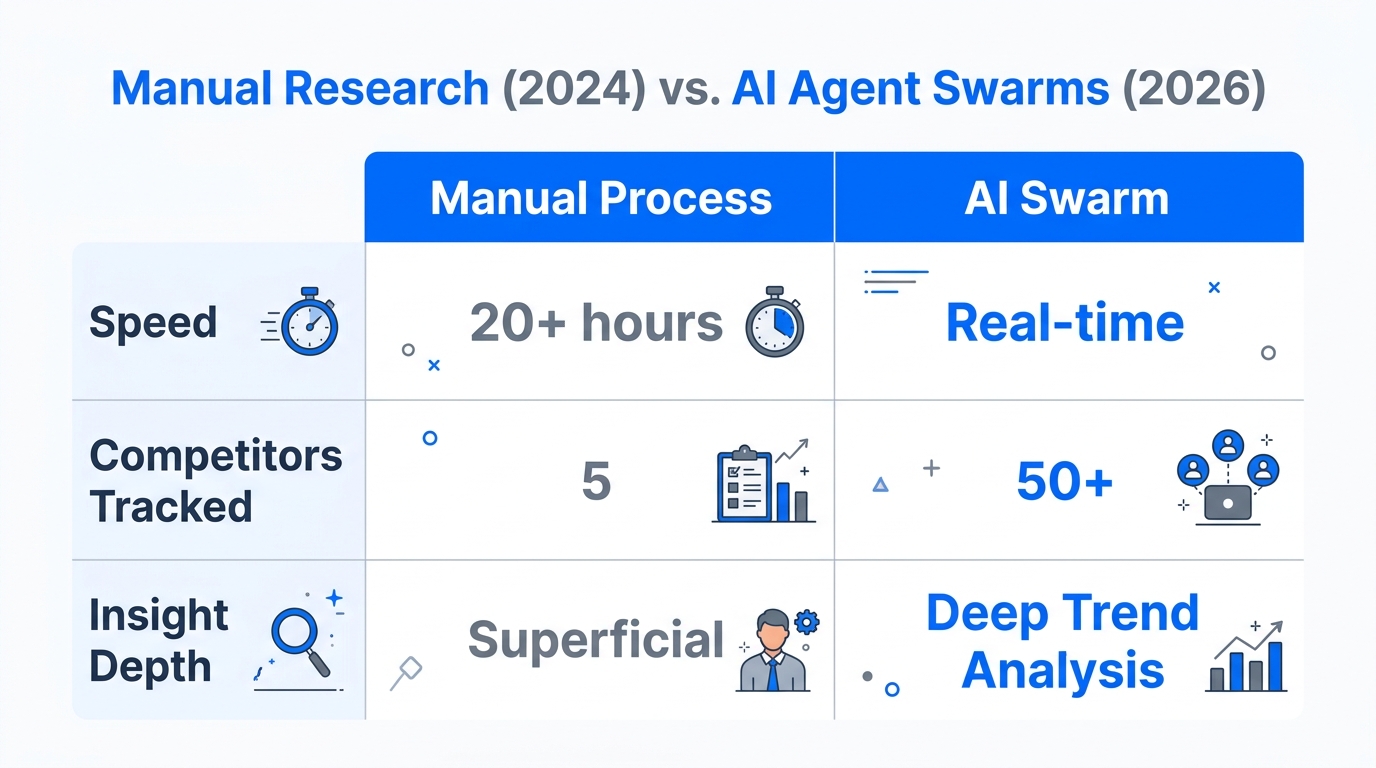
Manual research is dead. In the time it takes an intern to compile a quarterly report, your competitors have likely pivoted, raised a bridge round, or shipped three major features. The 2026 market moves too fast for static documents. Relying on manual workflows is like using a fax machine while your rivals are using fiber optics, as noted in recent Gartner research on data-driven decision making.
When you manually track competitors, you're susceptible to "founder's fatigue"—the demoralizing feeling of seeing a competitor's flashy announcement on Twitter and feeling like you're losing. AI agents don't have feelings; they have data. They provide what Lindy founder Flo Crivello calls a "sober report," filtering out the PR fluff and focusing on hard metrics like headcount growth and traffic estimates through tools like Similarweb.
"The goal isn't just to see what competitors are doing today, but to use AI to predict where they will—or won't—be in 12 months."
What Are AI Agent Swarms?
16:31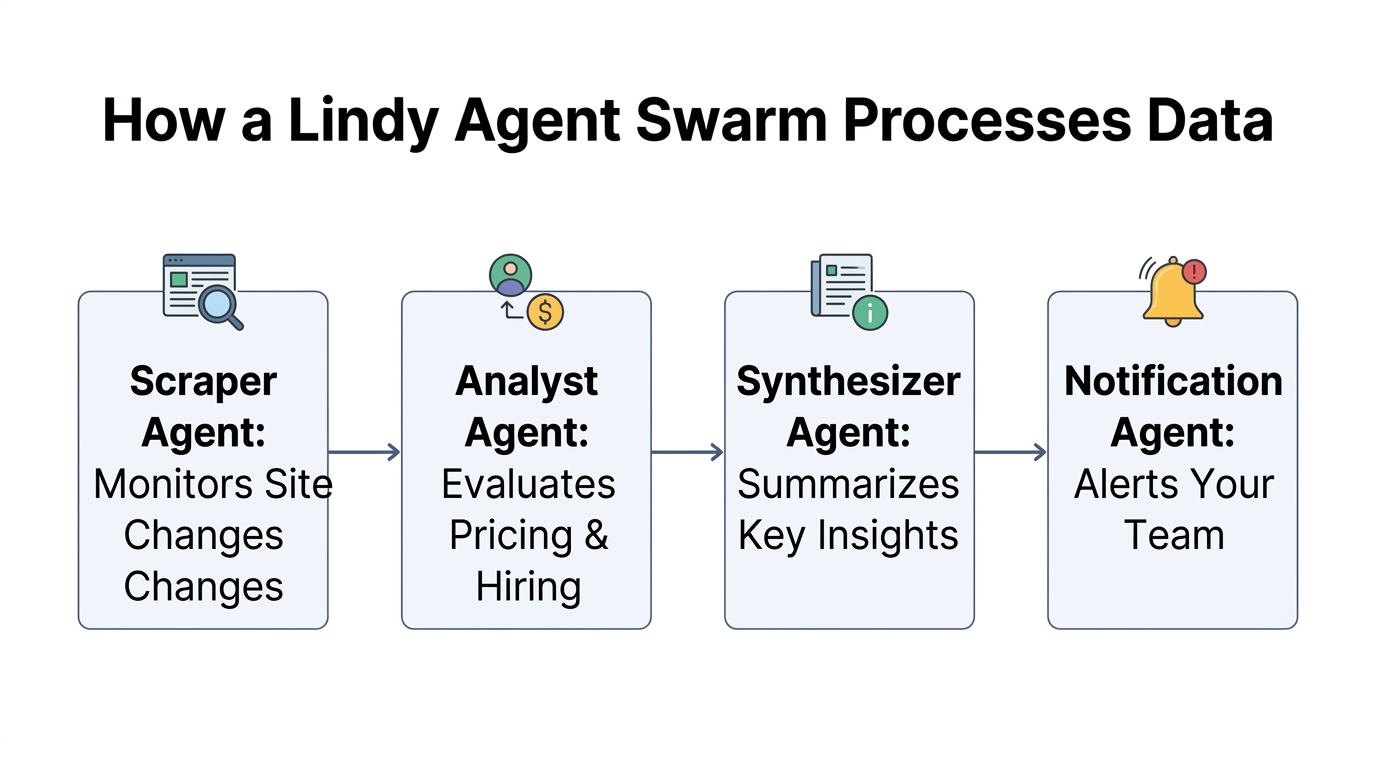
The core of this strategy is the "agent swarm." Think of a swarm as an "Agent Smith" effect from The Matrix. Instead of one agent slowly working through a list of 50 competitors, a swarm allows the agent to duplicate itself instantly, sending one copy of itself to research each competitor in parallel. This makes complex, multi-source research tasks finish in minutes rather than hours.
Lindy’s platform now features over 4,000 web scrapers and thousands of integrations, making it the most robust ecosystem for building these swarms. Whether you need to scrape YouTube comments for sentiment analysis or monitor LinkedIn for new hires, the swarm handles the heavy lifting.
| Feature | Manual Workflow | Lindy AI Swarm |
|---|---|---|
| Speed | Hours or days per report | Minutes via parallel processing |
| Consistency | Prone to human error/bias | High (structured data logging) |
| Scalability | Limited by headcount | Unlimited (1 to 1,000 competitors) |
| Emotion | Reacts to PR hype | Sober analysis of hard data |
Playbook: Building Your Real-Time Tracker
2:46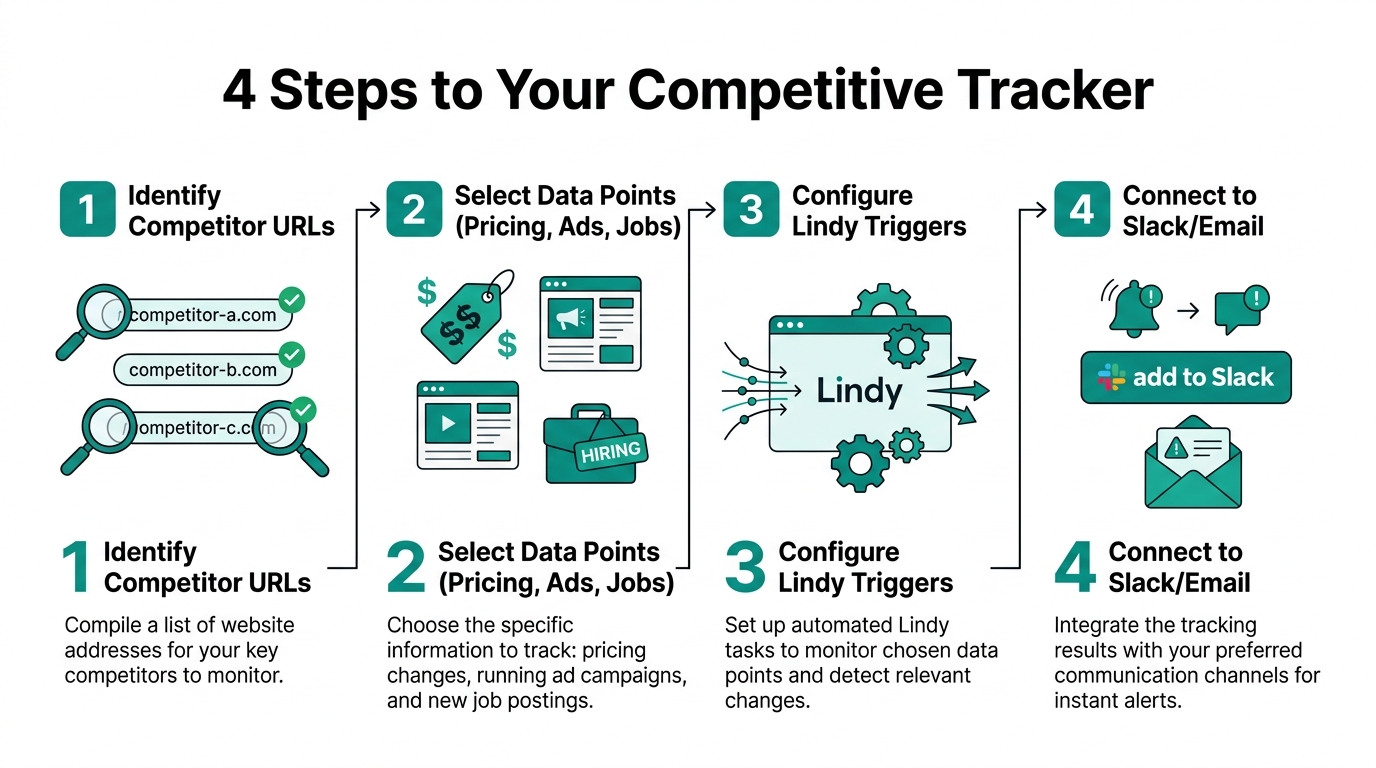
Building a competitive intelligence tool in Lindy requires no code and can be set up in less than 30 minutes. Follow these steps to automate your market research.
Step 1: Set Up Your Source Data
Create a central repository for the competitors you want to track. A Google Sheet is the most effective way to do this. Your columns should include the Competitor Name, Website URL, and Social Media handles. Lindy will use this sheet as its "marching orders."
Step 2: Configure the Lindy Swarm
Inside Lindy, create a new agent and set a recurring trigger (e.g., "Every first of the month"). The first step of the workflow should be to read the spreadsheet. Then, initiate a swarm. You don't even need to configure complex logic; simply tell the agent: "For every row in this sheet, deploy a researcher."
Step 3: Multi-Source Research with Perplexity
Direct your swarm to use tools like Perplexity AI to gather specific intelligence. For 2026 dominance, you should focus on:
- Employee Count: Tracking headcount shifts to see if they are scaling or downsizing.
- Traffic Estimates: Using web scrapers to monitor monthly visit trends.
- Hiring Trends: Identifying which roles they are recruiting for (e.g., hiring 10 AI engineers suggests a major product pivot).
- News & Funding: Scraping for recent press releases or SEC filings.
Step 4: Automated Data Logging
Once the swarm has finished its research, have the agent log the findings back into a separate tab of your Google Sheet. This creates a historical record of your market’s evolution. Over six months, you’ll be able to see exactly who is pulling ahead and who is losing momentum, potentially using Notion to visualize the data for your team.
"There is a massive arbitrage moment happening right now. Companies using agent swarms are operating with the intelligence of a 50-person team while staying lean with only 5-10 employees."
Receiving the 'Sober Report'
26:53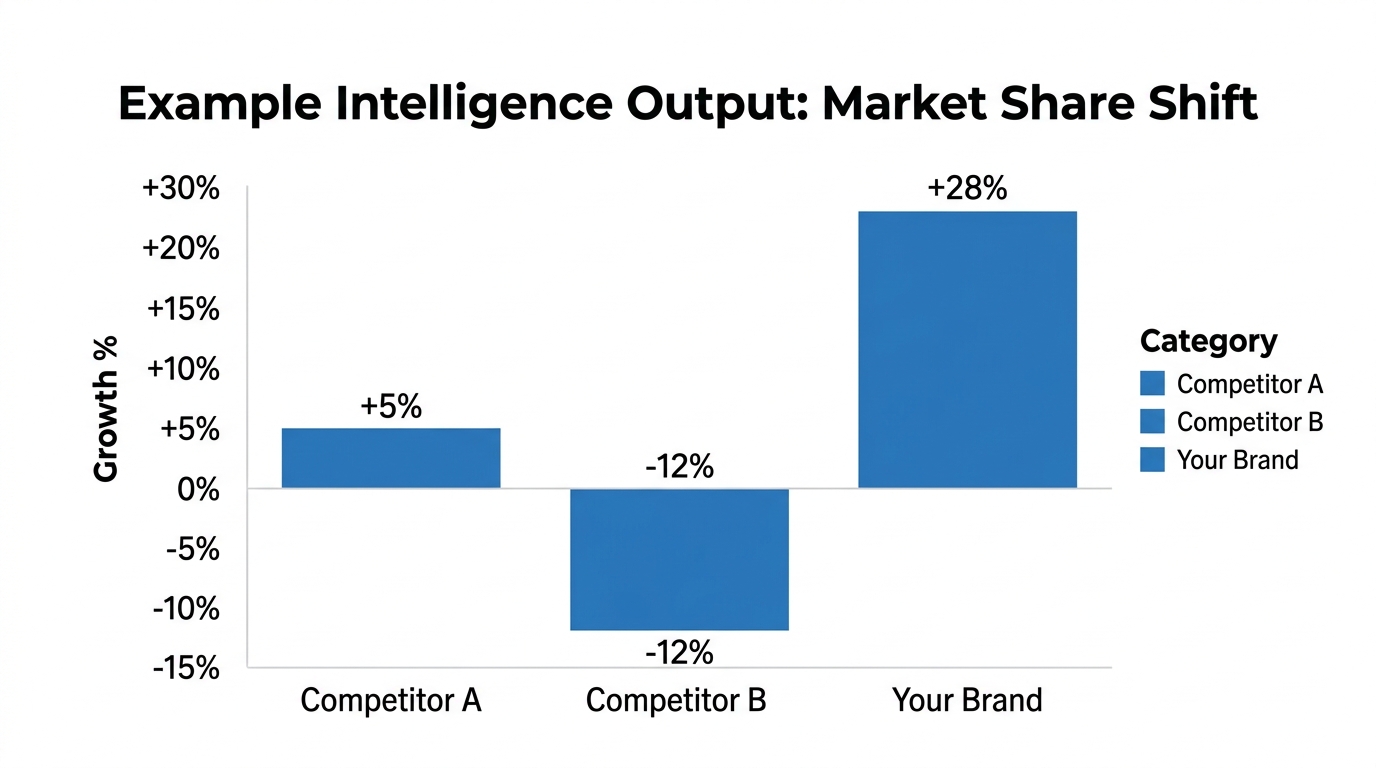
The final step in the workflow is the Executive Summary. Instead of digging through raw data, have your Lindy agent send you a "Sober Report" via email or Slack. This report should summarize the biggest moves: "Competitor A increased headcount by 20%, while Competitor B's traffic dropped for the third consecutive month."
While Lindy handles the broad market research, for more niche social-driven intelligence—like tracking which influencers your competitors are partnering with—specialized platforms like Stormy AI can fill the gap. Combining Lindy’s general market tracking with Stormy AI’s creator analytics allows you to see both the corporate strategy and the marketing execution of your rivals in one view.
Internal Intelligence: The 'Elon Lindy' Approach
Competitive intelligence isn't just external. To dominate your market, your internal team must be aligned and moving fast. Flo Crivello uses a setup called the "Elon Lindy." This agent uses Lindy’s phone call capability to conduct virtual weekly stand-ups.
Every Friday, the Lindy agent calls each team member and asks: "What did you get done this week? What are your blockers?" The agent then compiles a company-wide report for the CEO. This replaces the middle management layer and ensures the founder has a real-time pulse on the organization’s progress compared to the market moves tracked externally.
"The Elon Lindy effectively replaces the middle management layer of a company, allowing the CEO to stay connected to every single output."
Conclusion: The Arbitrage of 2026
The frontier of AI has moved so fast that most businesses are still using the equivalent of "fax machines" for their market research. By the time you read this, the companies that have automated their competitive intelligence tools are already winning.
Don't just watch the market—monitor it with an AI swarm. Start by setting up a basic meeting recorder or scheduler on Lindy to get a "W" on the board, then graduate to full-scale market research automation. Pair these tools with a Stormy AI account to track your competitor's influencer and social footprint, and you'll have a 360-degree view of your industry that no human team could ever match.
Stop listening and start building. The tools are ready; the only question is whether you will be the one using them or the one being tracked by them.