The era of static, text-heavy Amazon advertising is officially over. As we navigate 2026, the retail media landscape has matured into a multi-modal powerhouse, with Amazon’s retail media revenue projected to dwarf previous records, exceeding $60 billion. For sellers and brand owners, the challenge is no longer just winning the bid; it is winning the attention of a fragmented audience. Enter the Amazon AI Creative Studio, a tool that has democratized high-end production, allowing brands to generate 30-second audio and video assets that once cost thousands of dollars, now created in seconds with simple natural language prompts.
Transitioning to Multi-Modal: The Amazon AI Creative Studio Revolution
In the past, video and audio ads were the exclusive playground of enterprise-level brands with massive creative budgets. Today, the Amazon AI Creative Studio has leveled the playing field. By shifting from a "text-only" mindset to a multi-modal strategy, sellers can now produce high-quality content across TikTok Ads Manager-style vertical videos and immersive audio spots for Alexa-enabled devices.
This shift represents a fundamental change in how Amazon Ads operates. According to Jay Richman, VP of Creative Tech at Amazon Ads, generative AI is a "significant shift" from previous predictive models. We are moving from algorithms that simply recommend what to buy to algorithms that actually produce the assets that drive that engagement. Brands can now enter a prompt like "luxury kitchen setting with sunlight hitting a stainless steel coffee maker" and receive a fully rendered video ad ready for Sponsored Brands placement.
"The jump from predictive AI to generative AI means sellers are no longer just analysts—they are creative directors with an infinite production house at their fingertips."
The Math of AI: 22% Higher CTR and 34.1% ROAS Gains
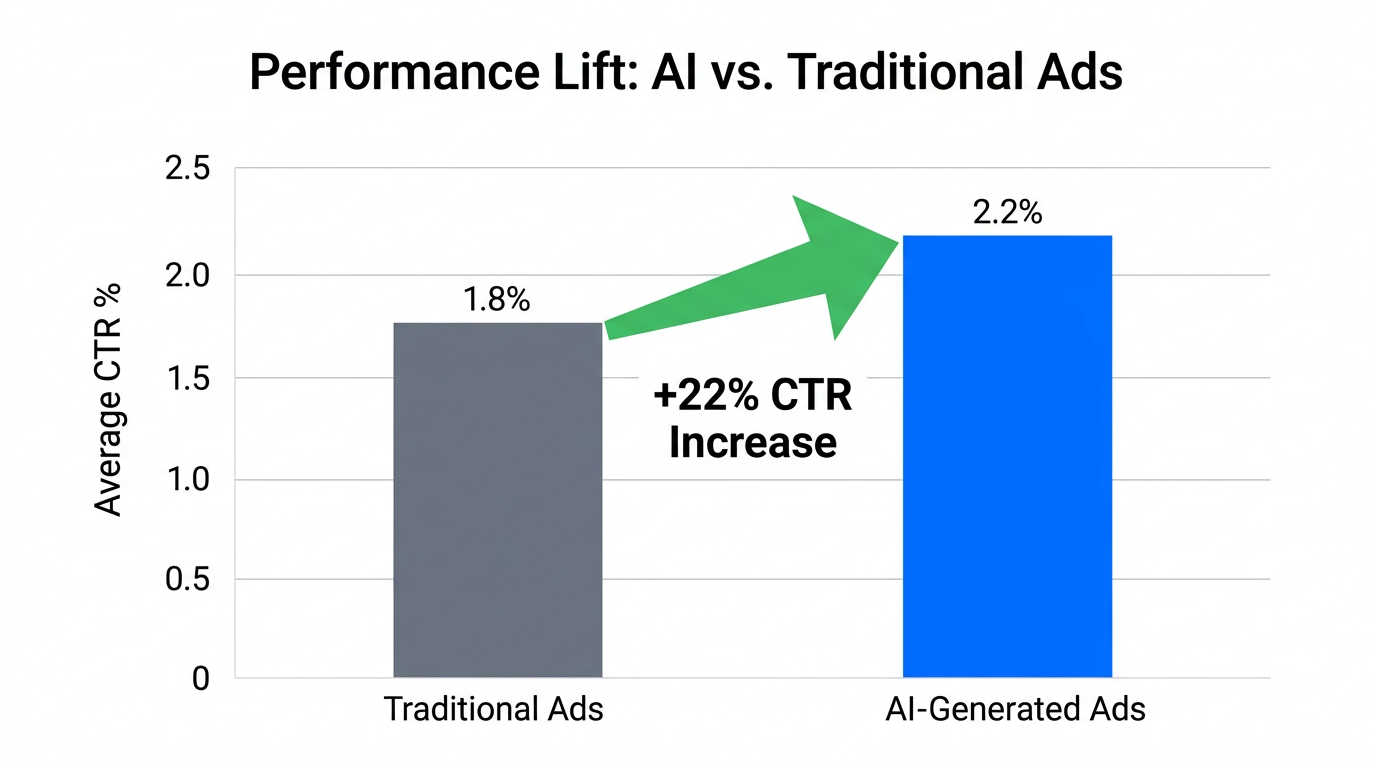
Why is everyone pivoting to AI-generated video ads on Amazon? The data from the last two years is undeniable. AI-driven management and creative generation show an average 34.1% improvement in ROAS (Return on Ad Spend) compared to manual optimization. This isn't just about pretty pictures; it’s about the underlying efficiency of the creative itself.
Early adopters of Amazon’s Performance+ campaigns—a "set and semi-forget" campaign type that leverages AI for audience creation and bidding—reported a 51% improvement in Customer Acquisition Cost (CAC). By using AI to iterate on visual hooks, sellers can find the winning combination of imagery and messaging much faster than a human team ever could.
| Metric | Manual/Traditional | AI-Enhanced (2026) | Performance Lift |
|---|---|---|---|
| Click-Through Rate (CTR) | 0.4% - 0.8% | 1.2% - 2.1% | +22% Avg. |
| ROAS Improvement | Baseline | +34.1% | Significant |
| CAC Reduction | Standard | -51% | Substantial |
| Production Time | 2-4 Weeks | Minutes | 99% Reduction |
Furthermore, expert users are saving anywhere from 5.2 to 14 hours per week by automating repetitive tasks like keyword harvesting and bid adjustments using tools like Perpetua or AiHello. This time is being reinvested into high-level strategy and brand-building efforts that AI cannot yet replicate.
Integrating Influencer Assets with AI for High-Velocity Ads
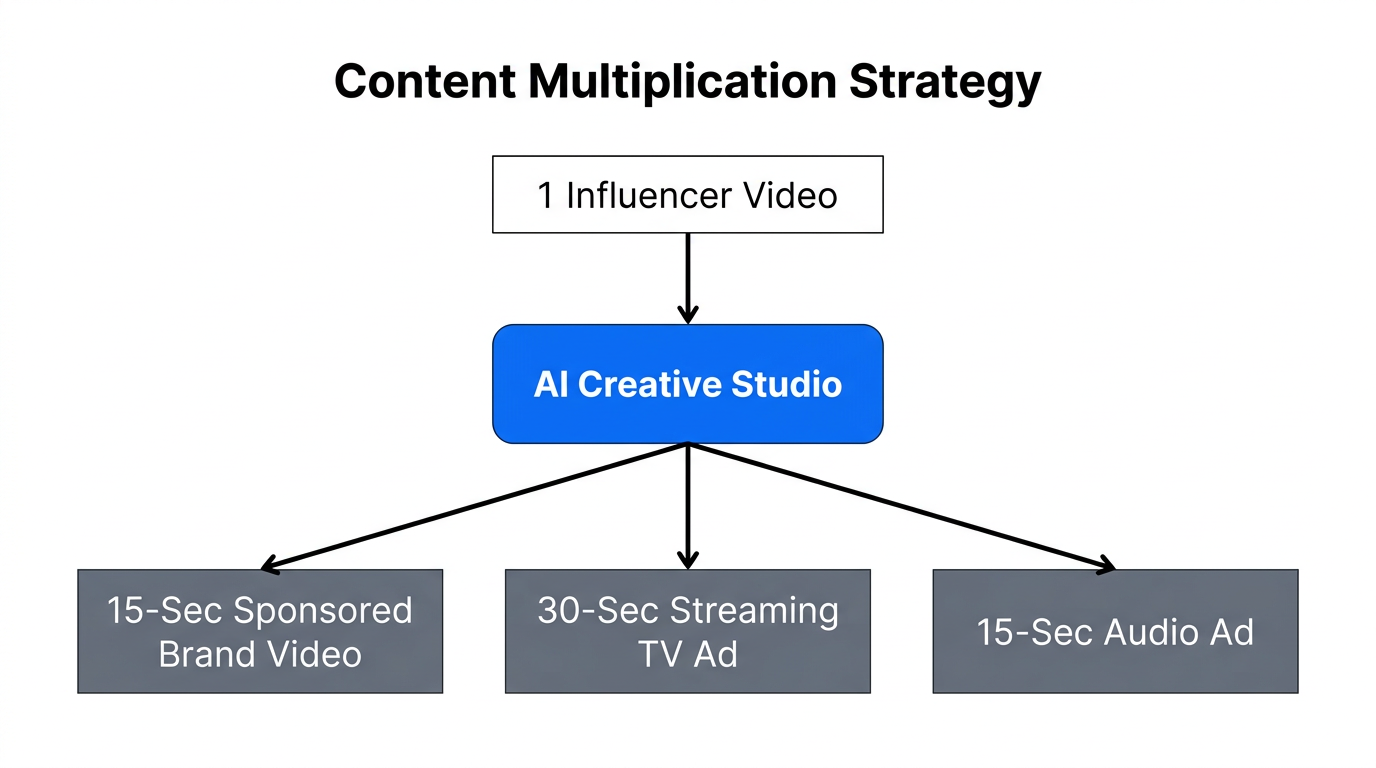
One of the most powerful strategies in 2026 is the "Hybrid Content Model." While AI can generate stunning backgrounds and product shots, it often lacks the raw, authentic feel of User-Generated Content (UGC). Savvy marketers are now taking raw influencer footage and running it through AI tools to create high-velocity ad variations.
For example, you can take a 10-second clip of a creator unboxing your product and use the Amazon AI Creative Studio to generate 50 different backgrounds, voiceovers, and CTA overlays. To source these initial high-quality human assets, platforms like Stormy AI are essential. By using Stormy to discover and vet creators across TikTok and Instagram, you can feed authentic human elements into the AI machine to create ads that feel both professional and relatable.
"The most successful ads in 2026 combine the soul of human influence with the scale of generative AI production."
By leveraging an automated outreach workflow, brands can secure the raw UGC rights quickly, then use the Amazon AI Creative Studio to spin those assets into a full-funnel video campaign. This hybrid approach ensures you maintain a consistent brand voice while benefiting from AI's speed.
Contextual Bidding: Mapping Creatives to the Shopper’s Environment
The standard "keyword-to-bid" model is becoming secondary to Contextual Bidding. AI now analyzes a shopper's real-time environmental factors—such as their device (mobile vs. desktop), time of day, and even their browsing history—to decide which creative asset to show.
If a shopper is browsing on a mobile device at 7:00 AM, the AI might serve a fast-paced 15-second video ad with captions (no sound). If that same shopper is on a tablet at 8:00 PM, the AI might deliver a more cinematic, 30-second audio-visual experience. This level of personalization is handled automatically within the Teikametrics or Quartile ecosystems, ensuring your bid is always tied to the highest-probability conversion asset.
The 2026 AI Creative Playbook: Step-by-Step Scaling
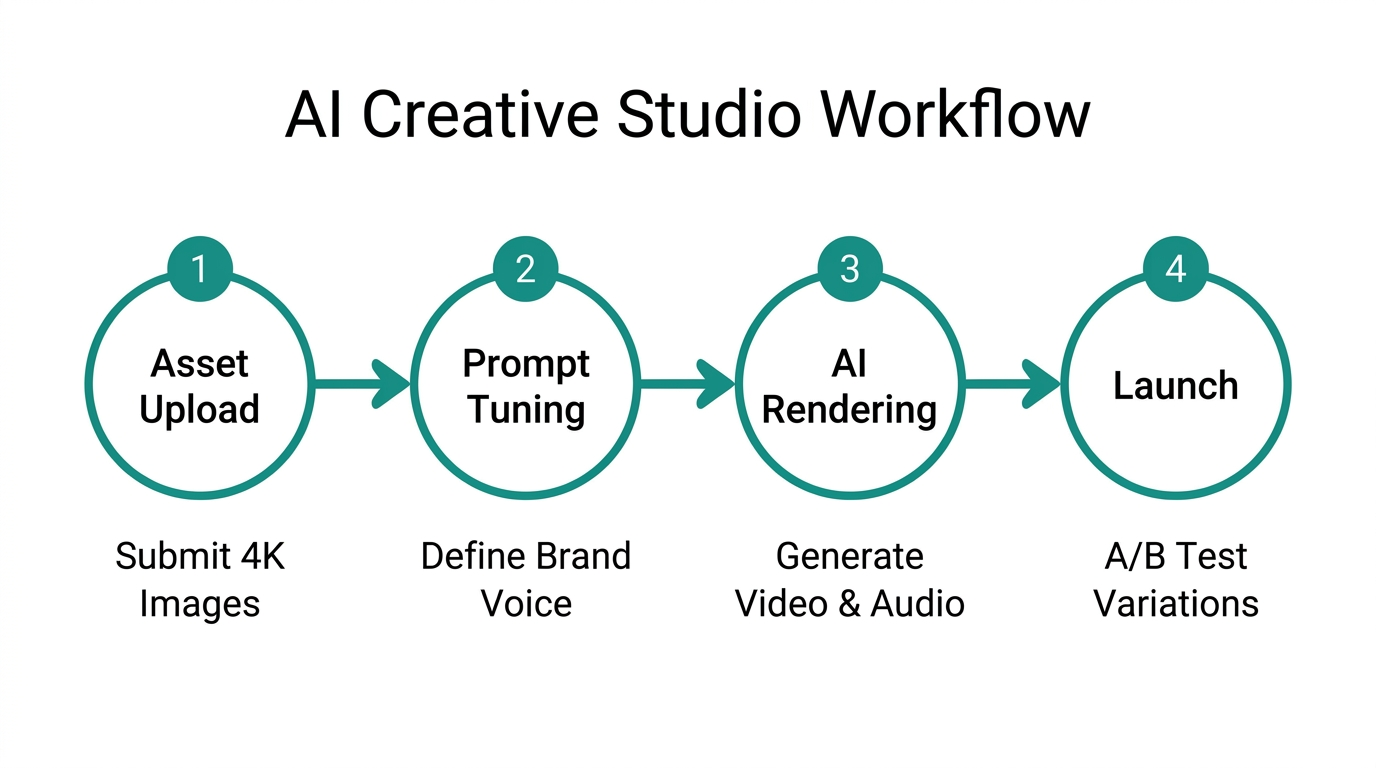
To succeed with the Amazon AI Creative Studio, you need a repeatable process. Follow this strategic playbook to scale your creative testing without burning your budget.
- Step 1: Define Your Core Hook. Use natural language prompts to generate 5-10 different visual hooks for your product. Focus on the first 3 seconds of the video.
- Step 2: Leverage Automated Harvesting. Link your discovery campaigns to tools like Helium 10 Adtomic. When a specific search term hits a conversion threshold (e.g., 3 sales in 7 days), promote it to an exact match campaign with a dedicated AI-generated video.
- Step 3: Implement AI Dayparting. Don't let your budget die at 2:00 PM. Use AI to adjust bids hourly, stretching your budget by lowering bids during low-conversion hours and aggressive bidding during peak windows.
- Step 4: Analyze via AMC. Use the Amazon Marketing Cloud (AMC) to track the multi-touch impact of your audio and video ads. Often, an audio ad doesn't result in an immediate click but drives a search 24 hours later.
"In 2026, the winner is not the brand with the biggest budget, but the brand that can run the most experiments per week."
Common Pitfalls: Why 100% AI Often Fails
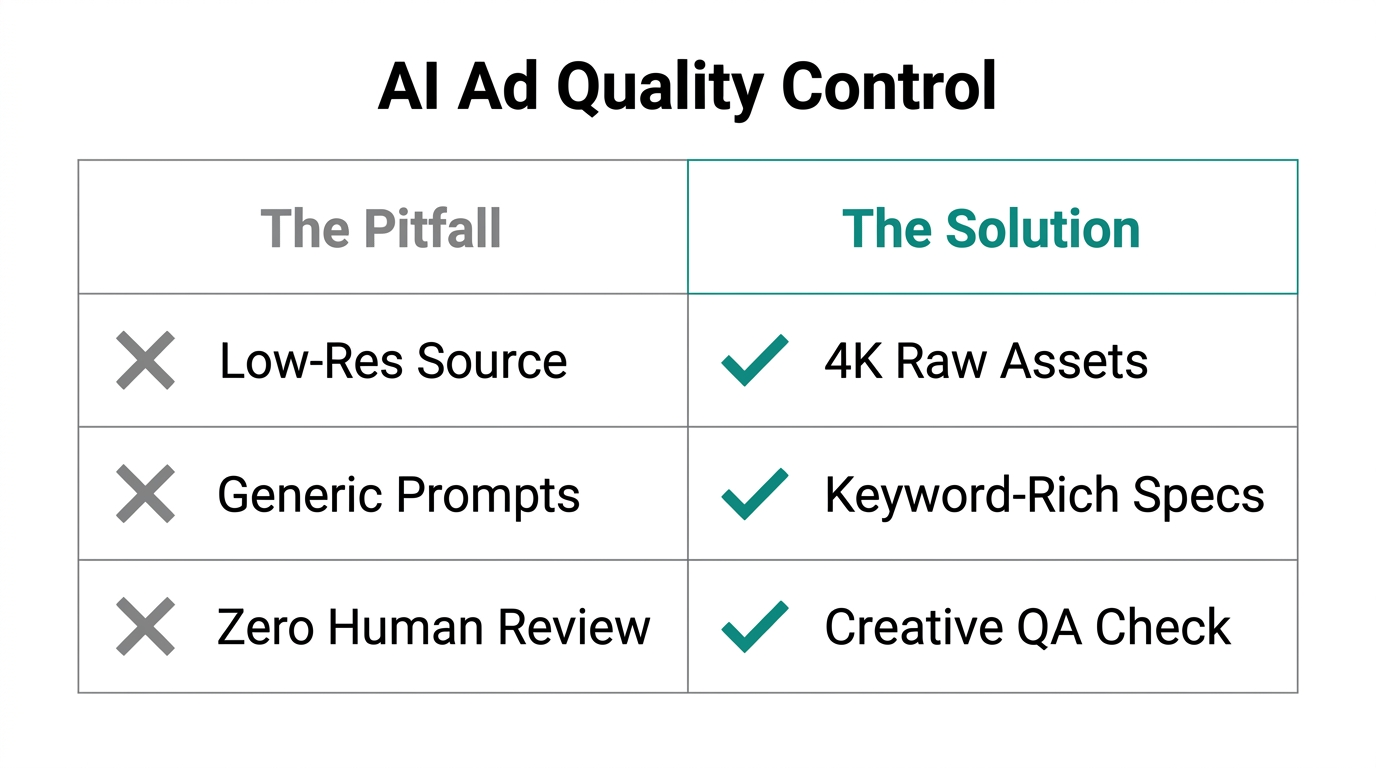
Despite the power of AI, industry leaders from BidX and Scale Insights argue that a human-in-the-loop is still essential. The "Hybrid Approach" is the gold standard for 2026. Here are the common mistakes to avoid:
- Disrupting the Learning Algorithm: Making manual changes every few hours resets the AI data collection phase. Always allow a 48-to-72 hour evaluation period.
- Neglecting Retail Readiness: No amount of AI video can save a listing with fewer than 15 reviews or poor quality scores. AI drives the traffic, but the listing closes the deal via your retail readiness.
- Keyword Cannibalization: Avoid grouping dissimilar products into one AI campaign. This confuses the algorithm’s ability to match the correct creative to the correct intent.
Conclusion: The Future is Generative
The transition to the Amazon AI Creative Studio isn't just a trend; it's the new standard for survival in the Amazon marketplace. By automating the production of high-CTR video and audio assets, sellers can finally focus on what matters: strategy and growth. Whether you are using Stormy AI to find the influencers that provide your raw creative fuel or using Perpetua to manage your bids, the goal remains the same—reach the right customer with the right message at the right time.
Start small, test rapidly, and let the AI do the heavy lifting. In 2026, the barrier to entry for world-class advertising has been removed. The only thing left to do is create.