Level 5 Leadership: Why the 'Give Up to Go Up' Framework is Essential for 2026 Founders
Discover how Level 5 leadership and the 'Give Up to Go Up' framework help 2026 founders scale startups by leveraging delegation, empathy, and personal resilience.
In the high-velocity landscape of 2026, where AI agents handle the bulk of operational heavy lifting and market cycles move faster than ever, the defining trait of a successful founder isn't just their technical prowess. It is their Level 5 Leadership. We often hear stories of 'billionaire sun gods' who seem to have manifested success out of thin air, but the reality is often rooted in a 'started from the bottom' narrative that involves learning disabilities, 'Big T' trauma, and a radical commitment to delegation. If you want to scale a company to $10 billion like Hais Barnard, you have to understand that being the smartest person in the room is your biggest liability.
Defining Level 5 Leadership: More Than Just a Title
Understand the unique traits and drive that define a level 5 leader today.
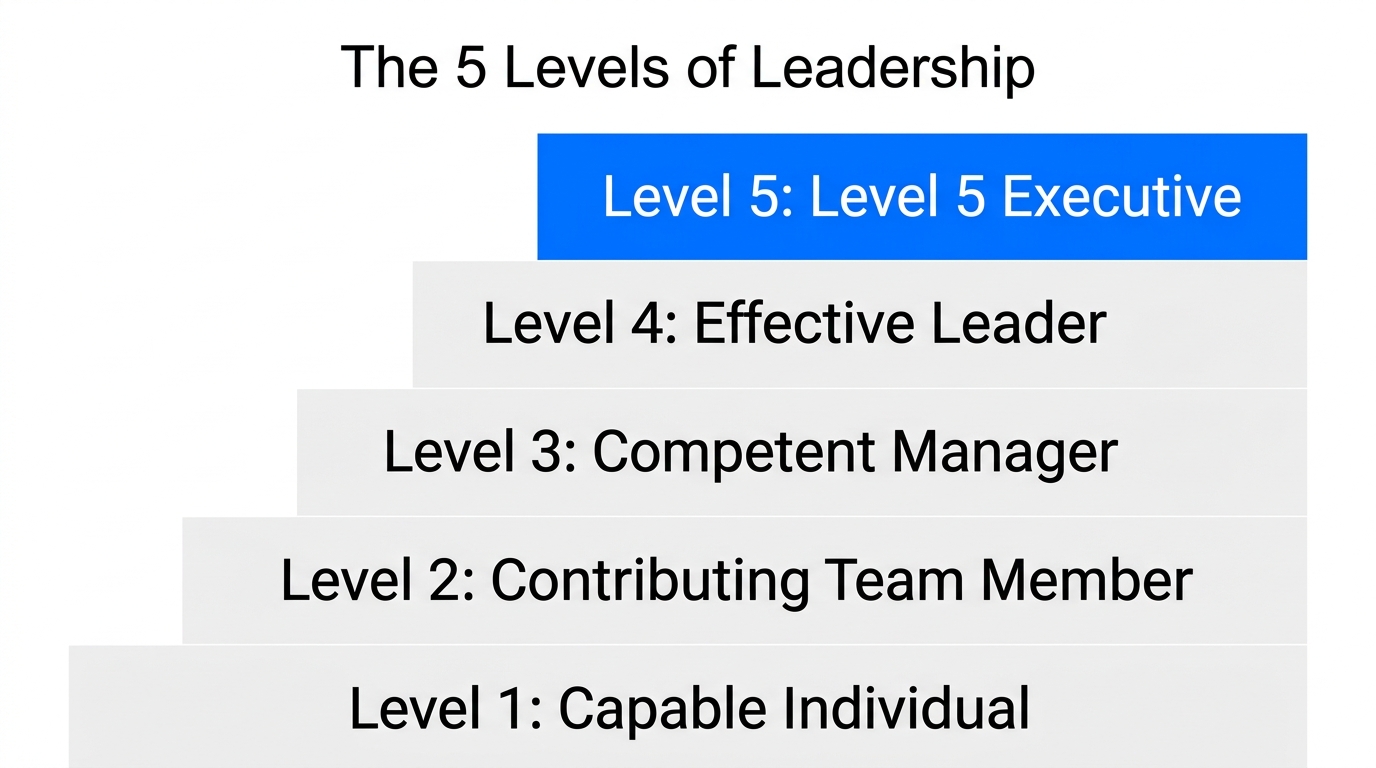
The concept of Level 5 Leadership, popularized by Jim Collins in Good to Great, describes a unique blend of extreme personal humility and intense professional will. In 2026, this framework is more relevant than ever. Level 5 leaders aren't micromanagers; they are facilitators who lead with compassion and empathy.
According to research into elite entrepreneurs, many Level 5 leaders share specific background traits that act as 'dark fuel' for their success. These often include:
- Learning Disabilities: Dyslexia or dysgraphia that forced them to find alternative ways to process information early on.
- 'Big T' Trauma: Significant childhood adversity, such as absent parental figures or near-death experiences.
- Career-Ending Setbacks: Moments where they had to reinvent themselves completely after a major failure.
"The valley is the value. When all your competition dies because it got too hard, that is the moment where your company is actually creating its greatest market share."
These leaders don't succeed in spite of these challenges; they succeed because of them. A learning disability, for example, forces a young person to surround themselves with talented people who can do what they cannot. By the time they reach the C-suite, they have already mastered the art of building a 'machine' of specialists.
The 'Give Up to Go Up' Principle
Learn why high-level success requires the willingness to give up to go up.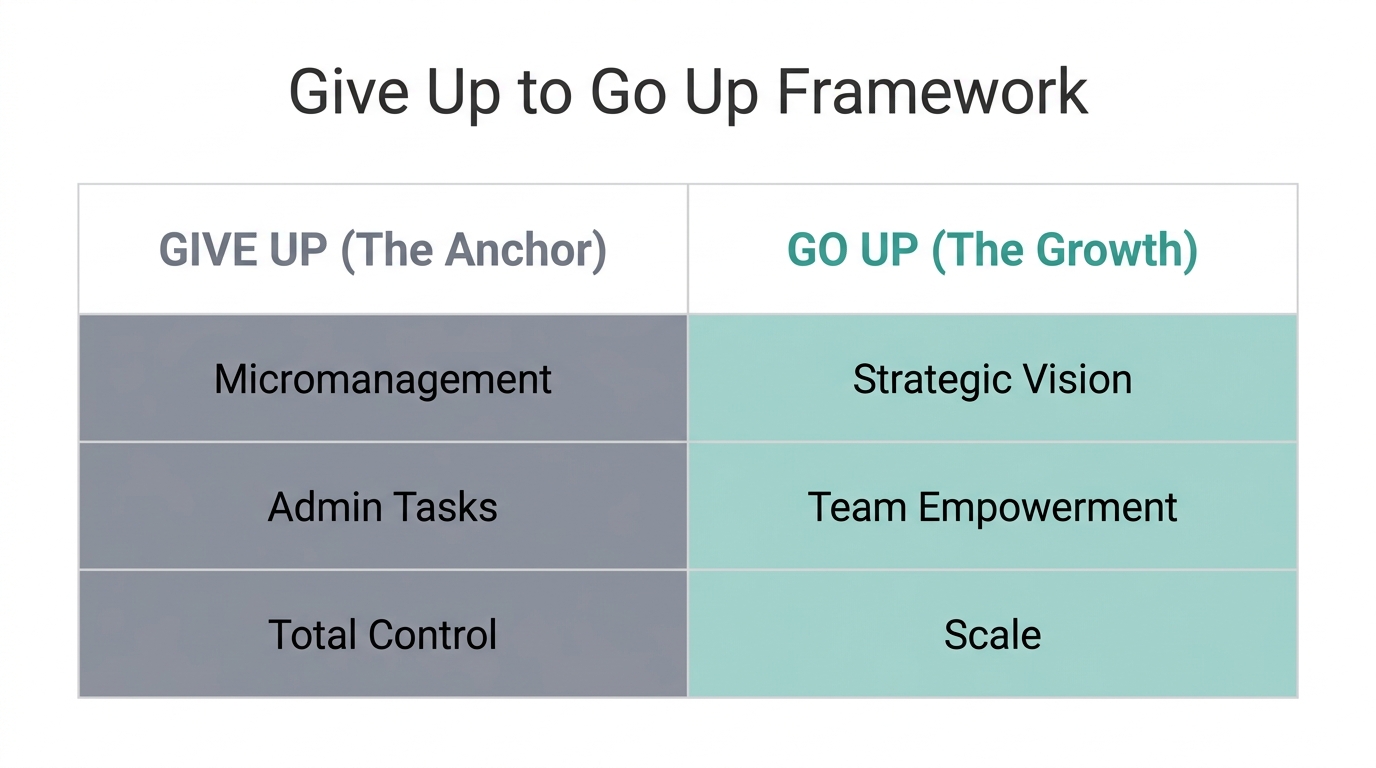
One of the most difficult lessons for a high-achieving founder to learn is that you must give up to go up. If you scored a 1550 on your SATs or were the 'smartest in the class,' you likely suffer from Competence Frustration. You see a task that takes an employee an hour, and you know you can do it in 15 minutes. So, you do it yourself.
The problem? You are now stuck doing that 15-minute task forever. You have capped your company's growth at your own personal bandwidth. To reach the next level of revenue in 2026, you must be willing to let go of the tasks you are good at to focus on the vision only you can provide. This is especially true when managing complex workflows like influencer marketing; instead of manually searching for creators, savvy founders use Stormy AI to automate the discovery and outreach process entirely.
| Leader Type | Focus | Scaling Potential |
|---|---|---|
| Level 4: Effective Leader | Directs others toward a vision through high-performance standards. | Linear (Limited by leader's oversight) |
| Level 5: Great Leader | Builds greatness through humility and an empowered machine. | Exponential (Limitless) |
Hiring for Your Weaknesses: Building the Machine
Discover how top leaders surround themselves with talent to overcome personal weaknesses.When you have a learning disability like dyslexia, you realize very quickly that you cannot do everything yourself. You learn to value the 'bond math' experts or the legal minds who can parse a 100-page contract in minutes. This is the Ari Emanuel approach to business: building a machine of people whose zone of genius covers your zone of incompetence.
In 2026, this 'machine' isn't just made of people—it's made of agentic AI and specialized software. For example, a founder might use tools like Stormy AI for their Creator CRM, Lemlist for sales automation, and specialized discovery agents for market research. By delegating these functions to a combination of elite talent and AI agents, the founder remains the architect rather than the operator.
The 'BYO Clarity' Mindset: From Direction-Taker to Direction-Giver
To become a boss, you must think like the boss before you have the title. This is the 'BYO Clarity' (Bring Your Own Clarity) mindset. Founders who scale effectively are those who hire team members who don't come in and ask, "What should I do today?" but rather say, "Here is what I am doing to move the needle."
"The person who goes in looking for the 'attaboy' or the pat on the back is never the boss. You become the boss when you stop asking for direction and start providing it."
This mindset applies to how you interact with your board, your investors, and your team. In high-stakes environments—like those seen at Tesla or SpaceX—the expectation is radical ownership. Founders who cultivate this 'warrior of light' culture find that their organizations can withstand even the most brutal market headwinds, like the tech corrections of the mid-2020s.
The 2026 Founder Audit: A Step-by-Step Playbook
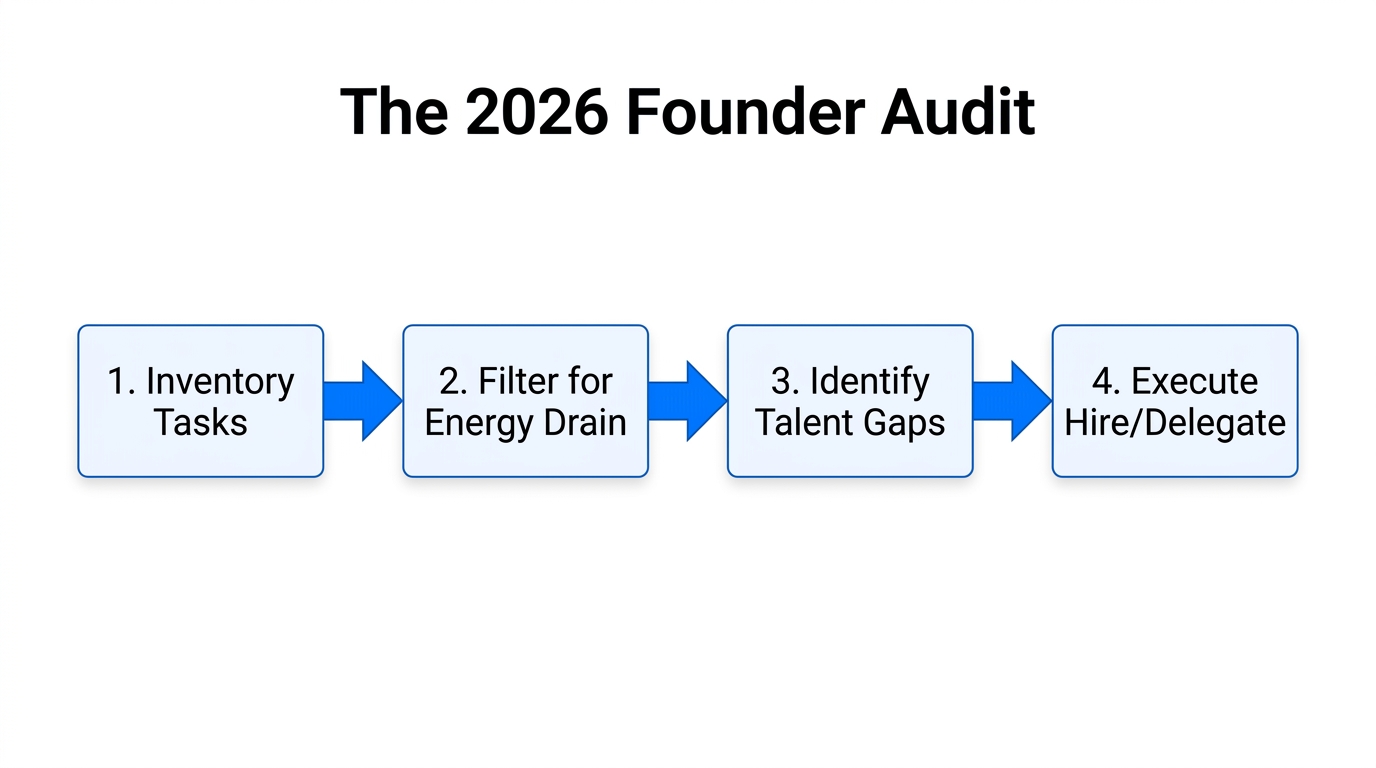
If you feel stuck in the 'owner-operator' trap, use this founder delegation strategy to unlock your next level of growth. Perform this audit once a quarter to ensure you are consistently 'giving up' tasks to 'go up' in value.
Step 1: Identify the '15-Minute Traps'
List every task you do that takes less than 30 minutes but occurs frequently. These are the tasks you are likely doing because "it’s just faster if I do it." These are your primary candidates for delegation to an AI agent or a junior specialist.
Step 2: Define Your Zone of Genius
What are the 2-3 things that only you can do? This usually involves high-level vision, key relationship building, or complex deal-making. Everything else must be moved to the 'machine.'
Step 3: Implement Autonomous Systems
In 2026, manual work is a choice. If you are still manually vetting influencers for TikTok or Instagram, you are wasting the most valuable resource you have: your time. Platforms like Stormy AI can handle discovery, quality vetting, and even outreach while you sleep, allowing you to focus on strategy.
The Devil Doesn't Tempt You With Spinach
Scaling a startup in 2026 requires moral and unit economic discipline. As Hais Barnard famously noted, "The devil doesn't tempt you with spinach." In business, the 'temptation' is often rapid growth through low-quality means—whether that's subprime loans, fake social engagement, or cutting corners on product quality.
Level 5 leaders have the discipline to walk away from volume if it compromises the unit economics or the mission. They understand that diversification is the key to weathering storms. Just as a mortgage company might diversify into clean energy and water solutions, a modern brand must diversify its marketing across multiple channels—leveraging everything from Google Ads to organic UGC creators found via AI discovery tools.
Conclusion: Solving for More Than One Level of Wealth
True success for the 2026 founder isn't just about the exit. It’s about achieving five levels of wealth: financial, time, mental health, physical health, and community. The Level 5 Leadership framework allows you to achieve all five by shifting the burden from your shoulders to an empowered team and an automated machine.
Whether you are building the next Salesforce or a niche e-commerce giant on Shopify, remember that your greatest competitive advantage is your ability to be a 'believer' when the rest of the world is skeptical. Stay humble, stay hungry, and most importantly, give up to go up.
Ready to start building your creator 'machine'? Discover how Stormy AI can automate your influencer marketing so you can focus on being a Level 5 leader.