In 2024, the barrier to entry for launching a software-as-a-service (SaaS) business has never been lower, yet the challenge of maintaining focus and profitability has never been higher. For the modern solopreneur, the goal isn't just to build a product; it's to build a sustainable, high-margin business that doesn't require a ten-person engineering team to keep the lights on. Many aspiring founders fall into the trap of over-engineering their solutions, obsessing over logos and microservices before they even have a single paying customer. To succeed as a one-person business, you must embrace a lean startup framework that prioritizes speed to market, low maintenance overhead, and clear customer acquisition channels. This article breaks down the exact bootstrap saas tech stack and operational strategy used by successful founders to reach five-figure monthly recurring revenue while working under significant time constraints.
The Shift from Perfection to Performance

Most failed side projects die not because the technology was poor, but because the founder spent too much time on the wrong things. Ben Boasé, the founder of Tech Lockdown, famously shared in a Starter Story interview how his early attempts at lead generation platforms and landing page builders failed because he was too obsessive over aesthetics. He spent weeks choosing brand colors and logos for products that had no users. When he finally pivoted to his current project—a platform that helps adults manage digital distractions—he didn't even have a logo until he had hundreds of customers. This shift in mindset is the foundation of how to build a saas alone: you must focus exclusively on the core value proposition and solve a problem that you are genuinely passionate about.
Building a business while working a 9-to-5 requires extreme discipline. Ben’s approach involved waking up at 5:30 AM to handle development tasks when his mind was sharpest, leaving marketing and lower-focus tasks for the evening. By the time he was laid off in 2023, his side project was already generating $3,000 in MRR. Because he had focused on a best tech stack for solopreneurs that favored simplicity, he was able to 5X that revenue to $15,000 MRR within a year. The lesson is clear: don't go full-time until you have a proven system that you can simply "throw gasoline on" once you have more hours to dedicate to it.
Time-Constrained Tech: SvelteKit and Supabase
When you are a solo developer, you are the CTO, the DevOps lead, and the QA engineer. You cannot afford a tech stack that requires constant patching or complex configuration. This is why many modern solopreneurs are moving away from traditional React-based stacks and toward more integrated frameworks. SvelteKit has emerged as a premier choice for JavaScript-focused developers. It provides a more accessible, less boilerplate-heavy experience than React, allowing you to move from idea to execution in record time. When combined with Supabase, which handles your database, authentication, and real-time features out of the box, you essentially eliminate the need to manage a complex backend infrastructure.
Using these saas tools for startups allows you to focus on the user experience rather than database migrations or auth security. Supabase’s PostgreSQL foundation ensures that you aren't sacrificing power for simplicity; it is a scalable solution that can grow with you from 1 to 100,000 users. By choosing tools that handle the "heavy lifting" of infrastructure, you can maintain a focus on building features that customers actually pay for, which is critical when you only have a few hours a day to work on your project.
The Deployment Tax: Trading $20 for Peace of Mind
A common mistake in the bootstrap saas tech stack is trying to save every penny by self-hosting on a raw VPS. While this might save you $15 a month, the hidden cost is the time spent managing server updates, SSL certificates, and deployment pipelines. For a solopreneur, your time is valued at hundreds of dollars an hour. Spending three hours fixing a server outage is a massive net loss. This is where Vercel becomes an essential part of the stack. For a small monthly fee, you get a continuous deployment system that automatically builds and ships your code every time you push to GitHub.
This "peace of mind" allows you to ship early and often, which is a core tenet of the Starter Story Build philosophy. If you can automate your infrastructure, you can focus on customer acquisition—the single most important problem to solve. As Ben noted, infrastructure costs are usually the smallest part of the budget, and spending a little extra for managed services allows you to maintain the mental bandwidth needed for growth and marketing.
Solving the Customer Acquisition Problem with Stormy AI
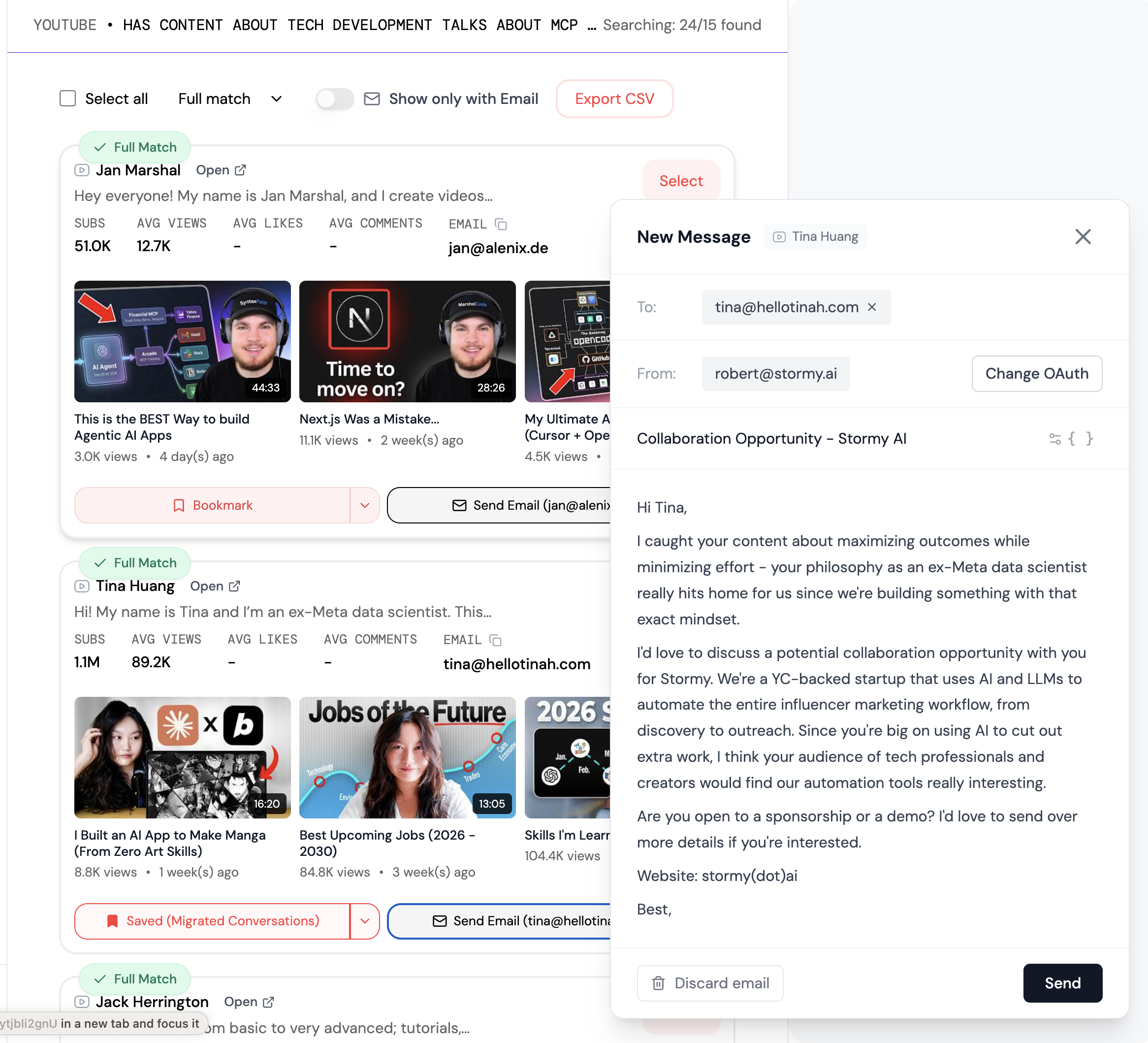
The most dangerous pitfall for solo founders is the "build it and they will come" fallacy. Ben Boasé found success by building an audience first through Reddit and YouTube long before he ever asked for a credit card. However, building an organic audience from scratch is slow. For those who need to accelerate their growth, leveraging the power of influencers and micro-creators is the most effective shortcut. This is where Stormy AI's search and discovery engine becomes a game-changer for the lean solopreneur.
Instead of manually searching through social media for hours, you can use natural language prompts to find niche creators who already have your target audience's attention. For example, if you are building a productivity app, you can instantly find fitness creators or tech reviewers with 10K-100K followers who can demo your product. To ensure you aren't wasting your budget, Stormy AI's influencer vetting and analysis tool detects fake followers and engagement fraud automatically. Once you have a list of targets, you can use Stormy AI's personalized outreach to send hyper-personalized emails to hundreds of creators simultaneously. This level of automation allows a solo founder to run a massive marketing department's worth of outreach in just a few clicks per day.
Measuring What Matters: SEO and Privacy-First Analytics
Content marketing is the long-game strategy that builds a moat around your business. Ben’s most successful piece of content, a guide on how to turn an iPhone into a dumbphone, was read hundreds of thousands of times and drove a significant portion of his 1,300 paying customers. To replicate this, you need a data-driven approach to SEO. Using Ahrefs allows you to perform deep keyword research and understand exactly what your competitors are ranking for. By focusing on high-intent keywords where you can provide a more "authentic" and "helpful" answer than corporate competitors, you can win the organic search battle.
Equally important is how you track your visitors. While Google Analytics is the industry standard, it is often overkill for a lean startup and raises privacy concerns. Plausible Analytics is a lightweight, privacy-focused alternative that gives you the essential metrics—where people are coming from and what they are clicking—without the complexity or cookie banners. When you are managing everything yourself, a clean dashboard that you can check daily in 30 seconds is far more valuable than a complex enterprise tool you never fully understand.
Maintaining 70% Profit Margins
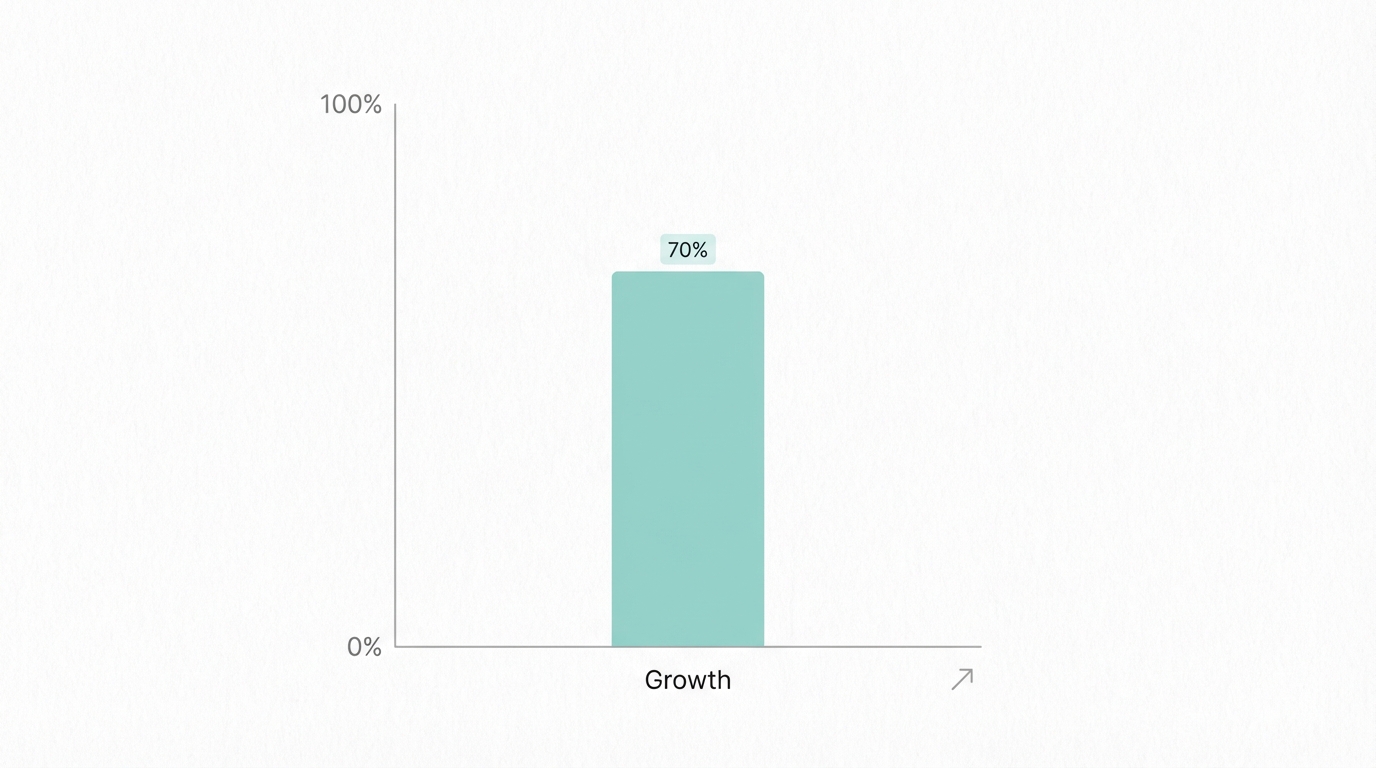
One of the most impressive aspects of the how to build a saas alone journey is the ability to maintain incredibly high margins. Ben targets a 70% profit margin even while paying for premium infrastructure like Mailgun for transactional emails and Ahrefs for SEO. The secret is keeping a flat organizational structure: zero employees. By using automation for everything from customer support to creator payments through Stormy AI, you keep your fixed costs low while your recurring revenue scales.
Ben’s business model uses a dual pricing strategy: $15 month-to-month or $10 a month for an annual plan. This incentivizes long-term commitment, which is vital for a solo founder because it reduces the mental stress of monthly churn. High-margin SaaS businesses are the ultimate vehicle for personal freedom, but only if you avoid the "selling a dollar for 90 cents" trap by ensuring your customer acquisition cost (CAC) remains significantly lower than your lifetime value (LTV).
AI as Your Junior Developer: Coding with Gemini

The final piece of the best tech stack for solopreneurs in 2024 is AI-assisted development. Tools like Google Gemini have transformed from simple chatbots into legitimate coding partners. Whether you are stuck on a complex SvelteKit component or need to generate a script for database cleanup, AI allows you to bridge the gap in your technical knowledge without hiring a freelancer. This enables a single developer to operate at the speed of a small team. Beyond code, AI can help you draft the "authenticity-focused" content that Ben recommends, allowing you to scale your voice across multiple platforms like Reddit and LinkedIn without burning out.
For marketing specifically, an autonomous AI agent can handle the discovery and follow-up with creators on a daily schedule. This is the definition of a modern lean stack: a collection of intelligent tools that work while you sleep, allowing you to focus on the high-level strategy and product vision that only a human can provide.
Conclusion: The Path to Solopreneur Success
Building a profitable SaaS alone is no longer a pipe dream; it is a repeatable process for those willing to follow a lean startup framework. By choosing a tech stack like SvelteKit and Supabase, automating your shipping with Vercel, and solving the acquisition puzzle with tools like Stormy AI, you can build a business that yields high margins and personal freedom. Remember the advice from those who have done it: keep it simple, find an audience that you genuinely care about, and ship the simplest possible version of your idea to prove the concept. 2024 is the year to stop over-complicating and start building. If you are ready to take the leap, focus on the tools that provide the highest leverage for your time, and don't let the pursuit of perfection stop you from shipping your first $15,000 MRR product.