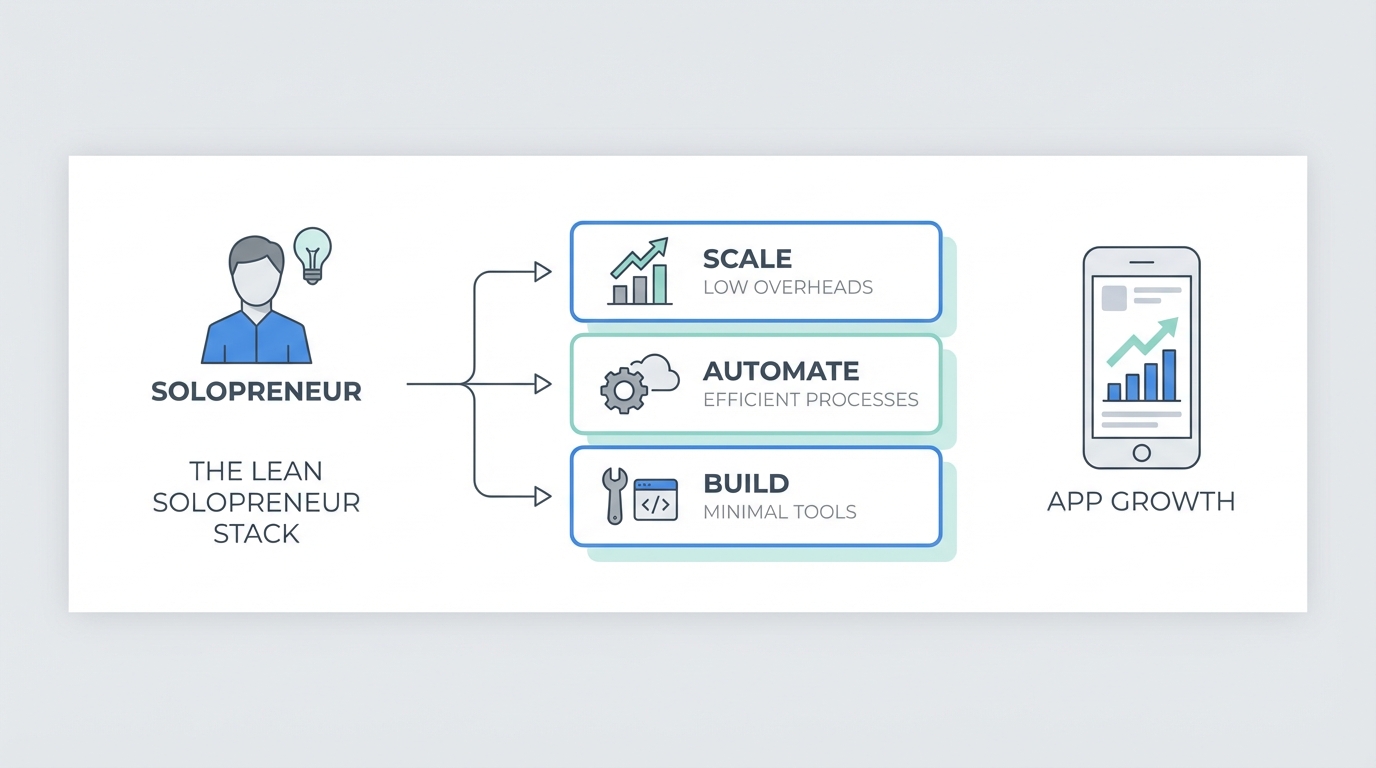
The dream of quitting a corporate job to build a solo empire is common, but the reality is often a series of expensive mistakes and technical debt. However, a new generation of developers is proving that you don't need a massive team or a venture capital infusion to reach the top of the charts. Sebastian Roe, the creator of HabitKit, recently demonstrated that with the right solopreneur tech stack, it is possible to scale a mobile application to $15,000 in monthly recurring revenue (MRR) while keeping operational expenses under $300. His journey, documented by Starter Story, serves as a masterclass in efficiency, showing how to build a mobile app that actually pays the bills.
The Foundation of Efficiency: Why Flutter Wins
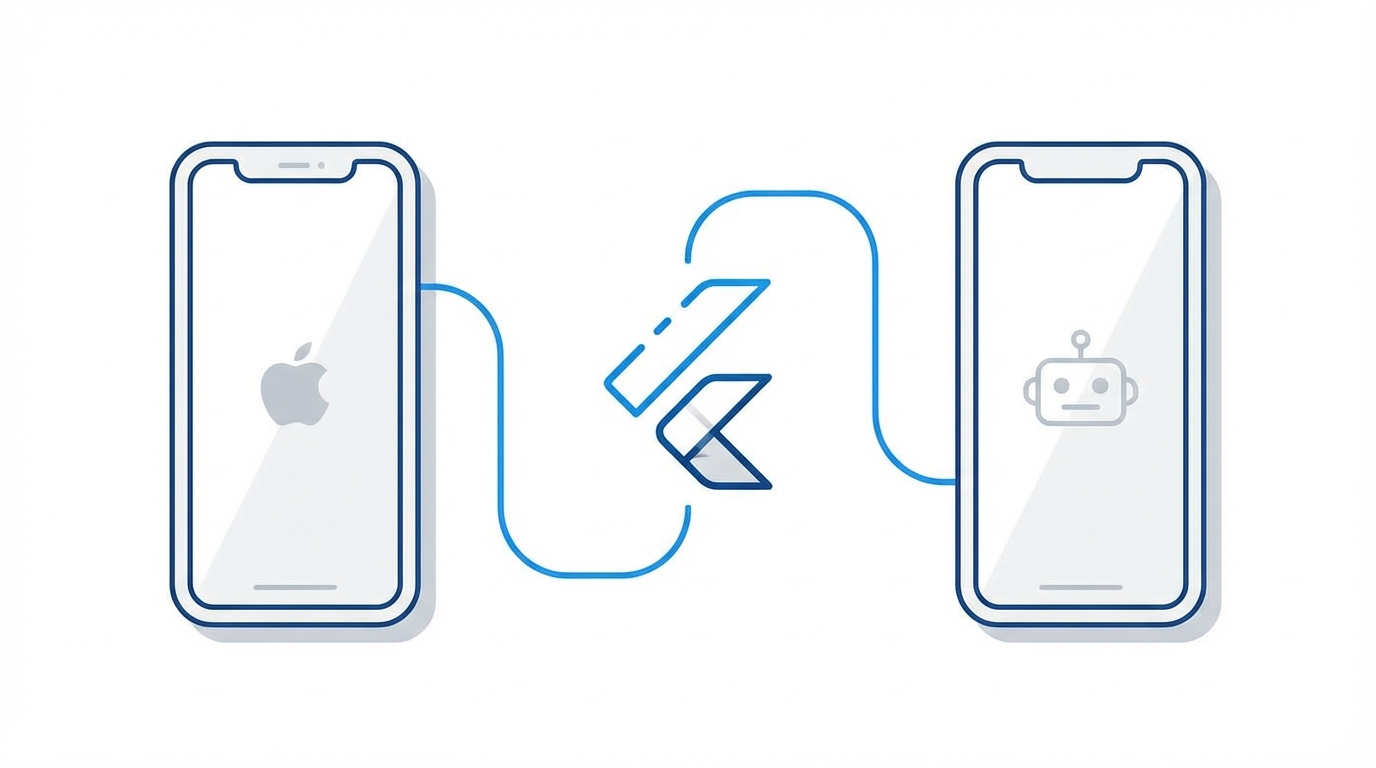

For a solo developer, time is the most valuable currency. Building native apps for both iOS and Android used to mean maintaining two separate codebases, effectively doubling the workload and the chance for bugs. This is why a flutter app development guide often begins with its core value proposition: write once, run anywhere. Flutter allows developers to deploy high-performance, visually stunning apps to both platforms from a single codebase, which was critical for Sebastian as he built HabitKit in just two months. To ensure your marketing matches this development speed, you can use Stormy AI for influencer vetting and fake follower detection, ensuring your promotion efforts are as high-quality as your code.
Using Flutter doesn't just save time during the initial build; it simplifies long-term maintenance. When you are the only person handling customer support, bug fixes, and feature requests, having a unified framework is a survival strategy. According to Starter Story's research, Sebastian focused on a clean, tile-based grid chart and prioritized privacy by storing data locally, a move that reduced backend complexity and appealed to users. If you are learning how to build a mobile app today, choosing a cross-platform framework like Flutter or React Native is the first step toward a lean operation.
AI-Powered Development with Cursor
The rise of ai tools for developers has fundamentally changed the speed at which a single person can ship code. Sebastian credits Cursor AI, an AI-powered IDE, as a cornerstone of his development workflow. Unlike traditional code editors, Cursor integrates large language models directly into the coding environment, providing intelligent completions and debugging assistance that feels like having a senior pair-programmer by your side. Research from GitHub's Octoverse report suggests that AI-assisted coding is drastically reducing the time required for complex software architecture tasks.
For solopreneurs, these AI tools bridge the gap between knowing how to code and being a high-output production machine. You can chat with your codebase, ask the AI to refactor complex functions, or generate boilerplate code for new features in seconds. This level of automation is what allows a solo dev to compete with mid-sized companies. In the same way that developers use Cursor to speed up their build, savvy marketers use Stormy's AI search to instantly discover the perfect creators for their app's niche, replacing hours of manual searching with a single natural-language prompt.
Monetization Without the Backend Headache
One of the biggest hurdles in how to build a mobile app is managing subscriptions and in-app purchases. Historically, this required building a custom backend to handle receipt validation, subscription renewals, and cross-platform synchronization. For a solopreneur, this is a massive time sink. Sebastian bypassed this entire hurdle by using RevenueCat.
RevenueCat handles the heavy lifting of mobile commerce. It provides a simple SDK that manages subscriptions across the App Store and Google Play, giving developers a single source of truth for their revenue data. While RevenueCat takes a small percentage of revenue (roughly 1% after reaching a certain threshold), the trade-off in time saved is immense. It allows the developer to focus on the product rather than the plumbing of the payment processor. When your app begins to scale, you can leverage Stormy's creator CRM to manage your growing list of influencer partnerships and deal stages with the same level of organized efficiency that RevenueCat brings to your finances.
The $15k MRR Cost Breakdown
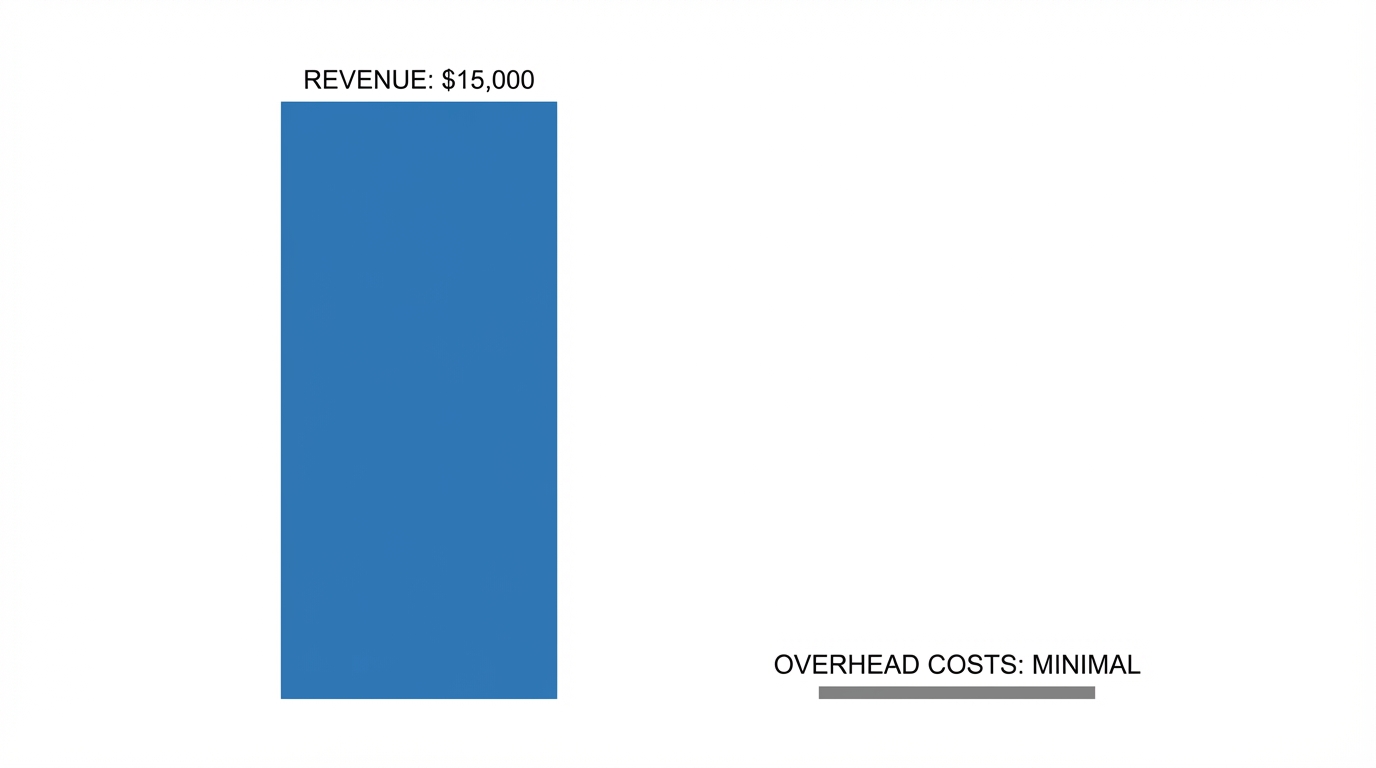
A common misconception is that a successful app requires massive mobile app development costs and high monthly overhead. Sebastian's model proves the opposite. Despite generating $15,000 per month, his operational costs remain remarkably low. According to data on global app revenue trends, high-margin profiles like this are what make the solo developer model so attractive compared to traditional startups.
- RevenueCat: ~1% of revenue (Sebastian's largest expense).
- Apple Search Ads: ~$100 per month for a basic ranking boost via Apple Search Ads.
- ASO Tools: Tools like Astro and Appfigures for keyword research.
- Legal and Business: Founders often use services like ZenBusiness to form an LLC and protect their personal assets for a low annual fee.
- Marketing Automation: Proactive founders use Stormy AI for email outreach, which automates follow-ups with creators so the app continues to grow while the developer sleeps.
- Total Overhead: Approximately $200-$300 per month.
By keeping fixed costs low, a solopreneur can survive the early stages of growth and build a sustainable, high-profit business without the need for a large team or massive funding.